Commercial LED Lighting · Energy Strategy
Energy Efficient Lighting for Commercial Buildings
Lower lighting power without compromising the visual environment. Combine efficient LED luminaires, precise optics and responsive controls to build a commercial lighting system around how the building is actually used.
Offices · Education · Retail · Warehouses · Parking · Commercial & Industrial Facilities
Energy-Efficient Commercial Lighting
Efficiency Is More Than Replacing a Lamp With LED
Energy-efficient lighting for commercial buildings combines efficient luminaires, appropriate light levels, controlled light distribution and lighting controls.
A fixture with a high lumens-per-watt rating can reduce connected lighting load, but efficacy alone does not determine whether a building has an efficient lighting system.
Fixture spacing, optics, operating hours, occupancy patterns, daylight availability and dimming strategy all affect how much electricity the completed installation consumes.
Start With the System
Three Foundations of Efficient Commercial Lighting
The goal is not simply to install fewer watts. It is to deliver the required illumination with less wasted light and less unnecessary operating time.
Efficient LED Luminaires
Evaluate luminous efficacy in lumens per watt together with thermal design, optical performance, driver quality and the light level required by the space.
Put the Light Where It Is Needed
Optical control and proper fixture spacing reduce wasted illumination and can help avoid over-lighting work areas, aisles and circulation zones.
Reduce Unnecessary Runtime
Dimming, occupancy sensing, scheduling and daylight-responsive control can reduce output when a zone does not require full illumination.
Fixture Selection
Match the Luminaire to the Commercial Space
Different parts of a commercial building need different optical, environmental and mounting characteristics. One fixture type rarely solves the entire project.
| Fixture Category | Typical Applications | Energy Strategy | Prillumen Direction |
|---|---|---|---|
| Architectural Linear | Offices, education, corridors, retail | Optical control, dimming, continuous layouts | Suspended, recessed, surface & wall systems |
| LED Troffers & Panels | Offices, classrooms, institutional interiors | Field-adjustable output and uniform ambient light | 2×2 / 2×4 commercial ceiling fixtures |
| High Bay | Warehouses, logistics, manufacturing | High efficacy plus targeted high-ceiling optics | Linear and round high-bay solutions |
| Vapor Tight | Parking, service areas, washdown environments | Efficient linear output with environmental protection | 4 ft / 8 ft sealed linear fixtures |
Prillumen Commercial LED Portfolio
Energy-Efficient Fixtures for Different Building Zones
Build the lighting schedule around the function of each area rather than forcing one fixture family across the entire building.

Architectural Linear Lighting
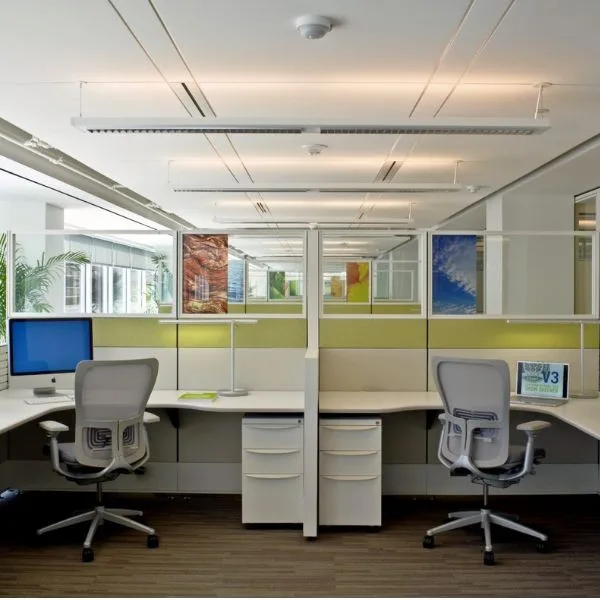
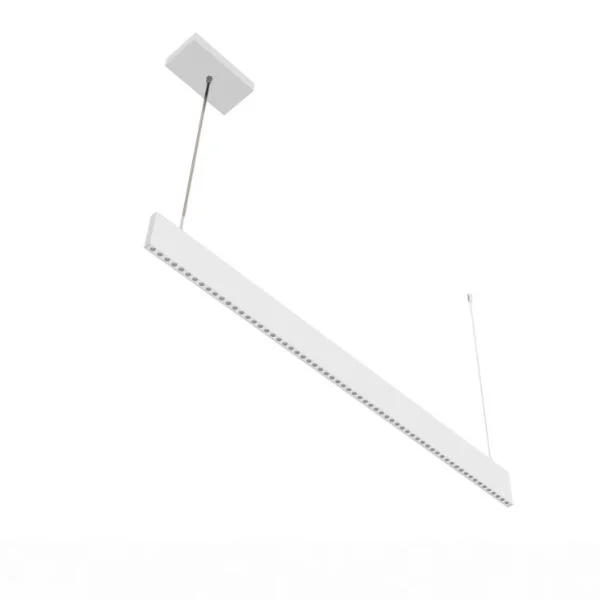
Suspended, recessed and surface-mounted linear systems combine architectural integration with controllable LED illumination. Continuous runs allow lighting layouts to follow workstations, circulation and ceiling geometry.
Selected systems support 0–10V dimming and project-specific output, optics and mounting configurations.
Explore Architectural Linear →LED Troffers & Ceiling Fixtures
Commercial troffers provide uniform ambient illumination for standard ceiling systems. Field-adjustable wattage and CCT options can help contractors match output to the actual room requirement while reducing SKU complexity.
Prillumen offers center-basket, dual-lens and other commercial troffer configurations.
Explore LED Troffers →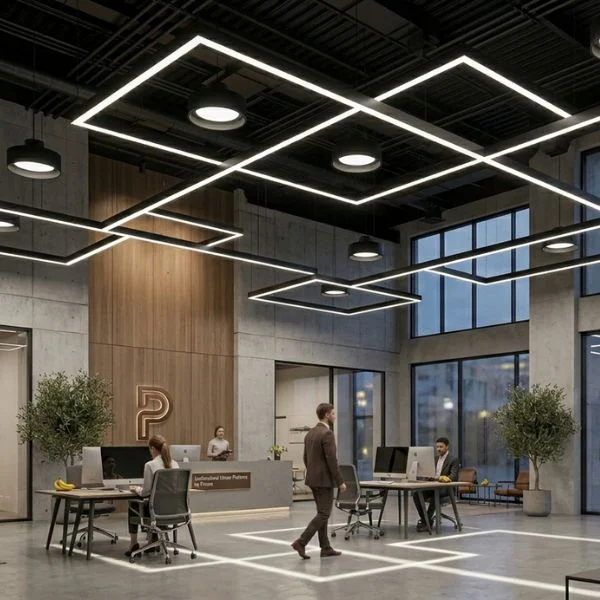
High-Efficiency High Bay Lighting
High-ceiling environments require more than raw lumen output. Efficient high-bay design combines high luminous efficacy with optics that deliver useful illumination to aisles, work areas and storage zones.
Selected Prillumen industrial high-bay systems achieve efficacy up to approximately 160 lm/W and can be paired with lighting controls according to project requirements.
Explore Commercial Lighting →
Vapor-Tight Linear Fixtures
Parking structures, loading areas and utility spaces require energy performance together with protection from dust and moisture.
Prillumen's commercial vapor-tight family includes sealed 4 ft and 8 ft linear configurations with selectable output options for project flexibility.
View Commercial Applications →Lighting Controls
Efficient Fixtures Are Only Part of the Equation
Controls reduce unnecessary operating hours and unnecessary output. The appropriate strategy depends on occupancy patterns, daylight conditions and the control system specified for the building.
Occupancy Sensing
Reduce or switch lighting when intermittently used rooms, aisles or support spaces are vacant.
Daylight Response
Reduce electric lighting near windows or skylights when sufficient natural light is available.
0–10V Dimming
Tune fixture output to the actual lighting requirement instead of operating every luminaire continuously at full output.
Scheduling & Zoning
Coordinate lighting operation with business hours, cleaning schedules and independently controlled building zones.
Strategies by Building Type
Energy Efficiency Looks Different in Every Commercial Space
Operating hours, ceiling height, visual tasks and environmental conditions should determine the fixture and control strategy.
Corporate Offices
Prioritize visual comfort, appropriate light levels, dimming and daylight-responsive control.
Warehouses & Logistics
Combine high-efficacy high bays with targeted optics and occupancy-based control in intermittently used zones.

Retail & Showrooms
Balance energy performance with vertical illumination, merchandise presentation and appropriate color quality.
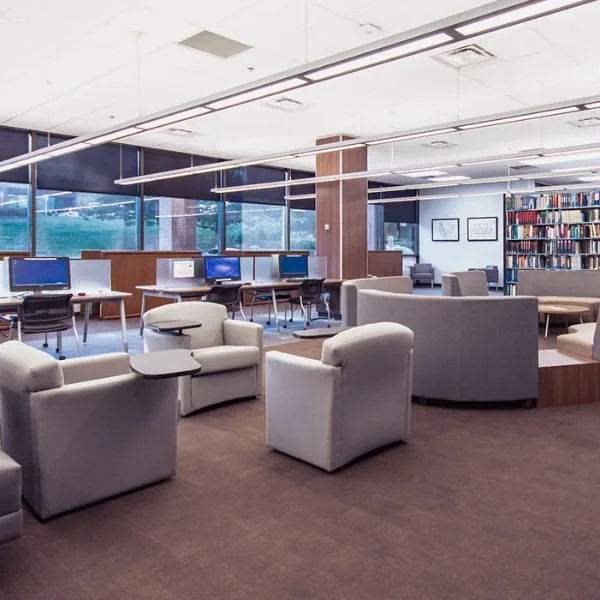
Education & Institutional
Coordinate efficient ambient lighting with classrooms, libraries, corridors and varying occupancy schedules.
Understanding lm/W
Efficacy Matters — But Higher lm/W Does Not Automatically Mean Better Lighting
Luminous efficacy measures how many lumens a luminaire produces for each watt of electrical input. It is an important metric when comparing energy performance.
But a commercial project should not select fixtures on efficacy alone. Light distribution, glare, color quality, lumen maintenance and the required illumination at the workplane also matter.
Existing Buildings
LED Retrofit or Full Luminaire Replacement?
Existing commercial buildings do not always require the same upgrade path. Compare installation cost against long-term optical, control and maintenance requirements.
| Consideration | LED Retrofit | Full Luminaire Replacement |
|---|---|---|
| Initial Cost | Typically lower | Typically higher |
| Existing Housing | Retained | Replaced |
| Optical Performance | May be limited by existing fixture | Designed as a complete optical system |
| Controls | Depends on retrofit configuration | Can be selected around new project requirements |
| Best Fit | Budget-sensitive upgrades with suitable housings | Major renovations and performance-driven projects |
Estimate the Opportunity
Start With Annual Lighting Energy, Not a Generic Savings Percentage
Actual energy savings vary by existing equipment, fixture count, wattage, annual operating hours, control behavior and electricity rate.
For this reason, project savings should be calculated from the existing building baseline rather than assumed from a generic LED percentage.
Annual kWh =
Fixture Wattage × Fixture Quantity × Annual Operating Hours ÷ 1,000
Compare the existing system with the proposed LED system, then model additional reductions from controls separately.
This produces a more defensible estimate for project budgeting, payback analysis and utility discussions.
Commercial Lighting Upgrade
A Practical Five-Step Upgrade Process
Photometric Planning
Avoid Saving Energy by Simply Under-Lighting the Space
An efficient lighting design still needs to provide appropriate illumination for the tasks performed in the building.
IES photometric files can be used during project planning to evaluate fixture spacing, workplane illumination, uniformity and connected lighting load before final fixture quantities are confirmed.
This is particularly important for high-bay facilities, continuous architectural linear systems and large commercial ceiling layouts.
Prillumen Project Support
From Fixture Selection to Commercial Project Supply
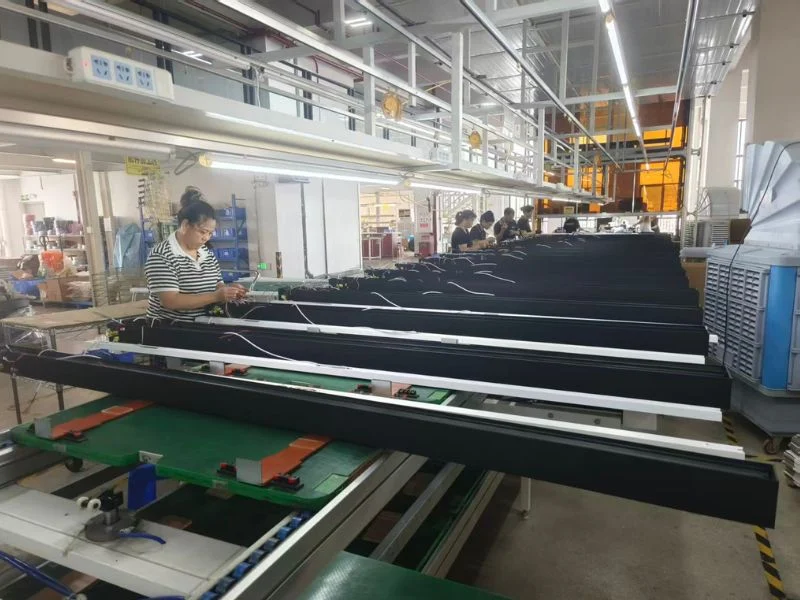
Energy performance begins with the specification, but successful projects also depend on repeatable fixture construction, configuration control and reliable production.
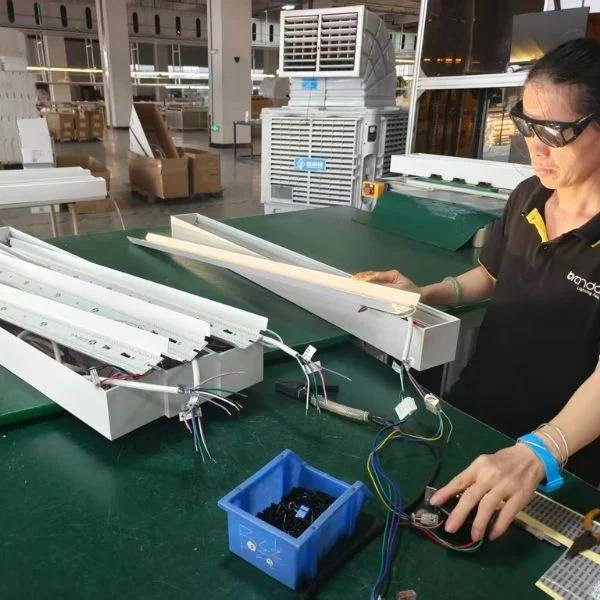
Prillumen supports commercial lighting projects with configurable LED fixture platforms, project documentation and manufacturing support for lighting companies, distributors, contractors and project partners.
 Fixture Manufacturing
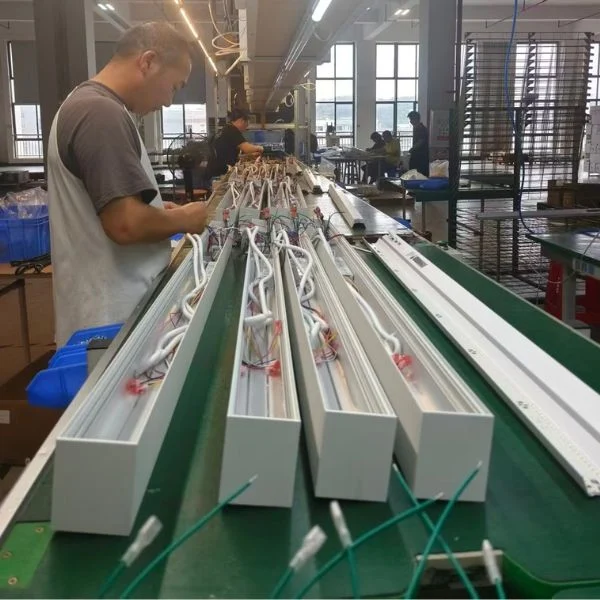 Finishing & Configuration
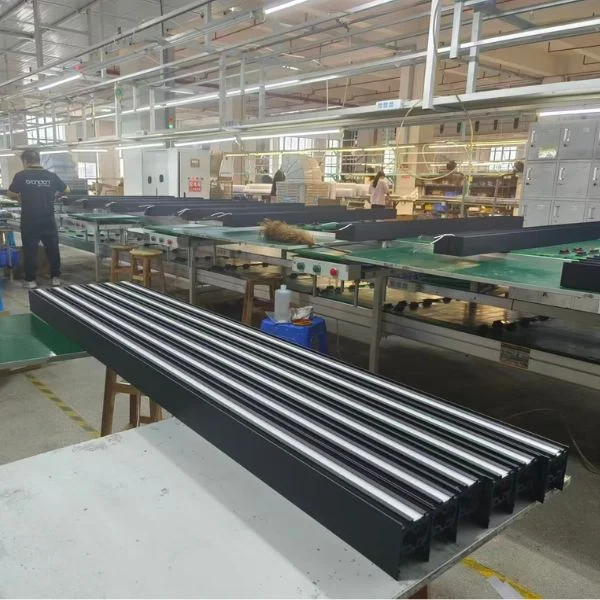 Assembly & Quality Verification
FAQ
Energy-Efficient Commercial Lighting FAQs
What is the most energy-efficient lighting for commercial buildings?
High-efficacy LED luminaires combined with appropriate optical distribution and lighting controls are commonly used to reduce commercial lighting energy demand. The best fixture type depends on the space, ceiling height, visual tasks and environmental conditions.
Does a higher lumens-per-watt rating always mean a better commercial light?
No. Higher efficacy means more lumens are produced per watt, but commercial lighting should also be evaluated for distribution, glare, color quality, lumen maintenance and whether the fixture delivers the required illumination to the target area.
How can lighting controls reduce commercial building energy use?
Occupancy sensing, daylight-responsive dimming, scheduling and zone control can reduce fixture output or operating time when full illumination is not required. Actual savings depend on building use and control configuration.
Should an existing commercial building use retrofit kits or new LED fixtures?
Retrofit kits can reduce initial installation cost when existing housings remain suitable. Full fixture replacement provides the opportunity to redesign optics, controls, output and fixture appearance as a complete lighting system.
What LED fixtures are suitable for commercial offices?
Common options include LED troffers, panels, suspended linear fixtures, recessed linear lighting and surface-mounted linear systems. Selection depends on ceiling type, desired visual comfort and architectural requirements.
What lighting is suitable for commercial warehouses?
High-bay LED fixtures are commonly used for high-ceiling warehouse and logistics spaces. Fixture selection should consider mounting height, aisle geometry, required workplane illumination, optical distribution and occupancy patterns.
How should commercial lighting energy savings be calculated?
Start with fixture wattage, fixture quantity and annual operating hours for the existing and proposed systems. Control-related reductions can then be modeled separately based on occupancy, daylight and scheduling conditions.
Commercial LED Project
Build the Lighting Schedule Around the Building
Send your fixture schedule, reflected ceiling plan or existing lighting information. Prillumen can help review suitable commercial LED fixture families, configurations and project requirements.
STAY IN THE LOOP
Subscribe to our free newsletter.
Leave A Comment
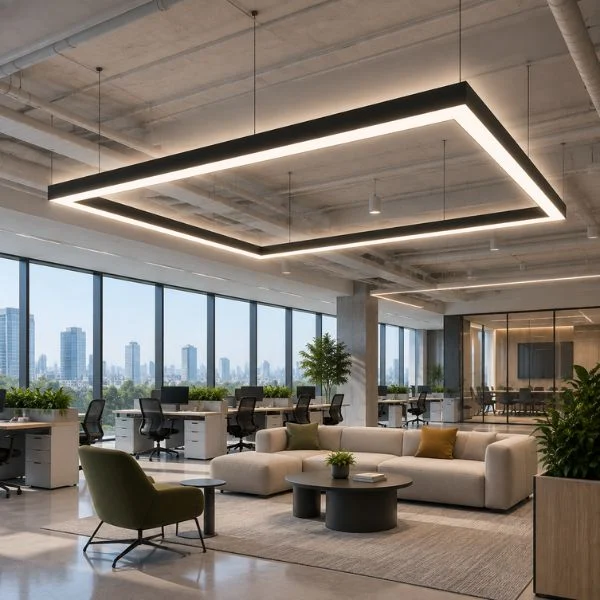
Recessed and pendant lighting explained Choosing the right illumination strategy [...]
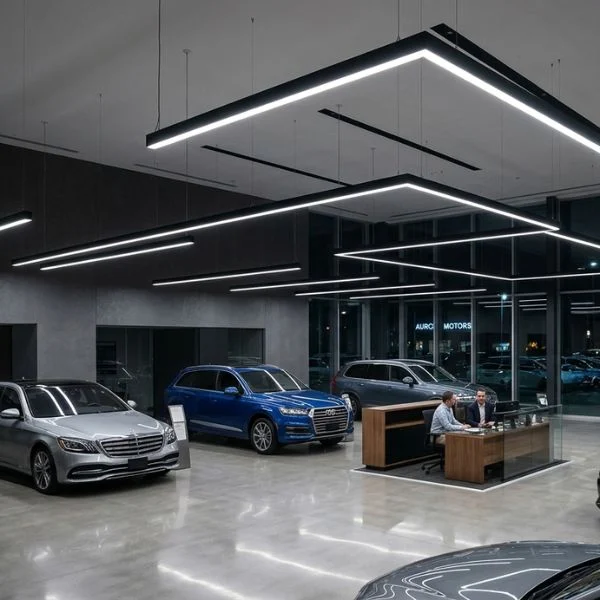
Anatomy of a Modular LED Lighting System We design every [...]
LED vs. Incandescent Bulbs: What Is the Real Difference? Are [...]