
Drywall Recessed Linear Lighting for Modern Architectural Interiors
Create clean, uninterrupted ceiling lines with drywall recessed linear LED lighting. Designed for plasterboard and drywall integration, the mud-in installation conceals the fixture frame within the ceiling finish, leaving a precise linear aperture and a refined architectural appearance.
Prillumenlight supports architects, lighting designers, contractors and lighting brands with configurable recessed linear systems, optical choices and project-based specification support.
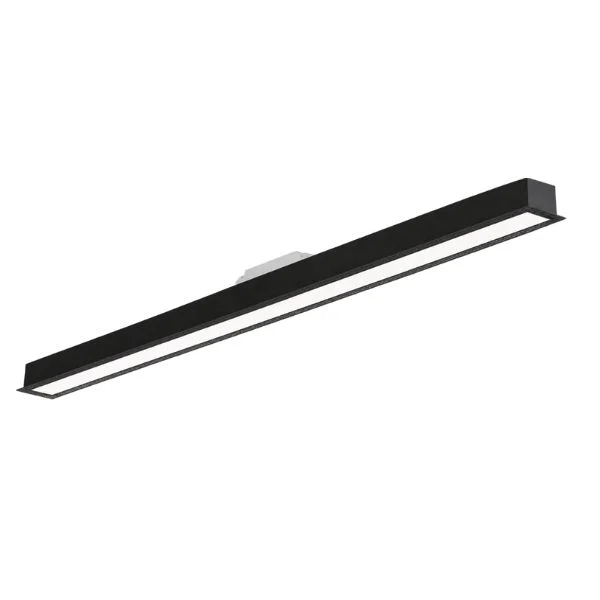
Drywall Recessed Linear Lighting in Black and White
A drywall recessed linear light is integrated into a plasterboard or drywall ceiling during the ceiling construction and finishing process. Its plaster-in flange is finished over with joint compound and paint, allowing the fixture to sit visually flush with the surrounding ceiling. The result is a minimal linear opening without a conventional visible trim frame.
Choose a black or white fixture appearance to coordinate with the ceiling design, interior palette and lighting concept. The final visible effect depends on the selected profile, diffuser or lens, ceiling preparation and installation workmanship.
For projects using suspended T-bar ceilings, a flanged-in recessed system is generally the more appropriate installation approach. This page focuses on the mud-in / trimless configuration.
Black Drywall Recessed Linear Light
A defined dark aperture for contemporary interiors and contrast ceiling details.
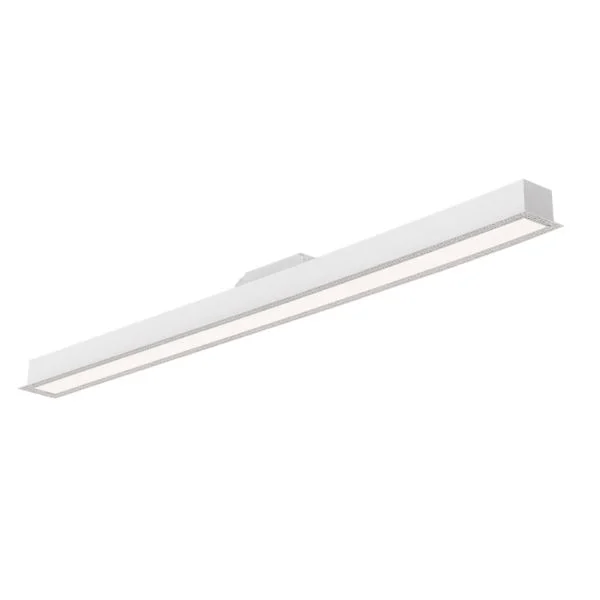
White Mud-In Linear Light
A discreet finish for light ceilings and visually integrated lighting layouts.
Select the Right Optical Treatment for Your Recessed Linear Lighting
The optical element influences the appearance of the luminous line, light distribution and visual comfort. Select the configuration according to the application, viewing angles, ceiling height and lighting design criteria.
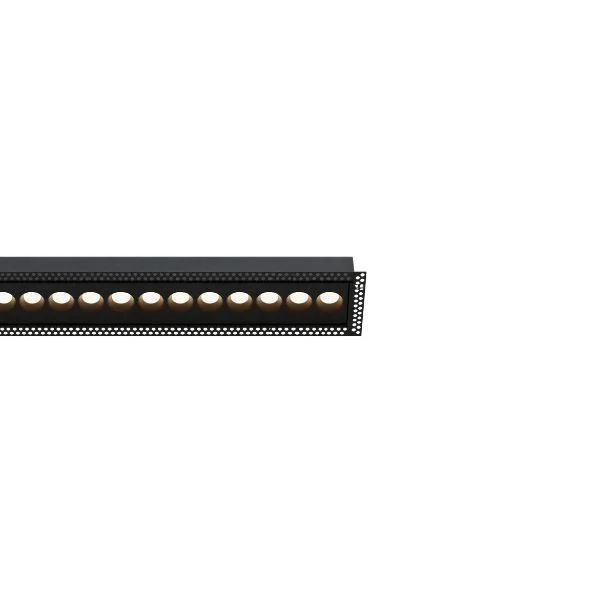
Precision Optical Lens
For projects requiring a more controlled distribution than a general-purpose diffusing cover. Confirm the available beam distribution and photometric files for the selected configuration.
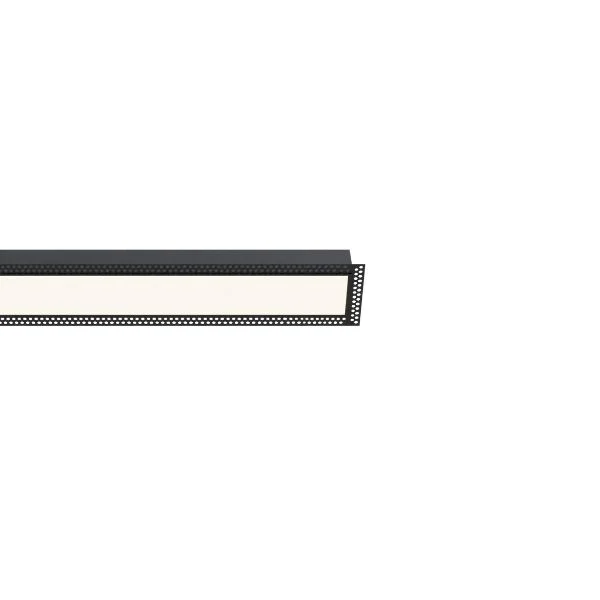
Micro-Prismatic Diffuser
A textured optical surface that helps shape the luminous appearance and manage high-angle brightness. Glare performance must be verified against the complete luminaire photometry.
Optical performance, beam angle, UGR and lumen output vary by the selected LED, optic, profile and operating conditions. Request the relevant photometric data before final project approval.
Drywall Recessed Linear Lighting for Modern Commercial Interiors
Continuous recessed linear lighting can define circulation routes, emphasize architectural geometry and provide a clean lighting language across open-plan commercial environments.
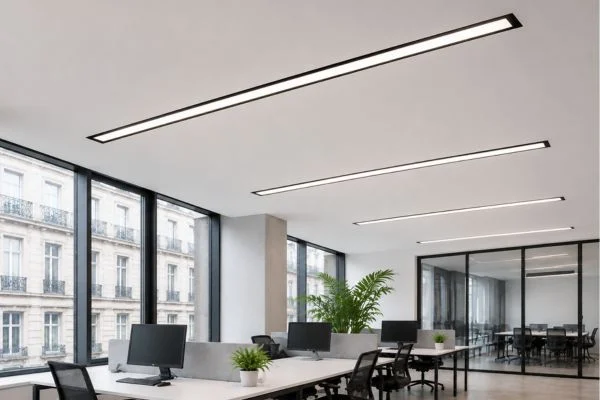
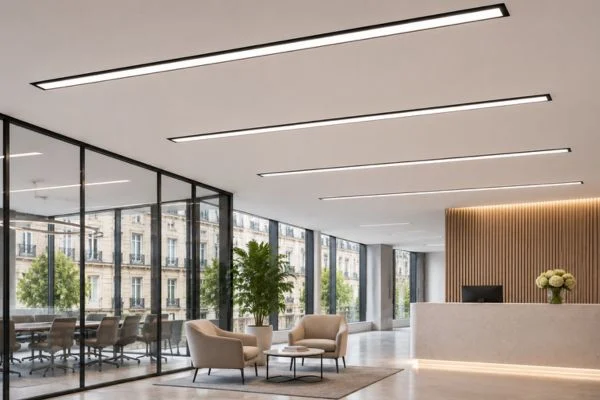
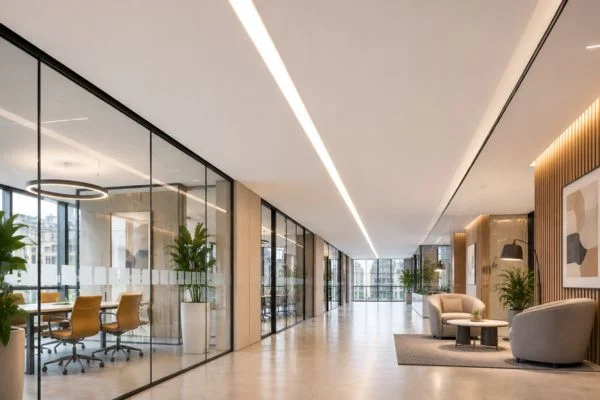
Plan a Continuous Recessed Linear Lighting Layout
Specify the profile width, installation detail, optical treatment and connection layout together. For continuous ceiling lines, coordinate the lighting plan with the reflected ceiling plan and the ceiling contractor's installation sequence.
Multiple Profile Widths
Architectural profile options include 2″, 2.75″, 4″ and 6″ widths. Confirm the selected system's exact section dimensions and ceiling depth before detailing.
Linear & Geometric Layouts
Plan straight runs and project-specific layouts with L, T, Y or corner transitions where supported by the selected system and connection components.
Coordinated Ceiling Details
Review the mud-in flange, plaster build-up, ceiling substrate, driver access and service strategy before construction begins.
| Selection Item | Project Specification Consideration |
|---|---|
| Installation | Drywall / plasterboard recessed installation using a mud-in (trimless) flange |
| Profile Width | 2″, 2.75″, 4″ or 6″ system options; confirm exact profile drawing |
| Optical Element | Precision optical lens or micro-prismatic diffuser, subject to model availability |
| Layout | Single runs or coordinated continuous layouts; connection details to be confirmed |
| LED & Electrical | Confirm CCT, CRI, wattage, lumen output, driver, voltage and dimming requirements per project |
| Documentation | Request dimensional drawings, installation details, photometric files and relevant compliance documents |
From Lighting Concept to Finished Ceiling
Define the Lighting Layout
Share the reflected ceiling plan, line lengths, required shapes, profile width and intended application areas.
Coordinate the Ceiling Detail
Review the product section, ceiling construction, plaster-in flange, cut-out and driver access with the project team.
Approve Performance & Mock-Up
Confirm the optical selection, electrical specification, photometric data and finish through documentation or a project sample.
Drywall Recessed Linear Lighting FAQs
What is drywall recessed linear lighting?
Drywall recessed linear lighting is integrated into a drywall or plasterboard ceiling using a mud-in flange. After joint compound and finishing, the flange is concealed and the visible result is a clean linear opening without a conventional exposed trim.
Is mud-in recessed lighting the same as flanged-in T-bar lighting?
No. Mud-in systems are designed to be plastered into a solid drywall or plasterboard ceiling. Flanged-in systems use a visible flange to sit within or against a suspended grid ceiling. Select the installation type to match the ceiling construction.
Which profile widths can be specified?
System options include 2-inch, 2.75-inch, 4-inch and 6-inch profile widths. Exact dimensions, ceiling depth and available lengths should be checked against the selected model's technical drawing.
Can trimless recessed linear lights form continuous lines and corners?
Continuous layouts and geometric transitions can be planned. The availability and construction of straight, L, T, Y and corner connections depend on the chosen profile family and connector design, so confirm the layout with the product drawings.
Which optical options are available?
Options shown on this page include a precision optical lens and a micro-prismatic diffuser. Confirm the available distribution, lumen output and photometric performance for the exact luminaire configuration.
Does a micro-prismatic diffuser guarantee UGR 19?
No. UGR is not determined by the diffuser name alone. It depends on the complete luminaire photometry, room geometry, surface reflectances, spacing and viewing position. Request project-relevant photometric data for evaluation.
What should be included in an RFQ?
Provide the ceiling type, profile width, run lengths, layout drawing, optical preference, CCT, CRI, wattage or target illuminance, voltage, dimming protocol, project quantity and destination market.
Specify Drywall Recessed Linear Lighting for Your Next Project
Send us your ceiling plan, preferred profile width and lighting requirements. Our team can help review the mud-in configuration, optical selection and technical details for your commercial lighting project.