

Architectural Lighting Classification: Core Definitions
In commercial lighting specification, precise terminology is essential. While everyday speech uses “lamp” or “light fixture” interchangeably, technical engineering requires strict distinction.
| Term | Technical Definition | Scope & System Function |
|---|---|---|
| Lamp | The replaceable or integrated light source. | Generates raw lumen output (e.g., LED diode array, bulb). |
| Light Fixture | The physical hardware frame and mounting assembly. | Holds the lamp in place without accounting for full system integration. |
| Luminaire | The complete, operational lighting unit (IES/CIE definition). | Includes light engine, optical control, housing, thermal assembly, and driver. |
According to the Illuminating Engineering Society (IES) and the International Commission on Illumination (CIE), a luminaire is a complete lighting unit designed to distribute light, position and protect the light source, and connect to the power supply.
Anatomy of a Modern Architectural Luminaire
Every type of luminaire we manufacture relies on four integrated subsystem components engineered for thermal, optical, and electrical efficiency:
- LED Light Engine & Modules: High-efficacy LED arrays delivering precise lumen output with accurate Color Rendering Index (CRI $\ge$ 90) and tight MacAdam ellipse binning for batch consistency.
- Optical Systems: Precision-molded micro-prismatic diffusers, optical reflectors, and specialized lenses that control beam distribution and mitigate glare.
- Thermal Management Assembly: Precision 6063-T5 aluminum extrusions and structural heat sinks designed to pull heat away from junction points and extend diode longevity.
- Control Gear & Drivers: Integrated constant-current power supplies supporting 0-10V, DALI-2, and smart lighting controls for flicker-free dimming performance.
Types of Luminaire Mounting and Installation Methods
When specifying the right type of luminaire for an architectural project, mounting versatility dictates both structural integration and visual outcome. We design and manufacture five core mounting classifications engineered for straightforward installation across commercial, educational, and retail environments.
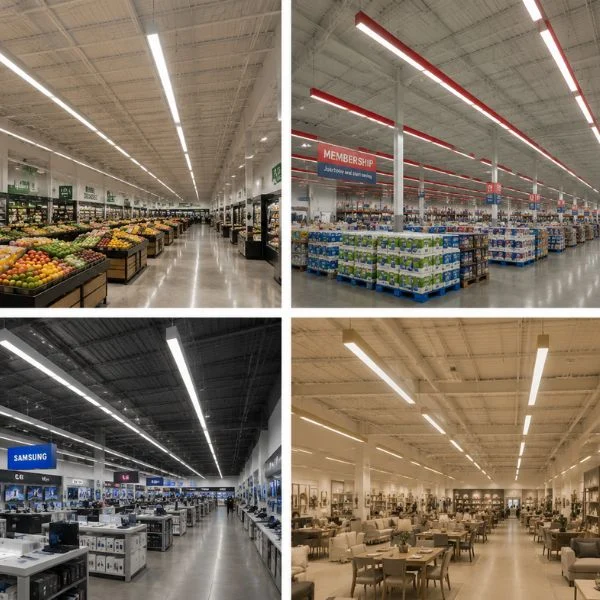
1. Continuous Run Linear Lighting
- Seamless Inline Integration: Heavy-duty mechanical joiners and integrated wiring through-runs allow continuous, uninterrupted lines of light over long distances.
- Target Applications: Perfect for open-plan offices, long retail aisles, and educational corridors.
- Optical Consistency: High-transmittance snap-in lens diffusers eliminate light leaks and visible dark spots at connection joints.
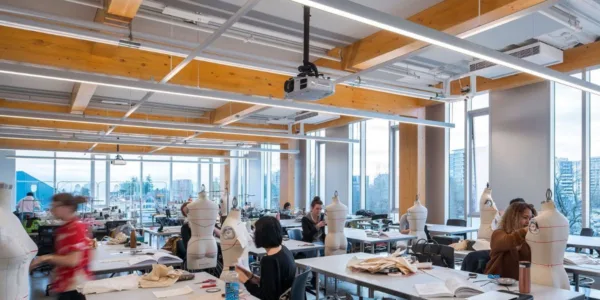
2. Suspended & Pendant Luminaires
- Hardware & Hardware Control: Utilizes heavy-duty aircraft cable suspension systems with toolless adjustable drop heights and integrated power cords.
- Form Factors: Linear drop pendants, suspended ring pendant lights, round high-bays, and decorative channels.
- Illumination Control: Features bi-directional (direct/indirect) optical distribution to simultaneously illuminate work planes while softening ceiling shadows.
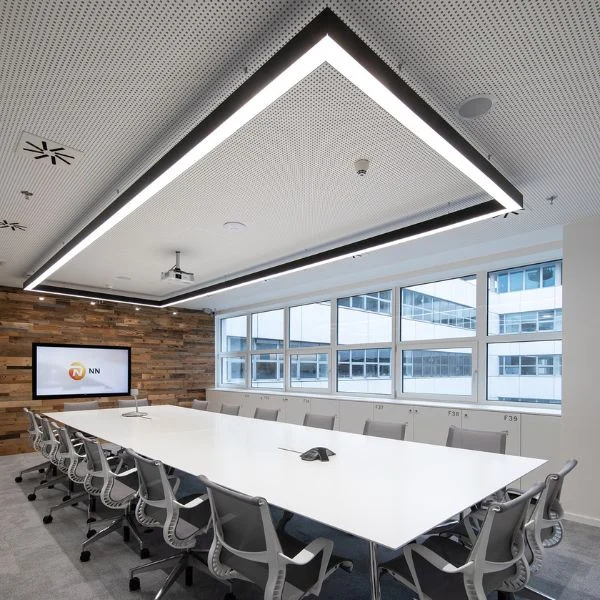
3. Recessed & Flush-Mount Luminaires
- Clean Ceiling Planes: Preserves architectural ceiling profiles and saves space in low-plenum areas.
- Fixture Configurations: Includes recessed linear channels, architectural downlights, flush panel lights, and commercial LED troffers in standard 1×4, 2×2, and 2×4 dimensions.
- Frame Styles: Engineered with flanged, trimless (mud-in for seamless drywall integration), and standard T-grid drop-ceiling mounting frames.
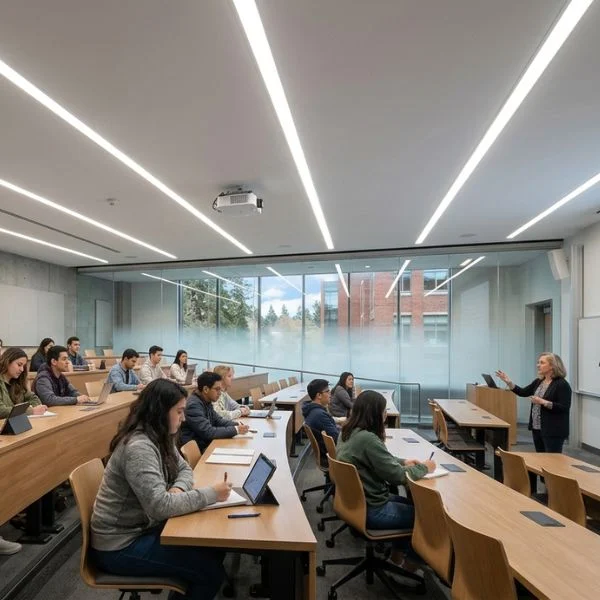
4. Surface-Mounted & Architectural Wall Luminaires
- Low-Plenum Solutions: Built for environments lacking ceiling plenum depth, such as concrete slabs, stairwells, and structural columns.
- Product Form Factors: Surface linear channels, decorative wall sconces, wall-washer profiles, and architectural cylinders.
- Perimeter Accents: Utilizing high-efficiency ceiling-mounted linear LED lighting profiles or wall-mounted linear light for modern architecture ensures full vertical illumination and perimeter accent lighting without structural drywall modifications.

5. Track & Modular Systems
- Dynamic Fixture Placement: Line-voltage, low-voltage, and magnetic track systems allow rapid fixture repositioning and beam adjustment.
- System Flexibility: Mix and match ambient linear modules, track heads, and drop pendants on a single power track for rapidly changing retail, gallery, or hospitality layouts.
Mapping Luminaire Types to Functional Lighting Layers
Effective architectural lighting relies on layered design. We engineer each type of luminaire to fulfill specific operational roles—combining high-efficacy general illumination with precise optical control for specialized tasks.
| Lighting Layer | Recommended Luminaire Types | Key Specs & Optics | Primary Application |
|---|---|---|---|
| Ambient (General) | Continuous linear runs, LED troffers, flush panels | High efficacy (lm/W), wide uniform beam spread | Open-plan offices, corridors, educational halls |
| Task Lighting | Low-bay linear, desk pendants, focused track heads | Directional beam control, targeted lux levels | Workstations, assembly lines, reading zones |
| Accent Lighting | Recessed adjustable downlights, wall-washers | High CRI (≥ 90), tight optical beam angles | Feature walls, artwork, retail displays |
| Decorative Lighting | Custom geometric pendants, suspended ring lights | Architectural visual profile, custom finishes | Reception desks, lobbies, spatial focal points |
Ambient Lighting
Ambient fixtures deliver uniform general illumination across large areas. We manufacture high-efficiency LED troffers and continuous channel runs designed to eliminate dark spots and harsh ceiling contrast. For layout strategies across wide footprints, explore our linear LED lighting guide for commercial spaces.
Task Lighting
Task luminaires direct light precisely where visual work occurs, increasing local illuminance without over-lighting the entire room.
Core Fixtures: Suspended task pendants, low-bay linear fixtures, and adjustable track heads.
Engineering Focus: High directional output with tailored beam distribution to prevent visual fatigue.
Accent Lighting
Accent luminaires add depth and drama by drawing attention to textures, merchandise, or architectural features.
Color Accuracy: High Color Rendering Index (CRI ≥ 90) ensures precise color reproduction.
Optical Precision: A dedicated wall washer luminaire or narrow-beam recessed downlight provides tight beam control with clean cutoff angles.
Decorative Lighting
Decorative luminaires serve as visual focal points while reinforcing the interior design language.
Custom Configurations: Prefabricated ring lights, custom geometric profiles, and tailored powder-coat finishes.
Performance: Combines distinct physical aesthetics with high-performance LED light engines for balanced form and function.
Optical Distribution & Light Control
How a luminaire casts its beam determines both spatial comfort and task efficiency. Choosing the right type of luminaire comes down to controlling beam angle, mitigating glare, and directing lumen output where occupants need it most.
Direct vs. Indirect Light Distribution
- Direct Optics: Delivers 100% downward light output. Ideal for high-task environments requiring high illuminance levels and sharp target visibility.
- Indirect Optics: Projects light upward against ceiling and wall surfaces to bounce soft illumination back into the space, eliminating direct glare and harsh contrast shadows.
- Direct-Indirect (Bi-Directional): Combines efficient direct task light with soft upward ambient fill (such as a 70% down / 30% up distribution). We engineer our indirect office lighting fixtures to keep work surfaces bright while lighting the ceiling plane. For perimeter vertical surfaces, incorporating a direct-indirect wall light grille maintains seamless ambient contrast without uncomfortable hotspotting.
Visual Comfort & Low UGR Glare Control
Uncontrolled luminance creates eye strain and reduces overall workplace productivity. We build precise optical controls into every fixture to protect visual health in high-occupancy interiors.
- Understanding UGR: The Unified Glare Rating (UGR) quantifies luminance from a luminaire relative to the background brightness of the room.
- Workplace Standards: Commercial offices, conference rooms, and educational spaces require a Low UGR (<19) rating to maintain long-term visual comfort.
- Micro-Prismatic Diffusers & Darklight Optics: We utilize specialized micro-prismatic lenses and recessed optics to control light cut-off angles. This shields the LED source from direct view and delivers glare-free, uniform light across the task area.
Specialized Architectural Profiles and Environmental Ratings
Standard linear channels do not always fit complex layouts or demanding environments. We manufacture specialized structural profiles and ruggedized enclosures to preserve your design intent without compromising performance or ingress protection.
Custom Geometric Shapes
We produce factory-assembled structural profiles designed for seamless ceiling layouts, eliminating messy field cuts and light leaks:
- Prefabricated Profiles: V-shape, X-shape, Y-shape, and Hexagon configurations.
- Continuous Optical Patterns: Precision mechanical joiners and overlapping lenses maintain uniform light output across complex geometric runs.
Weatherproof and Heavy-Duty Enclosures
Selecting the correct environmental type of luminaire depends on direct exposure to moisture, washdowns, and airborne dust.
| Ingress Rating | Protection Level | Primary Applications |
|---|---|---|
| IP65 | Dust-tight; protected against low-pressure water jets | Covered walkways, high-dust industrial zones |
| IP66 | Dust-tight; protected against high-pressure washdowns | Parking structures, food processing facilities, exterior facades |
For damp and high-moisture spaces, verifying strict compliance standards for linear lighting ensures complete electrical safety, corrosion resistance, and long-term driver reliability.
Dynamic Color and Color-Tunable Systems
Modern spaces require adaptable spectral output to balance human wellness with visual impact:
- Tunable White (2700K–6500K): Seamlessly shifts correlated color temperature throughout the day to support circadian rhythms in corporate and healthcare settings.
- RGBCW Architectural Channels: Combines full-spectrum RGB color mixing with dedicated high-CRI white chips for precise accenting in hospitality and branded environments.
Luminaire Profiles by Space Type
Matching the correct type of luminaire to specific architectural demands ensures optimal visual performance, energy efficiency, and code compliance. We engineer and manufacture specialized lighting profiles tailored to the specific requirements of four core application areas.
Commercial Offices & Corporate Workspaces
- Recommended Profiles: Low-UGR linear continuous runs, direct-indirect pendants, trimless recessed channels.
- Performance Focus: Low unified glare rating (UGR <19), balanced visual comfort, clean ceiling integration.
- Specification Strategy: Implementing high-performance linear lighting for open office solutions delivers uniform light distribution across workstations without causing screen reflections. For private offices and meeting rooms, specifying direct-indirect linear fixtures bounces illumination off the ceiling plane to soft-fill the room while maintaining targeted task lighting.
Educational & Institutional Buildings
- Recommended Profiles: Low-glare linear suspensions, high-efficiency commercial LED troffers, modular architectural panels.
- Performance Focus: High lumen efficacy (lm/W), long-lifespan drivers, minimal maintenance cycles.
- Specification Strategy: Classrooms require stable, flicker-free illumination. Modular drivers and high-transmittance micro-prismatic diffusers protect visual endurance for students and staff throughout long operational hours.
Retail & High-Traffic Commercial Spaces
- Recommended Profiles: Continuous run linear lighting, low-voltage magnetic track systems, architectural wall-washers.
- Performance Focus: High CRI (≥90) for true-to-life product rendering, flexible fixture positioning, optical beam control.
- Specification Strategy: Continuous inline fixtures draw foot traffic through primary aisles, while modular track heads provide high-intensity accent lighting to focus customer attention on key merchandise displays.
Industrial & Damp Locations
- Recommended Profiles: IP66 wet location luminaires, heavy-duty vapor-tight linear channels.
- Performance Focus: Dust-tight and water-jet protection (IP65/IP66), high thermal tolerance, IK-rated impact resistance.
- Specification Strategy: Industrial facilities, parking structures, and washdown environments demand extruded aluminum housings sealed with high-impact polycarbonate lenses to withstand moisture, corrosion, and physical contact.
Luminaire Selection Matrix
| Space Type | Primary Luminaire Type | Key Technical Requirements |
|---|---|---|
| Commercial Office | Direct-Indirect Suspended / Trimless Recessed | UGR <19, 0-10V/DALI Dimming, Micro-Prismatic Lens |
| Classrooms & Libraries | LED Troffer / Continuous Linear Suspension | High Efficacy (>130 lm/W), Long-Life Drivers |
| Retail & Hospitality | Continuous Run Systems / Accent Track | High CRI (≥90), CCT Tuning, Precise Beam Angles |
| Industrial & Outdoor Damp | Vapor-Tight IP66 Linear | IP66 Ingress Protection, IK10 Polycarbonate Lens |
Key B2B Specification Standards for Every Type of Luminaire
When specifying commercial lighting for large-scale projects, performance reliability and compliance are non-negotiable. We build each type of luminaire to meet rigorous build standards, ensuring streamlined installation, code compliance, and long-term operating durability.
Safety and Building Code Certifications
Commercial lighting components must adhere to strict electrical and safety codes prior to jobsite installation:
- UL and cUL Listings: Vital for meeting North American building code compliance and passing electrical site inspections.
- Compliance Verification: Review our overview of certifications for North American standards to guarantee your project fixtures satisfy regional safety requirements without delays.
- Jobsite Protection: Reduces contractor liability, mitigates electrical risks, and ensures long-term operational safety.
Optical Precision and Thermal Management
Sustained light quality relies on precision optical housing and active heat dissipation:
- Aluminum Extrusion Profiles: Heavy-duty aluminum housing rapidly draws heat away from LED modules, protecting chip longevity and maintaining lumen output.
- Color Consistency: We enforce strict 3-step MacAdam Ellipse binning, eliminating visible color variation across continuous fixture runs and batch orders.
- Photometric Stability: Optical lenses and diffusers maintain clear light transmission without yellowing or degrading under thermal stress.
Factory-Direct Engineering & OEM Capabilities
As a dedicated OEM manufacturer, we support architects, specifiers, and contractors with flexible, direct production workflows:
| Service Checkpoint | B2B Manufacturing Standard |
|---|---|
| Tailored CAD Support | Layout-ready BIM/CAD models for immediate architectural integration. |
| Rapid Prototyping | Fast turnarounds on custom profile samples and physical mockups. |
| Flexible MOQs | Manageable minimum order quantities tailored for custom architectural projects. |
| Continuous Run Testing | Optical alignment and photometric testing to eliminate light leaks in linear runs. |
We deliver factory-tested lighting fixtures directly to your jobsite, backed by verified engineering and precision manufacturing.
STAY IN THE LOOP
Subscribe to our free newsletter.
Leave A Comment
Retrofit LED Lighting Solutions Are soaring energy bills, relentless ballast [...]

Struggling to cut operational costs while upgrading your facility’s lighting [...]
The Financial & Operational Business Case Upgrading to energy efficient [...]
Are you worried about overhead head clearance, or tired of [...]