The Importance of Commercial Outdoor Lighting
Effective exterior illumination is not just about visibility; it is a critical investment in your property’s value, safety, and operational efficiency. Treating outdoor lighting as a strategic asset rather than an afterthought transforms your physical location into a secure, welcoming, and high-performing environment.
Enhancing Safety and Security
A well-lit exterior is your first line of defense against liability and crime. Proper illumination eliminates shadow pockets where unauthorized activity can occur, acting as a powerful psychological deterrent to potential intruders. Beyond crime prevention, adequate lighting is essential for preventing workplace accidents. By ensuring parking lots, loading docks, and walkways are clearly visible, you significantly reduce the risk of slips, trips, and falls, protecting both your workforce and your visitors.
- Crime Deterrence: Bright, uniform light discourages vandalism and theft.
- Surveillance Support: High CRI (Color Rendering Index) lighting ensures security cameras capture clear, usable footage.
- Accident Prevention: clear visibility of obstacles and changes in elevation reduces liability claims.
Boosting Brand Visibility and Curb Appeal
Your building’s exterior acts as a 24/7 billboard. Strategic lighting highlights architectural features and signage, creating a professional atmosphere that signals reliability to your customers. A dark building looks closed and uninviting, whereas a brilliantly lit facade draws attention and drives foot traffic. By utilizing directional lighting and wall packs, you enhance the customer experience before they even step through the door, establishing a strong, positive first impression.
Improving Energy Efficiency with LED Solutions
Modern businesses cannot afford the overhead of outdated, energy-guzzling fixtures like Metal Halide or High-Pressure Sodium lamps. transitioning to commercial LED outdoor lighting is a financial imperative. LED technology offers precise light control and superior output while consuming a fraction of the power used by traditional systems.
- Cost Reduction: LEDs can cut energy consumption by up to 75%.
- Longevity: Rated for 50,000 to 100,000 hours, LEDs drastically reduce replacement frequency and maintenance labor.
- Sustainability: Lower energy use contributes to a smaller carbon footprint and compliance with strict environmental regulations.
Common Types of Commercial Outdoor Lighting Fixtures
Selecting the right fixtures is about more than just picking what looks good; it’s about matching the specific function of the space with the right output and durability. Here is a breakdown of the most essential fixtures we use to keep commercial properties illuminated and secure.
Parking Lot and Area Floodlights
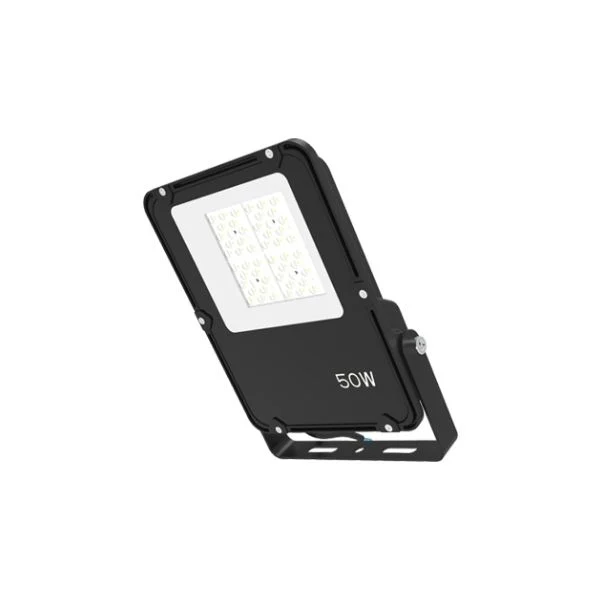
When you need to cover large expanses of asphalt, LED shoebox lights and floodlights are the go-to standard. These high-output fixtures are mounted on tall poles to cast a wide beam spread, ensuring drivers and pedestrians have clear visibility.
- High Lumen Output: Essential for pushing light down from 20 to 40-foot poles.
- Beam Angles: Specialized optics (Type III, IV, or V distributions) direct light exactly where it is needed to minimize light trespass.
- Durability: Built to withstand high winds and storms.
Wall Pack Lights for Building Perimeters
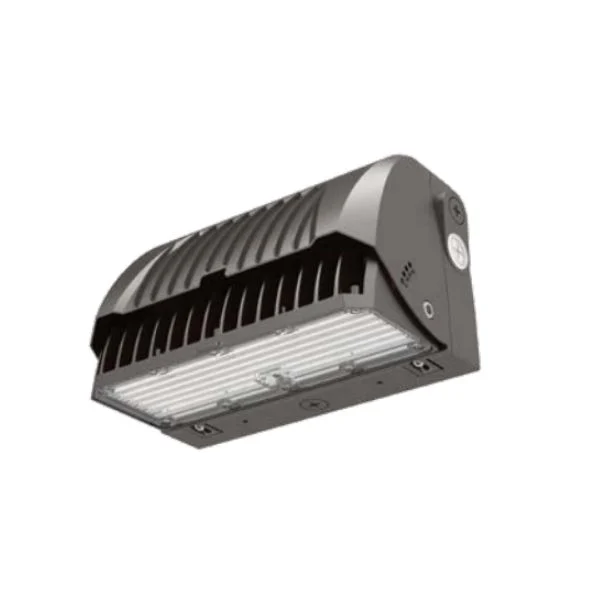
Security starts at the building’s edge. Wall packs are mounted directly onto vertical exterior surfaces, illuminating the immediate perimeter to deter intruders and assist security cameras. We typically recommend “full cutoff” wall packs which direct light downward, reducing light pollution while keeping the ground bright.
- Standard Wall Packs: Traditional look, wide throw.
- Cutoff Wall Packs: Dark-sky compliant, focuses light down.
- Slim Wall Packs: Low profile for a cleaner architectural look.
Pathway and Bollard Lighting
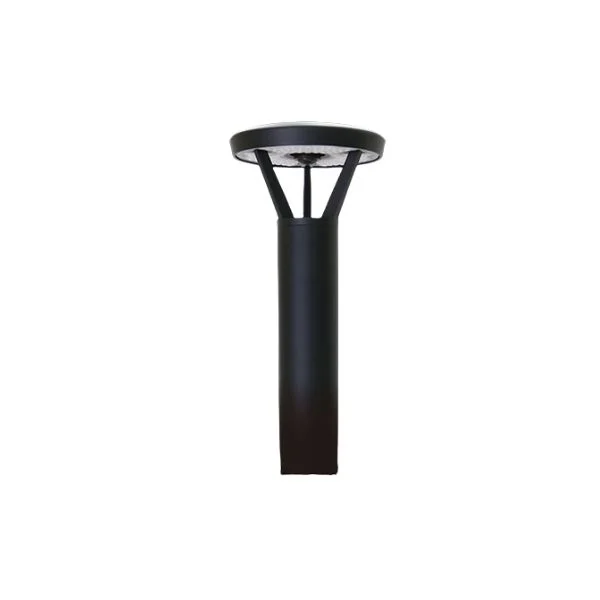
For walkways, courtyards, and pedestrian zones, giant floodlights are overkill. Bollard lights—short, sturdy posts—provide low-level illumination that guides foot traffic without causing glare. These are crucial for liability reduction, ensuring people don’t trip on uneven pavement.
In modern designs, integrating these fixtures requires a keen eye for detail. For a deeper understanding of how to blend these elements seamlessly into your property’s design, check out our comprehensive architectural lighting guide, which covers placement strategies for cohesive exterior aesthetics.
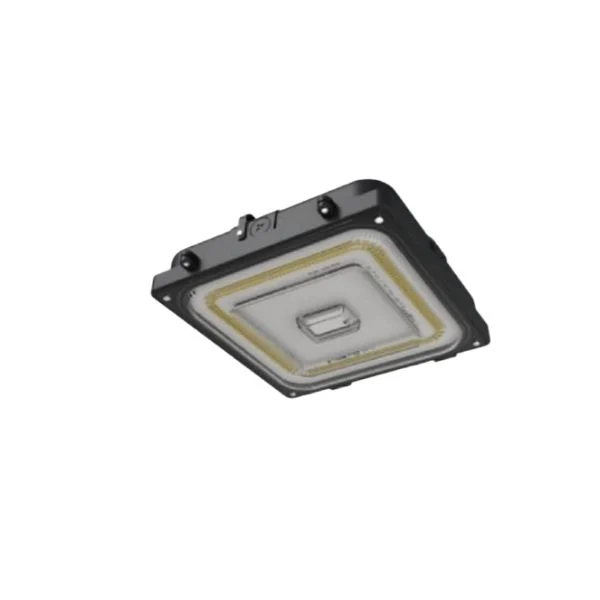
Canopy and Parking Garage Lights
Spaces like gas stations, loading docks, and parking structures present unique challenges due to vibration, fumes, and moisture. Canopy lights are surface-mounted or recessed fixtures designed to push light downward from a ceiling.
- Vapor Tight Ratings: Many garage fixtures are sealed against dust and moisture (IP65 or higher).
- Wide Distribution: Lenses are designed to eliminate shadows between parked cars.
- Motion Sensing: Smart controls dim the lights when the garage is empty to save massive amounts of energy.
Landscape Spotlights and Uplights
This is where utility meets beauty. Spotlights and uplights are used to accentuate trees, flags, monuments, or architectural textures. By placing fixtures at the base of a feature and aiming upward, we create dramatic focal points that boost curb appeal at night.
- Bullet Floods: precise directional lighting.
- Well Lights: Buried in the ground for a flush, hidden appearance.
- RGB Options: Color-changing capabilities for holidays or branding.
Step, Deck, and In-Ground Lighting
Safety is paramount on stairs and changes in elevation. Step lights are often recessed into concrete or masonry to illuminate the tread directly. In-ground lights (or paver lights) handle vehicle or foot traffic weight while marking boundaries.
For sleek, modern applications where you want the fixture to disappear and leave only the light, you might consider solutions similar to a round lens linear surface light, which offers a clean, low-profile aesthetic perfect for defining edges without bulk.
Dusk-to-Dawn and Barn Lights
For areas requiring autonomous operation, Dusk-to-Dawn fixtures are the efficient choice. Equipped with photocells, they automatically turn on at sunset and off at sunrise. Barn lights offer this functionality with a classic gooseneck aesthetic, popular in retail centers, restaurants, and agricultural-style commercial buildings.
- Automation: Zero manual switching required.
- Security: Guarantees light is always on during dark hours.
- Style: Adds a rustic or industrial charm to the facade.
Best Applications for Types of Commercial Outdoor Lighting
Knowing where to place different types of commercial outdoor lighting is just as important as choosing the fixtures themselves. We focus on putting the right light in the right place to maximize safety, function, and visual appeal across commercial properties.
Parking Lots and Roadways
Wide, open spaces demand powerful, even illumination to keep operations running smoothly.
- Safety First: High-output area lights eliminate dark corners and actively deter crime.
- Traffic Control: Bright, consistent light reduces accidents for both drivers and pedestrians.
- Maximum Spread: We use tall pole-mounted fixtures to push light across massive footprints with minimal hardware.
Building Entrances and Facades
Your entrance is your business’s first impression after dark.
- Welcoming Environment: Well-lit doorways make customers and staff feel safe and invited.
- Perimeter Security: Strategic exterior light installations, such as heavy-duty wall packs, mount directly to your building to keep the immediate boundaries secure from dusk till dawn.
Walkways and Pedestrian Areas
Navigating your property on foot must be safe and effortless.
- Trip Prevention: Targeted illumination ensures stairs, curbs, and uneven surfaces are clearly visible.
- Glare-Free Guidance: We rely on bollard lights and low-level pathway fixtures to guide foot traffic safely without blinding pedestrians with harsh, overhead glare.
Architectural and Signage Highlights
This is where functional utility meets pure marketing.
- Brand Visibility: Precision spotlights ensure your business signage is instantly readable from the street.
- Building Accents: Landscape uplighting adds depth, texture, and character to your property’s architecture.
- Dynamic Colors: If you want your facade to stand out, knowing which is better for architectural lighting projects (like RGB vs. RGBW) is critical to perfectly matching your brand’s exact colors.
Key Considerations for Selecting Outdoor Commercial Lights
Selecting the right fixtures goes beyond just picking the brightest option on the shelf. When I help business owners upgrade their facilities, we focus on technical specs that ensure longevity and performance. You need to balance visibility with energy consumption while making sure the hardware can survive the elements.
Understanding Lumens, Wattage, and Color Temperature
Gone are the days when wattage was the main indicator of brightness. Today, lumens are the true measure of light output. For commercial applications, we look for high efficacy—getting the most lumens per watt. This ensures you aren’t wasting electricity on heat.
Color temperature (Kelvin) also plays a massive role in how your property is perceived:
- 3000K (Warm White): Best for architectural highlights, hospitality areas, and creating a welcoming atmosphere.
- 4000K (Cool White): A neutral balance often used in walkways and general exterior lighting.
- 5000K+ (Daylight): Crisp and alert, ideal for high-security areas and parking lots.
Weather Resistance and IP Ratings
Outdoor lighting fixtures must withstand rain, dust, and temperature fluctuations. I always tell clients to check the Ingress Protection (IP) rating. This two-digit number tells you exactly how sealed the unit is.
- IP65: Protected against water jets; suitable for most standard outdoor uses.
- IP66/IP67: watertight against heavy seas or immersion; necessary for areas prone to flooding or severe storms.
For covered exterior areas, such as building overhangs or porticos, you might use fixtures that bridge the gap between indoor style and outdoor durability, like a robust ceiling cylinder light designed to handle damp locations.
Motion Sensors and Smart Lighting Controls
Static lighting is becoming obsolete. Integrating smart controls is the smartest way to cut operational costs. Motion sensors ensure security lights only activate when activity is detected, deterring intruders while saving energy.
Consider these control features:
- Dusk-to-Dawn Photocells: Automatically turn lights on at sunset and off at sunrise.
- Dimming Capabilities: Lower light levels during off-peak hours to reduce light pollution and energy usage.
- Zoning: Grouping lights to control specific areas like loading docks or parking garages independently.
Compliance and Light Pollution Regulations
You have to play by the rules. Many municipalities have strict codes regarding light pollution and light trespass (light spilling onto neighboring properties). Installing Dark Sky compliant fixtures is often required to minimize glare and protect the night sky.
Key compliance checks:
- Cut-off angles: Ensure light is directed downward, not up or sideways.
- Local ordinances: Check city codes regarding maximum foot-candles allowed at the property line.
- Energy codes: Ensure your specific types of commercial outdoor lighting meet local energy efficiency standards (like Title 24 in some regions).
Related Sources
STAY IN THE LOOP
Subscribe to our free newsletter.
Leave A Comment
Recessed and pendant lighting explained Choosing the right illumination strategy [...]
Anatomy of a Modular LED Lighting System We design every [...]
LED vs. Incandescent Bulbs: What Is the Real Difference? Are [...]