
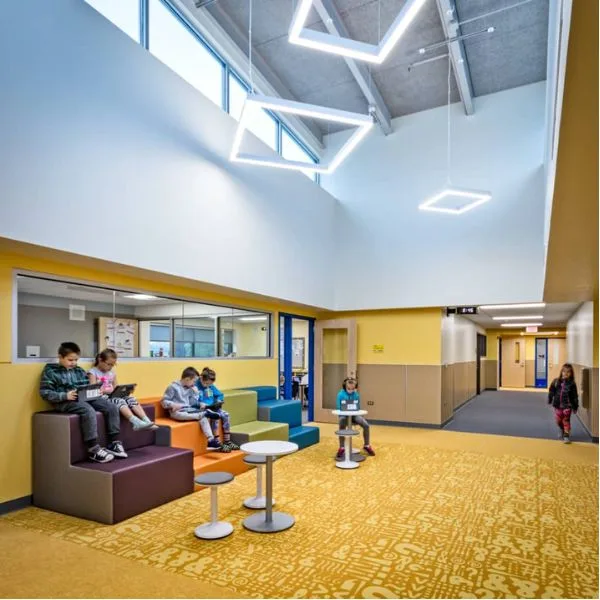
Top 5 Key Factors for Sourcing Suspended Linear Fixtures in Commercial Projects
Performance Specifications and Light Quality
When I source architectural suspended linear LED lighting, I look past the sleek housing straight to the performance data. It doesn\’t matter how good a fixture looks if the light quality fails the occupants. The goal is simple: achieve the right balance of efficiency and visual comfort.
First, check the lumen output efficacy suspended lights offer. You need high efficacy (lumens per watt) to keep energy costs down while hitting IES-recommended light levels. For most commercial office spaces, I aim for 30-50 footcandles (fc) on the work plane. If the fixture can\’t deliver that efficiently, it’s a no-go.
Next, consider the color temperature CCT commercial linear options. Standard projects usually call for static 3000K to 4000K, but having tunable or selectable models (ranging from 3000K up to 6500K) gives you the flexibility to adapt to different environments, from cozy hospitality areas to clinical workspaces.
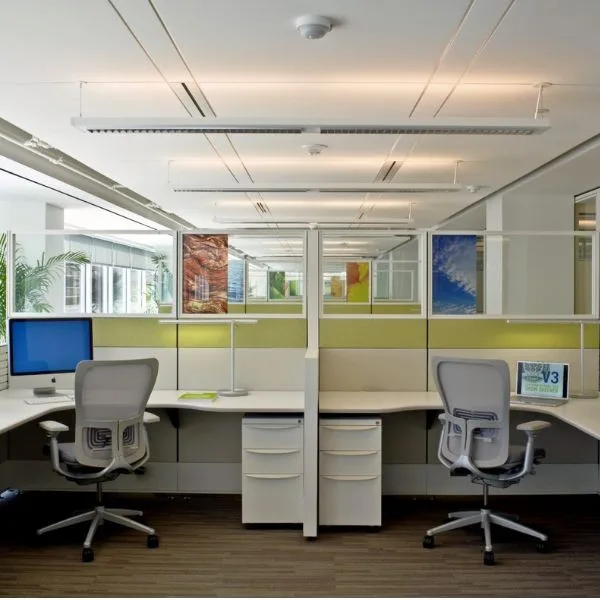
Key Light Quality Metrics
- High CRI (90+): Essential for retail or creative studios where color accuracy is non-negotiable.
- Low UGR (<19): UGR glare control linear fixtures are critical in screen-heavy environments to prevent eye strain and maintain productivity.
- Distribution: Look for up down light distribution linear suspension options. A direct/indirect ratio (like 70% down, 30% up) creates a balanced wash of light that reduces cavernous shadows on the ceiling.
| Specification | Target Value | Application Benefit |
|---|---|---|
| Luminous Efficacy | High lm/W | Meets energy codes & IES footcandle targets |
| Color Rendering | CRI 90+ | True-to-life colors for merchandise & design |
| Glare Rating | UGR <19 | Visual comfort for computer-heavy tasks |
| Distribution | Direct/Indirect | Balanced ambient and task lighting |
Compliance, Certifications, and Rebate Eligibility
When I source lighting for commercial projects, visual appeal means nothing if the fixtures don\’t pass inspection or qualify for incentives. Ensuring you choose UL ETL listed linear suspended fixtures is the first step in protecting your liability and ensuring safety. Without these essential safety listings, you risk failing local building inspections, which can derail project timelines and inflate costs.
Beyond safety, the financial aspect of energy efficient commercial linear lighting relies heavily on certifications. I always recommend prioritizing DLC certified suspended linear LED fixtures. A DLC Premium or Standard rating isn\’t just a badge; it is the key to unlocking utility rebates that can significantly offset the upfront cost of the installation.
Key Compliance and Technical Factors
- Safety Listings: Verify UL or ETL marks to ensure the fixtures meet North American safety standards.
- Energy Codes: Ensure compliance with local regulations like Title 24 (California) or ASHRAE standards, particularly for new builds and major renovations.
- Rebate Eligibility: Check the DesignLights Consortium (DLC) Qualified Products List (QPL) to confirm rebate availability.
- Driver Reliability: Look for 5-10 year warranties and drivers that offer flicker-free operation and surge protection.
Finally, never underestimate the importance of verified photometric data. I rely on accurate IES files to run simulations, ensuring that the suspended direct indirect lighting we select delivers the exact footcandle levels required for the space. Accurate data prevents over-lighting or dark spots, ensuring the final result matches the design intent.
Mounting, Customization, and Installation Practicality
When sourcing architectural suspended linear LED lighting, the physical integration into a space is just as critical as the photometric performance. A fixture might look great on a spec sheet, but if the mounting hardware fights the ceiling grid or the joiners leave gaps, the final result suffers. We focus on ensuring that the physical installation supports the design intent without driving up labor costs.
Suspension Systems and Flexibility
The suspension method dictates how the fixture interacts with the volume of the room. For most commercial spaces with open plenums or sloped ceilings, adjustable suspension cable fixtures utilizing aircraft cables are the industry standard. They offer the necessary flexibility to level fixtures in the field.
- Aircraft Cables: Best for versatility and minimalist aesthetics; allows for easy height adjustments during installation.
- Rigid Stems/Rods: Provide a cleaner, more substantial look but require precise pre-measurement of ceiling heights.
- Load Bearing: Always verify that the mounting points meet the weight requirements, especially for long continuous runs.
Continuous Runs and Seamless Integration
Creating long, uninterrupted lines of light is a hallmark of modern office design. Continuous run suspended linear fixtures must feature joinery that eliminates light leaks and ensures mechanical stability. We look for systems with \”quick-connect\” electromechanical joiners that slide together easily, reducing the time electricians spend wiring overhead.
For projects where standard 4-foot or 8-foot increments don\’t align perfectly with the architecture, partnering with a custom length suspended linear manufacturer is essential. This allows for made-to-measure runs that span exactly wall-to-wall or match specific furniture layouts. It is also wise to check if the manufacturer offers matching form factors, similar to how a direct-indirect wall light grille pairs with linear pendants for a cohesive look.
Controls and Maintenance Access
Suspended linear lighting installation considerations must include future maintenance and control compatibility. Drivers should be accessible—ideally from below or via a remote mount—so you don\’t have to deconstruct a continuous run to replace a component.
- 0-10V Dimming: The standard for most US commercial retrofits and new builds.
- DALI/Wireless: Essential for granular control in smart buildings.
- Field-Adjustable Components: Fixtures with selectable wattage or CCT offer a safety net if site conditions change.
By prioritizing these practical installation factors, we ensure the lighting system delivers long-term value and seamless architectural integration.
Project-Specific Application Fit and Aesthetics
When sourcing fixtures, I know that technical specs are only half the battle. The physical design must align perfectly with the space\’s function. A sleek LED linear pendant commercial office installation requires a different approach than a high-ceiling retail environment. You have to match the fixture scale to the room dimensions; a fixture that is too small gets lost in a large open ceiling, while one that is too bulky can make a conference room feel claustrophobic.
Architectural Finishes and Custom Forms
Standard white or black finishes work for many jobs, but high-end projects often demand more. We look for options like anodized aluminum, specific powder coat colors, or even custom finishes to match interior branding.
- Slim Profiles: ideal for minimalist designs where the light source should be felt, not seen.
- Curved Runs: break up the rigidity of straight lines in creative spaces.
- Custom Lengths: working with a custom length suspended linear manufacturer ensures the fixtures fit the architecture exactly, rather than leaving awkward gaps.
For spaces requiring a refined look with softer diffusion, a drop lens linear LED pendant offers an elegant solution that balances performance with visual appeal.
Biophilic and Human-Centric Design
Modern lighting isn\’t just about visibility; it\’s about occupant well-being. I prioritize architectural suspended linear LED lighting that supports biophilic trends. This means insisting on flicker-free operation to prevent headaches and considering circadian-friendly options that adjust color temperature throughout the day. Balanced illumination is key to reducing eye strain, especially in environments where people stare at screens all day.
Avoiding Common Layout Pitfalls
I often see projects suffer from over-lighting or mismatched scale. It is crucial to calculate the right quantity of fixtures to avoid a \”glare bomb\” effect or dark spots. Proper spacing and suspension height are critical. To understand how to better integrate these elements into your building\’s design, reviewing an architectural lighting complete guide can help clarify how to balance aesthetics with functional requirements.
Supplier Reliability, Lead Times, and Total Cost of Ownership
When managing a commercial project, the company behind the fixture is just as important as the light itself. As a custom length suspended linear manufacturer, I know that reliable support services—such as providing detailed photometric layouts and design assistance—are critical. You need a partner who validates your lighting plan against real-world requirements, ensuring you don\’t face surprises during installation.
Supply Chain Stability and Customization
Time is money on a job site. You cannot afford delays caused by unstable supply chains. It is essential to work with suppliers who offer transparent lead times and consistent inventory availability. Furthermore, if your design calls for unique runs, ensure your partner can deliver custom length suspended linear manufacturer capabilities without excessive wait times. The best suppliers balance made-to-measure precision with speed.
Evaluating Long-Term ROI
Smart sourcing looks beyond the initial price tag. The Total Cost of Ownership (TCO) often outweighs upfront savings. Investing in high-quality, energy efficient commercial linear lighting drastically reduces operational costs over the building\’s life.
- Lifespan: Verify an L70 rating of >50,000 hours to minimize replacement frequency.
- Maintenance: Choose fixtures with accessible drivers to lower future labor costs.
- Energy Savings: High efficacy reduces monthly utility bills, improving ROI.
For more insights on selecting the right fixtures for your workspace, review our guide on hanging office lights to ensure your project meets all performance and aesthetic goals. Prioritizing these factors ensures a smooth installation and a lighting system that performs reliably for years.
Frequently Asked Questions About Sourcing Suspended Linear Fixtures
What is the ideal lumen output for office suspended lighting?
For standard office environments, we typically aim for 30 to 50 footcandles at the desk level. This generally requires lumen output efficacy suspended lights delivering between 600 to 1,000 lumens per foot, depending on your ceiling height and fixture spacing. The goal is to provide sufficient brightness for reading documents without overpowering the space.
How do I reduce glare (UGR) with linear pendant lights?
To maintain visual comfort in screen-heavy environments, you need UGR glare control linear fixtures with a rating of UGR <19. We accomplish this through:
- Micro-prismatic lenses that diffuse hot spots.
- Deep-recessed light sources that hide the LED chips from direct view.
- Indirect lighting components that bounce light off the ceiling to soften contrast.
Why is DLC certification important for commercial fixtures?
DesignLights Consortium (DLC) listing is critical for two reasons: quality verification and financial incentives. DLC certified suspended linear LED fixtures have undergone rigorous testing to prove their energy efficiency and longevity. Furthermore, most US utility companies require this certification to approve rebates, significantly lowering your total project cost.
Can suspended linear fixtures be installed in continuous runs?
Yes, this is a standard feature for creating seamless architectural lines. Our continuous run suspended linear fixtures utilize internal joiner brackets and quick-connect wiring harnesses. This allows you to link multiple 4ft or 8ft sections together without visible gaps or light leaks. You can explore various configurations in our linear lighting collection to see how these systems integrate.
What is the difference between direct and indirect light distribution?
- Direct: Light projects downward (100% down) for focused task illumination.
- Indirect: Light projects upward (100% up) to reflect off the ceiling for ambient glow.
- Direct/Indirect: A combination (e.g., 70% down / 30% up).
We often recommend direct indirect suspended linear lights with up down light distribution linear suspension for offices. This approach reduces eye strain by balancing task lighting with ambient fill. Our architectural linear office lighting solutions are specifically designed to optimize this ratio for occupant well-being.
Related Sources
STAY IN THE LOOP
Subscribe to our free newsletter.
Leave A Comment
Retrofit LED Lighting Solutions Are soaring energy bills, relentless ballast [...]

Struggling to cut operational costs while upgrading your facility’s lighting [...]
The Financial & Operational Business Case Upgrading to energy efficient [...]
Are you worried about overhead head clearance, or tired of [...]