A Comprehensive Guide to Hospital Patient Room Lighting
Effective hospital patient room lighting is not just about visibility; it is a critical component of modern healthcare infrastructure. We recognize that the right illumination strategy transforms sterile clinical spaces into optimized environments of healing, directly impacting both patient recovery rates and medical staff performance.
The Importance of Comfort and Functionality
A successful lighting plan must seamlessly bridge the gap between rigorous clinical requirements and essential patient comfort. Medical professionals require bright, shadow-free, and color-accurate illumination to perform examinations and administer care safely. Simultaneously, patients need a soothing atmosphere to reduce anxiety and rest. Achieving this dual purpose requires versatile fixtures that deliver high-intensity light for medical tasks without causing harsh glare during a patient’s recovery downtime.
Supporting Patient Healing and Wellbeing
Light profoundly influences the human body’s physical and psychological recovery processes. By strategically integrating advanced hospital patient room lighting, we can actively accelerate healing.
Key clinical benefits include:
- Regulated Sleep Cycles: Exposure to appropriate light levels helps reset disrupted circadian rhythms, promoting deeper, more restorative sleep.
- Reduced Stress and Anxiety: Warmer, softer illumination helps lower cortisol levels and creates a more residential, less institutional feel.
- Improved Mood and Pain Tolerance: Optimized visual environments have been shown to elevate mood and can positively alter a patient’s perception of pain.
Human-Centric Lighting in Healthcare
Human-centric lighting (HCL) represents the pinnacle of healthcare facility design. This approach prioritizes human biological and emotional needs by mimicking the natural progression of sunlight. Utilizing tunable white LED technology, HCL systems dynamically adjust color temperature and intensity throughout the 24-hour cycle.
Daily HCL Progression in Patient Rooms:
| Time of Day | Lighting Characteristic | Biological Impact |
|---|---|---|
| Morning | Cool, bright light (5000K+) | Stimulates daytime alertness and suppresses melatonin production. |
| Midday | Neutral, moderate light (4000K) | Maintains sustained energy levels for both patients and staff. |
| Evening | Warm, dim light (2700K) | Encourages relaxation and signals the body to prepare for sleep. |
By adopting these advanced biological lighting strategies, facilities ensure that the lighting environment actively works in tandem with medical treatments to support total patient health.
Top Challenges and Standards in Healthcare Lighting
Designing hospital patient room lighting is a balancing act. We are not just lighting a room; we are equipping a highly demanding environment where every fixture must perform flawlessly. We face unique challenges daily, ensuring that our lighting solutions provide absolute comfort for resting patients while delivering clinical precision for healthcare professionals.
Ensuring Accuracy, Reliability, and Safety
In a medical setting, lighting is a critical tool that directly impacts patient outcomes. Our focus always comes back to three non-negotiable pillars:
- Visual Accuracy: Medical staff rely heavily on high Color Rendering Index (CRI) lighting. Doctors and nurses need to accurately assess skin tones, wound conditions, and read charts without color distortion. If the lighting is off, it can delay or impact care.
- Unwavering Reliability: Flickering lights or inconsistent power draws are completely unacceptable in healthcare. We design our systems to ensure constant, flicker-free performance that integrates seamlessly with hospital backup power systems.
- Patient and Staff Safety: Fixtures must be easy to sanitize. We prioritize sealed housings and smooth lenses to prevent dust accumulation and bacteria buildup, directly supporting the facility’s infection control protocols.
Understanding these strict safety requirements is essential, and planning a facility upgrade often requires referencing a comprehensive hospital lighting complete guide to ensure every single standard is met from the lobby to the patient bed.
Meeting Healthcare Lighting Standards and Regulations
Healthcare lighting is heavily regulated to protect everyone inside the building. We strictly follow the guidelines set by international lighting authorities and local health departments to ensure our global clients pass inspections with ease.
Navigating this red tape means focusing heavily on these specific regulatory areas:
- Precise Illuminance Levels: Codes dictate exactly how much light must hit the exam bed surface versus the patient’s reading area. We engineer our fixtures to hit these exact footcandle requirements.
- Strict Glare Control: Harsh glare can cause immediate eye strain for working nurses and severe discomfort for bedridden patients looking upward. We utilize advanced diffusing lenses to soften the output.
- Electrical Compliance: Medical environments require specialized wiring, grounding, and electromagnetic interference (EMI) shielding so that lighting components do not interfere with sensitive life-saving equipment.
Recommended Practices for Patient Rooms
Based on years of outfitting medical facilities worldwide, we have established core best practices for hospital patient room lighting. The secret is layering the light. A single room must serve as a bedroom, a living room, and a clinical exam space all in one.
Here is how we break down the necessary layers of light in a standard patient room:
| Lighting Layer | Primary Purpose | Core Requirement |
|---|---|---|
| Ambient | General room illumination for everyday activities | Soft, glare-free, and ideally mimics natural daylight |
| Exam / Task | Direct lighting for medical checks and procedures | Extremely high CRI, shadow-free, and high intensity |
| Reading | Personal light for patient comfort and autonomy | Easily adjustable, focused, and easily reachable |
| Observation | Allowing staff to navigate and check on patients at night | Low-level, warm tones that won’t disrupt sleep |
By properly zoning and layering these distinct light sources, we create an environment that actively supports healing while giving medical teams exactly what they need to work efficiently.
Types of Hospital Patient Room Lighting Fixtures
When we build out hospital patient room lighting, we know a single light source simply won’t cut it. The space demands a layered approach. We use a specific mix of fixtures to balance strict clinical requirements with genuine patient comfort.
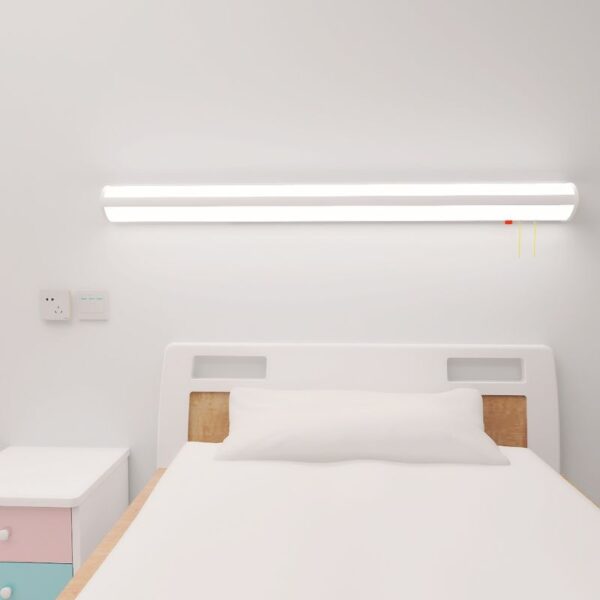
Multi-Function Overbed and Bed Head Lights
These are the core workhorses of the room. Positioned right above the patient, they consolidate multiple tasks into one clean unit:
- Ambient Light: Provides a general, soft glow around the bed.
- Reading Light: Delivers focused beams for patients reading or using their tablets.
- Exam Light: Offers high-intensity, color-accurate illumination so doctors and nurses can perform check-ups safely and effectively directly from the bed.
Wall Sconces and Ambient Lighting
Nobody wants to stare at a harsh, clinical bulb all day. We install wall sconces to soften the room and make it feel much more welcoming. Integrating a reliable direct-indirect wall light bounces light gently off the ceiling and walls. This creates a comfortable, glare-free environment that helps reduce eye strain and allows patients to relax.
Step Lights and Undercabinet Solutions
Nighttime safety is always a top priority in healthcare spaces.
- Step Lights: Low-level LED lights keep the floor clearly visible during the night. They prevent trips and falls when patients get up to use the restroom, all without blasting the room with light and disrupting their sleep cycle.
- Undercabinet Lights: These are placed at charting stations or sinks inside the room, giving staff just enough targeted light to read charts or prep medication without waking the patient.
Linear and Recessed Troffers
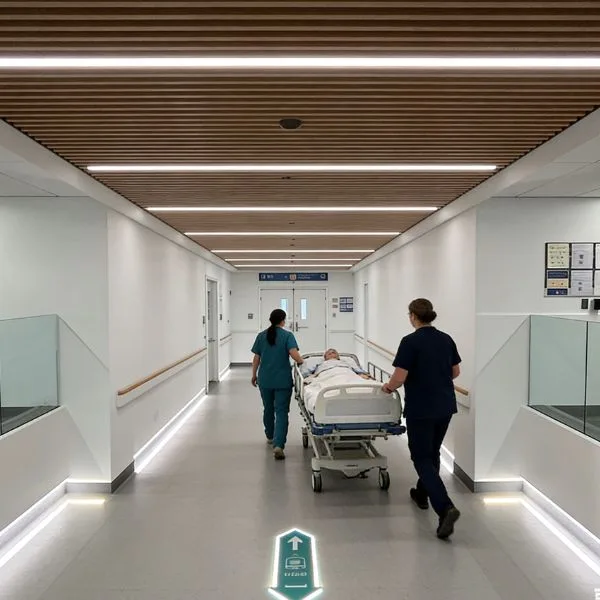
For general room illumination, we rely on sleek, overhead fixtures that sit flush with the ceiling. Upgrading to modern recessed architectural luminaires ensures clean, even lighting distribution across the entire space. They are sealed tight to be easy to wipe down, meet strict infection control standards, and deliver consistent brightness whenever the room needs to be fully lit for daytime cleaning or equipment setup.
Intelligent Lighting Control Systems
Smart Lighting Controls for Healthcare
Modern hospital patient room lighting relies heavily on intelligent controls. We design smart systems that do far more than just turn on and off. They automatically adjust brightness and color temperature throughout the day to mimic natural sunlight. This circadian-friendly approach helps patients sleep better and recover faster, while freeing up healthcare staff from constantly adjusting switches.
Environmental Sensing and Monitoring
Integrating sensors takes hospital lighting to the next level. We incorporate advanced sensors directly into the lighting network to monitor the room environment in real-time.
- Daylight Harvesting: Sensors detect the amount of natural sunlight entering the room and smoothly dim the artificial lights to cut down on energy waste.
- Occupancy Sensing: Lights automatically brighten when medical staff enter and dim when the space is clear.
- Seamless Integration: To get these sensors communicating perfectly within complex hospital networks, we often provide OEM/ODM custom engineering to tailor the monitoring tech to specific ward requirements.
Empowering Patients with Lighting Control
Hospital stays can be stressful, and giving patients control over their environment makes a massive difference in their daily comfort. We ensure our lighting systems allow patients to easily adjust their room’s atmosphere right from their bed remote or a bedside tablet. Whether they want to turn off the main overhead lights or dim a 4-foot LED wall mount light fixture for evening reading, putting the controls directly in the patient’s hands reduces anxiety and drastically improves the overall care experience.
How to Choose the Right Patient Room Lighting
Selecting the correct lighting for healthcare environments isn’t just about picking a fixture; it’s about creating a holistic system that serves both medical staff and recovering patients. The right choice impacts everything from diagnostic accuracy to patient sleep cycles.
Evaluating Light Planning and Best Practices
Effective light planning starts with understanding the specific zones within a patient room. A one-size-fits-all approach fails here because different tasks require drastically different illumination levels.
When planning, prioritize fixtures that offer versatility. For example, our hospital bed light solutions are designed to integrate multiple functions—reading, examination, and ambient light—into a single, streamlined unit. This reduces ceiling clutter and simplifies maintenance.
Key Planning Considerations:
- Glare Control: Ensure fixtures have proper shielding to prevent direct glare into a patient’s eyes, especially when they are lying down.
- Color Rendering Index (CRI): Aim for a CRI of 90 or higher. This is critical for medical staff to accurately assess skin tone and other visual diagnostic cues.
- Flexibility: Look for fixtures with adjustable arms or directional capabilities to put light exactly where it is needed without disturbing others.
Balancing Patient Care with Energy Efficiency
Modern hospitals operate 24/7, making energy consumption a major operational cost. However, cutting costs should never compromise patient care. The goal is to use high-efficiency LED technology that delivers superior light quality while consuming less power.
LEDs not only lower electricity bills but also reduce heat output, keeping patient rooms more comfortable. Smart controls further enhance this balance by dimming lights when full brightness isn’t required, such as during resting hours or when natural daylight is sufficient.
| Feature | Benefit for Patient Care | Benefit for Efficiency |
|---|---|---|
| Dimmable LEDs | Allows for a soothing environment at night. | Reduces power draw when full output isn’t needed. |
| Motion Sensors | Ensures safety during night visits. | Prevents lights from being left on in empty rooms. |
| Long-Life Drivers | Reduces maintenance disruptions in patient rooms. | Lowers replacement and labor costs over time. |
Frequently Asked Questions About Hospital Lighting
Q: Why is color temperature important in patient rooms?
A: Color temperature affects the body’s circadian rhythm. Cooler, blue-rich light (4000K-5000K) promotes alertness for staff during exams, while warmer light (2700K-3000K) helps patients relax and prepare for sleep.
Q: Can one fixture handle both exams and reading?
A: Yes. Multi-function bed head units are specifically engineered to provide high-intensity light for medical tasks and softer, focused light for patient reading, often controlled by separate switches.
Q: How do I ensure the lighting is durable enough for a hospital?
A: Choose fixtures built with robust materials like aluminum and impact-resistant lenses. Verifying our factory strength and strategic partnerships ensures you are sourcing from manufacturers who understand the rigorous demands of healthcare environments.
STAY IN THE LOOP
Subscribe to our free newsletter.
Leave A Comment
Recessed and pendant lighting explained Choosing the right illumination strategy [...]

Anatomy of a Modular LED Lighting System We design every [...]

LED vs. Incandescent Bulbs: What Is the Real Difference? Are [...]