What Are LED High Bay Lights for Warehouses?
When operating a large-scale facility, optimal visibility is non-negotiable. LED high bay lights for warehouse spaces are specialized indoor fixtures engineered to illuminate expansive areas with high ceilings, typically ranging from 20 to 45 feet. These powerful overhead fixtures deliver bright, uniform light across vast square footage, ensuring both workplace safety and maximum productivity. By transitioning to these modern LED solutions from outdated metal halides, fluorescent lights, or traditional HID lights, facility managers achieve superior illumination quality while drastically driving down long-term energy costs.
Understanding High Bay vs. Low Bay Lighting
Choosing the right overhead fixtures depends entirely on your facility’s vertical space. Installing the wrong fixture profile leads to glaring hotspots, harsh shadows, or wasted energy.
- High Bay Lighting: Purpose-built for high ceilings measuring 20 feet and above. These fixtures utilize narrow beam angles and specialized lenses to push intense, focused light down to the working floor. They are the standard for towering stockrooms, hangars, and massive industrial applications.
- Low Bay Lighting: Engineered specifically for ceilings under 20 feet. Low bays are designed to diffuse light wider and more horizontally, minimizing glare. They are the ideal choice for smaller shop lights, low-clearance assembly lines, or lower commercial garages.
Common Industrial and Commercial Applications
High bay lighting is the operational backbone for heavy-duty and large-scale environments. These fixtures are incredibly versatile, designed to deliver consistent performance across a variety of demanding commercial locations.
- Warehouses and Stockrooms: Providing critical, uniform light down deep pallet racking aisles and expansive open loading docks.
- Manufacturing Facilities: Ensuring visual precision and safety for complex, heavy-duty industrial applications.
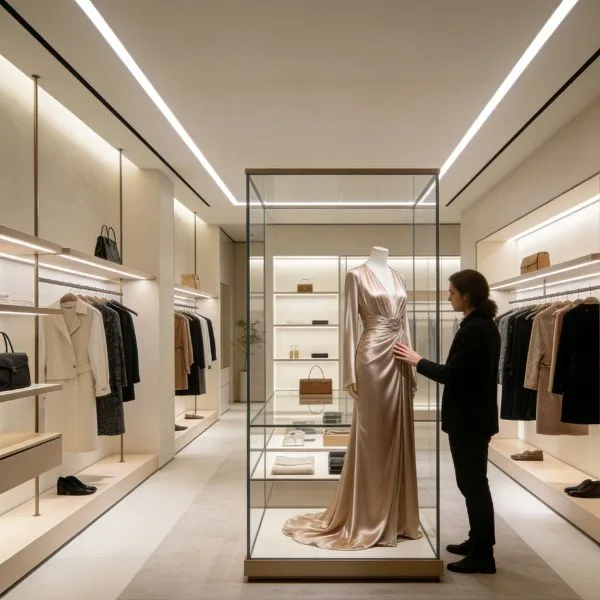
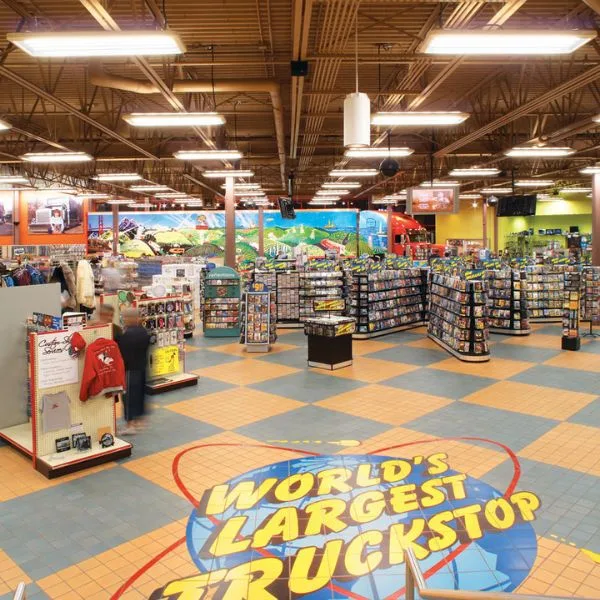
- Large Retail Spaces: Creating a crisp, bright, and welcoming shopping environment in big-box stores and automotive showrooms.
- Commercial Garages and Hangars: Delivering high-lumen output for expansive, wide-open indoor workspaces that require absolute clarity.
- Food Processing Plants: Utilizing specialized, NSF certified high bay fixtures to maintain strict sanitation and visibility standards.
Benefits of Upgrading to LED Warehouse Lighting
Upgrading your indoor fixtures is one of the smartest investments you can make for your facility. When we supply high bay lights for warehouse spaces, our primary goal is to help you cut overhead while drastically improving your working environment.
Maximum Energy Savings and Efficiency
Old lighting technology silently drains your operating budget. Making the switch to LEDs guarantees massive energy savings right out of the gate.
- Lower wattage: You get superior brightness while consuming a fraction of the power.
- Slash energy costs: Instantly reduce your monthly electric bills compared to running outdated fluorescent lights.
Excellent Light Performance and Output
Quality lighting keeps your daily operations safe, fast, and highly accurate.
- Uniform light: Completely eliminate dark spots, glare, and harsh shadows across the floor.
- Instant on: Never wait for lights to warm up after a power flicker.
If you need highly adaptable coverage, advanced solutions like our X-shape modular linear light provide precise, customizable distribution tailored to your specific aisle layouts and racking systems.
Lower Maintenance Costs and Longevity
Constantly renting scissor lifts to change dead bulbs on high ceilings is both expensive and disruptive to your workflow.
- Ditch the old tech: Stop relying on failing metal halides and high-maintenance HID lights.
- Install and forget: LED retrofit lighting lasts for tens of thousands of hours without fading or needing replacement parts.
Quick Comparison: Traditional vs. LED High Bays
| Feature | Traditional Lighting | LED High Bays |
|---|---|---|
| Energy Costs | Very High | Extremely Low |
| Lifespan | Short (Frequent changes) | Long (50,000+ hours) |
| Warm-up Time | 10-15 minutes | Instant On |
| Maintenance | Disruptive & Costly | Practically Zero |
Types of LED High Bay Light Fixtures
When outfitting a space, picking the right high bay lights for warehouse setups comes down to your building’s exact layout. We generally break our lighting solutions down into three main styles to match different environments.
UFO High Bay Lights (Round Form Factor)
These compact, round units look exactly like their name implies. UFO fixtures are the heavy-duty standard when you need to replace old, inefficient metal halides and HID lights.
- Best for: Open commercial locations, commercial garages, and wide retail spaces.
- Why they work: They drop a wide, circular beam that provides uniform light across broad, open floors with high ceilings. Their single-point mounting ring also makes retrofitting and installation incredibly fast.
Linear High Bay Lights
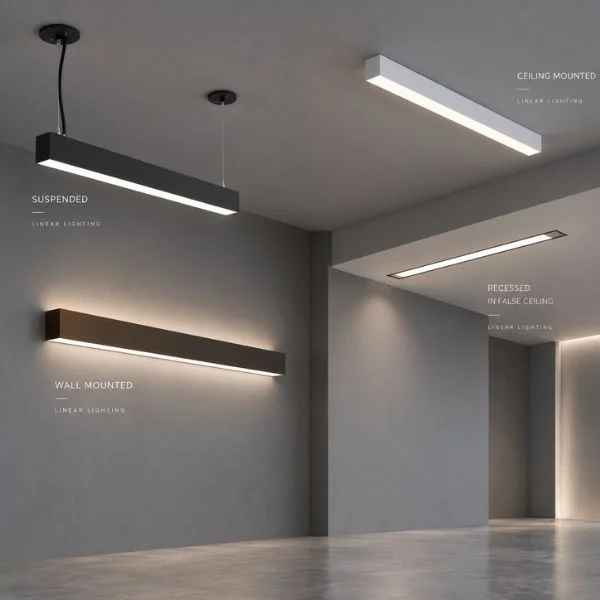
If your facility is packed with tall racking, you need light directed down the aisles, not wasted on the tops of shelves. Linear fixtures are long, rectangular panels built for this exact job.
- Best for: Narrow aisleways, stockrooms, and large shop lights applications.
- Why they work: They distribute light in a rectangular pattern, completely eliminating dark spots between warehouse racks. They act as a direct, easy upgrade for bulky, outdated fluorescent lights, bringing down your energy costs immediately.
Modular and Adjustable High Bays
Sometimes a standard shape simply doesn’t fit a complex ceiling layout or a specific task area. Modular units allow you to adjust individual light modules and angles to point illumination exactly where it is needed.
- Best for: Custom overhead layouts and modern indoor fixtures.
- Why they work: You can build out the exact shape your floor plan demands. For instance, linking sections together to form a hexagonal modular linear light setup gives you both high-performance, lower wattage overhead lighting and a clean, professional aesthetic for your facility.
How to Choose the Right Warehouse High Bay
Selecting the perfect high bay lights for warehouse spaces involves more than just picking the brightest bulb. We need to look at the physical dimensions of your building and the specific tasks happening inside to ensure maximum safety, visibility, and energy efficiency.
Matching Fixtures to Your Ceiling Height
The distance from the floor to the roof directly dictates the power and beam angle you need. Facilities with high ceilings require specialized optics to push light down effectively without scattering. Fortunately, modern LED technology allows us to use much lower wattage to achieve significantly better brightness than older HID systems.
Quick Ceiling Height to Lumen Guide:
| Ceiling Height | Recommended Lumen Output | Best For |
|---|---|---|
| 15 – 20 Feet | 10,000 – 15,000 Lumens | Small storage, low-clearance areas |
| 20 – 30 Feet | 16,000 – 20,000 Lumens | Standard warehouses, manufacturing floors |
| 30+ Feet | 25,000+ Lumens | Heavy industrial, aviation hangars, high-rack storage |
Recommended Spacing and Layout Guidelines
Proper spacing prevents dark spots, overlap, and harsh glare. Our goal is to achieve uniform light across the entire floor, which is non-negotiable for safety in busy commercial locations.
- The Spacing Rule: As a general baseline, space your fixtures at a distance equal to 1 to 1.5 times the ceiling height.
- Aisle Optimization: For narrow racking areas, standard round fixtures waste light on the tops of shelves. Instead, use linear indoor fixtures to direct light straight down the aisles. Keeping up with modern commercial linear lighting trends ensures your layout maximizes both efficiency and visibility.
- Computer Modeling: For large or complex facilities, we always recommend running photometric layouts prior to installation. This software simulation shows exactly how the light will perform, eliminating any guesswork.
Selecting the Best Color Temperature
Color temperature dictates the clarity and visual comfort of the environment, measured in Kelvin (K).
- 4000K (Neutral White): Clean and balanced. Reduces eye strain during long shifts. Ideal for detailed manufacturing, inspection zones, and large retail spaces where a slightly warmer, inviting feel is needed.
- 5000K (Daylight White): Crisp and high-contrast. This is the absolute industry standard for high bay warehouse lighting. It mimics natural daylight, keeping workers alert and making it incredibly easy to read labels and safely operate forklifts.
Key Specifications and Lighting Controls
Getting the right high bay lights for warehouse environments means looking closely at the technical details. I always ensure the right specs and controls are in place so you get maximum performance without wasting power.
Understanding Wattage and Lumen Replacements
When I spec out lighting upgrades, I tell my clients to focus on lumens (brightness) rather than watts (power consumption). Older setups like fluorescent lights, metal halides, and traditional HID lights consume excessive electricity just to produce basic lighting. Modern LEDs deliver crisp, uniform light at a much lower wattage, which immediately slashes your energy costs.
| Traditional Fixture (HID/Metal Halide) | My Recommended LED Replacement | Energy Saved |
|---|---|---|
| 250W | 100W – 150W LED | Up to 60% |
| 400W | 150W – 240W LED | Up to 65% |
| 1000W | 300W – 400W LED | Up to 70% |
Integrating Occupancy Sensors and Dimming
Leaving lights on in empty aisles simply burns through your budget. By upgrading these indoor fixtures with smart controls, you only pay for the light you actually use.
- 0-10V Dimming: Allows you to scale back brightness levels based on the natural daylight coming in through skylights or bay doors.
- Occupancy Sensors: Microwave or PIR sensors automatically trigger the lights when a forklift or worker enters, then shut them down when the area clears.
Voltage Ratings and Circuit Compatibility
Before tackling any retrofit lighting project, always verify your facility’s input voltage. Buying the wrong driver will cause immediate circuit compatibility issues.
- Standard Commercial: 120-277V AC covers most standard warehouse electrical layouts.
- High Voltage: 347-480V AC is strictly necessary for heavy-duty industrial power grids.
Safety and compliance are non-negotiable. I highly advise checking your local electrical codes before installation. For instance, understanding the UL vs. ETL certification differences is crucial to guarantee that your lighting circuits are fully compliant and safe for long-term commercial use.
Frequently Asked Questions
UFO vs. Linear High Bay: When Does Form Factor Matter?
The shape of your fixture makes a huge difference in how light spreads across your facility.
- UFO Fixtures: These round, compact units are perfect for wide-open spaces with high ceilings. They cast a broad, circular beam, making them the go-to choice when replacing outdated HID lights or metal halides in open commercial locations.
- Linear Fixtures: These long, rectangular lights are built for aisles. If you are lighting up narrow stockrooms or warehouses with tall shelving, linear fixtures push a crisp, uniform light straight down the aisle rather than wasting it on top of the racks. They are the modern standard for replacing old fluorescent lights and tube-style shop lights.
How Many High Bays Do I Need Per Square Foot?
There is no one-size-fits-all answer because the exact number heavily depends on your ceiling height, the lumen output of the fixture, and the primary function of the space. However, we typically follow these general guidelines:
- General Spacing: For a standard 20-foot ceiling, spacing fixtures roughly 15 feet apart usually provides excellent coverage.
- Space Function: A detail-heavy workspace or bright retail spaces will require a tighter layout with higher foot-candles than standard commercial garages or basic storage areas.
- Precision Planning: For larger industrial applications, we always recommend utilizing photometric layouts. This software-driven planning calculates the exact spread and intensity, completely removing the guesswork from your lighting design.
Are LED High Bays Eligible for Utility Rebates?
Yes, absolutely. Most local utility companies offer substantial commercial rebates for switching to LED retrofit lighting because of the massive energy savings they provide. By upgrading your power-hungry overhead fixtures to lower wattage LEDs, you instantly reduce the strain on the local power grid. To ensure you get the best return on your investment while permanently slashing your energy costs, exploring the specific types of commercial lighting fixtures and their benefits is the most critical step before starting your warehouse lighting upgrade.
Related Sources
STAY IN THE LOOP
Subscribe to our free newsletter.
Leave A Comment

Explore types of hanging lights including pendant chandeliers and cluster designs to find the perfect style for every room