Pendant Lights: Single-Point Suspensions
Pendant fixtures are the most adaptable types of hanging lights available. Suspended from a single canopy via a cord, chain, or rigid stem, these fixtures deliver targeted downlight or general illumination depending on shade geometry and optical design.
Mini Pendants for Islands and Bedside Drops
- Footprint: Slim profiles typically under 10 inches in diameter.
- Best Use: Installed in multiples over kitchen islands or dropped beside beds to eliminate nightstand clutter.
- Function: Concentrated accent and task lighting without obstructing sightlines across open living spaces.
Multi-Light and Cluster Pendants
- Configuration: Multiple individual pendants wired into a single central ceiling canopy.
- Visual Impact: Staggered cord lengths create vertical volume and an eye-catching focal point.
- Best Use: Tall entryways, double-height stairwells, and compact dining nooks that need multi-dimensional light.
Drum and Shade Pendants
- Design: Wide cylindrical fabric, metal, or wood veneer shades housing multiple bulbs or LED arrays.
- Light Distribution: Shields side glare while casting a balanced wash of downward light and ceiling bounce.
- Best Use: Breakfast tables, lounge seating areas, and primary bedrooms.
Globe and Sphere Pendants
- Optical Spread: Frosted, opal, or clear spherical glass distributing 360-degree diffused light.
- Aesthetic: Clean, mid-century, and minimalist architectural styling.
- Best Use: Hallways, casual dining zones, and centered above open living spaces for soft, shadowless fill light.
Bowl and Dome Pendants
- Shade Construction: Heavy-gauge spun metal, ceramic, or opaque glass enclosures.
- Light Directivity: Blocks horizontal light spillage to direct 100% of lumen output downward.
- Best Use: Dedicated food prep zones, workshop tables, and focused dining surfaces requiring zero visual distraction.
Inverted and Uplight Pendants
- Reflective Technique: Upward-facing bowls that bounce illumination against the ceiling surface.
- Visual Effect: Eliminates harsh downward shadows and visually expands smaller rooms with low or medium ceiling heights.
- Best Use: Foyers, conversation areas, and home offices where indirect ambient light is preferred over direct glare.
Core Category 2: Chandeliers (Multi-Branch Suspensions)
When scaling up from single drops, chandeliers serve as the primary multi-branch types of hanging lights designed to illuminate broader footprints. Rather than relying on a single socket, these fixtures split illumination across several arms or structural points, providing widespread ambient light while serving as central visual anchors.
Modern and Geometric Chandeliers for Contemporary Spaces
Modern geometric chandeliers rely on clean lines, open cubic framing, and asymmetrical profiles. We use these in minimalist living rooms and open-plan lofts where an ornate fixture would create visual clutter. The open-cage design prevents light blockage, allowing illumination to spread evenly across the room without casting heavy shadows.
Sputnik and Radial Chandeliers for Multi-Directional Light
Sputnik and radial chandeliers extend arms outward from a central orb, casting light in 360 degrees.
Light Distribution: Multi-directional orientation eliminates dark ceiling pockets.
Best Placements: Mid-century dining areas, vaulted living rooms, and central foyers.
Bulb Options: Exposed globe bulbs or frosted LED filaments soften the direct output to minimize glare.
Linear Dining Chandeliers for Rectangular Tables
Standard round fixtures often leave the ends of long tables in the dark. Linear dining room chandeliers arrange multiple light sources in a horizontal row, aligning with rectangular dining tables or extended kitchen counters. This configuration balances ambient vs task lighting, ensuring consistent coverage from end to end without needing multiple individual ceiling drops.
Classic Candelabra and Tiered Chandeliers for Formal Elegance
A traditional candelabra chandelier uses curved arms topped with exposed, flame-style bulbs to recreate classic lighting profiles.
Tiered Layers: Two- or three-tier layouts scale effortlessly into tall, double-height rooms.
Proportion Balance: The vertical stack provides visual presence without overwhelming floor-level furniture.
Dimming Control: Pairing these fixtures with dimmers is essential to keep multiple exposed bulbs from overwhelming the eye during evening meals.
Crystal and Glass Prism Chandeliers for High-Refraction Sparkle
Crystal and glass prism fixtures maximize illumination by bending and scattering light through precision-cut facets. Modern iterations pair clear, faceted glass with streamlined metal framework, replacing heavy vintage filigree with crisp lines. As light passes through the glass elements, it creates high-refraction sparkle, adding depth and dynamic texture to entry halls and formal dining spaces.
Core Category 3: Linear & Architectural Suspensions
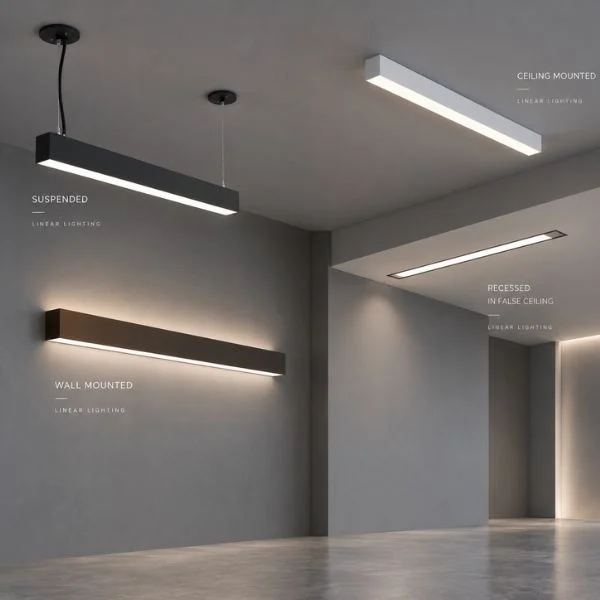
Among modern types of hanging lights, linear and architectural suspensions deliver clean geometry, balanced lumens, and targeted light distribution. We rely on these profiles to eliminate shadows across long surfaces while keeping ceiling visual clutter to a minimum.
Continuous Architectural Linear Bars for Shadow-Free Task Surfaces
Continuous linear bars feature a streamlined, elongated profile equipped with high-efficiency diffusers. Instead of casting multiple overlapping scallops like rowed single pendants, a continuous run provides uninterrupted, edge-to-edge illumination.
- Best Uses: Kitchen islands, executive desks, conference rooms, and open-plan design studios.
- Key Advantage: Completely eliminates dark gaps across work planes.
- Spec Tip: When sourcing fixtures for modern layouts, reviewing trusted architectural linear lighting manufacturers ensures you select profiles with high color rendering (90+ CRI) and robust extruded aluminum thermal management.
Suspended Track and Monorail Systems for Directional Flexibility
Suspended track and monorail setups bridge the gap between fixed hanging fixtures and adjustable accent lighting. Dropped from aircraft cables or rigid stems, these systems bring the light source closer to eye level in spaces with high structural ceilings.
- Flexible Aiming: Rotate and angle individual heads toward art, accent walls, or prep counters.
- Hybrid Layouts: Many systems let us mix directional spotlights with downward pendants along the exact same suspended rail.
- Adaptive Design: Ideal for rooms where electrical junction boxes are off-center from the intended furniture layout.
High-Bay and Industrial Suspensions for Lofts and Vaulted Ceilings
Standard residential pendants get lost in double-height spaces. Industrial suspensions and architectural high-bay fixtures solve the volume problem by delivering punchy downward throws from elevated structural rafters.
- Optics and Spread: Engineered reflectors and prismatic lenses focus the beam downward, preventing light spill and glare in high-volume rooms.
- Rugged Construction: Built with heavy-duty cast housings, thick wire guards, and high-tensile steel cables.
- Placement Match: Vaulted living rooms, open-concept warehouse conversions, and expansive mezzanine walkways.
Specialty & Functional Types of Hanging Lights
Not every room fits standard suspension rules. When standard junction boxes are missing, ceilings are low, or narrow corridors demand durable framing, we turn to specialty types of hanging lights built for specific architectural challenges.
Lantern Pendants and Cage Fixtures for Foyers and Hallways
Enclosed and open-cage lanterns serve as workhorses for transition zones like entryways, stairwells, and long hallways.
360-Degree Illumination: Clear glass or open-cage geometric designs cast light outward in all directions, preventing dark corners in long passages.
Visual Structure: The metal framework creates an architectural focal point without creating visual bulk in high-traffic entry corridors.
Durable Enclosures: Fully enclosed lanterns keep circulating dust and drafts away from bulbs in drafty front entries.
Swag and Plug-In Hanging Lights for Renter-Friendly Spaces
When you cannot cut into drywall or add a ceiling junction box, a swag plug-in pendant provides overhead lighting without permanent wiring.
No Hardwiring Required: Plugs directly into standard wall outlets with an integrated inline cord switch.
Flexible Anchor Points: Uses discrete ceiling hooks to drape the cord anywhere you need illumination, whether directly centered over a rental dining table or tucked into a reading nook.
Easy Portability: Simple to unhook, pack, and reinstall whenever you move.
Semi-Flush Dropped Fixtures for 8-Foot Ceilings
Low ceilings often create a dilemma between a flush mount vs hanging light. Semi-flush fixtures solve this clearance challenge by dropping the canopy just 4 to 12 inches below the ceiling plane.
Airflow and Dimension: Unlike flat ceiling mounts, dropped fixtures allow light to reflect off the ceiling surface, visually lifting the room height.
Headroom Safety: Maintains the necessary 7-foot floor clearance required for standard residential foot traffic.
Versatile Applications: Works reliably in low-ceiling bedrooms, laundry rooms, and basement renovations. For broader commercial projects or shared utility zones, pairing these low-clearance units alongside broader types of commercial lighting fixtures for offices and retail maintains clean sightlines while delivering steady, code-compliant foot-candles.
Room-by-Room Selection Guide for Hanging Lights
Choosing among the various types of hanging lights comes down to function, scale, and sightlines. Every room presents unique layout challenges, and placing a fixture at the wrong height or picking the wrong spread can throw off an entire space. Here is how we dial in fixture choices room by room.
Kitchen Islands: Clear Sightlines and Task Spread
Over an island, you need direct downward illumination that does not block eye contact across the counter.
Fixture choice: Mini pendants or linear suspension bars.
Spacing: Mount fixtures 30 to 36 inches above the countertop surface.
Spread: Space multiple single pendants roughly 24 to 30 inches apart to ensure an even pool of task light without visual clutter.
Dining Rooms: Matching Proportions to Table Size
A dining fixture needs to illuminate the table surface without blinding guests seated across from one another.
Fixture choice: Wide chandeliers or linear dining pendants.
Proportions: Pick a fixture width roughly one-half to two-thirds the width of your dining table.
Placement: Hang the base of the fixture 30 to 34 inches above the tabletop to preserve open sightlines.
Living Rooms: Anchoring Conversation Zones
Living areas require ambient illumination that defines the seating perimeter without interrupting foot traffic or media viewing.
Fixture choice: Drum pendants, multi-arm chandeliers, or low-glare diffuse globes.
Placement: Centralize the unit over a coffee table rather than primary walk paths.
Clearance: Maintain a minimum 7-foot clearance from the floor to the bottom of the fixture if placed in an open walking area.
Entryways and Foyers: Single vs. Two-Story Ceilings
First impressions start in the foyer, where ceiling height strictly dictates fixture scale.
Single-story foyers (8 to 9 feet): Stick to semi-flush drops or compact lantern pendants that preserve at least 7 feet of head clearance above the finished floor.
Two-story foyers: Opt for dramatic tiered chandeliers or oversized open-cage pendants hung level with second-story windows to fill the vertical volume. For tall open entryways, reviewing specialized strategies for lighting for high ceilings helps ensure the lumen output matches the massive air volume.
Bedrooms: Bedside Drops to Reclaim Nightstand Space
Bedrooms benefit from soft, warm-toned hanging drops that replace bulky table lamps.
Fixture choice: Slim mini pendants or soft globe drops suspended directly over nightstands.
Clearance: Hang them 16 to 20 inches above the tabletop surface.
Control: Wire these drops to independent bedside switches or dimmers to easily switch from reading light to low ambient levels.
Technical Clearance and Sizing Rules of Thumb
Getting the proportions and clearance right prevents your fixtures from feeling visually overwhelming or physically obstructive. When we evaluate different types of hanging lights for a project, we rely on concrete sizing formulas and mounting standards to ensure balance, safety, and functionality.
Sizing Fixture Diameter Using Room Dimensions
To determine the ideal diameter for an ambient fixture in an open room, use this standard baseline:
- The Formula: Measure the room’s length and width in feet, add those numbers together, and convert the sum to inches.
- Example: A 12-foot by 16-foot room requires a fixture roughly 28 inches in diameter (12 + 16 = 28).
- For Islands and Tables: Ensure the fixture diameter is roughly 12 inches narrower than the table width on all sides to avoid head bumps.
Recommended Clearance and Hanging Heights
Proper hanging light clearance height depends on whether the fixture sits over a static surface or an active traffic path.
| Installation Zone | Standard Clearance Measurement | Practical Purpose |
|---|---|---|
| Kitchen Islands | 30 to 36 inches above countertop | Clear view across counters with focused prep lighting |
| Dining Tables | 30 to 36 inches above tabletop | Prevents sightline obstruction during seated conversation |
| Open Walkways | 7 feet (84 inches) minimum from floor | Allows comfortable headroom clearance for foot traffic |
| Two-Story Foyers | Level with second-floor threshold | Keeps the fixture visually anchored from both levels |
Choosing Suspension Hardware: Rods vs. Cords vs. Chains
The mounting mechanism dictates both structural stability and visual line:
- Rigid Downrods: Provide clean, architectural vertical lines and prevent fixture sway in drafty areas. Most include sectional stems to adjust drop lengths.
- Adjustable Braided Cords: Ideal for lightweight pendants and modern aesthetics. They offer simple manual height trimming during installation.
- Chains: Deliver flexible articulation, making them the standard choice for sloped, vaulted, or uneven ceilings where rigid hardware might bind.
Specifying Kelvin, Lumens, and Dimming Controls
The performance of any hanging fixture depends entirely on matching its output to room use:
- Color Temperature (Kelvin): Select 2700K to 3000K for warm, relaxing illumination in dining areas, bedrooms, and living spaces. Shift to 3500K to 4000K for neutral, alert task lighting over kitchen work surfaces.
- Light Quality & CRI: Pay attention to the color rendering index of LED lights to ensure food, finishes, and skin tones look accurate and vivid under artificial light.
- Lumen Output: Plan for 30 to 40 lumens per square foot for task-heavy islands and workspaces, versus 20 to 30 lumens per square foot for ambient dining environments.
- Glare Control & Dimming: Always pair dining and living suspensions with dedicated dimmers and diffusers to manage direct and indirect glare across reflective table surfaces.
Quality Indicators: What Separates Standard from Premium Fixtures
When comparing different types of hanging lights, two fixtures can look identical online while performing completely differently in your space. We look past the catalog photos and evaluate three core manufacturing details to tell budget fittings from true architectural-grade hardware.
- Material Thickness and Construction: Budget fixtures rely on ultra-thin stamped sheet metal that dents easily, vibrates under airflow, and strips out at the mounting threads. Premium pendants and suspended luminaires use heavy-gauge spun aluminum or solid forged brass. Heavier materials keep the suspension lines hanging perfectly plumb and withstand years of cleaning without bending.
- Glare Control and Optics: Low-cost fittings leave bare diodes exposed or use cheap, thin acrylic covers that create hot spots and eye fatigue. Well-engineered fixtures use deep-set light engines, micro-prismatic diffusers, and precision optical lenses. These components direct light downward onto your work surface without blinding anyone seated at the table.
- Internal Component Reliability: The visible shell matters, but internal longevity depends on thermal management and power conversion. High-grade fixtures feature dedicated aluminum heat sinks that draw warmth away from the LEDs, paired with certified drivers that prevent visible flicker and buzzing when dimmed. Examining how these components perform across various types of commercial lighting fixtures and their benefits shows why robust drivers and multi-stage powder-coated finishes resist corrosion and outlast standard retail fixtures by years.
Frequently Asked Questions About Types of Hanging Lights
Navigating the different types of hanging lights comes down to balancing structural limits, mounting hardware, and actual illumination output. Here are direct answers to the most common questions we encounter when specifying fixtures.
What is the main difference between a pendant light and a chandelier?
The primary distinction lies in suspension structure and light point distribution:
| Feature | Pendant Lights | Chandeliers |
|---|---|---|
| Suspension | Single drop point via cord, rod, or chain | Central stem branching into multiple arms |
| Light Source | Typically single-bulb or integrated directional engine | Multiple light sources distributed across branches |
| Primary Function | Direct task lighting or focused accentuation | Ambient room illumination and focal decorative scale |
| Common Placements | Kitchen islands, bedside drops, compact corners | Dining tables, grand entryways, living room centers |
Can hanging lights be installed on sloped or vaulted ceilings?
Yes, but mounting compatibility depends on your suspension hardware:
- Cord and Chain Drops: Naturally gravity-leveling. Flexible fabric or braided cables plumb down straight on any angled ceiling without additional adaptors.
- Rigid Metal Stems: Require a sloped-ceiling swivel canopy (swivel adaptor) that articulates to your ceiling’s pitch (typically up to 45 or 90 degrees).
- Linear Fixtures: Architectural profiles—like horizontal hanging lights—require two independently adjusted suspension points or dual swivel mounts to stay level across an angle.
How do I choose between an adjustable braided cord and a rigid metal downrod?
We recommend selecting your suspension mechanism based on the room’s aesthetic and air movement:
- Adjustable Braided Cord: Best for casual, minimalist, or industrial interiors. Offers simple, on-site field length trimming and accommodates non-standard ceiling heights easily. However, lightweight shades on cords can sway in rooms with strong ceiling fan airflow or open drafts.
- Rigid Metal Downrods: Deliver a clean, structured, high-end architectural finish. Downrods keep your fixture completely stationary and conceal wiring inside solid stems, making them ideal for heavy centerpieces, dining areas, and spaces with active HVAC currents.
How many lumens do I need for a dining room hanging light?
For a dining room, target 1,500 to 3,000 total lumens, scaled to room dimensions and table footprint:
- Small Dining Nooks (2–4 Seats): 1,200 to 1,800 lumens.
- Standard Dining Tables (6–8 Seats): 2,000 to 3,000 lumens.
- Foot-Candle Metric: Strive for 30 to 40 foot-candles directly at the tabletop surface.
- Dimming: Always pair dining suspensions with trailing-edge or 0–10V dimmers to transition smoothly from bright task settings down to ambient dinner levels.
STAY IN THE LOOP