
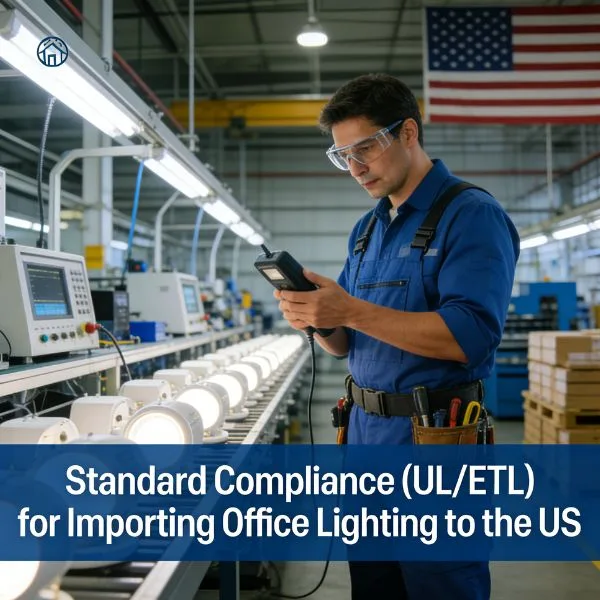
Why UL/ETL Certification Is Essential for Importing Office Lighting
When importing office lighting into the U.S., UL or ETL certification is more than just a label—it’s a legal and safety necessity. Both certifications fall under the Nationally Recognized Testing Laboratory (NRTL) program, overseen by OSHA. This means UL and ETL labs are officially authorized to test and certify electrical products, ensuring they meet strict safety standards.
For commercial installations, local building codes and the National Electrical Code (NEC) require lighting fixtures to carry NRTL marks like UL listed or ETL listed lighting. This guarantees the office lighting complies with electrical safety rules designed to prevent fires, shocks, or other hazards in commercial spaces.
Skipping UL/ETL certification when importing can lead to serious risks:
- Customs delays or product seizures due to non-compliance.
- Liability issues if uncertified lighting causes safety incidents.
- Rejection by inspectors or tenants because uncertified lighting doesn’t meet building codes.
- Financial losses from unsellable inventory or expensive retrofits.
In short, UL or ETL certification is essential for smooth importation, legal compliance, and guaranteeing safe, reliable office lighting products in the U.S. market.
Key Standard: UL 1598 for Luminaires
UL 1598 is the primary standard that covers the safety requirements for luminaires, including office lighting fixtures imported into the US. This standard sets the rules for the construction, electrical, and mechanical aspects of lighting products to ensure they operate safely in commercial environments. When importing office lighting, it’s essential that your fixtures meet UL 1598 guidelines, which include rigorous testing for durability, electrical insulation, grounding, and resistance to fire hazards.
For LED office lights, UL 1598 works hand-in-hand with UL 8750, a standard focused specifically on LED equipment. UL 8750 covers essential aspects like driver performance, thermal management, and electrical efficiency, ensuring LED luminaires are safe and reliable. Together, these standards guarantee your lighting products are properly constructed, tested, and clearly marked with compliance information for use in US commercial spaces.
Meeting these requirements isn’t just good practice—it’s necessary to comply with commercial building codes and the National Electrical Code (NEC). Without this certification, your office lighting risks rejection at customs or failing local inspections, leading to costly delays and potential legal issues. For trusted lighting solutions that align with these standards, consider exploring options from established manufacturers like Prillumen Light, known for compliant office lighting fixtures that meet UL 1598 and UL 8750 criteria. You can learn more in their recessed linear fixture portfolio.
UL vs ETL: Understanding the Differences
When importing office lighting to the US, understanding the UL vs ETL certification difference is key. Both ensure your products meet safety standards, but they come with some distinct features.
| Feature | UL Certification | ETL Certification |
|---|---|---|
| Standards | Developed by UL with rigorous testing | Tests to UL standards, maintains equivalence |
| Testing Time & Cost | Typically longer and more expensive | Usually faster and less costly |
| Acceptance | Widely recognized by authorities and building codes | Also accepted as NRTL by OSHA and authorities |
| Brand Perception | Strong premium brand reputation | Seen as equally safe but less prestigious |
| Lab Ownership | UL operates its own labs | Labs like Intertek offer ETL testing |
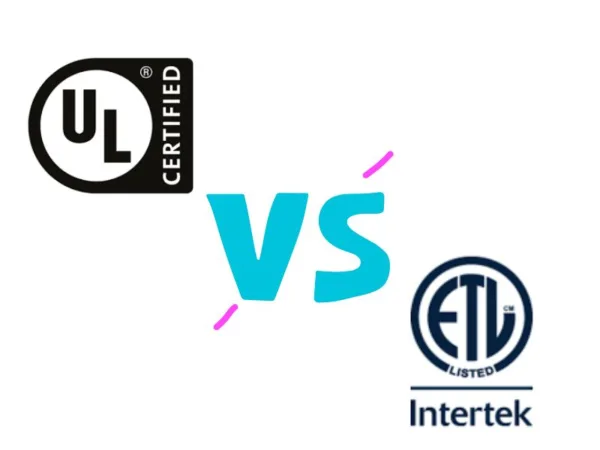 Both certifications are recognized as NRTL certification requirements under OSHA, which means either UL or ETL listed lighting products comply with US safety regulations. ETL provides a more cost-effective, quicker route while meeting the same safety benchmarks set by UL.
For importers, UL’s well-known brand can boost customer trust, especially in commercial installations governed by strict National Electrical Code (NEC) rules. On the other hand, ETL’s flexibility and speed make it attractive for fast market entry without sacrificing compliance.
In short:
- UL means rigorous, thorough testing with strong name recognition
- ETL offers the same safety standards with faster turnaround and lower cost
Choosing between UL and ETL depends on your budget, time frame, and how important brand perception is for your office lighting import business. For more details on compliant lighting options, consider exploring manufacturers like Prillumen Light that offer various UL-listed office lighting solutions.
Explore their direct/indirect wall light grille for examples of UL-certified fixtures designed to meet strict US standards.
Step-by-Step Certification Process for Office Lighting
Getting your office lighting certified to meet UL or ETL standards is a clear path that ensures safety and compliance for the US market. Here’s what the certification process typically looks like:
Choose Between UL or ETL Labs
Both UL and ETL are recognized Nationally Recognized Testing Laboratories (NRTL) under OSHA. Selecting which lab to work with depends on your timeline, budget, and branding needs. UL is the original standard bearer, while ETL often offers quicker and cost-effective testing to UL standards.
Submit Product Samples for Testing
Once you pick a lab, you’ll need to send in samples of your lighting fixtures. The lab runs a battery of tests based on the UL 1598 standard, checking electrical safety, thermal performance, mechanical strength, and more. For LED office lights, integration with UL 8750 requirements is also verified.
Undergo Factory Inspections
Certification isn’t just about testing samples; these labs require factory audits to confirm consistent manufacturing quality. Inspections cover production processes, materials, and ongoing compliance measures to ensure what’s tested matches what’s shipped.
Obtain Certificates of Compliance and Proper Markings
After passing all tests and inspections, you receive official certificates certifying your product meets safety standards. These certificates allow you to apply the UL or ETL mark on your office lighting fixtures, a must-have for commercial installations and approvals under the National Electrical Code.
Maintain Compliance Over Time
Certification isn’t a one-time event. Continuous factory inspections and product retesting are mandatory to retain your listing status. This helps avoid surprises like product recalls or regulatory penalties.
Tips for Choosing UL-Listed Manufacturers
For hassle-free importing, consider partnering with established UL-listed manufacturers like Prillumen Light. They bring tested and verified office lighting solutions and have a proven track record of meeting compliance needs in the US market. You can explore their range and expertise in lighting compliance through their product insights and detailed guidance in the strategic buyer’s guide.
Following a clear certification process is key to importing office lighting that ticks all the regulatory boxes, ensures safety, and supports smooth commercial use across the US.
Additional Compliance Requirements for Import
When importing office lighting into the US, meeting UL/ETL certification alone isn’t enough. You also must follow several other compliance rules to avoid customs delays and ensure smooth market entry.
FCC Rules on Electromagnetic Interference (EMI)
Office lighting products, especially LED fixtures, must comply with FCC Part 15 regulations. These rules limit electromagnetic interference to prevent disruption of other electronic devices. Testing for EMI emissions ensures your lighting won’t cause radio or TV signal issues.
Customs Documentation Essentials
Proper paperwork is critical for customs clearance. Key documents include:
| Document | Importance |
|---|---|
| Harmonized Tariff Schedule (HTS) codes | Correct tariff classification avoids fines and misclassification |
| Commercial invoices | Details product description, value, and origin for customs |
| Declarations | Statements on product compliance and origin help smooth import process |
Using accurate HTS codes for lighting fixtures is essential; otherwise, shipments can be delayed or face penalties.
Labeling and Marking Requirements
Your lighting products must carry recognized NRTL marks like UL or ETL labels visibly on the product or packaging. These marks prove compliance with US safety standards and are often checked during inspections. Proper labeling also includes:
- Manufacturer details
- Model numbers
- Electrical ratings
Other Considerations
- Energy Efficiency Incentives: Certain LED office lighting may qualify for energy rebates or tax credits if they meet DOE standards.
- RoHS Compliance: Although not strictly mandatory in the US, many businesses prefer lighting free from hazardous substances to meet global corporate standards.
For seamless importing and compliance, partnering with a UL listed office lighting manufacturer like Prillumen Light ensures your products meet all these standards from the start. Their expertise in certified office lighting simplifies customs paperwork, labeling, and adherence to FCC requirements.
Explore their office lighting options for fully compliant solutions.
Common Pitfalls and How to Avoid Them
When importing office lighting to the US, there are a few common mistakes that can cause serious headaches. One major issue is misunderstanding the CE marking—often mistaken for a valid standard in the US. The CE mark is for European markets and doesn’t replace the need for NRTL certification requirements like UL or ETL marks, which are essential for legal commercial installations.
Another trap is not certifying each SKU individually. Every lighting model, even small variations, needs its own Certificate of Compliance. Skipping this can lead to costly delays at customs or rejections in inspections.
Incomplete paperwork or working with suppliers who aren’t on an OSHA-recognized lab’s list can also stall your import process. Always ensure all customs documentation, including proper HTS codes and certification records, is complete to avoid delays.
Lastly, while it’s tempting to cut costs, balancing savings with compliance is crucial. Importing cheaper non-certified office lighting might seem like a win upfront but risks fines, product recalls, or worse—safety hazards. Choosing trusted manufacturers, like a UL listed office lighting manufacturer such as Prillumen Light, keeps you compliant and stress-free.
By staying clear of these pitfalls, you keep your import process smooth and your office lighting safe and up to code. For reliable, compliant options, check out Prillumen’s range of vapor-tight LED fixtures that meet all US safety standards.
Choosing a Compliant Supplier: Office lighting on Prillumen Light
Partnering with a UL-listed office lighting manufacturer like Prillumen Light is a smart move when importing lighting fixtures to the US. UL listing means the products meet strict safety standards, giving you peace of mind and simplifying compliance with building codes and the National Electrical Code (NEC). This reduces the risk of delays or rejections at customs and during inspections.
Prillumen Light stands out for its deep expertise in providing office lighting solutions that meet UL 1598 standards, ensuring full compliance with NRTL certification requirements. Their products, including surface-mounted lights and linear LED pendants, are tested for electrical safety, thermal performance, and durability—helping you avoid common pitfalls related to uncertified imports. You can trust their consistent quality and proper labeling with UL or ETL marks, which are crucial for commercial installations in the US.
For a closer look at their range, check out Prillumen Light’s surface-mounted linear lights or their linear LED pendant lighting, both designed with compliance and performance in mind. Choosing a reliable, UL-listed supplier like Prillumen Light not only saves you time and money but also ensures your office lighting meets all necessary US electrical product import regulations.
FAQs on UL/ETL Certification for Importing Office Lighting
Is UL or ETL mandatory by law?
While UL or ETL certification is not explicitly required by federal law, NRTL certification (such as UL or ETL) is mandatory for most commercial and office lighting installations under OSHA regulations. Local building codes and the National Electrical Code (NEC) often require UL or ETL listed products to ensure safety compliance in office lighting and other commercial spaces.
How long does certification take?
The certification process typically ranges from a few weeks to a few months, depending on the complexity of the lighting fixture and the testing lab’s workload. UL and ETL both require thorough electrical, thermal, and mechanical testing, along with factory inspections before issuing a Certificate of Compliance.
Can I import office lighting without certification for testing purposes?
Importing uncertified lighting strictly for internal testing and evaluation is possible but comes with risks. Many customs agents and regulatory bodies may hold shipments until proof of compliance is provided. It’s best to coordinate with your NRTL lab beforehand and ensure you have proper documentation.
Are CE marked products accepted for the US market?
The CE mark indicates compliance with European standards but does not guarantee acceptance in the U.S. market. Importing CE marked office lighting without UL or ETL certification may lead to customs delays or rejection since U.S. regulations focus on OSHA-recognized NRTL marks like UL 1598 or ETL listed lighting.
For reliable UL-listed office lighting options designed specifically for the U.S. market, consider trusted manufacturers like Prillumen Light’s architectural LED troffer fixtures, which meet all necessary safety and compliance standards.
STAY IN THE LOOP
Subscribe to our free newsletter.
Leave A Comment
Learn how 0–10V dimming works in commercial LED linear lighting, including wiring, drivers, control compatibility, applications and troubleshooting.
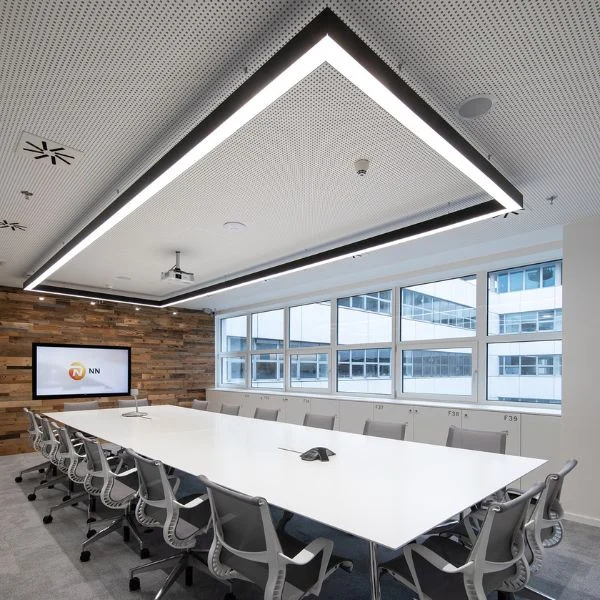
Office Lighting Design Guide for Modern Workplaces with lux UGR and LED fixture tips for comfort productivity and energy efficiency
Ever wonder why an outfit looks vibrant in natural sunlight, [...]
What is Tunable White Lighting? As the industry standard evolves, [...]