
The Importance of Strategic Hospital Lighting Design
In the evolving landscape of 2026 healthcare, Hospital Lighting Design has transitioned from a basic utility to a critical clinical tool. Strategic illumination is no longer just about visibility; it is a fundamental component of the healing architecture. High-quality lighting systems integrate advanced technology with human-centric principles to drive better clinical outcomes, operational efficiency, and energy sustainability.
Enhancing Patient Comfort and Recovery
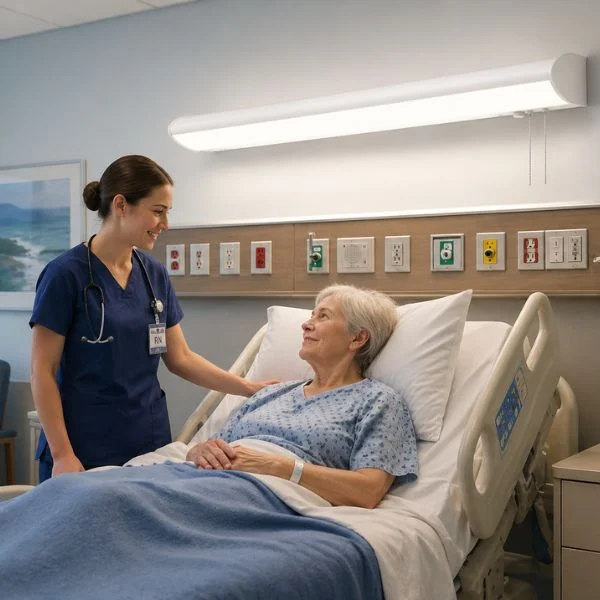
The primary goal of modern healthcare lighting is to foster an environment conducive to healing. By aligning artificial light with the body’s internal clock, we can significantly improve patient well-being.
- Circadian Rhythm Support: Utilizing tunable white light helps regulate sleep-wake cycles, which is proven to accelerate recovery times.
- Stress Reduction: Soft, indirect lighting reduces patient anxiety and creates a calming, “hospitality-like” atmosphere.
- Personalized Control: Giving patients the ability to adjust light levels in their rooms empowers them and improves the overall care experience.
Supporting Clinical Staff Performance and Safety
For medical professionals, lighting is a high-stakes tool. Precision and alertness are non-negotiable in environments where a split-second decision can save a life.
- Visual Acuity: High Color Rendering Index (CRI) lighting ensures that doctors can accurately assess skin tones, tissues, and fluids during diagnosis.
- Fatigue Mitigation: Optimized light levels at nurse stations and in high-intensity zones reduce eye strain and cognitive fatigue during long shifts.
- Error Prevention: Uniform, flicker-free illumination minimizes shadows and visual distractions, directly contributing to a safer workspace and fewer medical errors.
Improving the Human Experience in Healthcare Environments
A successful Hospital Lighting Design complete guide 2026 emphasizes the holistic “human experience.” Hospitals are complex ecosystems where lighting bridges the gap between sterile functionality and emotional comfort.
| Feature | Impact on Human Experience |
|---|---|
| Warm Color Temps | Creates a welcoming, non-institutional feel in public areas. |
| Dynamic Lighting | Mimics natural daylight patterns to keep visitors and staff grounded. |
| Glare Control | Protects the visual comfort of patients on gurneys and those with sensory sensitivities. |
By prioritizing the psychological and physiological needs of every occupant, strategic lighting transforms cold, clinical spaces into vibrant, supportive healing environments.
Core Principles of Healthcare Lighting Design
We believe that effective hospital lighting design isn’t just about visibility; it’s about creating an environment that supports healing and precision. To get this right in 2026, we focus on four pillars that define modern medical facilities.
Integrating Natural Daylight and Circadian Lighting
The human body relies on light to regulate sleep and mood. We prioritize circadian lighting systems that mimic the natural cycle of the sun to help patients maintain a healthy sleep-wake cycle.
- Morning: Cool, blue-enriched light to boost alertness and reset the internal clock.
- Evening: Warm, dimmed tones to encourage melatonin production and rest.
- Daylighting: Maximizing window access to reduce reliance on artificial sources and improve patient morale.
Balancing Functional Task Lighting and Ambient Illumination
A hospital is a dual-purpose space. We need soft, calming ambient light for patients and high-intensity task lighting for medical staff. Finding the right balance ensures that a hallway feels welcoming while a hospital patient room lighting guide 2026 provides the necessary brightness for exams without overwhelming the occupant.
Visual Comfort and Glare Reduction Strategies
Glare is a major issue in clinical settings due to reflective surfaces like stainless steel and polished floors. We implement specific strategies to protect the eyes of both patients and staff:
- Indirect Lighting: Bouncing light off ceilings or walls to eliminate “hot spots.”
- Deep-Regressed Optics: Keeping the light source hidden from direct view to prevent eye strain.
- Flicker-Free Drivers: Ensuring stable light output that doesn’t cause headaches or interfere with medical monitors.
Color Temperature and Light Levels for Clinical Accuracy
For doctors to make accurate diagnoses, light must render colors perfectly. We focus on high-performance metrics to ensure clinical safety.
| Feature | Requirement | Benefit |
|---|---|---|
| Color Rendering (CRI) | 90+ R9 | Accurate visualization of blood and skin tones |
| Tunable White | 2700K – 6500K | Flexibility for different times of day and tasks |
| Illuminance (Lux) | 300 – 1000+ | Variable levels based on the intensity of the procedure |
When selecting systems, we often look at the best healthcare lighting companies in 2026 to ensure our hardware meets these rigorous technical standards and provides long-term reliability.
Specialized Lighting for Patient Care Areas
In my experience, patient care areas require the most nuanced approach in a Hospital Lighting Design complete guide 2026. These spaces must transition seamlessly from high-intensity clinical environments to calm, restorative retreats. We focus on fixtures that offer both technical precision and emotional comfort.
Patient Room Lighting and Personal Control Systems
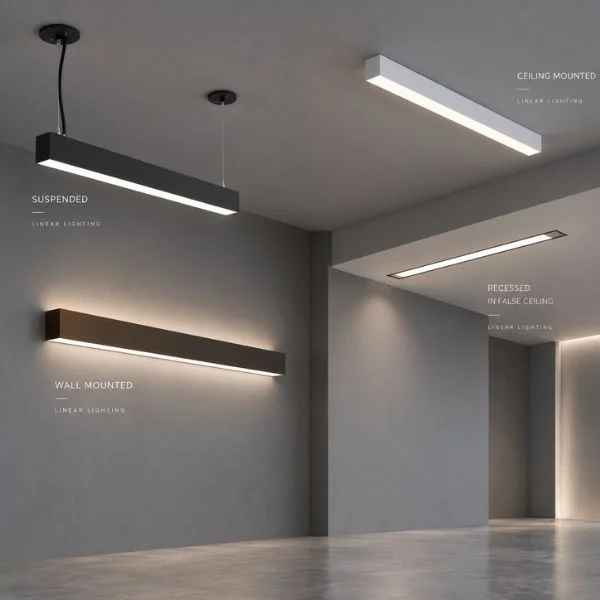
Modern patient rooms are multi-functional. Patients need a sense of control to reduce anxiety, while staff need high-quality light for assessments. We prioritize layered lighting that separates ambient, task, and reading functions. Utilizing a slot 4 wall mounted linear light provides a clean, architectural aesthetic that delivers indirect illumination, preventing harsh glare for patients lying in bed.
- Individual Dimming: Allows patients to adjust brightness based on personal preference.
- Night Lighting: Low-level floor lights to prevent falls without waking the patient.
- Integrated Controls: Simple interfaces for both patients and nursing staff.
High-Performance Lighting for Surgical and Examination Suites
Precision is non-negotiable in surgical and exam rooms. We design these spaces with high-output, high-CRI (Color Rendering Index) fixtures to ensure medical professionals can see tissue colors and textures accurately.
| Feature | Requirement | Benefit |
|---|---|---|
| CRI | 90+ | Accurate color representation for diagnosis |
| Shadow Reduction | Multi-point sources | Clear visibility during procedures |
| Cleanability | IP65 or higher | Maintains sterile environment standards |
Lighting Solutions for Behavioral and Mental Health Facilities
Safety is the primary driver in behavioral health design. We utilize tamper-resistant, anti-ligature fixtures that do not sacrifice the healing atmosphere. The goal is to create a residential feel that avoids the “institutional” look, which can be triggering for sensitive patients.
- Impact-Resistant Lenses: Prevents breakage and unauthorized access to components.
- Tunable White Technology: Mimics natural daylight patterns to help stabilize mood and sleep cycles.
- Recessed Mounting: Eliminates anchor points for maximum safety.
Pediatric and Aging Population Design Considerations
Designing for the bookends of life requires specific adjustments. For pediatric wards, we use soft, diffused light to create a playful and non-threatening environment. A drop lens linear LED pendant is an excellent choice for these areas, offering a friendly visual profile and wide light distribution that eliminates scary shadows.
For aging populations, we address physiological changes in the eye:
- Increased Brightness: Seniors often require higher light levels to see clearly.
- Glare Mitigation: Matte finishes and indirect lighting prevent “sparkle” that causes confusion.
- High Contrast: Using light to clearly define transitions between floors and walls to prevent trips.
Lighting for Clinical Staff and Operational Efficiency
In any Hospital Lighting Design complete guide 2026, we have to prioritize the people who keep the facility running. Clinical staff work in high-pressure environments where a split-second decision matters. I believe that lighting shouldn’t just be a utility; it should be a tool that helps doctors and nurses perform at their peak while staying alert during long shifts.
Optimizing 24-Hour Nurse Stations and Workspaces
Nurse stations are the command centers of the hospital. They need to be visible from a distance but functional enough for detailed paperwork and digital charting. Since these areas operate 24/7, we use smart controls to adjust brightness based on the time of day.
To create a clean, organized look that defines these hubs, I often recommend using a t-shape modular linear light to provide continuous, shadow-free illumination over desks and counters. This setup ensures that:
- Documentation is clear: No more squinting at charts or labels.
- Visual cues are obvious: Patients can easily spot help desks.
- Transition is seamless: Lighting levels shift gradually to help night-shift staff stay focused without straining their eyes.
Task Lighting for Precision Medical Procedures
When it comes to examinations or minor bedside procedures, general ambient light isn’t enough. We focus on high-output, high-CRI (Color Rendering Index) LED solutions. This allows medical professionals to see true tissue colors and fine details, which is critical for accurate diagnosis and treatment.
- Shadow Reduction: Strategic placement of fixtures prevents the “head-and-shoulders” shadow over the patient.
- Adjustability: Using dimmable task lights allows staff to dial in the exact intensity needed for the moment.
- Reliability: We use industrial-grade LEDs that don’t flicker, ensuring a stable environment for precision work.
Reducing Fatigue through Human-Centric Design
Staff burnout is a real challenge in healthcare. By implementing human-centric lighting, we can actually help regulate the internal clocks of healthcare workers.
I focus on these three pillars to keep teams sharp:
- Circadian Support: Using cooler, blue-enriched light during the day to boost alertness and warmer tones during the end of a shift to help staff wind down.
- Glare Control: We use specialized diffusers to eliminate “hot spots” on screens and tablets, significantly reducing eye strain and headaches.
- Breakroom Atmosphere: In staff lounges, we switch to softer, warmer lighting to provide a genuine mental break from the clinical intensity of the wards.
By investing in a smart Hospital Lighting Design, you aren’t just buying fixtures—you’re investing in the safety and well-being of your most valuable asset: your staff.
Public Spaces and Common Area Lighting
Public areas are the first point of contact for patients and visitors. In our Hospital Lighting Design complete guide 2026, we prioritize transition zones that bridge the gap between the outside world and the clinical environment. The goal is to balance high-performance visibility with a calming atmosphere.
Creating Welcoming Registration and Waiting Areas
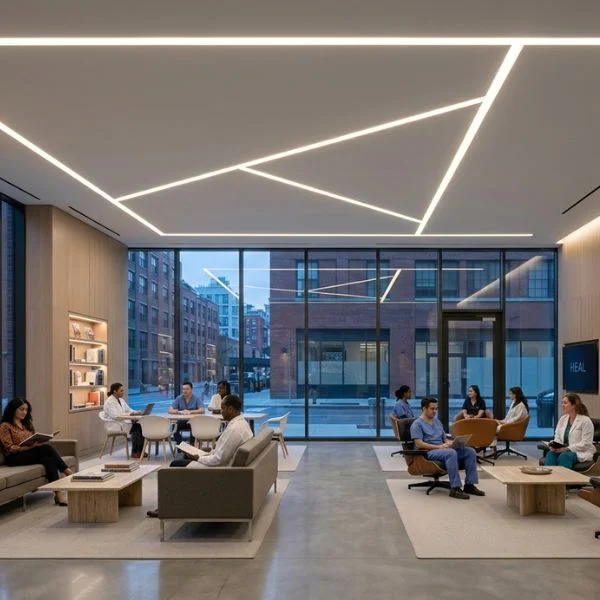
The lobby and waiting rooms set the tone for the patient experience. We move away from harsh, clinical overheads toward layered lighting that feels more like a professional lounge than a sterile institution.
- Warm Color Temperatures: Using 3000K to 3500K helps lower cortisol levels and reduce anxiety.
- Acoustic Integration: Many modern fixtures now combine LED technology with sound-dampening materials to keep waiting areas quiet.
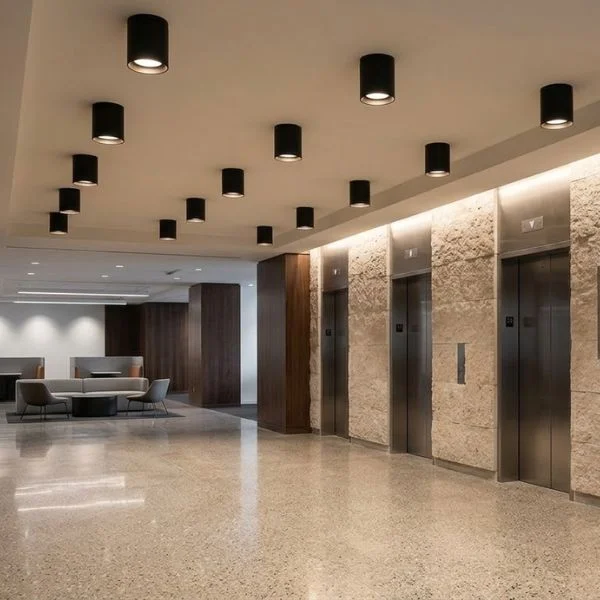
- Accent Lighting: Highlighting reception desks with flush mount cylinder lights provides clear visual cues for where patients need to check in.
Safe Navigation for Corridors, Staircases, and Entrances
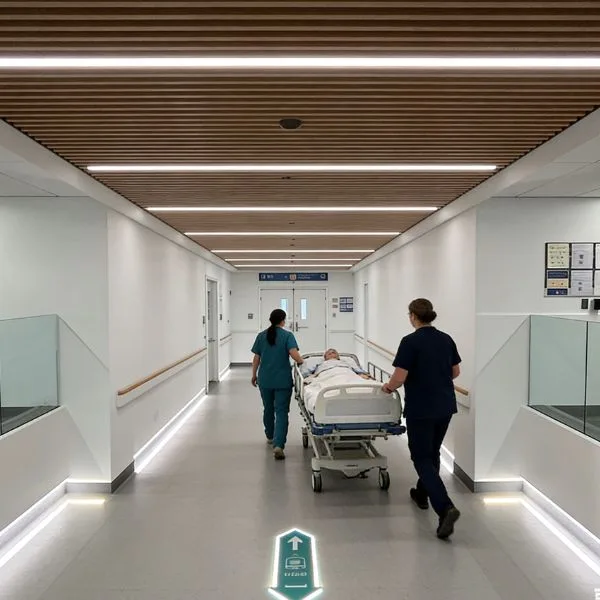
Corridors are the arteries of a hospital, operating 24/7. Lighting here must be functional, durable, and completely reliable to prevent falls and facilitate rapid transport.
- Uniformity: We eliminate dark spots and “zebra patterns” on the floor, which can be disorienting for elderly patients or those with visual impairments.
- Continuous Illumination: Utilizing continuous linear LED lighting ensures a seamless flow of light that guides the eye naturally down long hallways.
- Night Mode: Implementing smart dimming allows corridor lights to drop to lower levels during late hours, saving energy while maintaining enough visibility for safety.
Aesthetics and Wayfinding in Large Healthcare Facilities
In massive medical complexes, light is a critical tool for wayfinding. We use light as a silent language to help people find their way without feeling lost or overwhelmed.
- Visual Hierarchy: Brighter light levels typically indicate main thoroughfares, while softer lighting marks private consultation zones.
- Color Coding: Integrated RGBW strips in recessed channels can highlight specific wings (e.g., “follow the blue light for Pediatrics”).
- Architectural Integration: Lighting should emphasize architectural features like high ceilings or art installations, making the space feel less confined and more open.
Technical Standards and System Integration for Hospital Lighting Design 2026
Meeting technical benchmarks is the backbone of any successful medical facility. We ensure every project adheres to strict global and local safety codes while integrating the latest in smart building technology.
Compliance with Healthcare Regulations and Standards
Navigating the landscape of healthcare regulations requires precision. We focus on meeting the rigorous demands of IESNA (Illuminating Engineering Society of North America) and local building codes to ensure patient safety and operational legality.
| Standard Category | Key Requirement |
|---|---|
| Illuminance Levels | Minimum lux requirements for surgical vs. recovery areas. |
| Emergency Lighting | Instant-on backup systems for critical life-support zones. |
| Energy Codes | Compliance with ASHRAE 90.1 for maximum power density. |
| Electrical Safety | Low-leakage current drivers for patient-vicinity equipment. |
Smart Lighting Controls and Building Automation
Modern hospitals rely on interconnected systems. By integrating lighting into the Building Management System (BMS), we allow for automated energy harvesting and data-driven maintenance. Our approach utilizes IoT sensors to track occupancy and adjust output in real-time.
- Automated Dimming: Reduces energy waste in unoccupied corridors and offices.
- Daylight Harvesting: Uses sensors to balance natural light with artificial output.
- Centralized Monitoring: Real-time alerts for fixture failures to minimize downtime.
- Scalability: Systems designed to grow alongside facility expansions.
For those navigating these complex requirements, our architectural lighting FAQ provides deeper insights into how we bridge the gap between aesthetics and technical compliance.
Infection Control and Easy-to-Maintain Fixtures
In a clinical environment, the hardware must be as sterile as the instruments. We prioritize fixtures that support infection protocols and simplify the workload for facilities teams. Utilizing LED grid frame ceiling lights allows for a seamless, flush finish that prevents dust accumulation and simplifies sanitization.
- IP Ratings: High Ingress Protection (IP65+) for labs and surgical suites to withstand pressurized cleaning.
- Antimicrobial Coatings: Specialized finishes that inhibit the growth of bacteria on fixture surfaces.
- Tool-less Access: Design features that allow maintenance staff to swap components quickly without compromising the sterile field.
- Gasketed Housings: Airtight seals to prevent the passage of contaminants through ceiling plenums.
Sustainability and the Future of Hospital Lighting
Sustainability is no longer an optional feature in modern healthcare; it is a core requirement for facility longevity and operational success. As we look toward the Hospital Lighting Design complete guide 2026, the focus shifts from simple illumination to integrated systems that reduce environmental impact while enhancing the quality of care.
Energy Efficiency and Sustainable Design Practices
We prioritize energy-efficient LED technology to drastically cut power consumption and maintenance costs. Modern healthcare facilities are moving away from traditional bulbs in favor of high-efficacy luminaires that offer longer lifespans and lower heat output. Implementing these systems involves:
- Advanced Dimming: Reducing light output in unoccupied zones.
- Daylight Harvesting: Using sensors to adjust artificial light based on natural sunlight levels.
- Green Materials: Selecting fixtures made from recyclable components to minimize the carbon footprint.
For facilities utilizing suspended grids, choosing the right types of lighting for drop ceilings ensures that energy-efficient fixtures fit seamlessly into the architectural layout without compromising thermal insulation or acoustic performance.
Future-Proofing Healthcare Lighting Systems
Healthcare needs evolve rapidly, and lighting infrastructure must be adaptable. We design systems with modularity in mind, allowing for easy upgrades as technology advances. Future-proofing involves installing robust digital backbones that support software updates and hardware swaps without requiring a full renovation. By utilizing standardized protocols and open-source platforms, hospitals can integrate new sensors or control modules as they become available, ensuring the facility remains at the cutting edge of the Hospital Lighting Design complete guide 2026 standards.
Emerging Trends: Smart Technology and Healing Environments
The future of hospital lighting lies in the intersection of technology and biology. We are seeing a massive shift toward “Light as Medicine,” where illumination is used as a therapeutic tool.
| Trend | Impact on Healthcare |
|---|---|
| IoT Integration | Assets and staff can be tracked via lighting-integrated sensors. |
| AI-Driven Adjustments | Systems learn peak usage times to optimize energy and brightness automatically. |
| Circadian Tuning | Light spectra shift throughout the day to support patient sleep-wake cycles. |
| Personalized Control | Patients manage their own micro-environments via mobile apps or bedside tablets. |
These smart technologies transform sterile corridors into healing environments. By focusing on human-centric design, we ensure that the lighting system contributes directly to faster recovery times and improved staff morale, making the hospital a more efficient and compassionate space.
STAY IN THE LOOP
Subscribe to our free newsletter.
Leave A Comment
Comments are closed.

Explore types of hanging lights including pendant chandeliers and cluster designs to find the perfect style for every room
Seems like lighting can really change the whole vibe in a hospital setting. Did you find any surprising trends for 2026?