Are you struggling to find the perfect lighting to elevate your kitchen island or dining room? Selecting the right fixture can completely transform the ambiance and functionality of your space.
As a design expert, I know that investing in quality linear suspension lighting is crucial for a stunning, modern interior. I’m here to give you advice that goes beyond the basics, backed by real industry experience.
You might already know there are countless styles out there, from minimalist metal to rustic wood…
But how do you choose the perfect size, brightness, and suspension system, exactly?
Well, you’re in for a treat.
In this post, you’re going to learn exactly how to select, size, and install the ideal fixture, step by step. Whether you’re illuminating a modern office or a dining table centerpiece, this horizontal hanging lights complete guide 2026 has everything you need to make a smart, stylish investment.
Let’s dive right in.
Understanding Horizontal Hanging Lights
Welcome to the horizontal hanging lights complete guide 2026. As architectural design evolves, horizontal fixtures have established themselves as a cornerstone of modern interiors. These elongated luminaires deliver both highly functional illumination and striking visual appeal, transforming how we light expansive spaces.
What is Linear Suspension Lighting?
Linear suspension lighting refers to elongated fixtures hung from the ceiling, featuring either a continuous light source or multiple bulbs arranged in a straight line. Unlike traditional single-point pendants, these fixtures are engineered to project light evenly across a wide, horizontal plane.
Core Characteristics Comparison:
| Feature | Linear Suspension | Traditional Pendant |
|---|---|---|
| Design Profile | Elongated, horizontal | Single focal point |
| Light Spread | Broad, even distribution | Concentrated pool |
| Ideal Application | Kitchen islands, long tables | Small nooks, entryways |
Benefits of Horizontal Pendant Designs
Integrating horizontal pendant designs into your residential or commercial space offers distinct, measurable advantages. These fixtures maximize utility without cluttering the visual field.
- Broad Illumination: Effortlessly eliminates shadows and dark spots across long, rectangular surfaces.
- Sleek Aesthetics: Delivers a clean, minimalist architectural look that instantly elevates the room’s design profile.
- Space Optimization: Replaces the complex wiring and cluttered look of hanging multiple individual pendants side-by-side.
- Visual Balance: Perfectly anchors large furniture pieces, creating structural harmony in open-concept spaces.
Popular Styles of Horizontal Pendant Lights
Finding the right look for your space means exploring the popular styles of horizontal pendant lights available today. As we outline in this horizontal hanging lights complete guide 2026, the current market focuses heavily on fixtures that blend high-performance illumination with striking architectural design. We see a massive shift toward clean lines, raw textures, and bold geometric shapes.
Modern and Minimalist Linear Lights
Modern design is all about doing more with less. Minimalist linear lights deliver a sleek, continuous line of illumination without cluttering your ceiling space. These fixtures are designed to blend right into contemporary environments, making them a top choice for global commercial and residential projects.
If your space requires a low-profile alternative to suspended options, integrating a surface-mounted linear light provides that same ultra-clean, modern aesthetic while keeping the ceiling line completely unobstructed.
Core features of minimalist styles:
- Ultra-slim profiles: Minimal housing that focuses entirely on the light output.
- Seamless integration: Clean edges that match modern architectural lines.
- Unobtrusive design: Perfect for spaces where the light should be felt, not just seen.
Industrial and Rustic Designs
For spaces that need a bit more character, industrial and rustic designs stand out. We design these fixtures to bring warmth, texture, and a rugged edge to a room. They serve as excellent statement pieces over large dining tables or open-concept workspaces.
Why industrial designs work:
- Exposed hardware: Visible bolts and raw metal finishes add authenticity.
- High contrast: They break up the sterile feel of ultra-modern rooms.
- Heavy-duty build: Focused on durable, long-lasting construction.
Unique Shapes: Tubular, Arc, and Ring Lights
Straight lines are not your only option. We are seeing a huge demand for geometric variations that act as the primary focal point of a room. These unique shapes break the mold of traditional linear suspension.
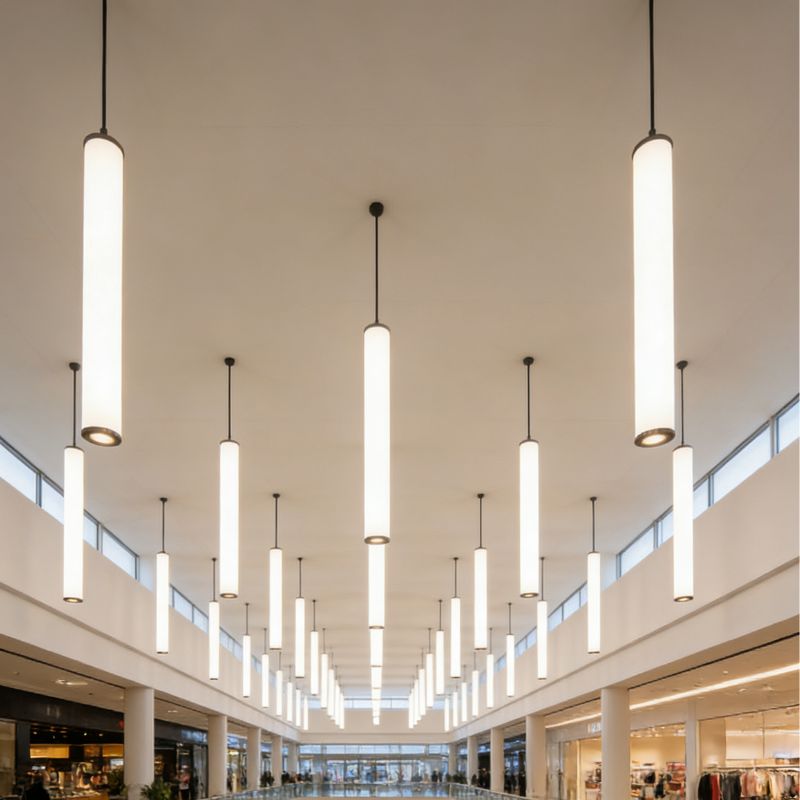
- Tubular Lights: Cylindrical designs that diffuse light evenly in all directions, creating a soft, glowing effect.
- Arc Lights: Gentle, sweeping curves that soften rigid room layouts and add a sense of motion.
- Ring Lights: Circular halos that provide a stunning, futuristic vibe, ideal for high-end lobbies or modern dining areas.
Choosing the Right Material and Finish
When we design or recommend lighting, the material dictates both the lifespan and the visual impact of the fixture. As part of our horizontal hanging lights complete guide 2026, we focus on finishes that meet the demands of modern global interiors while maintaining peak functionality.
Metal and Brass Finishes
Metal remains a dominant choice for its sleek profile and structural integrity. Brass finishes add a touch of warmth and luxury, while matte black or brushed aluminum offers a clean, contemporary edge. These robust materials are ideal for high-traffic areas. When professionals are choosing the right direct/indirect linear fixtures, durable metal housings are almost always the standard for long-term performance.
Wood and Natural Materials
Wood introduces an organic, grounding element to any room. We frequently see walnut, oak, and ash used to soften the rigid, straight lines of horizontal pendant lights.
- Warmth: Instantly makes large spaces feel inviting.
- Versatility: Pairs well with both minimalist and rustic decors.
- Texture: Adds a natural contrast to modern, sterile environments.
Glass and Acrylic Shade Options
The shade material controls how light disperses across your surface. Glass delivers a premium, classic look with unmatched clarity. Acrylic, on the other hand, is lightweight, shatter-resistant, and provides a smooth, uniform glow.
Material Quick Comparison
| Material Type | Best Application | Core Advantage |
|---|---|---|
| Metal & Brass | Kitchen islands, modern offices | Maximum durability and sleek styling |
| Natural Wood | Dining rooms, hospitality spaces | Adds warmth and organic texture |
| Glass & Acrylic | Task areas, commercial workspaces | Ensures even, glare-free light diffusion |
Both glass and acrylic options ensure your horizontal hanging lights perform efficiently, eliminating harsh glare while maximizing brightness across your entire workspace or dining area.
Ideal Spaces for Horizontal Hanging Lights
When planning your layout with our horizontal hanging lights complete guide 2026, you will find these fixtures offer incredible versatility. We consistently see linear suspension lighting transforming both residential and commercial environments by providing wide, even illumination exactly where it is needed most.
Illuminating Kitchen Islands
The kitchen island is the primary workspace in any home, requiring reliable task lighting. A horizontal pendant design perfectly matches the elongated shape of modern islands.
- Shadow-free prep: Broad light distribution eliminates dark spots while you chop and cook.
- Visual balance: A single linear fixture creates a cleaner, less cluttered look compared to hanging multiple small pendants.
- Clear sightlines: Proper mounting keeps the view across your kitchen completely open and unobstructed.
Dining Room Table Centerpieces
A dining table demands lighting that sets the right mood while keeping the space highly functional. Horizontal hanging lights act as a stunning focal point without overwhelming the room.
- Proportional design: They naturally mirror the rectangular or oval shape of large dining tables.
- Even light spread: Ensures every guest at the table enjoys consistent, comfortable lighting.
- Statement pieces: Minimalist linear designs draw the eye and anchor the entire dining space.
Modern Office and Workspace Lighting
In commercial spaces, proper illumination directly impacts daily productivity. Horizontal hanging lights provide sleek, functional task lighting over conference tables and collaborative workstations. For broader commercial ceiling applications, integrating these linear pendants with an architectural LED troffer creates a comprehensive, glare-free lighting system. If your workspace has a unique or challenging layout, supplementing your main lighting—as detailed in the professional guide to corner light fixtures—ensures no desk is left in the dark.
- Reduced eye strain: Diffused linear lighting minimizes harsh screen glare for employees.
- Professional aesthetic: Clean, straight lines complement modern office decor seamlessly.
- Focused task lighting: Delivers concentrated brightness directly over desks and critical work surfaces.

How to Choose the Perfect Horizontal Light Fixture
Finding the right fit requires balancing aesthetics with everyday functionality. As part of our horizontal hanging lights complete guide 2026, I focus on three core metrics: size, quantity, and illumination quality.
Selecting the Right Size and Length
Proportion is the most critical factor. A fixture that is too small gets lost in the ceiling space, while one that is too large overwhelms the room.
- The Rule of Proportions: Your horizontal light should span roughly 1/2 to 2/3 the length of the table or island below it.
- Edge Clearance: Always leave at least 6 inches of clearance from the ends of the fixture to the edge of your surface to prevent head bumps.
- Commercial Scaling: If you are outfitting large-scale workspaces, overcoming linear LED procurement challenges often starts with securing consistent, scalable fixture lengths that fit standard architectural grids.
Determining the Number of Lights
You have two main paths: a single continuous linear profile or a series of individual pendants arranged horizontally.
- Single Linear Suspension: Delivers a sleek, modern look with uninterrupted light distribution. This is the most efficient way to light a long surface evenly.
- Multiple Grouped Lights: Ideal for adding texture to rustic or industrial spaces. I recommend using odd numbers (groups of 3 or 5) for the best visual balance. Space the center of each light 24 to 30 inches apart.
Color Temperature and Brightness
Lumens measure the actual brightness, while Kelvin (K) measures the color appearance of the light. I always match the color temperature directly to the specific function of the room.
| Application Area | Color Temperature (Kelvin) | Target Brightness (Lumens) |
|---|---|---|
| Dining & Hospitality | 2700K – 3000K (Warm White) | 1,500 – 2,500 |
| Kitchen Islands | 3000K – 3500K (Neutral White) | 2,500 – 4,000 |
| Modern Workspaces | 4000K – 5000K (Cool White) | 4,000 – 6,000+ |
Always opt for dimmable fixtures. This gives you complete control over the atmosphere, allowing the exact same horizontal hanging light to transition seamlessly from bright task lighting during the day to a soft, ambient glow at night.
Suspension Systems and Installation Guide
In this section of our horizontal hanging lights complete guide 2026, I will break down the mounting hardware. A secure installation ensures your linear fixtures look great and stay perfectly level.
Single vs. Twin Suspension Systems
The weight and overall length of your fixture will dictate the best mounting style for your space.
- Single Suspension: This system uses one central ceiling canopy. Both the power cord and support cables drop from this single point. It is the best choice for shorter, lighter horizontal lights.
- Twin Suspension: This setup features two distinct ceiling mounting points. It prevents swaying and offers superior structural balance for extra-long, heavy fixtures.
Adjusting the Hanging Height
Getting the height right prevents harsh glare and keeps your room’s lines of sight completely open. Here are my standard placement rules:
- Over Kitchen Islands: Hang the fixture 30 to 32 inches above the countertop.
- Over Dining Tables: Keep it 30 to 36 inches above the table surface.
- In Open Walkways: Maintain a minimum clearance of 7 feet from the floor to the bottom of the light.
How the Suspension Mechanism Works
Modern horizontal pendants rely on aircraft-grade steel cables paired with adjustable ceiling grippers. The mechanism is simple: you press the small gripper pin to release the tension, slide the cable up or down to your desired length, and let go to lock it firmly in place. The main power wire usually drops down parallel to one of these support cables. When mapping out your ceiling layout, combining these suspended fixtures with sleek luminaire recessed lighting creates a perfectly layered, professional lighting design that eliminates dark corners.
STAY IN THE LOOP
Subscribe to our free newsletter.
Leave A Comment
Recessed and pendant lighting explained Choosing the right illumination strategy [...]
Anatomy of a Modular LED Lighting System We design every [...]
LED vs. Incandescent Bulbs: What Is the Real Difference? Are [...]