
One System.
More Ways to Compose.
A modular tube lighting system built around Ø55 mm cylindrical LED modules, multi-directional connection hubs and complementary optical elements. Create linear runs, branching layouts and custom geometric compositions for architectural interiors.
Designed as a lighting system, not a single fixture.
The platform combines cylindrical LED tube modules with central connection hubs and selected optical add-ons. Different tube lengths and connection versions make it possible to build coordinated lighting compositions across a ceiling plane.
Each component has a defined role: the tube provides the illuminated run, the hub creates the junction, and compatible optical modules add supplementary lighting effects.
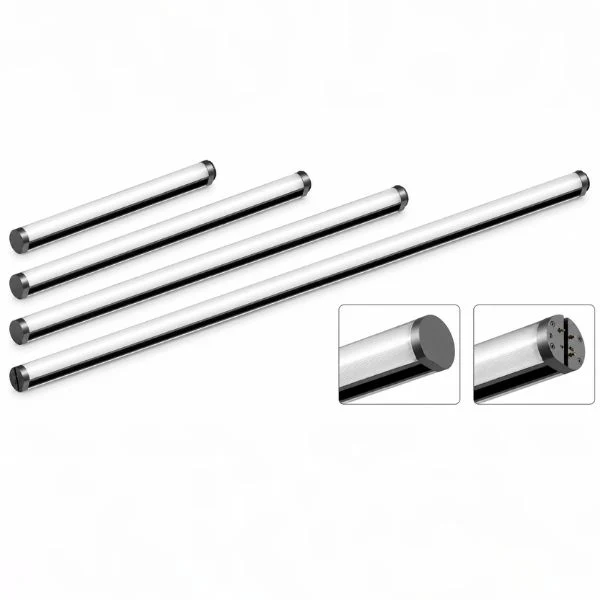
LED Tube Modules
Ø55 mm aluminium and PC tubes in four nominal wattages. Different connection versions support different system arrangements.
Connection Hubs
Central multi-way connectors enable branching and directional changes, creating a modular visual language across the ceiling plane.
Optical Add-ons
Complementary accent and linear optical elements offer scope for mixed lighting compositions, subject to confirmed compatibility.
Connect. Rotate. Reconfigure.
Use the modular connection concept to explore vertical, multi-level and multi-directional compositions. The final mechanical and electrical compatibility must be checked for each project configuration.
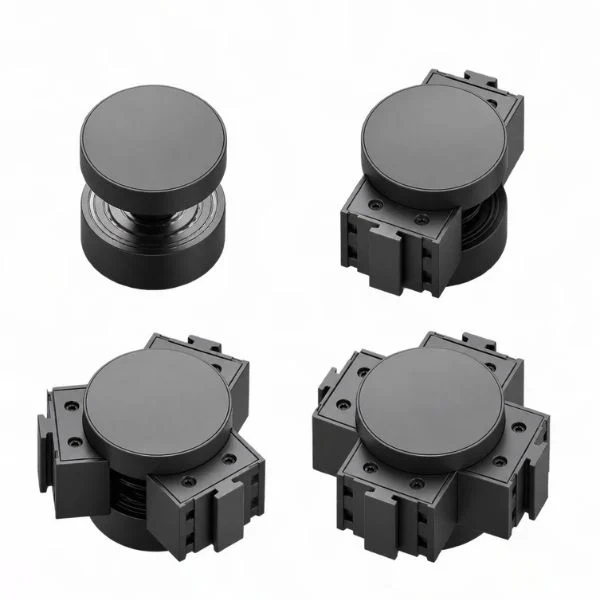
Build in more than one direction.
Combine compatible tube modules around a central connection point to create branching arrangements and layered ceiling compositions.
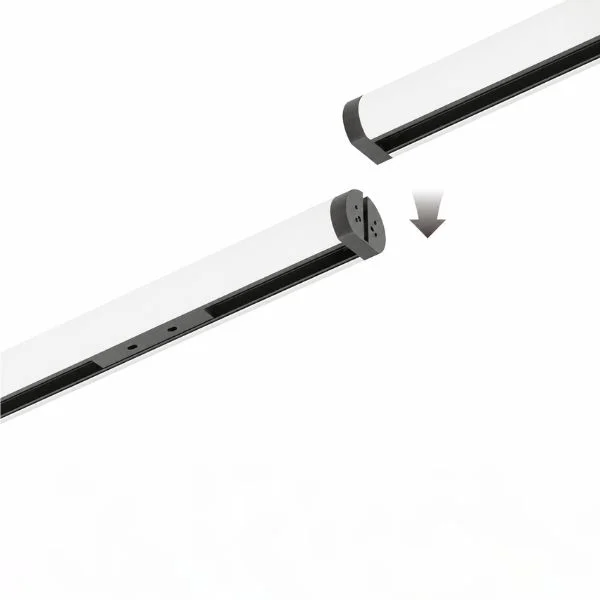
Arrange modules around a central node.
The connection concept allows directional layouts to be coordinated with meeting tables, circulation routes and irregular room geometry. Rotation limits and locking details require technical confirmation.
Explore the building blocks.
From linear tube-to-tube assemblies to multi-way hubs, each connection type should be selected according to the intended geometry, mounting position and electrical load.
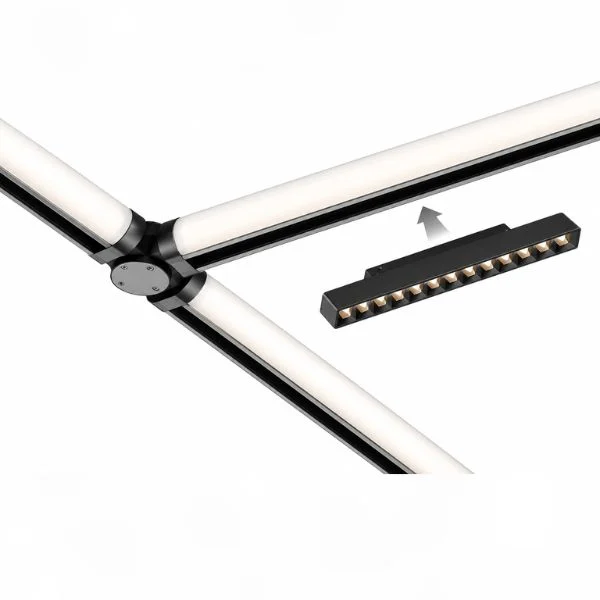
Multi-Level Joining
Combine compatible tube modules around a central hub. Confirm mounting positions, suspension points and connector configuration for each project.
Rotational Assembly
Arrange tube sections in different directions. Rotation range and mechanical locking details should be checked against the selected connector.
Tube-to-Tube Assembly
Extend a suspended composition with compatible tube sections. Verify one-way, two-way and independent tube connections, electrical continuity and module compatibility.
From a single tube to a connected lighting composition.
Explore multi-directional connectors and project-specific shapes. Final junction angles, suspension points and electrical loads are subject to technical review.
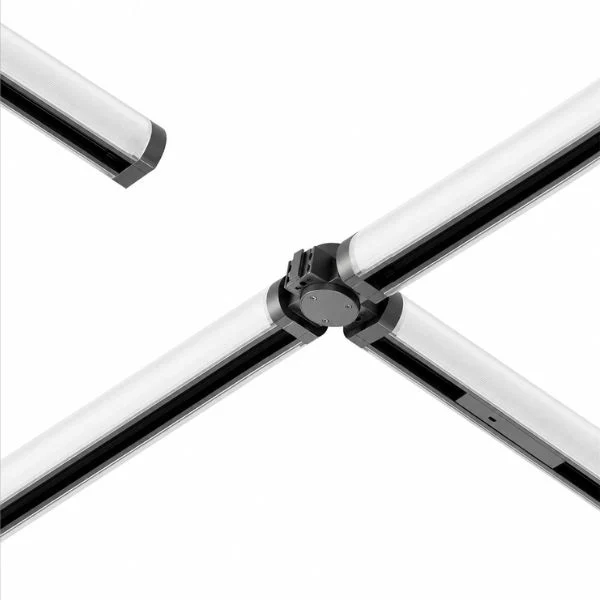
T-shaped arrangement
Branching layout with a multi-way junction.
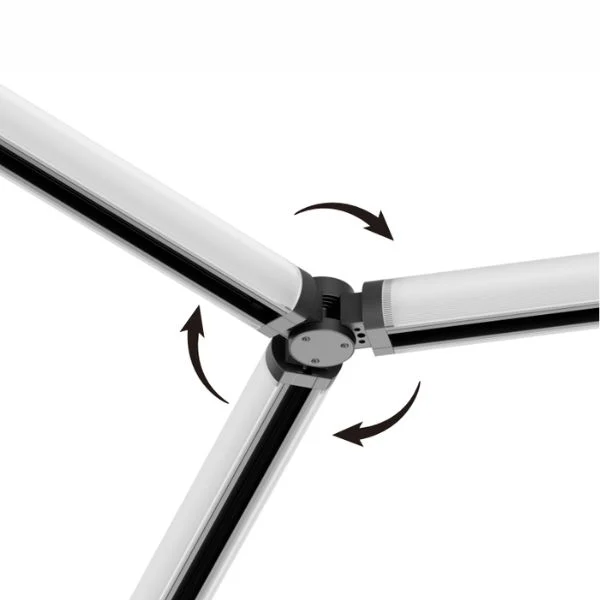
Three-way Y-shaped arrangement
Three-direction composition around a central node.
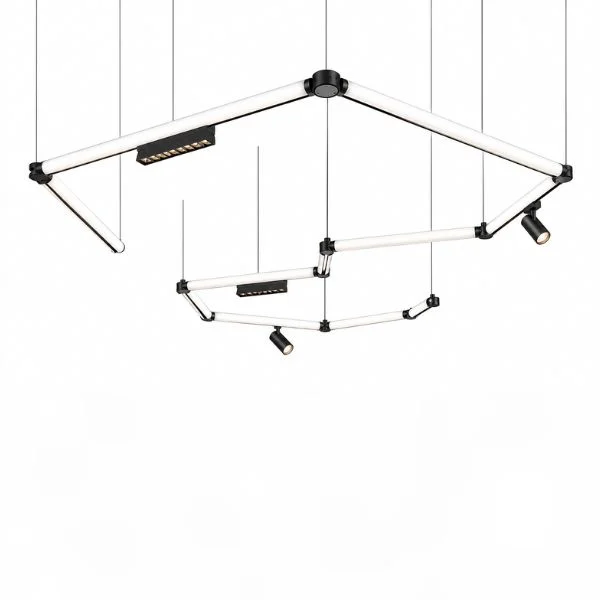
Custom hexagon
Geometric lighting arrangement for feature spaces.
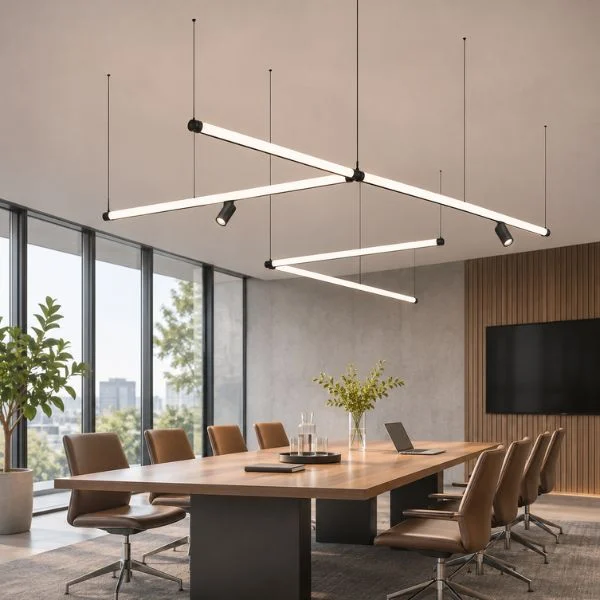
Connected architectural composition
Multiple tubular LED sections work together as one coordinated suspended lighting feature.
Different tube lengths
Length choices for coordinated modular layouts.
Choose the right tube configuration.
The catalogue lists three electrical and connection variants. Nominal lengths differ slightly by configuration, so specify the exact tube type when preparing a layout or bill of materials.
| Tube variant | 15W | 30W | 45W | 60W |
|---|---|---|---|---|
| One-way powered | 595 mm | 1195 mm | 1765 mm | 2365 mm |
| Two-way powered | 600 mm | 1200 mm | 1770 mm | 2370 mm |
| Independent light-emitting | 590 mm | 1190 mm | 1760 mm | 2360 mm |
*The source catalogue does not clarify whether the 24° beam angle applies to the diffused tube or a directional optical module. Confirm the applicable optical module before specification.
Combine general illumination with targeted accents.
Alongside the illuminated cylindrical tubes, the catalogue illustrates supplementary light-source types and a linear grille module. These components may help create different lighting effects within a coordinated architectural composition.
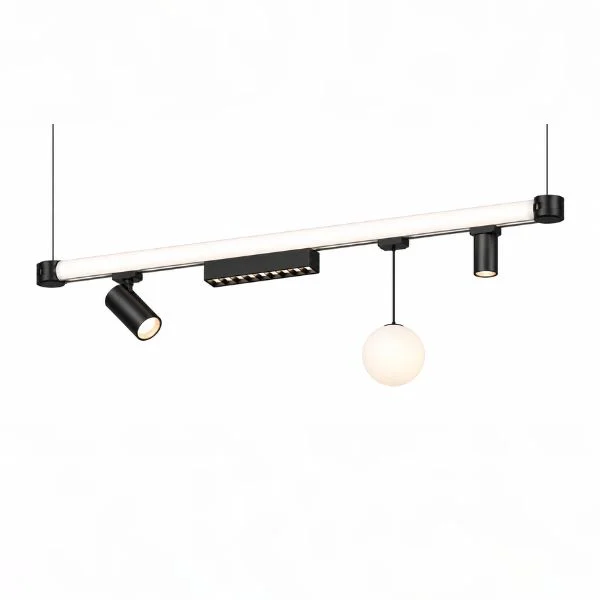
Alternative light sources
Explore supplementary optical elements for mixed lighting compositions. Confirm mechanical and electrical compatibility for each accessory.
Grille light module
A linear grille element is illustrated as a related component for supplementary directional lighting.
Compatibility-led selection
Confirm the accessory interface, power requirements and control method against the selected tube and hub configuration.
The exact compatibility, photometric output and controls for each optical accessory must be confirmed with the project bill of materials.
Lighting that becomes part of the architecture.
Geometric suspended compositions can give rhythm to large ceilings, define collaboration zones and create a visual focal point above meeting tables, reception counters or retail displays.
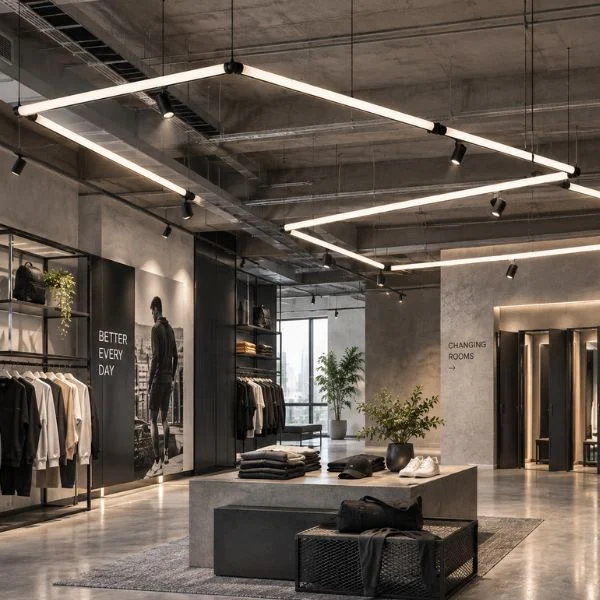

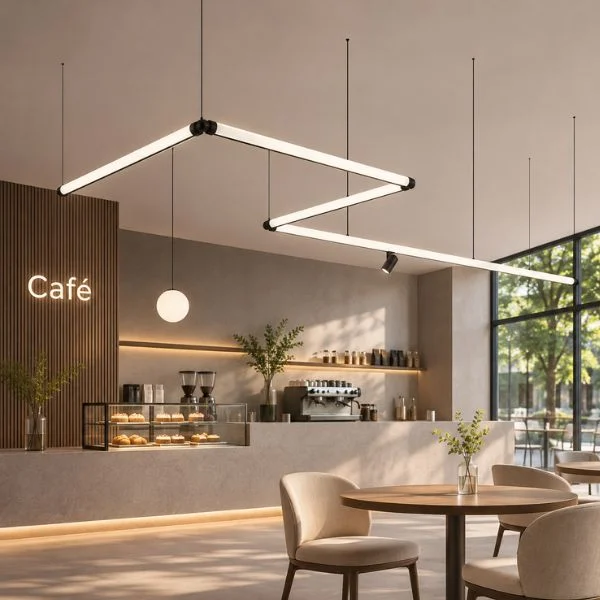
Suggested applications include corporate offices, boardrooms, creative studios, hospitality reception areas and contemporary retail environments. Final suitability depends on the selected photometric and mounting configuration.
From ceiling plan to system layout.
Share the intended geometry, ceiling plan, mounting height and preferred lighting effect. Our team can review the available modules and connector types to prepare a project-specific configuration.
Choose the layout
Linear, angled, branching or layered composition.
Build the system
Tube lengths, connection types and supplementary optical elements.
Review compatibility
Power supply, suspension, connector compatibility and technical documentation.
Frequently asked questions.
What is a modular magnetic tube lighting system?
It is a configurable lighting system built from cylindrical LED tube modules and multi-directional connection hubs. Compatible components can be combined to create linear, branching and geometric suspended layouts. Confirm the exact connection and accessory compatibility for the selected configuration.
Can the lighting layout be changed using rotating connectors?
The catalogue illustrates rotational and multi-directional connection concepts. The available rotation range, locking method and permitted layouts depend on the selected hub and must be confirmed before installation.
What is the difference between one-way and two-way powered tubes?
They are listed as separate tube connection variants, with slightly different nominal lengths. Their electrical feed direction and permitted connection sequence should be confirmed against the manufacturer's wiring diagram for the selected system.
Which tube lengths and wattages are available?
Four nominal power options are listed: 15W, 30W, 45W and 60W. Nominal lengths vary by connection variant, from approximately 590–600 mm at 15W to 2360–2370 mm at 60W.
Is this the same as a conventional magnetic ceiling track?
No. This page describes a modular cylindrical tube lighting system with central connection hubs. It should not be specified as a conventional magnetic track system unless the manufacturer confirms that classification and its applicable installation method.
Can Prillumen assist with a project-specific configuration?
Yes. Share the ceiling plan, desired geometry, mounting height, tube lengths and lighting requirements so the available modules and connection options can be reviewed.
What beam angle does the modular tube lighting system offer?
A 24° beam angle appears in the catalogue. The applicable optical module is not clearly identified, so confirm the beam angle and photometric file for the selected light source before specification.
What colour temperatures are available?
The catalogue lists 3000K, 4000K and either 5700K or 6000K depending on the diagram or specification table. Confirm the selectable CCT options for the exact model before ordering.
How is the 48V lighting system powered and specified?
The catalogue identifies 48V as the operating voltage. The compatible power supply, maximum connected load, wiring topology, connector ratings and dimming/control options must be verified for the complete project configuration.
Product details on this page are based on the currently available catalogue information. Confirm final dimensions, electrical diagrams, photometric data, control options, safety documentation and certifications with Prillumen before project specification or ordering.