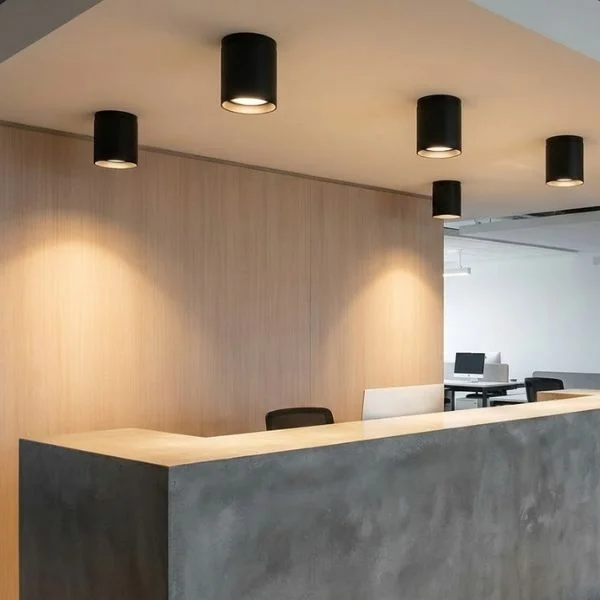
Ever wonder why an outfit looks vibrant in natural sunlight, but completely washed out under your indoor bulbs?
It isn’t a problem with brightness or color temperature—it comes down to the color rendering index of led lights.
The right CRI score can make your interior design pop, reduce eye strain, and reveal true-to-life colors in any room. The wrong one leaves your entire space looking dull and flat.
In this quick guide, you’ll learn what Índice de Reprodução de Cor (IRC) actually measures, how it differs from Kelvin ratings, and exactly how to choose the right 90+ CRI LED bulbs for your space.
Let’s dive right in.
Have you ever bought a jacket that looked deep crimson in the store, only to discover it looked dull and brownish under your home lighting? Or noticed how skin tones look pale and washed out in a newly renovated office?
These common frustrations stem directly from the color rendering index of led lights. Understanding how light sources reproduce color is essential when specifying high-performance illumination that brings interior architectural finishes and products to life.
The 0–100 Color Fidelity Scale Explained
O Índice de Reprodução de Cor (IRC) evaluates how accurately a light source reveals the true colors of objects compared to a natural reference light.
- The 100 CRI Benchmark: The natural daylight spectrum (100 CRI) and traditional incandescent light bulbs represent the baseline score of 100 on the color fidelity scale (0–100).
- Continuous Spectral Power Distribution (SPD): Natural light features a complete, unbroken spectrum containing all visible light wavelengths, allowing every shade to appear in its truest form.
How General CRI (Ra) Is Calculated
To calculate the standard general CRI value (denoted as Ra), testing laboratories measure a light source against eight specific standard test colors.
| Test Samples | Color Palette | Purpose in Testing |
|---|---|---|
| R1 through R8 | Light pastel shades (pink, yellow, green, blue, violet) | Calculates the standard average Ra score |
The numerical average of the scores for R1 through R8 yields the standard CRI rating found on most lighting spec sheets.
Limitations of Early LED Phosphor Formulations
Early phosphor-converted LED chips relied heavily on blue LED dies coated with simple yellow phosphors. While energy efficient, this early technology created serious spectral gaps:
- Missing Deep Wavelengths: Early LEDs struggled to emit deep reds, cyan, and rich saturated tones.
- Misleading High Scores: A light fixture could achieve an 80+ Ra rating by rendering pale pastel tones reasonably well, while completely failing to render vivid, saturated colors.
The R9 Factor: Why Saturated Red Rendering Is Critical
To overcome the blind spots of standard Ra ratings, we pay critical attention to the R9 saturated red score—the separate test color sample measuring deep, saturated red.
Because red wavelengths are fundamental to creating depth and warmth in our surroundings, high R9 scores are indispensable for:
- Human Skin Tones: Prevents complexions from looking dull, pale, or greenish in commercial and healthcare spaces.
- Wood Grains & Finishes: Accentuates the rich, warm undertones of walnut, oak, and cherry millwork.
- Fresh Produce & Meats: Keeps fruits, vegetables, and meats looking vibrant and appetizing in retail grocery environments.
- Fabrics & Apparel: Guarantees precise color matching and vibrancy for high-end retail displays and galleries.
When we develop high-grade architectural illumination, we ensure our LED engine selections combine high baseline CRI with elevated R9 output to deliver true full-spectrum performance.
CRI vs. Color Temperature (CCT): Decoupling Fidelity from Atmosphere
Ao especificar cURL Too many subrequests by single Worker invocation. To configure this limit, refer to https://developers.cloudflare.com/workers/wrangler/configuration/#limits, confusing Correlated Color Temperature (CCT) with Color Rendering Index (CRI) is one of the most common pitfalls we see in project planning. While both shape visual perception, they control entirely different aspects of light quality.
- CCT (Kelvin): The Mood Setter. Correlated Color Temperature describes the visual warmth or coolness of the light beam itself, measured on the Kelvin (K) scale. Lower values like 2700K yield a cozy, amber glow, while higher values like 5000K produce a crisp, cool daylight feel. CCT sets the emotional atmosphere.
- CRI (0–100): The Truth Teller. O color rendering index of LED lights measures how accurately a light source reveals the true colors of objects beneath it compared to natural sunlight. A light fixture can be set to a warm 3000K or a cool 4000K, but if its CRI score is low, vibrant finishes look dull, timber looks washed out, and skin tones appear sickly.
For spaces requiring adaptable ambiance without compromising visual clarity, specifying flexible fixtures like a downlight de wafer LED 5CCT allows you to dial in the precise Kelvin temperature for the room while maintaining high color fidelity.
CCT vs. CRI Metrics and Architectural Impact
To ensure your lighting specifications meet both design aesthetics and operational goals, we break down how these two fundamental metrics impact illuminated spaces:
| Metric | O que mede | Standard Scale | Primary Architectural Impact |
|---|---|---|---|
| Correlated Color Temperature (CCT) | Visual appearance and warmth/coolness of the light beam. | 1800K to 6500K (Kelvin) | Sets space atmosphere, defines functional zones, and supports circadian alignment. |
| Índice de Reprodução de Cor (IRC) | Precision and accuracy in rendering object colors. | 0 to 100 Ra (plus R9) | Preserves material authenticity, enhances product displays, and ensures visual comfort. |
Decoupling CCT from CRI allows us to engineer fixtures—such as an architectural up and down pendant light—that deliver warm, inviting illumination without sacrificing the color integrity of interior finishes, artwork, or structural elements.
Application-Specific Guide: Choosing the Right Color Rendering Index of LED Lights
Choosing the right color rendering index of LED lights comes down to balancing energy efficiency with visual accuracy for your specific space. Here is how I categorize CRI tiers across industrial, commercial, and architectural specifications:
CRI Selection Tiers for Specifiers
- CRI < 80 (Basic Utility & Industrial)
- Aplicações: Parking garages, heavy industrial warehouses, outdoor security perimeter lighting.
- Foco: Maximum energy efficiency and lumen output where precise color identification is non-critical.
- CRI 80–89 (Standard Commercial Baseline)
- Aplicações: Open-plan office spaces, general corridors, stairwells.
- Foco: Reliable visual clarity for general work tasks. This is the common baseline for standard cURL Too many subrequests by single Worker invocation. To configure this limit, refer to https://developers.cloudflare.com/workers/wrangler/configuration/#limits.
- CRI 90–94 (High-Fidelity Architectural Standard)
- Aplicações: Executive boardrooms, educational classrooms, healthcare patient rooms.
- Foco: Superior visual comfort, reduced eye strain, and true-to-life tone accuracy. Ideal when specifying high-end fixtures like cURL Too many subrequests by single Worker invocation. To configure this limit, refer to https://developers.cloudflare.com/workers/wrangler/configuration/#limits.
- CRI 95–100 (Color-Critical Professional Applications)
- Aplicações: High-end retail showrooms, art galleries, museums, medical inspection bays.
- Foco: Full-spectrum accuracy ensuring zero distortion on artwork, textiles, fresh produce, and medical examinations.
Specification Tip: For high-end architectural interiors, always mandate a minimum 90 CRI with an R9 score above 50 on your fixture schedules to ensure natural rendering of wood finishes, warm stone, and human skin tones.
Beyond Basic CRI: Modern Evaluation Standards
cURL Too many subrequests by single Worker invocation. To configure this limit, refer to https://developers.cloudflare.com/workers/wrangler/configuration/#limits color rendering index of led lights has been the industry standard for decades, traditional Ra scoring has clear limitations. Standard CRI only evaluates 8 muted pastel reference samples (R1–R8), which means a fixture can score a high Ra while failing to render saturated colors, deep reds, or subtle skin tones accurately.
To address these gaps in visual evaluation, modern architectural lighting specifications rely on more comprehensive dual-metric systems.
IES TM-30 Color Metrics
O IES TM-30 color metrics provide a far more complete picture of photometric quality by evaluating light across 99 real-world color samples:
- Fidelity Index (Rf): Evaluates overall color accuracy on a 0–100 scale, refining traditional CRI into a more reliable spectrum-wide measurement.
- Gamut Index (Rg): Measures average saturation levels. A score of 100 represents neutral saturation, while values above 100 indicate boosted color vibrancy and values below 100 signal desaturation.
| Metric | Benchmark Target | Practical Architectural Impact |
|---|---|---|
| Fidelity (Rf) | Rf ≥ 90 | Ensures true-to-life color rendering without spectral drop-offs |
| Gamut (Rg) | 95 ≤ Rg ≤ 105 | Prevents visual dullness while avoiding unnatural over-saturation |
RGBCW Tunable White Technology
When shifting color temperatures throughout the day, basic dual-channel tunable white fixtures often drop in color fidelity at intermediate kelvin steps. We utilize five-channel RGBCW tunable white LED fixtures (Red, Green, Blue, Cool White, Warm White) to bridge these spectral gaps.
By actively blending primary color channels alongside dedicated warm and cool white LED dies, our linear systems hold high color accuracy, vibrant R9 red values, and stable TM-30 scores across the entire tuning range. When specifying advanced linear systems for commercial builds, pairing high color fidelity with verified conformidade com padrões para importação de iluminação de escritório para o Brasil ensures both superior visual quality and hassle-free project code approval.
High-CRI Linear Lighting in Architecture
When we design high-performance commercial and residential spaces, lighting is never an afterthought. Integrating a high color rendering index of led lights into continuous linear fixtures completely changes how a physical space feels and functions. By pairing top-tier color fidelity with clean architectural lines, we transform basic illumination into an active design element.
Visual Comfort and Material Authenticity
Standard LEDs often wash out premium surfaces or create harsh glare. By mastering modern design de iluminação arquitetônica principles, high-CRI linear fixtures highlight raw materials as intended while protecting visual comfort.
| Architectural Feature | Impact of High-CRI Linear Lighting | Benefício Principal |
|---|---|---|
| Material Authenticity | Reveals genuine warmth in timber, natural sheen in metal, and rich texture in concrete. | Prevents dull, muddy surface finishes under artificial light. |
| Low Glare (UGR) | Optimizes light distribution to maintain a low Unified Glare Rating. | Significantly reduces eye strain and visual fatigue for occupants. |
| Trajetórias Contínuas | Ensures uniform color accuracy across long, uninterrupted architectural lines. | Eliminates color shifts along continuous linear installations. |
Human-Centric Lighting & Productivity
True-to-life spectrums do more than make finishes look good—they directly impact biological wellness and occupant productivity.
- Circadian Support: Full-spectrum light aligns with natural daylight cues, improving daytime focus, alertness, and energy.
- Reduced Mental Fatigue: High visual accuracy allows the human eye to process contrast and fine details effortlessly without strain.
- Enhanced Spatial Quality: Accurate rendering creates vibrant, natural indoor environments that boost mood and overall psychological comfort.
How Prillumen Light Engineers Superior Photometric Performance
Premium Chipsets & Advanced Phosphor Formulations
At Prillumen, we do not rely on standard, off-the-shelf components. We engineer high-performance custom LED modules built with Tier-1 chipsets and specialized phosphor layers. This precise engineering maximizes the color rendering index of led lights across every fixture we produce, delivering rich, natural colors and seamless spectral balance without compromising energy efficiency.
Rigorous Photometric Testing & Quality Control
Every fixture we manufacture undergoes stringent photometric validation to guarantee spec-grade performance on every job site:
- Verified Light Output: Precision lab testing confirms accurate lumen delivery and beam distribution.
- Driver Stability: Clean power delivery ensures flicker-free operation and smooth dimming performance.
- Low UGR Optics: Advanced diffusers control brightness to minimize visual glare and strain.
- cURL Too many subrequests by single Worker invocation. To configure this limit, refer to https://developers.cloudflare.com/workers/wrangler/configuration/#limits Tight MacAdam ellipse binning prevents color drift across continuous fixture runs.
UL-Listed Quality & Custom OEM Solutions
We design and build commercial luminaires that meet the strictest North American safety standards. When you specify our UL-certified linear LED lighting, you get factory-direct OEM flexibility tailored directly to your exact photometric and architectural requirements.
| Performance Feature | Prillumen Engineering Standard | Architectural & Project Impact |
|---|---|---|
| Phosphor Formulation | Custom full-spectrum blend | Guarantees high CRI (Ra 90+) and strong R9 red rendering |
| Photometric Testing | Complete laboratory test reporting | Provides verified IES files for reliable lighting calculations |
| Certificação de Segurança | UL-listed commercial standard | Assures code compliance and simple site inspection approval |
| Factory OEM Customization | Modular layout & driver options | Meets custom length, lumen, and control specifications |
Perguntas Frequentes
Can an LED Light Achieve a CRI of 100?
Technically, no LED fixture achieves a perfect score of 100 across every metric, but high-end chipsets come remarkably close. A true 100 CRI benchmark represents natural daylight or incandescent lighting, which emit a continuous thermal spectrum.
Standard LEDs produce light by using a blue diode coated with phosphor. While advanced multi-phosphor blends allow our high-fidelity Luminárias comerciais de LED para uso interno to achieve a 97–98 CRI, hitting 100 requires absolute spectral continuity across every single wavelength. For all practical architectural and commercial applications, a score of 95+ CRI is visually indistinguishable from natural sunlight.
Does Higher CRI Reduce Energy Efficiency?
Yes, there is a small trade-off between color accuracy and luminous efficacy (lumens per watt). Maximizing the color rendering index of led lights—specifically boosting the R9 saturated red score—requires thicker phosphor layers that absorb blue light photons and re-emit them as lower-energy red wavelengths.
| Performance Tier | Relative Efficacy | Aplicação Ideal |
|---|---|---|
| 80 CRI | Baseline (100%) | Storage areas, back-of-house utility, parking structures |
| 90 CRI | ~90%–95% of baseline | Open offices, educational facilities, general retail |
| 95+ CRI | ~85%–90% of baseline | Art galleries, luxury showrooms, healthcare, inspection bays |
Engineers have significantly closed this gap over recent years, meaning you no longer have to sacrifice substantial energy savings to achieve exceptional color fidelity.
How to Verify CRI Performance on Spec Sheets
cURL Too many subrequests by single Worker invocation. To configure this limit, refer to https://developers.cloudflare.com/workers/wrangler/configuration/#limits architectural lighting specifications for premium architectural recessed linear LED light fixtures, standard marketing claims like “high CRI” are not enough. We recommend following a clear verification checklist:
- Demand the R9 Rating: Padrão Índice de Reprodução de Cor (IRC) only calculates the R1–R8 average ($R_a$). Always verify an explicit R9 score of >50 (or >80 for color-critical applications) to ensure skin tones and materials don’t look washed out.
- Evaluate IES TM-30 Color Metrics: Ask for the Fidelity Index ($R_f$) (aim for >90) and Gamut Index ($R_g$) (aim for 95–105) to get an accurate picture of color saturation alongside fidelity.
- Request an IES LM-79 Test Report: Examine the laboratory-tested Spectral Power Distribution (SPD) graph. A high-performing light source will display a broad, continuous curve across blue, green, and red spectral regions rather than a sharp blue spike followed by a steep drop.
FIQUE POR DENTRO
Inscreva-se na nossa newsletter gratuita.
Deixe um Comentário
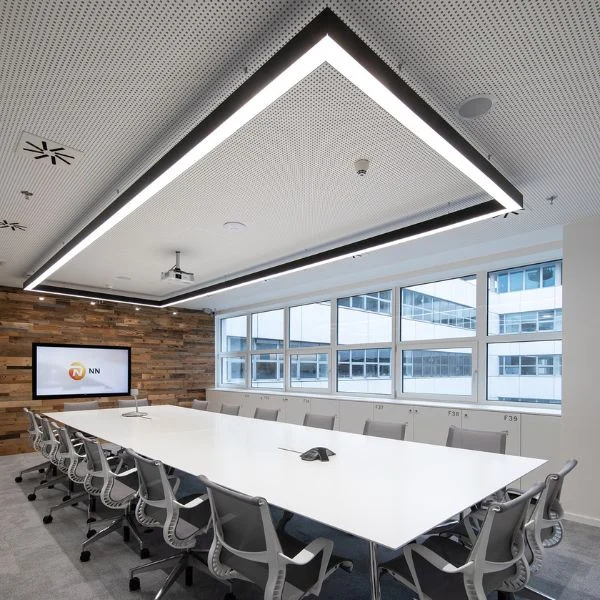
Iluminação de Escritório Design Guide for Modern Workplaces with lux UGR and LED fixture tips for comfort productivity and energy efficiency
O que é Iluminação de Branco Ajustável? À medida que o padrão da indústria evolui, [...]
cURL Too many subrequests by single Worker invocation. To configure this limit, refer to https://developers.cloudflare.com/workers/wrangler/configuration/#limits