Understanding Linear LED Lighting in Retail Contexts
What Are Linear LED Systems?
When we talk about retail lighting design, we aren’t just talking about hanging a few bulbs. We are defining the store’s architecture. At its core, linear lighting consists of trunking LED systems and modular linear luminaires designed to create long, uninterrupted lines of light.
Unlike the disjointed look of old-school fixtures, these linkable linear LED systems snap together to form seamless continuous runs. Whether it’s a surface-mounted rail or a suspended pendant, the goal is uniformity. We utilize modular fixtures—meaning the light engine, optics, and drivers are often interchangeable components within a rail—allowing us to tailor the light exactly where your merchandise needs it.
Linear LED vs. Traditional Fluorescent
I often hear store owners ask, “Is the upgrade worth it?” When you look at the Total Cost of Ownership (TCO), the answer is a resounding yes. Traditional fluorescent tubes and halogen spotlights are notorious for high maintenance costs and rapid lumen depreciation.
Here is a quick breakdown of why linear LED fixtures dominate the modern market:
| Feature | Traditional Fluorescent/Halogen | Linear LED System |
|---|---|---|
| Uniformity | Prone to flickering and dark spots at connection points | Seamless continuous runs with zero dark spots |
| Maintenance | Frequent bulb replacements required | Virtually zero maintenance (50,000+ hour lifespan) |
| Efficiency | High heat output, lower energy conversion | High efficacy, minimal heat, reduced HVAC load |
| Aesthetics | Bulky, dated industrial look | Sleek, architectural, and minimalist |
Creating Seamless Light Lines
The visual impact of a store is decided the moment a customer walks in. We use continuous runs not just for illumination, but for navigation. A clean, straight line of light subconsciously guides foot traffic down aisles and towards key promotional areas.
In retail lighting design, “seamless” is the magic word. High-quality trunking LED systems allow us to link fixtures end-to-end without visible gaps or breaks in the light output. This creates a sophisticated, architectural feel that elevates the perceived value of the products below, turning the ceiling into a directional tool rather than just a utility surface.
Would you like me to detail the specific psychological impacts these lighting layouts have on customer dwell time and sales conversion next?
The Impact of Lighting on Retail Psychology and Sales
Lighting is your silent salesperson. I’ve seen time and again how strategic retail lighting design does more than just illuminate a space—subconsciously guiding how customers move and feel. If you want to direct foot traffic to the back of the store or highlight a new collection, linear lighting acts as a visual path. By creating comfortable, well-lit environments, you encourage customers to slow down. Extending this “dwell time” is crucial because the longer they stay, the more likely they are to make a purchase.
Guiding Foot Traffic and Mood
To truly influence behavior, the atmosphere needs to match the brand. For example, using RGBCW tunable white LED lights allows you to shift color temperatures dynamically, creating an energetic vibe during the day and a relaxed, warm ambiance in the evening. This adaptability keeps customers comfortable and engaged.
Key Principles: Contrast Ratios for Emphasis
Uniform brightness is the enemy of visual interest. To break the monotony and draw the eye specifically where you want it, you need to master accent lighting retail ratios.
- 3:1 Ratio: The accent light is three times brighter than the ambient light. This is perfect for highlighting shelves or specific aisles without being jarring.
- 5:1 Ratio: The accent light is five times brighter. Use this for high-impact window displays or featured product drops to create dramatic focus.
Using L-shape modular linear lights can help you build these zones physically, creating architectural interest that naturally draws the eye toward high-margin merchandise.
Evidence-Based Sales Increases
There is solid data backing visual merchandising lighting. When customers can clearly see the texture of a fabric or read a label without squinting, their confidence in the product rises. High-quality illumination improves perceived value. By eliminating dark spots and ensuring true-to-life color rendering, you aren’t just making the store look better; you are directly reducing return rates and increasing conversion at the checkout.
Next Step: Would you like me to detail the specific technical specifications, such as CRI and Color Temperature, needed to achieve these effects in the next section?
Essential Technical Specifications for Retail Linear LEDs
Selecting the right linear LED fixtures isn’t just about filling a space with light; it’s about choosing specifications that actively sell your products. When we talk about spec-grade fixtures, specific technical metrics determine whether your merchandise pops or looks flat. Here is the breakdown of the non-negotiable specs I look for in modern retail environments.
High CRI LED Lighting (>90)
Color Rendering Index (CRI) is the most critical metric for product visibility. In retail, a low CRI makes colors look muddy and unappealing. I always insist on CRI >90 (often labeled as Ra90) for applications involving fashion, fresh food, and cosmetics. This ensures that a red dress looks vibrant red, not dull maroon, and that produce looks fresh rather than stale.
Color Temperature Retail Recommendations (CCT)
The “vibe” of your store is dictated by the Correlated Color Temperature (CCT). Choosing the wrong temperature can alienate your target demographic. Here is a quick reference guide I use for alignment:
| Retail Category | Recommended CCT | Effect Created |
|---|---|---|
| Luxury & Hospitality | 3000K (Warm White) | Intimate, cozy, and high-end atmosphere. |
| Fashion & Grocery | 3500K – 4000K (Neutral) | Clean, energetic, and honest color representation. |
| Electronics & Pharmacy | 5000K (Cool White) | Clinical, sharp, and high-tech appearance. |
For complex spaces requiring multiple moods, adhering to a comprehensive architectural lighting complete guide ensures your CCT transitions smoothly between zones.
Beam Angle Selection and Optics
You shouldn’t waste lumens lighting the floor. Proper beam angle selection directs light exactly where shoppers look.
- Wide Distribution (90°+): Ideal for general ambient retail illumination to ensure safety and navigation.
- Asymmetric Optics: These are essential for shelf lighting solutions. They throw light vertically onto shelving units without blinding customers walking down the aisle.
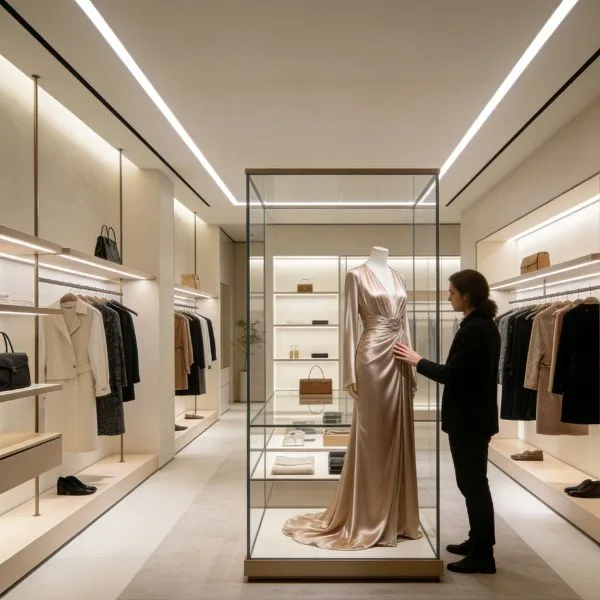
- Narrow Beams (15°-30°): Used strictly for accent lighting retail strategies to highlight specific displays or mannequins.
For unique layouts, using versatile fixtures like a triangular modular linear light can provide both wide distribution and a distinct aesthetic edge that standard boxy fixtures lack.
Glare Control and Lux Levels
Nothing drives a customer out faster than a headache. Glare-free retail lights are mandatory for customer comfort. Look for a Unified Glare Rating (UGR) of <19. This ensures the light source is comfortable to look at, even from a distance.
Regarding brightness, different zones require different intensities:
- General Aisles: 300–500 Lux
- Merchandise Displays: 750–1000 Lux (Create contrast)
- Window Displays: 1500+ Lux (To combat daylight reflection)
By balancing high luminous efficacy with strict glare control, you ensure the store is bright enough to sell, but comfortable enough to keep people browsing.
Next Step
Would you like me to detail the specific installation methods for these linear systems, specifically focusing on suspended vs. recessed mounting for different ceiling types?
Types of Linear LED Fixtures for Retail Applications
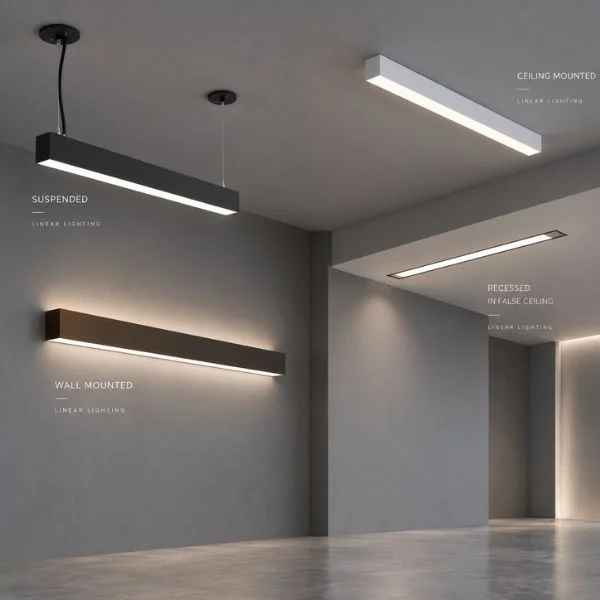
When we are designing a retail space, selecting the right form factor is just as critical as the light quality itself. The goal is to blend the fixture into the architecture so customers focus on the merchandise, not the light source. We generally categorize retail linear LED lighting into four primary mounting styles, each serving a specific architectural purpose.
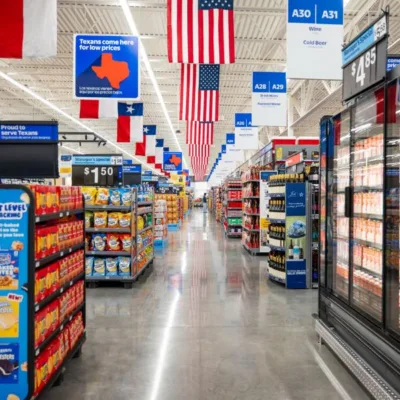
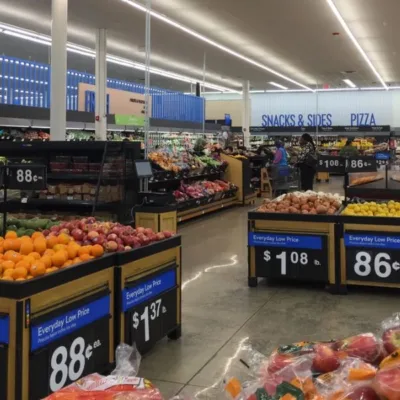
Versatile Mounting Styles
- Suspended (Pendant): Ideal for stores with high or open ceilings (like the popular exposed-grid look). These fixtures bring the light source closer to the merchandise. For example, a drop lens linear LED pendant offers excellent distribution, pushing light vertically and horizontally to brighten aisles and shelves simultaneously.
- Recessed: These sit flush with the ceiling for a clean, minimalist aesthetic. They are perfect for luxury boutiques where you want the ceiling to look uncluttered.
- Surface-Mounted: The go-to solution for retrofits where recessed installation isn’t possible, attaching directly to the ceiling or wall.
- Trunking LED Systems: The heavy hitters for supermarkets and big-box stores. These allow for long runs of uninterrupted light with pre-wired rails for fast installation.
Modular and Linkable Designs
The days of dealing with dark spots between fixtures are over. Modern retail design demands seamless continuous runs. We utilize Linkable Linear LED Systems that snap together to create smooth lines of light that guide the customer through the store.
- No Dark Spots: Advanced joiners ensure the light is uniform across the entire run.
- Flexibility: Modular linear luminaires allow us to mix and match lengths and corners (L, T, or X shapes) to follow the store layout.
- Spec-Grade Quality: For high-end applications, we rely on spec-grade fixtures like the 2″ architectural pendant light, which offers precision construction and superior aesthetics compared to standard commercial strips.
Specialized Options for Visual Merchandising
Beyond general illumination, we use specialized linear formats to drive sales:
- Shelf-Integrated: Ultra-slim profiles designed to hide under shelves, illuminating products without visible glare.
- Tunable White Fixtures: These allow us to adjust the ambiance from warm to cool based on the time of day or the specific collection being displayed.
- Asymmetric Optics: Specialized lenses that throw light specifically onto wall displays rather than the floor.
By mixing these linear LED fixtures, we create a layered lighting environment that feels cohesive and high-end.
Lighting Layering Strategies: Ambient, Task, and Accent
You cannot simply install rows of uniform lights and expect merchandise to pop. Effective retail lighting design relies on layering—combining different types of light to guide the customer’s eye and create visual hierarchy. We achieve this by blending ambient retail illumination with targeted task and accent lighting, often within the same linear profile.
Building Layers within Linear Systems
Gone are the days when you needed separate fixtures for general light and spotlights. Modern linear LED fixtures allow for seamless continuous runs that integrate general lighting with adjustable spot modules. You can maintain a clean, architectural look while directing high-intensity beams exactly where they are needed. For instance, using a flexible square modular linear light system allows you to snap in spotlight inserts for featured products without breaking the visual continuity of the ceiling design.
Zone-Specific Approaches
Different areas of your store require distinct lighting tactics to influence customer behavior:
- Entrances and Promotional Areas: These zones need high brightness and contrast to grab attention immediately.
- Aisles: Uniform linear runs are essential here for navigation, preventing dark spots on the floor.
- Perimeter Walls: Lighting vertical surfaces makes the store feel larger. A high-quality Slot 4 wall-mounted linear light is perfect for washing walls, drawing customers toward the edges of the room.
- Shelving: Requires asymmetric optics to push light onto the vertical face of the product, not just the floor.
The Accent Rule for Visual Merchandising
To make a product truly stand out, you need contrast. A general rule of thumb in visual merchandising lighting is that accent lighting should be 3 to 5 times brighter than the surrounding ambient light. If your general aisle is at 500 lux, your featured mannequin or end-cap display should be hit with at least 1500 to 2500 lux. This contrast ratio signals to the shopper’s brain that these items are important, directly influencing purchasing decisions.
Designing for Specific Retail Zones
A “one-size-fits-all” approach kills retail ambiance. To drive sales and maximize customer comfort, we treat every zone as a unique environment requiring a specific lighting strategy. We don’t just hang lights; we map out the customer journey from the sidewalk to the checkout counter.
Window Displays and Entrances: The Hook
You have roughly three seconds to grab a pedestrian’s attention. This zone requires high-impact visual merchandising lighting. We typically aim for a contrast ratio of at least 5:1 compared to the interior ambient light.
- Goal: Create drama and highlight the “hero” products.
- Strategy: Use high-output linear accents or integrated spotlights to punch through window reflections during the day.
Sales Floor and Aisles: The Navigation Engine
Once inside, the customer needs to feel guided, not overwhelmed. We use trunking LED systems to create seamless continuous runs that visually direct foot traffic down aisles. This establishes rhythm and ensures lux levels in retail zones remain consistent, preventing dark spots that make a store feel dingy.
- Goal: Uniformity and easy navigation.
- Strategy: Deploy specific retail linear lighting solutions that allow for long, uninterrupted lines of light, encouraging customers to explore deeper into the store.
Shelving and Merchandise: Vertical Visibility
Standard downlighting often leaves products on lower shelves in the dark. To fix this, we utilize linear LED fixtures with asymmetric optics. This throws light onto the vertical surfaces (the products) rather than wasting lumens on the floor.
- Goal: Eliminate shadows on shelving.
- Strategy: Shelf lighting solutions must focus on vertical illuminance, making packaging pop and prices easy to read.
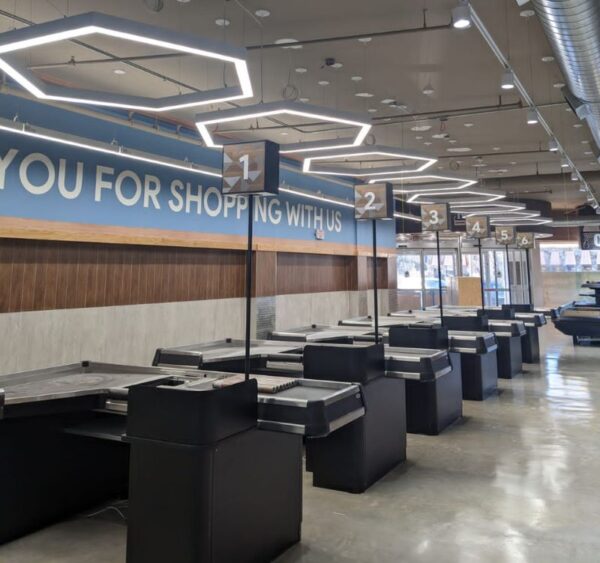
Fitting Rooms and Cash Counters: The Decision Zones
This is where the conversion happens. In fitting rooms, unflattering lighting leads to abandoned carts. We insist on High CRI LED lighting (CRI >90) here to render skin tones and fabric colors accurately. At the cash wrap (POS), the lighting should be bright enough for transactions but comfortable for staff standing there all day.
- Goal: Comfort, accuracy, and flattery.
- Strategy: Soft, diffuse light with excellent color rendering to boost buyer confidence.
Back-of-House and Stock Areas: Efficiency First
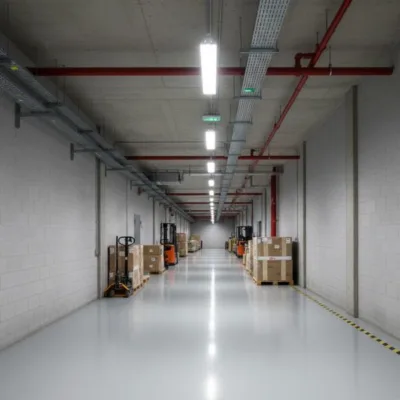
In stockrooms, aesthetics take a backseat to utility and cost. We prioritize energy-efficient store lighting that provides safety and visibility for inventory tasks without driving up the electric bill.
- Goal: Low maintenance and high efficiency.
- Strategy: robust, industrial-grade linear strips or vapor tights equipped with motion sensors to ensure lights are off when the room is empty.
Quick Reference: Zone Lighting Requirements
| Retail Zone | Priority | Recommended Optic | Key Feature |
|---|---|---|---|
| Windows | Attention | Narrow/Spot | High Contrast |
| Aisles | Navigation | Wide/Double Asymmetric | Glare-free Uniformity |
| Shelves | Visibility | Asymmetric | Vertical Illumination |
| Fitting Rooms | Flattery | Diffuse | High CRI (>90) |
| Stock Room | Efficiency | Wide | Motion Sensors |
Would you like me to detail the ROI calculations and energy savings breakdown for upgrading to these linear LED systems in the next section?
Energy Efficiency and ROI in Retail Lighting
Switching to energy-efficient store lighting is a financial strategy, not just an environmental one. When I sit down with clients to calculate the Total Cost of Ownership (TCO), linear LEDs consistently outperform legacy fluorescent or halogen systems. You aren’t just cutting your monthly electric bill by 40-60%; you are virtually eliminating the labor and hardware costs associated with replacing burnt-out tubes and ballasts.
For retailers in the US, compliance is non-negotiable. Utilizing Title 24 Compliant fixtures ensures you meet strict energy codes—vital for new builds in states like California—while often qualifying your business for substantial utility rebates.
Maximizing Value with Smart Controls
To truly optimize ROI, we integrate dimmable linear LEDs with modern control protocols. Proper planning during commercial lighting installation allows these smart systems to reduce waste automatically:
- Daylight Harvesting: Sensors dim artificial lights when natural sunlight floods the sales floor.
- Occupancy Sensors: Back-of-house and stock areas only light up when staff is present.
- DALI Dimming: precise control over light levels to balance atmosphere with energy consumption.
Installation and Maintenance Best Practices
When we talk about outfitting a store, time is money. That is why I always prioritize Linkable Linear LED Systems designed for tool-free assembly. You want fixtures that snap together easily, allowing contractors to create seamless continuous runs without needing a massive toolkit or excessive labor hours. This plug-and-play approach not only speeds up the timeline but ensures the alignment is dead straight—critical for that high-end retail look.
However, even the best spec-grade fixtures can fail if the install is rushed. Here are the common issues I see and how to fix them:
- Flickering: This is usually a driver compatibility issue. Ensure your dimmers match the LED drivers perfectly.
- Uneven Runs: Misalignment looks cheap. Use the manufacturer’s alignment pins or brackets to keep long runs perfectly straight.
- Glare: If customers are squinting, you’ve failed. Verify your suspension height and ensure the optics (UGR <19) are suited for the ceiling height.
For those diving deeper into troubleshooting, reviewing answers to common architectural lighting questions can save you a lot of guesswork on site.
Retrofits vs. New Builds
The strategy shifts depending on the project type. For new builds, we have the luxury of planning the ceiling grid around the lights. However, for retrofits, I recommend looking for versatile mounting options that can utilize existing suspension points. This minimizes ceiling repairs and keeps the Total Cost of Ownership (TCO) low. Whether you are looking for wholesale pricing on a bulk order or a custom solution, getting the installation logic right before the products arrive is half the battle.
Real-World Success with Linear LED Systems
We’ve seen firsthand how the right lighting transforms a retail space from “just okay” to a sales-driving machine. It’s not just about swapping out bulbs; it’s about strategic application. Here are a couple of anonymized examples from the field that show what modern retail lighting design can actually do.
The Urban Boutique Upgrade
We worked with a high-traffic streetwear store in Chicago that struggled with a cluttered ceiling and poor focus. Their old track lighting left dark spots that made the store feel smaller.
- The Fix: We installed a creative geometric layout using modular linear luminaires to guide customer flow from the entrance to the back wall. We specifically utilized Y-shape modular linear lights to create a unique, branching pattern overhead that matched their edgy branding.
- The Result: The store reported a 15% increase in dwell time because the space felt more open and inviting. The unique ceiling design also became a social media hook for shoppers.
The Big-Box Efficiency Overhaul
A regional grocery chain needed to cut operational costs while improving produce visibility. Their fluorescent tubes were flickering and racking up maintenance bills.
- The Fix: We deployed high-efficacy Trunking LED systems for the aisles. These created seamless continuous runs that eliminated shadows on the shelving. For their featured organic section, we used rectangular modular linear lights to create a distinct “zone within a zone,” visually separating the premium products without physical barriers.
- The Result: They achieved a 40% reduction in energy costs and the maintenance team stopped wasting hours replacing ballasts. Plus, the fresh produce looked vibrant under the high CRI light, boosting category sales.
Why Modular Trunking Wins
These examples highlight why linkable linear LED systems are the standard for modern US retail. They offer a level of customization that rigid fixtures just can’t match.
- Customizable Layouts: Whether you need a straight run for an aisle or a hexagonal modular linear light for a feature area, the system adapts to your floor plan.
- High Efficacy: You get more light output (lux) for every watt of electricity used, lowering the Total Cost of Ownership (TCO).
- Speed: Tool-free assembly means your store isn’t shut down for weeks during installation.
By focusing on flexible, high-performance solutions, retailers can stop fighting their building’s limitations and start using light as a sales tool.
FAQ: Professional Insights into Retail Linear LED Procurement
1. How do linkable linear LED systems reduce labor costs in large-scale retail projects?
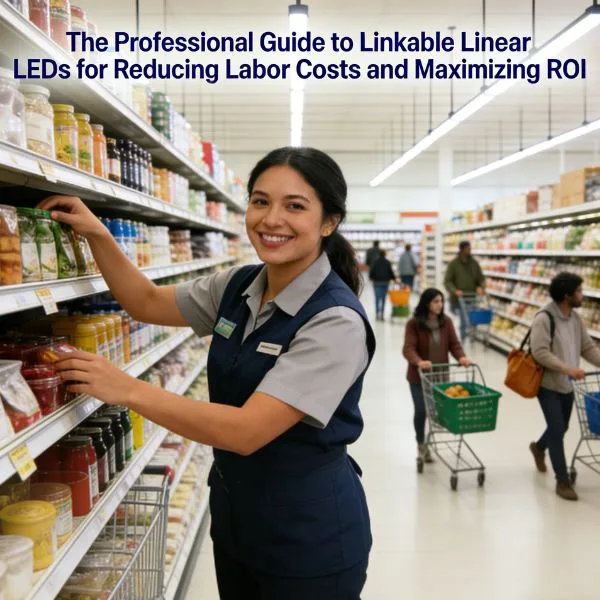
In commercial installations, labor often accounts for a significant portion of the budget. Linkable linear LED systems utilize plug-and-play connectors and tool-free trunking rails, allowing contractors to complete installations up to 50% faster than traditional hard-wired fixtures. This rapid deployment significantly lowers the total project cost for bulk buyers.
2. Why is CRI 90+ mandatory for high-end retail visual merchandising?
CRI 90+ (High Color Rendering Index) is critical for retail because it ensures merchandise colors—from fresh produce to luxury fashion—appear vibrant and accurate. Lighting with low CRI can make products look dull or “off-color,” which directly correlates to lower sales conversion and higher return rates.
3. What is the advantage of DLC Premium listed linear LEDs for U.S. retailers?
DLC Premium certification is the gold standard for energy efficiency in the United States. Beyond ensuring high luminous efficacy (120+ lm/W), it is the primary requirement for retailers to qualify for utility rebates. These rebates can often offset a substantial percentage of the initial procurement cost for large-scale retrofits.
4. How does UGR <19 impact customer “dwell time” in shopping environments?
UGR <19 signifies glare-free lighting. In a retail context, harsh glare causes visual fatigue and discomfort. By providing a comfortable, low-glare environment, retailers can extend customer “dwell time”—the duration a customer stays in the store—which is a key metric in increasing the average transaction value.
5. Can modular linear lighting be integrated with smart building controls?
Yes. Modern modular linear luminaires are typically compatible with 0-10V or DALI dimming protocols. This allows for integration with daylight harvesting sensors and occupancy controls, further reducing OPEX (operational expenses) by ensuring lights are only at full brightness when and where they are needed.
Would you like me to outline a specific maintenance schedule checklist for your new linear lighting setup?
Related Sources
STAY IN THE LOOP
Subscribe to our free newsletter.
Leave A Comment

Explore types of hanging lights including pendant chandeliers and cluster designs to find the perfect style for every room