
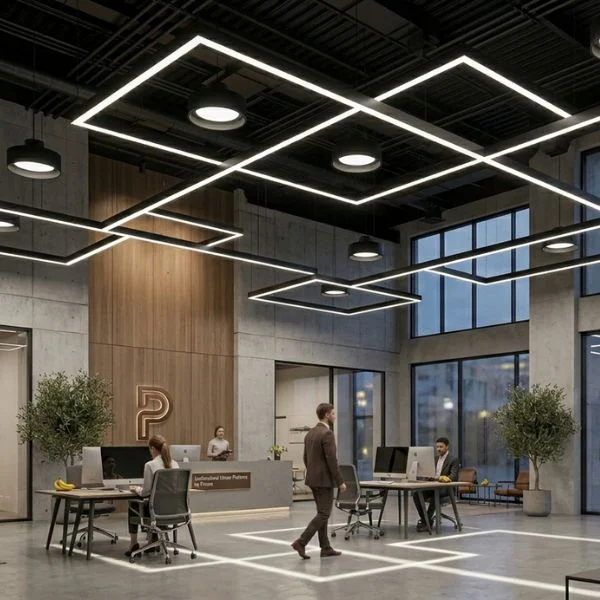
Are you struggling to keep up with skyrocketing energy costs and outdated building standards? In 2026, commercial lighting is no longer just a utility—it’s a long-term strategic planning tool for your bottom line.
I’ve tracked the shift toward high-efficiency LED standards and IoT integration to help you turn simple fixtures into data-driven optimization assets. Whether you need human-centric lighting to boost employee wellness or biophilic design to elevate your brand, this guide cuts through the noise.
I’ve updated this entire guide to include the latest sustainability regulations, automated controls, and smart exterior fixtures you need to stay competitive.
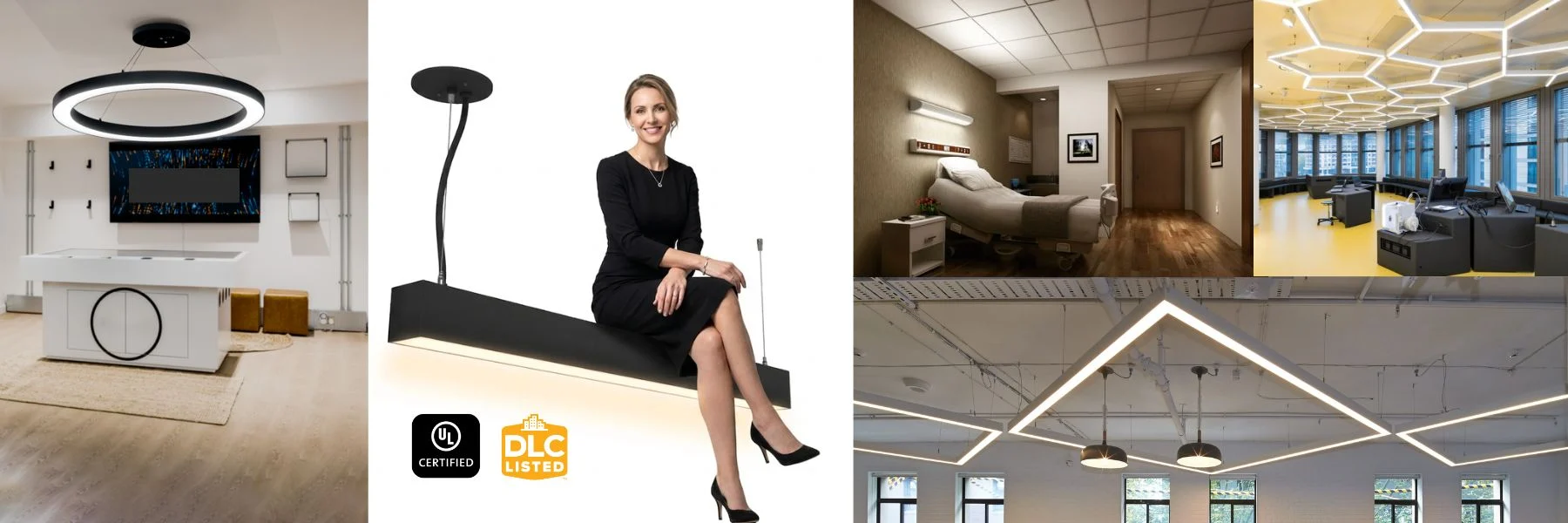
Evolution of the Commercial Lighting Market
The landscape of Commercial Lighting Trends 2026 is defined by a fundamental shift toward intelligent, carbon-neutral environments. As energy costs fluctuate and global climate targets tighten, commercial lighting has moved from a simple utility to a core component of building performance and asset value.
The Transition to High-Efficiency LED Standards
The baseline for performance has shifted significantly. In 2026, High-Efficiency LED technology is no longer optional; it is the industry standard. Modern installations focus on:
- Ultra-High Efficacy: Moving beyond standard savings to achieve 200+ lumens per watt.
- Quality of Light: Enhanced color rendering (CRI 90+) without sacrificing energy performance.
- Legacy Phase-outs: Rapid replacement of remaining fluorescent and HID systems to meet new power density limits.
Market Dynamics and Emerging Sustainability Regulations
Regulatory pressure is a primary driver for innovation in the current market. Governments are enforcing stricter codes that mandate not just efficient bulbs, but integrated control systems.
- Decarbonization Mandates: New laws require commercial properties to report and reduce their carbon footprint.
- Circular Economy: A shift toward modular fixtures that allow for component replacement rather than total disposal.
- Material Transparency: Increased demand for “Red List Free” components and sustainable manufacturing documentation.
Long-Term Strategic Planning for Modern Infrastructure
Forward-thinking facility managers are viewing lighting as a long-term investment rather than a one-time expense. Strategic planning now involves:
| Strategic Focus | Key Benefit |
|---|---|
| Future-Proofing | Designing systems that can receive over-the-air (OTA) software updates. |
| Total Cost of Ownership (TCO) | Prioritizing low maintenance and longevity over lower initial hardware costs. |
| Modular Scalability | Implementing infrastructure that grows with the building’s changing occupancy needs. |
By aligning lighting upgrades with long-term infrastructure goals, businesses ensure their properties remain competitive, compliant, and operationally efficient in an increasingly demanding global market.
Smart Lighting Systems and IoT Integration
In the world of Commercial Lighting Trends 2026, lighting is no longer a “set it and forget it” utility. We’ve moved into an era where lighting acts as the digital backbone of the building. By integrating IoT, we’re transforming fixtures into intelligent nodes that communicate, collect data, and adapt to human behavior.
Automated Controls with Occupancy and Daylight Sensors
The most immediate impact on your bottom line comes from stopping energy waste. I’ve seen that high-end commercial spaces are now standardizing automated sensors to handle the heavy lifting of energy management.
- Precision Occupancy Sensing: Modern sensors use a mix of infrared and ultrasonic tech to detect presence, ensuring lights stay on for focused workers but cut off the moment a room is empty.
- Daylight Harvesting: These systems measure ambient light from windows and dim the interior fixtures accordingly.
- Strategic Placement: Integrating these sensors into various types of lighting for drop ceilings allows for a clean aesthetic while maintaining maximum coverage for automated dimming.
Wireless Management and Remote Scheduling via IoT
We are leaving the days of complex, hard-wired control panels behind. Modern IoT integration allows us to manage entire facilities through mesh networks and cloud-based apps. This flexibility is vital for businesses that frequently reconfigure their floor plans.
With wireless controls, you can group fixtures or change schedules with a few taps on a tablet. For a truly dynamic environment, our tunable white linear light options allow you to sync your office’s color temperature with the time of day, all managed through a centralized wireless interface.
Data-Driven Optimization Through Building System Integration
Smart lighting is now a source of “actionable intelligence.” When we connect lighting to a Building Management System (BMS), the fixtures do more than just glow—they report.
| Feature | Practical Value for Business |
|---|---|
| Occupancy Heat Maps | Identify underused areas of your building to optimize real estate and HVAC usage. |
| Predictive Maintenance | The system flags a failing driver or LED chip before it goes dark, allowing for scheduled repairs. |
| Automated Energy Audits | Generate instant reports on power consumption for green building compliance and tax incentives. |
By treating your lighting as a data-gathering network, you aren’t just saving on the electric bill—you’re gaining a clearer picture of how your entire operation functions day-to-day.
Human-Centric Lighting for Health and Productivity
In our strategy for Commercial Lighting Trends 2026, we prioritize the human element. Modern lighting is no longer just about visibility; it is about how light impacts the biological well-being and performance of the people inside the building.
Biophilic Design: Integrating Natural Light Patterns
We are moving beyond simple illumination by bringing the outdoors in. Biophilic lighting design mimics the subtle shifts of natural sunlight to create a more organic, calming atmosphere. By using lighting that simulates sky-blue tones or the dappled patterns of forest light, we reduce the “boxed-in” feeling common in high-density workspaces. This approach fosters a deeper connection to nature, which is proven to lower stress levels and improve overall morale.
Circadian Rhythm Alignment and Color Temperature Control
The most significant shift in the commercial lighting market is the adoption of tunable white technology. We use intelligent controls to adjust color temperatures throughout the workday to match the human body’s internal clock:
- Morning Boost: Crisp, cool white light (5000K+) to suppress melatonin and increase alertness.
- Mid-Day Stability: Neutral, high-intensity light to maintain peak cognitive focus.
- Late Afternoon Transition: Warm, amber hues (2700K-3000K) to signal the body to wind down, preventing “office fatigue.”
Integrating these cycles into sophisticated office lights hanging from the ceiling ensures that employees remain energized and productive without the typical late-day energy crash.
Improving Visual Comfort and Reducing Workplace Fatigue
Visual comfort is a non-negotiable standard for 2026. We focus on high Color Rendering Index (CRI) and flicker-free drivers to eliminate the invisible stressors that lead to headaches and eye strain. Utilizing advanced solutions like the dual-lens LED troffer light provides beautifully diffused, low-glare illumination. This technology protects the eyes during long hours of digital screen work, making the workspace significantly more comfortable.
Key Benefits of Human-Centric Lighting:
- Reduced Absenteeism: Healthier lighting leads to fewer health-related complaints.
- Enhanced Focus: Eliminates the “yellow haze” or “harsh blue” extremes that cause distractions.
- Higher Retention: Modern, comfortable environments are a top priority for today’s workforce.
| Feature | Impact on Productivity |
|---|---|
| Flicker-Free Technology | Prevents migraines and digital eye strain |
| High CRI (90+) | Increases visual clarity and color accuracy |
| Low UGR (Unified Glare Rating) | Minimizes distracting reflections on screens |
Creative Architectural and Aesthetic Lighting Trends
In the landscape of Commercial Lighting Trends 2026, aesthetics and architecture are finally on equal footing with utility. I see more businesses moving away from “flat” lighting in favor of designs that tell a brand story while remaining highly functional.
Layered Lighting Strategies for Depth and Functionality
Creating a sophisticated space requires more than just high-output overheads. We achieve visual depth by blending three distinct layers:
- Ambient: The base layer for general visibility.
- Task: Focused light for desks, counters, or workstations.
- Accent: Highlighting textures and architectural features.
To get this right, we often integrate architectural wall sconces to wash walls with light, which makes rooms feel larger and more inviting. This layering prevents the “hospital vibe” and gives the office or retail floor a premium, curated feel.
Statement Fixtures and Decorative Pendant Lighting
Statement lighting has become the centerpiece of modern lobby and conference room design. In 2026, the trend leans toward oversized geometric pendants and organic shapes that serve as art installations.
- Focal Points: Use large fixtures to draw the eye to reception desks or lounge areas.
- Materiality: Look for matte blacks, brushed brass, and sustainable composites.
- Customization: Tailoring the fixture size to the ceiling height ensures the scale feels intentional.
Using LED Strips and Neon Signage for Modern Branding
Branding is now built directly into the architecture using linear light. Flexible LED strips allow us to highlight ceiling coves, under-cabinet edges, or floor paths with precision. For a more aggressive modern look, LED “neon” signage offers a retro-futuristic way to display company logos or slogans.
To balance these creative elements with practical needs, we recommend pairing decorative accents with high-performance tools like a 5CCT LED wafer downlight. This ensures that while your branding pops, the actual workspace remains perfectly illuminated with adjustable color temperatures to suit the time of day.
Industry-Specific Commercial Lighting Trends 2026
I’ve seen firsthand how specialized lighting can transform a business’s bottom line. In 2026, the shift is moving away from “generic” brightness toward industry-specific lighting applications that prioritize the unique needs of every environment, from the sales floor to the factory line.
Retail Strategies for Enhanced Customer Experience
Retail lighting is no longer just about visibility; it’s about visual marketing. We use high-CRI (Color Rendering Index) fixtures to ensure product colors are vivid and true to life. By choosing the right lighting applications for different zones, I can guide customer traffic and highlight high-margin items effectively.
- Accent Lighting: Creates focal points on new arrivals.
- Dynamic Displays: Adjustable tracks that adapt to seasonal floor changes.
- Brand Identity: Using light to evoke specific emotional responses from shoppers.
Hospitality Lighting for Ambiance and Guest Well-Being
In the hospitality sector, I focus on the “human element.” The goal is to create a seamless transition from day to night. 2026 trends emphasize tunable white technology that mimics natural light during the morning and shifts to warm, amber tones for a relaxing evening atmosphere.
High-Performance Solutions for Industrial and Warehouse Spaces
In industrial settings, performance and safety are non-negotiable. I recommend rugged, high-output surface mount LED lights that offer uniform coverage and eliminate dark spots in high-ceiling warehouses.
| Industry | Primary Focus | Recommended Tech |
|---|---|---|
| Retail | Visual Appeal & Sales | High-CRI Spotlights |
| Hospitality | Mood & Comfort | Tunable White LEDs |
| Industrial | Safety & Efficiency | High-Lumen Linear Fixtures |
By matching the fixture to the function, we ensure that every watt used contributes directly to the success of the operation. Whether it’s reducing eye strain for warehouse workers or creating a cozy vibe for hotel guests, the right application makes all the difference.
Modernizing Outdoor and Exterior Commercial Lighting
Outdoor lighting in 2026 is no longer just about visibility—it is a strategic blend of safety, aesthetics, and environmental responsibility. I focus on high-performance fixtures that protect your property while significantly boosting its nighttime profile.
Enhanced Security and Safety with Smart Exterior Fixtures
Security is the top priority for any commercial space. We are seeing a massive shift toward AI-integrated fixtures that do more than just shine a light. These systems act as active deterrents by reacting to specific triggers.
- Adaptive Dimming: Lights stay at 20% power and ramp up to 100% when motion is detected.
- Instant Alerts: IoT-connected fixtures send real-time notifications to your security team upon sensing unusual activity.
- Optical Precision: Modern lenses ensure light stays on the ground, eliminating glare that can blind security cameras.
| Feature | Impact on Operations |
|---|---|
| Motion-Activated IoT | Reduces energy waste by up to 70% |
| High CRI LEDs | Improves facial recognition on camera feeds |
| Rugged IP65+ Ratings | Ensures performance in extreme weather |
Parking Lot Upgrades and Curb Appeal Improvements
First impressions happen before a client even walks through your door. Uniform, flicker-free lighting in parking areas eliminates “dead zones” and makes visitors feel secure. To elevate your building’s architecture, I recommend using sleek exterior cylinder lights to highlight textures and entryways. This approach creates a high-end, professional look that sets your property apart from the competition.
Environmentally Conscious and Turtle-Friendly Lighting Options
As sustainability regulations tighten, Commercial Lighting Trends 2026 heavily favor “Dark Sky” compliance. I prioritize designs that minimize light trespass into the atmosphere and surrounding habitats.
- Shielded Fixtures: Directing light exactly where it’s needed to prevent light pollution.
- Wildlife-Safe Spectrum: In coastal regions, I implement turtle-friendly amber lighting. These long-wavelength LEDs provide necessary illumination for humans without disorienting local hatchlings.
- Sustainable Materials: We use corrosion-resistant, recyclable aluminum housings that withstand the elements for decades, reducing the need for frequent replacements.
Sustainable Practices and Economic Benefits: Commercial Lighting Trends 2026
Sustainability is no longer a “nice-to-have” feature; it is the driving force behind the Commercial Lighting Trends 2026. I’ve seen firsthand how prioritizing eco-friendly tech directly translates to a healthier bottom line. We are moving toward a circular economy where every fixture is an investment in both the planet and the profit margin.
Maximizing Energy Savings and Reducing Operational Costs
In my experience, the quickest way to boost a building’s valuation is to slash its overhead. High-efficacy fixtures are the standard for 2026. For example, installing a durable LED cylinder light for commercial buildings with efficient design significantly cuts kilowatt usage without sacrificing lumen output.
| Benefit | Impact on Business |
|---|---|
| Lower Utility Bills | Immediate reduction in monthly overhead. |
| Extended Lifespan | Fewer replacements and lower labor costs. |
| Thermal Control | Reduced load on HVAC systems due to low heat output. |
Leveraging Utility Rebates and Green Building Certifications
I always advise my clients to look beyond the initial price tag and consider the “rebate ROI.” Local governments and utility companies are offering massive incentives for switching to high-spec lighting. Using 5CCT field-adjustable flush mount LED options allows contractors to meet specific energy codes easily, making the property eligible for:
- LEED & WELL Certifications: Boosting brand prestige and tenant retention.
- Utility Rebate Programs: Often covering up to 40% of the hardware costs.
- Tax Incentives: Accelerated depreciation for green technology upgrades.
Sustainable Manufacturing and Eco-Friendly Material Evolution
The Commercial Lighting Trends 2026 focus heavily on “cradle-to-cradle” manufacturing. We are shifting away from single-use plastics and hazardous materials.
- Recycled Components: Fixture housings made from reclaimed aluminum and bio-plastics.
- Modular Design: Components that can be easily swapped or repaired rather than throwing away the entire unit.
- Minimalist Packaging: Reducing the carbon footprint of the shipping and logistics chain.
Key Factors for Selecting and Implementing Commercial Lighting Trends 2026
Choosing the right tech isn’t just about picking the brightest bulb; it’s about long-term ROI and how the light actually feels in a professional space. As we navigate commercial lighting trends 2026, I recommend focusing on the core metrics that define quality and ease of use.
Understanding Technical Specs: CRI, Lumens, and Kelvin Ratings
To get the most out of modern fixtures, you need to look past the brand name and dive into the specs. Here is a quick cheat sheet for the three most important numbers:
| Metric | What it Means | Why it Matters |
|---|---|---|
| CRI (Color Rendering Index) | How “true” colors look (0-100). | High CRI (90+) is vital for retail and offices to reduce eye strain. |
| Lumens | The total amount of visible light emitted. | Focus on lumens per watt to ensure you are getting maximum efficiency. |
| Kelvin (K) | The color temperature (Warm vs. Cool). | 3500K-4000K is the “sweet spot” for most 2026 workplace designs. |
Retrofitting Existing Spaces vs. New Construction Installations
When I talk to clients about upgrades, the first question is always: “Do we rip it all out or fix what we have?”
- Retrofitting: This is the fastest way to hit sustainability goals. For example, replacing old fluorescent units with a modern wall-mounted stairwell light instantly improves safety and cuts energy costs without a full remodel.
- New Construction: This allows for total integration. We can hide drivers and use specialized fixtures like a regressed linear hanging light to create a clean, architectural look that defines the building’s character from day one.
Maintenance, Software Updates, and System Troubleshooting
The “smart” in smart lighting comes with a new type of maintenance. In 2026, your facility manager is as much an IT tech as a mechanic.
- Firmware is the New Filter: Just like your phone, IoT lighting systems require regular software updates to stay secure and functional.
- Proactive Alerts: Modern systems tell you when a driver is failing before the light goes out.
- Simplified Troubleshooting: Look for systems with “plug-and-play” components. If a fixture fails, you should be able to swap it out without calling a specialist to reprogram the entire floor.
Focusing on these practical implementation factors ensures that your investment in commercial lighting trends 2026 pays off through lower bills and a better-lit environment.
STAY IN THE LOOP
Subscribe to our free newsletter.
Leave A Comment
Retrofit LED Lighting Solutions Are soaring energy bills, relentless ballast [...]

Struggling to cut operational costs while upgrading your facility’s lighting [...]
The Financial & Operational Business Case Upgrading to energy efficient [...]
Are you worried about overhead head clearance, or tired of [...]