Choosing the wrong industrial lighting can tank your facility’s productivity and burn a massive hole in your maintenance budget.
As someone who has managed rugged facility upgrades, I know that harsh environments demand more than just standard bulbs. You need fixtures that can withstand moisture, dust, and heavy-duty washdowns without blinking.
In this comprehensive guide, you’ll learn exactly how to choose the right LED vapor proof fixture for your specific space. From decoding IP ratings and material durability to calculating the perfect layout and maximizing your ROI, we’re covering it all.
Let’s dive right in.
What is an LED Vapor Proof Fixture?
Definition and Key Features
An LED vapor proof fixture—also known as a vapor tight or tri-proof light—is a heavy-duty, sealed luminaire engineered to withstand harsh, demanding environments. Unlike standard commercial lighting, these fixtures are constructed with a single-piece outer housing and reinforced gaskets to completely seal out external elements.
Key features include:
- Total Enclosure: Impregnable housing that blocks dust, moisture, and vapor.
- Impact Resistance: Built using high-durability materials like polycarbonate to resist physical damage.
- Corrosion Protection: Engineered to withstand chemical exposure, coastal salt air, and high-pressure washdowns.

How Vapor Tight Lighting Works
Vapor tight lighting relies on a specialized sealing design rather than complex mechanical systems. The engineered defense mechanism ensures continuous operation in volatile spaces.
| Component | Mechanism | Protection Benefit |
|---|---|---|
| Reinforced Gaskets | Continuous polyurethane or silicone seals compressed by heavy-duty clips. | Prevents water ingress and moisture condensation inside the lens. |
| Seamless Housing | Single-molded body with minimal entry points for wiring. | Eliminates structural weak spots where dust or gas could penetrate. |
| Polycarbonate Lens | Impact-resistant, UV-stabilized clear or frosted diffusion barrier. | Protects the internal LED modules while ensuring uniform light distribution. |
Advantages Over Traditional Industrial Lighting
Upgrading to an LED vapor proof fixture provides immediate operational advantages over legacy high-intensity discharge (HID) and fluorescent systems.
- Exceptional Lifespan: Delivers up to 50,000+ hours of maintenance-free operation, eliminating frequent bulb and ballast replacements.
- Superior Energy Efficiency: Reduces power consumption by up to 60% to 80% compared to traditional industrial fixtures, drastically lowering utility costs.
- Instant-On Performance: Operates at full brightness immediately upon activation, even in extreme cold-storage temperatures where fluorescents fail.
- Enhanced Safety: Constructed without mercury or fragile glass, making it the ideal choice for strict environmental and workplace safety compliance.
Key Factors to Consider When Choosing an LED Vapor Proof Fixture
Selecting the right LED vapor proof fixture requires looking beyond the price tag. Harsh environments demand rugged engineering, so you need to evaluate how a fixture handles dust, moisture, impacts, and energy consumption over time.
Understanding IP Ratings (Waterproof and Dustproof)
Ingress Protection (IP) ratings define exactly how well a fixture seals out solids and liquids. For tough industrial spaces, two ratings dominate the market:
- IP65: Dust-tight and protected against water jets from any angle. Ideal for covered outdoor areas, corridors, and standard washdown zones.
- IP66: Dust-tight and built to withstand high-pressure water streams. If your facility requires heavy-cleaning schedules, an IP66 surface mounted linear fixture ensures water never penetrates the internal electronics.
Material Selection: Polycarbonate vs. Acrylic Housing
The chemical makeup of your workspace dictates the fixture housing material you choose. Selecting the wrong material leads to premature yellowing, cracking, or catastrophic lens failure.
- Polycarbonate: Exceptionally high impact resistance (IK10 rating). It withstands physical blows from tools or machinery but can degrade when exposed to harsh oils, severe detergents, and certain industrial chemicals.
- Acrylic (PMMA): Superior chemical resistance. Acrylic will not yellow or become brittle when exposed to UV rays or heavy sanitizing chemicals, making it the preferred choice for food processing and chemical applications, though it is more brittle than polycarbonate.
Brightness (Lumens) and Color Temperature (CCT)
To get the most out of your LED vapor proof fixture, you must balance light output with visual clarity.
- Lumens: Focus on total light output rather than wattage. High-ceiling warehouses require high-lumen output fixtures, while low-ceiling parking garages need diffused, mid-lumen options to prevent blinding glare.
- Color Temperature (CCT):
- 4000K (Cool White): Best for inspection areas, retail, and general workspaces to minimize eye strain.
- 5000K (Daylight): Ideal for high-security areas, outdoor lots, and manufacturing plants where maximum visibility and alertness are critical.
Wattage, Energy Efficiency, and L70 Lifespan
Upgrading to an industrial LED platform drastically cuts operational overhead. True commercial-grade fixtures deliver high efficacy, often exceeding 130 to 150 lumens per watt, allowing you to lower your wattage draw without sacrificing brightness.
When calculating your return on investment, always verify the L70 lifespan. This rating indicates how many hours the fixture operates before its light output drops to 70% of its original brightness. Premium fixtures feature an L70 rating of 50,000 to 100,000 hours, translating to over a decade of reliable, maintenance-free performance.
Types and Sizes of LED Vapor Tight Fixtures
Linear vs. Round Vapor Proof Lights
Choosing the right shape for an LED vapor proof fixture depends entirely on the layout of the space.
- Linear Vapor Tight Fixtures: These are the industry standard for wide, continuous coverage. They excel in hallways, parking structures, and warehouse aisles where uniform light distribution is required.
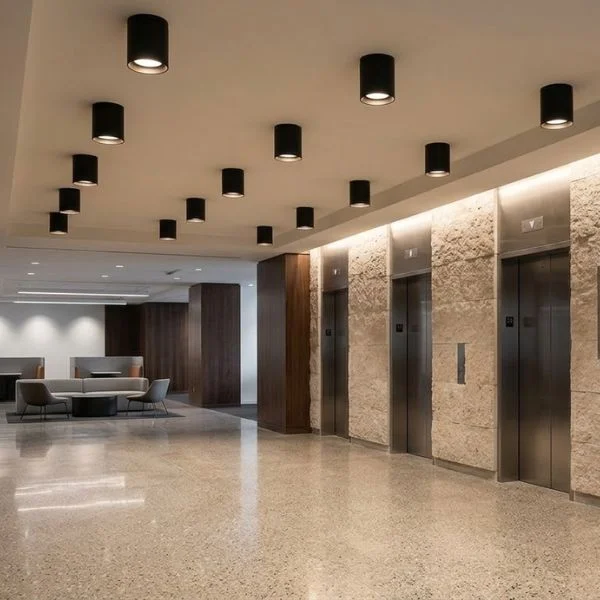
- Round Vapor Proof Lights: Often called “jelly jar” lights, these compact fixtures are ideal for localized, spot illumination. They work best over doorways, in small utility rooms, or on columns. For multi-purpose outdoor spaces where aesthetics matter alongside durability, pairing these with modern cylindrical outdoor lights ensures a cohesive, rugged layout.
Choosing the Right Length and Dimensions
Selecting the physical size of a linear fixture impacts both light output and installation spacing. The most common sizes include:
| Fixture Length | Common Lumen Output | Best Application |
|---|---|---|
| 2-Foot | 2,000 – 4,000 LM | Small walk-in coolers, stairwells, entryways |
| 4-Foot | 4,000 – 10,000 LM | Standard parking garages, car washes, manufacturing lines |
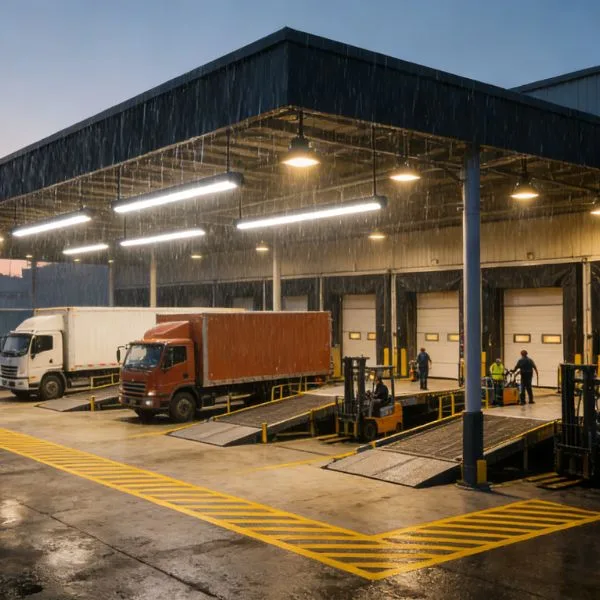
| 8-Foot | 10,000 – 20,000+ LM | High-ceiling warehouses, large loading docks |
Different Mounting Types and Options
Every industrial space presents unique structural challenges. Secure mounting ensures the longevity and safety of the LED vapor proof fixture.
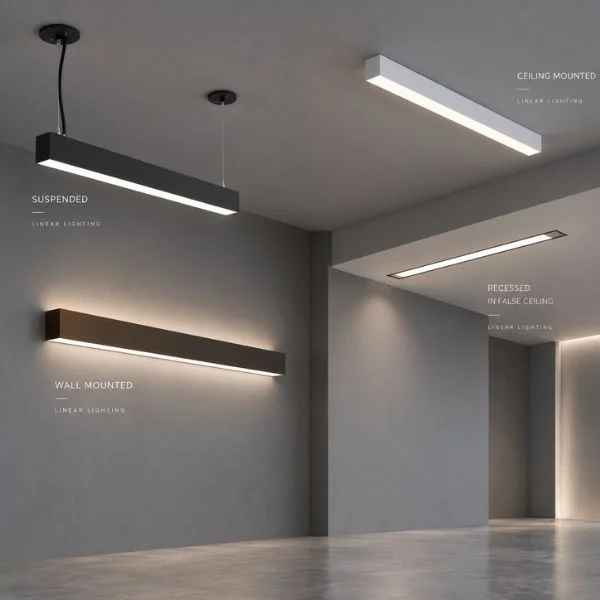
- Surface Mounting: The fixture brackets screw directly into the ceiling or wall. This is the most secure option for low ceilings, car washes, and areas prone to high-pressure washdowns.
- Chain/Cable Suspension: Hanging V-hooks and chains suspend the fixture from high ceilings. This brings the light source closer to the work plane in tall warehouses or industrial barns.
- Conduit Mounting: The electrical conduit feeds directly into the end or top of the fixture. This is ideal for continuous row wiring in exposed-ceiling parking garages.
Application Scenarios and Industry-Specific Needs
Choosing the right LED vapor proof fixture depends heavily on where you plan to install it. Different environments face distinct challenges, from extreme temperatures to high-pressure washdowns. Matching your fixture to the specific demands of your space ensures long-term durability and optimal performance.
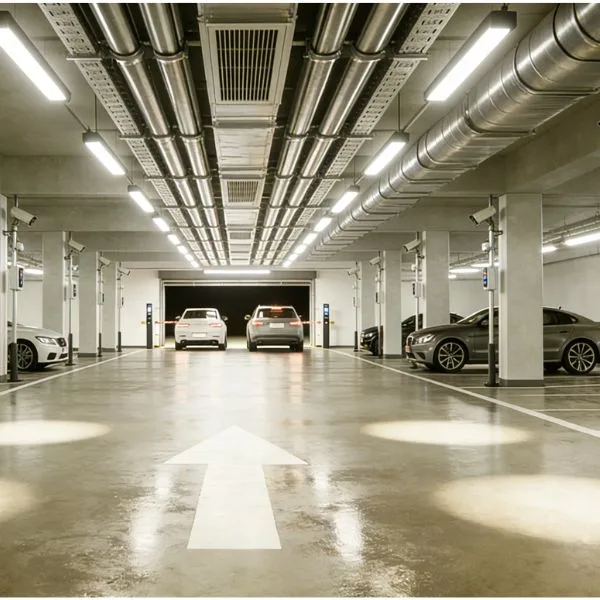
Parking Garages and Outdoor Wet Locations
Outdoor areas and parking structures deal with constant exposure to changing weather, moisture, and temperature fluctuations. For these spaces, you need rugged commercial garage lights fixtures that can withstand high humidity and dust infiltration.
- Key Requirements: IP65 or IP66 ratings, UV-stabilized housing to prevent yellowing, and impact resistance against vandalism or accidental vehicle contact.
- Benefits: Enhanced safety for drivers and pedestrians, reduced maintenance costs in hard-to-reach ceilings, and reliable operation in freezing winters or blistering summers.
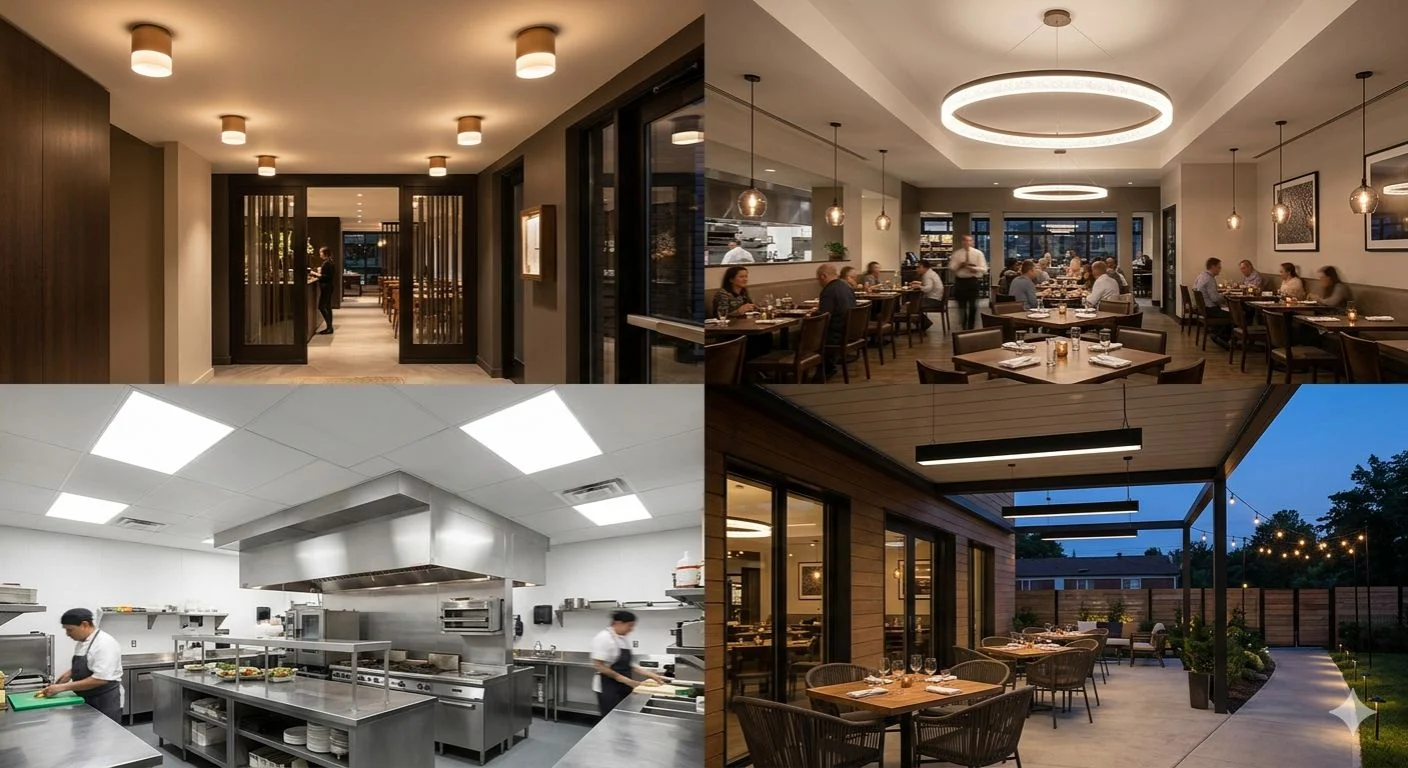
Food Processing and Cold Storage Facilities
Food production and cold storage areas have some of the strictest lighting requirements in the industrial sector. Sanitation and temperature management are the top priorities here.
- Sanitation Compliance: Fixtures must feature smooth, easy-to-clean designs that do not harbor bacteria or dust. NSF certification is often required to ensure food safety compliance.
- Cold Tolerance: Standard lights lose efficiency or fail in sub-zero temperatures. High-quality LED vapor tight fixtures thrive in cold storage and blast freezers, maintaining their lumen output and energy efficiency without any warm-up time.
Warehouses and Industrial Manufacturing
Industrial plants and warehouses are often plagued by airborne dust, debris, and vibrational shock from heavy machinery. Standard shop lights quickly fail under these harsh conditions.
- Dust and Vapor Protection: A sealed vapor proof fixture keeps airborne particles and manufacturing byproducts out of the internal electronics.
- High Ceiling Performance: Look for high-lumen output options that deliver clear, uniform illumination from high mounting heights, which improves worker safety and productivity.
Car Washes and Marine Environments
Car washes and marine applications represent the absolute toughest environments for any electrical fixture. These spaces subject lighting to constant water exposure, high-pressure streams, and corrosive elements like salt and cleaning chemicals.
| Environment | Primary Threat | Required Feature |
|---|---|---|
| Car Washes | High-pressure water jets, chemical detergents | IP69K rating, chemical-resistant housing |
| Marine Areas | Saltwater corrosion, high humidity | Stainless steel latches, marine-grade finishes |
Using a properly rated LED vapor proof fixture in these zones prevents water ingress, stops internal corrosion, and eliminates the frequent short circuits that plague standard utility lighting.
Layout Design and Lighting Calculations
Properly planning your layout ensures you don’t end up with dark spots or blinding glare. When figuring out how to choose the right LED vapor proof fixture, a strategic layout design is just as critical as the hardware itself.
Evaluating Your Space and Lighting Demands
Every industrial space has unique demands. A car wash requires uniform, shadow-free illumination, while a cold storage facility focuses on maintaining light levels in low temperatures. We start by assessing the physical traits of your space:
- Ceiling Height: Higher ceilings require fixtures with narrower beam angles or higher lumen outputs to push light down to the work plane.
- Reflectivity: Light-colored walls and floors bounce light around, reducing the total lumens needed, whereas dark, oily industrial floors soak up light.
- Task Complexity: Inspecting fine details on a manufacturing line demands much higher foot-candles than general illumination for a parking garage path.
Spacing and Fixture Layout Guidelines
To achieve even lighting, you cannot just hang fixtures at random. For optimal results, we generally follow a 1:1 or 1.5:1 spacing-to-mounting-height ratio.
| Ceiling Height | Recommended Fixture Spacing | Typical Application |
|---|---|---|
| 8 to 10 feet | 8 to 12 feet apart | Low-profile parking structures, car washes |
| 12 to 15 feet | 12 to 18 feet apart | Standard warehouses, food processing areas |
| 15+ feet | 15 to 22 feet apart | High-ceiling industrial manufacturing |
For linear spaces, utilizing an 8ft LED vapor tight fixture is highly efficient. This longer configuration reduces the total number of electrical connection points needed, streamlines the installation process, and delivers a continuous, unbroken line of light that minimizes shadows.
Determining the Total Number of Fixtures Needed
Calculating the precise number of fixtures prevents both under-lighting and wasting money on over-lighting. We use a straightforward three-step approach:
- Calculate Total Square Footage: Multiply the length of the room by its width ($Area = L times W$).
- Determine Target Lumens: Multiply the square footage by the required foot-candles (FC) for your specific industry. For instance, a basic warehouse might need 20 FC, while a detailed food processing line needs 50 FC.
- Divide by Fixture Output: Divide the total required lumens by the lumen output of your chosen LED vapor proof fixture to get the exact unit count.
Pro Tip: For complex layouts with irregular shapes or heavy machinery obstructions, running a quick DIALux photometric simulation removes all guesswork and guarantees compliance with local workplace safety lighting codes.
Smart Controls and Future-Proofing Integration
Intelligent Connectivity and DALI 2.0 Systems
Modern industrial spaces demand more than just standard on-and-off switches. When learning how to choose the right LED vapor proof fixture, incorporating smart connectivity is a massive step toward long-term efficiency. Integrating these rugged fixtures with advanced DALI 2.0 systems allows for automated scheduling, precise grouping, and real-time energy monitoring. This intelligent network ensures your heavy-duty lighting adapts dynamically to daily operations, preventing energy waste in unoccupied zones while keeping your facility compliant with modern energy codes.
Motion Sensors and Daylight Harvesting
Maximizing efficiency requires fixtures that react to their environment. Equipping your LED vapor proof lights with integrated microwave motion sensors ensures high-output illumination is only delivered when personnel are active in the area.
Furthermore, implementing daylight harvesting controls allows the fixtures to automatically dim or brighten based on the amount of natural light entering through skylights or loading dock doors. This combination drastically slashes utility bills and extends the operational lifespan of your lighting system. For outdoor transition zones or areas exposed to the elements, combining these sensors with durable exterior cylinder lights creates a seamless, energy-smart property layout.
Total Cost of Ownership (TCO) and ROI Analysis
When you look at the numbers, evaluating the total cost of ownership (TCO) is the smartest way to justify upgrading your facility infrastructure. A high-quality LED vapor proof fixture might carry a slightly higher upfront price tag than traditional options, but the long-term financial returns are undeniable. Looking at the complete financial picture proves that investing in durable engineering pays off rapidly.
Upfront Procurement vs. Long-Term Energy Savings
The initial purchase price of an LED vapor proof fixture is just one part of the equation. Traditional high-intensity discharge (HID) or fluorescent fixtures drain power and inflate utility bills month after month.
- Energy Reduction: Upgrading to industrial LEDs instantly cuts lighting energy consumption by 50% to 70%.
- Operational Savings: Lower wattage requirements mean immediate, permanent drops in your monthly operational expenses.
- Thermal Efficiency: LEDs emit significantly less heat, reducing the load on your facility’s cooling systems.
Maintenance Cost Reduction and Lifespan ROI
In harsh industrial environments, replacing burnt-out lamps is a logistical headache that requires specialized equipment, lifts, and costly downtime. A rugged LED vapor proof fixture solves this problem by virtually eliminating maintenance cycles.
- L70 Lifespan: Designed to operate efficiently for 50,000 to 100,000 hours before brightness drops to 70% of original output.
- Zero Ballast Failures: Solid-state drivers eliminate the frequent ballast replacements common with old fluorescent setups.
- Durability ROI: Sealed housings protect internal components from dust and moisture, preventing premature system failures and saving thousands in labor costs.
Utility Rebates and Financial Incentives
You do not have to shoulder the entire cost of a lighting upgrade alone. Most regional utility companies offer aggressive financial incentives to businesses that switch to energy-efficient systems.
- DLC Premium Qualification: Choosing fixtures certified by the DesignLights Consortium (DLC) opens the door to the highest tier of commercial rebates.
- Instant vs. Prescriptive Rebates: Depending on your location, you can secure cash-back incentives either at the point of purchase or through a post-installation filing process.
- Accelerated Payback Period: Combining direct energy savings with utility rebates frequently reduces the total return on investment (ROI) payback period to less than two years.
Global Compliance, Safety, and Certifications
When figuring out how to choose the right LED vapor proof fixture, checking safety and compliance marks is non-negotiable. These certifications ensure your lighting operates safely in hazardous or harsh environments without risking electrical failures or code violations.
Navigating UL, DLC, and SAA Ratings
Different regions require different safety standards. We ensure all our heavy-duty fixtures carry the necessary global stamps of approval to match your local regulations:
- UL/ETL Listed: Essential for North America. This guarantees the fixture has passed rigorous electrical safety testing for wet and harsh locations. To guarantee compliance, ensure you source from reputable suppliers, such as the top 15 U.S. outdoor lighting brands in 2026, which prioritize tested and certified gear.
- DLC Qualified: Indicates high energy efficiency. Choosing a DesignLights Consortium (DLC) approved fixture qualifies you for lucrative utility rebates, drastically lowering your upfront costs.
- SAA Certified: Required for compliance in Australia and New Zealand, proving the fixture meets strict regional electrical safety parameters.
Chemical Resistance and Environmental Safety Compliance
Industrial spaces put lighting through absolute torture. A standard light will degrade quickly when exposed to corrosive elements, which is why specialized environmental compliance is critical:
- NSF Certification: If you operate a food processing plant or commercial kitchen, you need NSF-certified, splash-zone-rated fixtures. These are easy to clean and have no exposed glass or crevices that could harbor bacteria.
- NEMA 4X Rating: This certification proves the housing resists corrosion and can withstand heavy hose-down cleaning, salt spray, and direct exposure to chemical cleaning agents.
- IK Impact Rating: Look for an IK08 or IK10 rating to ensure the housing won’t crack under physical impacts or vandalism in high-traffic zones.
Common Selection Mistakes When Choosing an LED Vapor Proof Fixture
Choosing the wrong industrial lighting can lead to frequent fixtures failing, high maintenance costs, and safety hazards. When you are looking for how to choose the right LED vapor proof fixture, avoiding these three common pitfalls will save your operation time and money.
Buying Based on Price Alone Over Durability
Opting for the cheapest fixture upfront is a recipe for long-term failure. Low-grade vapor tight lights often use cheap drivers and inferior plastics that crack, yellow, and leak under industrial stress.
- The Hidden Cost: A cheap fixture requires frequent replacements, doubling your labor costs.
- The Smart Play: Invest in fixtures with high-quality components and reliable thermal management to ensure the light lasts its full rated lifespan.
Ignoring the Specific IP Rating Needed for Your Environment
Not all wet-location lights are created equal. Installing a fixture without verifying its specific Ingress Protection (IP) rating leads to premature burnout.
| Environment | Minimum Required Rating | Risk of Wrong Selection |
|---|---|---|
| Dusty Warehouses / Light Washdown | IP65 (Dust-tight, water jets) | Dust entry dims light; moisture corrodes circuits. |
| Car Washes / Heavy Hose-Downs | IP66 / IP67 (Powerful jets, temporary immersion) | High-pressure water penetrates seals, causing short circuits. |
| Sanitation / Food Processing | IP69K (High-pressure, high-temp wash) | Steam and high-temperature cleaning destroy standard seals. |
Overlooking Future Maintenance and Installation Requirements
Many buyers forget to look at how the fixture actually mounts or how easy it is to service. If a fixture requires complex tools or total disassembly just to access the driver, your maintenance team will waste hours on simple fixes.
- Mounting Flexibility: Look for stainless steel mounting brackets and surface-mount or chain-suspend options that fit your existing layout.
- Design Considerations: If your project also requires clean interior aesthetics, consider how specialized commercial designs like a surface mounted curved linear fixture might offer a better visual fit for transitional spaces compared to ruggedized industrial shells.
- Wiring Ease: Choose fixtures with toolless entry latches and push-in wire connectors to slash installation times by up to 50%.
Frequently Asked Questions (FAQs)
Can Vapor Proof Fixtures Be Used Indoors?
Yes, you can absolutely use an LED vapor proof fixture indoors. In fact, they are highly recommended for indoor environments prone to high humidity, dust, or frequent washdowns. Common indoor applications include commercial kitchens, indoor car washes, walk-in freezers, and industrial workshops. Utilizing these fixtures indoors ensures long-term durability and protects your lighting investment from airborne contaminants.
What Is the Difference Between Vapor Proof and Vapor Tight?
While many people use these terms interchangeably, there are slight differences in design and traditional naming conventions. Here is a quick breakdown to help you choose the right LED vapor proof fixture for your project:
| Feature | Vapor Tight Fixtures | Vapor Proof Fixtures |
|---|---|---|
| Design Shape | Typically linear (4-foot or 8-foot strips) | Typically rounded, jar-like, or specialized shapes |
| Primary Use | Large areas like parking garages and warehouses | Targeted spots like walk-in freezers and marine vessels |
| Gasket System | Continuous poured-in-place polyurethane gasket | Heavy-duty screw-on or clamped silicone seals |
Both styles offer excellent protection against moisture, dust, and corrosion, so your choice depends on your specific layout and mounting requirements.
STAY IN THE LOOP
Subscribe to our free newsletter.
Leave A Comment
Why high ceilings are challenging Tall architectural volumes—such as multi-story [...]