
IP66 Architectural Linear Lighting for Wet and Demanding Locations
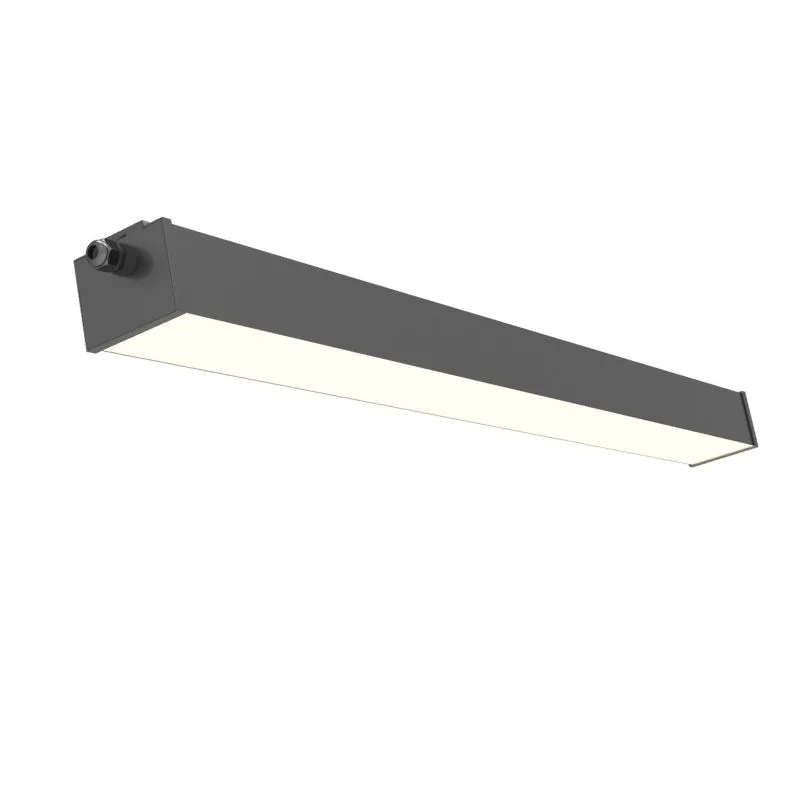
The Prillumen IP66 Architectural Linear Lighting family combines a specification-oriented linear profile with protection for projects where dust and water exposure must be considered. Available in 2FT, 4FT and 8FT lengths, the family offers selectable wattage, three CCT options, two lens choices and pendant, surface or wall mounting configurations.
For broader specification context, see the UL damp-versus-wet-location guidance before finalizing the project schedule.
It is intended for commercial and architectural environments where a conventional utility-style waterproof luminaire may not suit the visual requirements of the space. Project teams can coordinate fixture length, output, colour temperature, CRI, optical appearance, control method, mounting and finish around the application.
Use this guide to understand the available configurations, assess typical applications and prepare the information needed for a project quotation or specification review.
What Is IP66 Architectural Linear Lighting?
IP66 is an ingress-protection classification. The first digit, 6, indicates a dust-tight enclosure. The second digit, 6, indicates protection against powerful water jets under the applicable test conditions. The rating does not mean that a luminaire is designed for permanent underwater operation, and it does not by itself establish resistance to chemicals, salt spray, chlorine, impact or every outdoor condition.
For a project specification, evaluate the environmental rating together with the installation location, exposure direction, mounting details, electrical connection method, maintenance access and the exact certified product configuration. A luminaire may be exposed to rain, washdown, dust or humidity in very different ways depending on the site.
The architectural intent of this family is to combine protected construction with a clean linear appearance. Its published 4.19-inch-wide by 4.00-inch-high profile, selectable output and coordinated finish options help project teams consider it for visible commercial spaces where a conventional utility-style waterproof fixture may not suit the design.
Key Features for Commercial Project Specifications
IP66 Protection
Designed for projects where dust and powerful water-jet exposure are relevant considerations. Confirm actual site conditions and installation instructions, especially where pressure washing, wind-driven rain or unusual cleaning practices are involved.
Selectable Wattage by Length
Each standard length offers multiple wattage settings. Coordinate output with mounting height, fixture spacing, target illuminance and the intended role of the luminaire rather than choosing the highest wattage by default.
Two Lens Options
Flat opal and micro-prismatic lens choices provide different luminous appearances and optical characteristics. Compare the applicable photometric files, viewing angles and visual-comfort requirements.
Three Mounting Approaches
Pendant, surface and wall mounting options support different ceiling and wall conditions. The selected method affects visual presence, installation coordination, wiring route and future maintenance access.
CCT and CRI Choices
Choose 3500K, 4000K or 5000K according to the project lighting concept. CRI 80+ and 90+ are listed; confirm the selected combination in the quotation and final submittal.
Finish Coordination
White, black and silver finishes are listed, with custom RAL colours available for project coordination. Confirm finish availability and lead time before approval.
IP66 Architectural Linear Light Specifications
The following table summarizes the published configurations. Lumen output is presented as stated on the current product page; confirm final delivered lumens and ordering combinations against the latest product submittal.
| Lengte | Selecteerbare wattage | Published lumen output | Afmetingen | CCT |
|---|---|---|---|---|
| 2FT | 20 / 30 / 40W | Up to 4,200 lm | 24.0 × 4.19 × 4.00 in | 3500K / 4000K / 5000K |
| 4FT | 40 / 60 / 80W | 4,200–8,400 lm | 47.5 × 4.19 × 4.00 in | 3500K / 4000K / 5000K |
| 8FT | 80 / 120 / 160W | 8,400–16,800 lm | 94.4 × 4.19 × 4.00 in | 3500K / 4000K / 5000K |
The product page identifies the 2FT maximum output as based on the 40W configuration at 105 lm/W. Confirm the final lumen package for the exact order configuration.
Electrical, optical and finish options
| Item | Published information |
|---|---|
| Input voltage | 120–277VAC / 120–347VAC |
| System efficacy | 105 lm/W |
| CRI | 80+ / 90+ |
| Lens | Flat opal / Micro-prismatic |
| Dimming / control | 0–10V / DALI |
| Montage | Hangend / Oppervlak / Wand |
| Afwerking | Wit / Zwart / Zilver / Aangepaste RAL |
| Ingress protection | IP66 |
| Listing / warranty | UL Listed / 5-year warranty, as stated on the product page |
Where to Use IP66 Architectural Linear Lighting
Covered Walkways and Building Canopies
Covered pedestrian routes and entrance canopies often need dependable illumination while remaining visually consistent with the building façade. A linear fixture can establish a clear lighting rhythm along the route. Consider pendant or surface mounting according to the canopy structure and desired ceiling appearance. Coordinate drainage, exposure and service access during design review.
Parking Structures and Ramps
Parking decks, ramps and perimeter circulation zones can experience moisture, dust and changing environmental conditions. Select wattage and spacing using mounting height, target illuminance, uniformity and glare considerations. The IP rating should be only one part of the review; confirm suitability for the specific parking environment and installation details.
Transit Platforms and Public Circulation
Covered transit platforms, station approaches and public circulation spaces may benefit from a consistent linear layout. The 4FT and 8FT lengths can establish a regular visual pattern, while selectable output gives designers options for different mounting heights. Review photometric files and control requirements before finalizing the layout.
Exterior Corridors and Commercial Entries
Exterior corridors, service entrances and commercial building approaches require coordination between lighting performance and architectural finish. Wall mounting may be appropriate where ceiling mounting is unavailable, while surface or pendant mounting can be considered for overhead structures.
Other Wet-Location Commercial Areas
Some semi-exterior or moisture-exposed commercial areas require more protection than a typical dry-location architectonisch armatuur. Before specifying the product in washdown, food-processing, pool, coastal or chemically aggressive environments, obtain written confirmation of application suitability. IP66 alone does not certify resistance to chemicals, chlorine, corrosion or salt spray.
Choosing the Right Fixture Length and Wattage
Length and wattage should be selected together. A longer fixture can create a more continuous visual rhythm across an extended zone, while a higher wattage setting can increase output where mounting heights or spacing demand it. Neither should be chosen without reviewing the lighting calculation and physical layout.
| Configuratie | Planning considerations | Questions to resolve |
|---|---|---|
| 2FT | Shorter architectural zones, compact bays or areas requiring smaller fixture modules. | Does the module suit the structure, layout and required output? |
| 4FT | General commercial module for walkways, canopies and circulation areas. | Which 40W, 60W or 80W setting meets the calculated illuminance? |
| 8FT | Longer overhead zones where a larger module suits the layout. | Can the structure, transport route, installation team and maintenance plan accommodate the longer fixture? |
For every layout, verify fixture spacing, mounting height, orientation, control zoning and maintenance access. Check emergency-lighting and local-code requirements where applicable.
Pendant, Surface or Wall Mounting?
Pendant Mount
Consider pendant mounting when the fixture needs to sit below a canopy or ceiling structure, or when the design calls for a linear element at a controlled height. Confirm suspension hardware, ceiling attachment, cable or stem arrangement and wiring entry.
Oppervlaktebevestiging
Surface mounting is an option when the fixture is installed directly to a ceiling or overhead structure and a suspended drop is not required. Check substrate, bracket spacing, fasteners, conduit entry and maintenance access.
Muurbevestiging
Wall mounting can support horizontal or vertical compositions where the wall is the primary mounting surface. Confirm orientation, mounting hardware, cable entry and water exposure at the installed position.
Flat Opal or Micro-Prismatic Lens?
The product family lists flat opal and micro-prismatic lens options. Compare them using the actual photometric files and, where possible, a sample. Evaluate luminous appearance, optical distribution, viewing angles and visual comfort at the intended mounting height.
| Lens option | What to evaluate | Project questions |
|---|---|---|
| Flat Opal | Diffused luminous appearance, visual continuity and source concealment. | Does the diffuser appearance suit the viewing distance and ambient lighting? |
| Micro-Prismatic | Optical distribution, luminance appearance and visual comfort at typical viewing angles. | Does the photometric distribution support target illuminance and glare strategy? |
Request the applicable IES file and confirm lens availability with the selected length, wattage, CCT and control configuration.
IP66 Architectural Linear Lighting vs. Vapor-Tight Fixtures
Both product types can be considered for demanding environments, but they are not interchangeable by default. The correct choice depends on the project brief, environmental exposure, architectural intent and required documentation.
| Decision point | IP66 Architectural Linear | Typical Vapor-Tight Fixture |
|---|---|---|
| Design intent | Protected lighting where visual integration is part of the project design. | Functional protected lighting for utility, service and industrial spaces. |
| Visual character | Architectural linear profile with coordinated finish and lens choices. | Protective enclosure-led appearance, varying by model. |
| Montage | Pendant, surface and wall configurations are listed for this family. | Often surface or suspended; confirm the individual fixture. |
| Selection priority | Balance environmental protection, architectural appearance and photometric needs. | Prioritize environmental rating, durability and functional output. |
| Documentatie | Confirm exact IP rating, UL listing scope, optics, controls and mounting configuration. | Confirm exact rating, listing, enclosure details and installation limits. |
How to Specify an IP66 Linear LED Fixture
- Define the environment. Record whether the fixture is indoors, outdoors, under a canopy, exposed to rain, subject to washdown or near chemicals, salt or pool water.
- Confirm protection and listing. Specify the required IP rating, then verify the exact product configuration, installation method and certification documentation.
- Choose length and wattage. Select 2FT, 4FT or 8FT after reviewing mounting height, spacing, target illuminance and lighting calculations.
- Set CCT and CRI. Confirm 3500K, 4000K or 5000K and whether CRI 80+ or 90+ is required.
- Select lens and controls. Compare flat opal and micro-prismatic options and confirm 0–10V or DALI compatibility.
- Coordinate mounting and finish. Specify pendant, surface or wall mounting and white, black, silver or requested RAL finish.
- Review the submittal. Request the current specification sheet, IES file, installation instructions, listing information, warranty and project drawings before approval.
Project Submittal Checklist
Provide the following information with the fixture schedule or request for pricing to reduce clarification cycles:
- Project name, location and application area.
- Required IP rating and description of actual environmental exposure.
- Fixture length, quantity and selected wattage.
- Mounting type and mounting height.
- Required lumen output, CCT and CRI.
- Lens selection: flat opal or micro-prismatic.
- Control method: 0–10V or DALI.
- Finish colour and custom RAL reference, if applicable.
- Input voltage and any emergency or local-code requirements.
- Required listing documents, IES files, installation instructions and delivery schedule.
Veelgestelde vragen
What does IP66 mean for an architectural linear light?
IP66 indicates a dust-tight enclosure and protection against powerful water jets under the applicable ingress-protection test conditions. It does not mean the luminaire is suitable for permanent immersion. Confirm the installation environment and manufacturer’s instructions for the exact configuration.
Is an IP66 light suitable for outdoor use?
An IP66 rating can be relevant to outdoor and wet-location applications, but suitability depends on the complete luminaire, mounting method, electrical connections, exposure and installation instructions. Check whether the specific project conditions are covered before specifying the fixture.
What lengths are available?
The published family includes 2FT, 4FT and 8FT versions, with nominal lengths of 24.0, 47.5 and 94.4 inches respectively.
What wattage options are available?
The 2FT version is listed at 20/30/40W, the 4FT at 40/60/80W and the 8FT at 80/120/160W. Confirm the required wattage and output in the project quotation.
What is the maximum lumen output?
The published output reaches up to 16,800 lumens for the 8FT, 160W configuration at the stated 105 lm/W efficacy. Confirm the final lumen package in the current submittal.
Which colour temperatures can be specified?
The listed CCT options are 3500K, 4000K and 5000K. Confirm availability with the selected wattage, lens and control configuration.
Does the fixture support 120–347V?
The product page lists 120–277VAC and 120–347VAC options. Confirm the exact driver and voltage configuration for the project before ordering.
Can the fixture be pendant, surface or wall mounted?
Yes. Pendant, surface and wall mounting options are listed for this family. Confirm the mounting accessories, orientation and installation instructions for the selected configuration.
What is the difference between flat opal and micro-prismatic lenses?
They are two different lens options with different luminous appearances and optical characteristics. Compare the applicable IES files, luminance appearance and visual comfort requirements for the intended mounting height and viewing angles.
Is the IP66 architectural light UL Listed?
The current product page states UL Listed and a 5-year warranty. For project approval, request current listing documentation and verify that the exact ordered model and configuration are within its scope.
Can IP66 lighting be used in a car wash, swimming pool or chemical-processing area?
Do not assume IP66 alone makes a fixture suitable for these applications. Chemical exposure, chlorine, salt, corrosion and pressure-washing practices may require additional ratings or material verification. Obtain written confirmation for the exact application.
Specify IP66 Architectural Linear Lighting for Your Project
Send us your fixture schedule, project drawings, quantities, mounting requirements and control preferences. Our team can review the requested 2FT, 4FT or 8FT configuration and help confirm output, lens, CCT, CRI, voltage and finish for quotation.
Request Project Pricing
Explore 2FT IP66 Linear Light
Explore 8FT High Output IP66 Linear Light
Product information summarizes the published Prillumen IP66 Architectural Linear Lighting page. Confirm current availability, exact configuration, listing scope, photometric data, installation requirements and warranty terms with the latest product documentation before specification or purchase.