
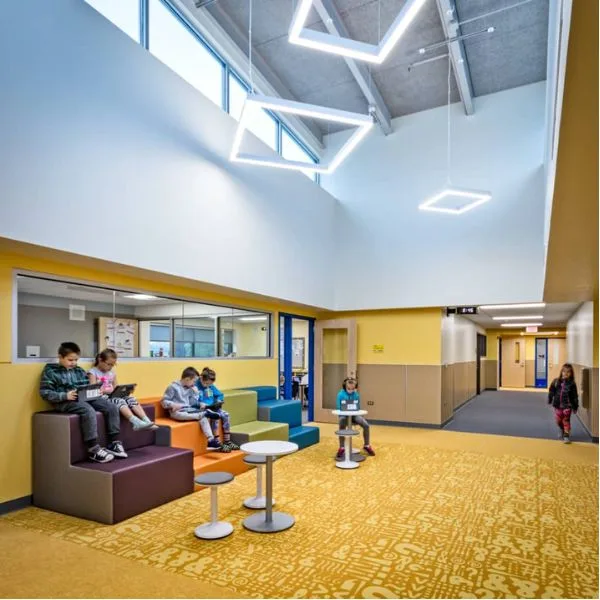
Benefits of Upgrading to LED Lighting for Schools
As educational institutions prepare for the future, the transition to LED lighting for schools has become a critical infrastructure upgrade. Beyond simple illumination, modern LED systems offer a strategic advantage, balancing fiscal responsibility with superior visual performance. This complete guide for 2026 highlights why retrofitting is essential for forward-thinking administrators.
Energy Efficiency and Operational Cost Savings
The most immediate impact of installing LED fixtures is a dramatic reduction in utility expenses. Schools often operate on tight budgets, and lighting accounts for a significant portion of electricity usage. LEDs consume substantially less power than traditional fluorescent T8 or T5 tubes while delivering higher lumen output.
Key Financial Advantages:
- Lower Utility Bills: Reduce lighting energy consumption by 50% to 75%.
- Fast ROI: Energy savings often cover installation costs within 2-3 years.
- Reduced HVAC Load: LEDs emit less heat, lowering air conditioning costs during warmer months.
| Feature | Fluorescent T8 | LED Flat Panel | Savings Impact |
|---|---|---|---|
| Wattage | 32W per tube | 40W (Total Fixture) | High |
| Heat Emission | High | Low | Moderate |
| Energy Waste | Omni-directional | Directional | High |
Reduced Maintenance and Extended Fixture Lifespan
Maintenance teams in schools are often overwhelmed. Replacing burnt-out bulbs and failing ballasts in classrooms and gymnasiums is labor-intensive and disruptive to the learning process. LED technology eliminates these recurring headaches through superior durability.
- Longevity: High-quality LEDs are rated for 50,000 to 100,000 hours, compared to just 15,000 hours for fluorescents.
- Durability: Solid-state construction resists vibrations and impact, making them ideal for gyms and hallways.
- Labor Savings: “Install and forget” reliability frees up facility staff for more critical maintenance tasks.
Environmental Sustainability and Carbon Footprint Reduction
Adopting LED lighting aligns educational facilities with global sustainability goals. As we move into 2026, reducing the carbon footprint is a priority for school districts aiming for “Green School” status.
Eco-Friendly Benefits:
- Mercury-Free: Unlike fluorescent tubes, LEDs contain no hazardous mercury, eliminating disposal risks.
- CO2 Reduction: Lower energy consumption directly translates to fewer greenhouse gas emissions.
- Recyclability: Most LED components are 100% recyclable, contributing to a circular economy.
Enhancing the Learning Environment with LED Technology
As we look toward the future of education, the physical environment plays a massive role in how students absorb information. In this section of our led lighting for schools complete guide 2026, we move beyond simple energy savings to discuss how light quality directly influences cognitive function and physical well-being.
Improved Student Focus and Academic Performance
Lighting isn’t just about visibility; it is a critical tool for concentration. Old, buzzing fluorescent tubes are notorious for causing distraction and fatigue. By upgrading to modern LED solutions, we provide a stable, high-quality light source that mimics natural daylight. This clarity helps students stay alert and engaged during lessons.
For classrooms requiring a clean, distraction-free ceiling layout, installing a 2″ recessed linear light fixture offers uniform illumination that reduces shadows on desks and whiteboards. Studies consistently show that proper illumination levels correlate with:
- Higher reading speeds due to better contrast.
- Increased attention spans during long lectures.
- Lower error rates in visual tasks.
Human Centric Lighting and Biological Wellness
Our bodies operate on a circadian rhythm, an internal clock regulated by sunlight. Traditional school lighting ignores this, blasting the same intensity all day. We advocate for Human Centric Lighting (HCL) systems that adjust color temperature to match the time of day.
- Morning: Cool, blue-rich light (5000K) suppresses melatonin to wake students up.
- Afternoon: Warmer tones (3000K) help calm students down before they head home.
Implementing this requires careful planning. When sourcing suspended linear fixtures for commercial projects, it is vital to select luminaires compatible with tunable white controls to fully realize these biological benefits.
Flicker-Free Technology and Reduced Eye Strain
One of the silent enemies in a classroom is “invisible flicker.” While you might not consciously see it, the brain detects the rapid flashing of low-quality lights, leading to headaches, eye strain, and visual fatigue. This is especially problematic in the digital age, where students constantly switch focus between backlit tablets and physical textbooks.
We prioritize flicker-free LED drivers in our designs to eliminate this stroboscopic effect. The result is a visually comfortable space where students can read and work for hours without the physical stress associated with poor lighting.
Key Indoor Lighting Applications for Educational Facilities
Educational facilities are complex ecosystems where a single lighting solution rarely fits every zone. From focused study areas to high-traffic corridors, each space requires a tailored approach to maximize energy efficiency and student well-being. In our led lighting for schools complete guide 2026, we break down the specific requirements for the most critical indoor applications.
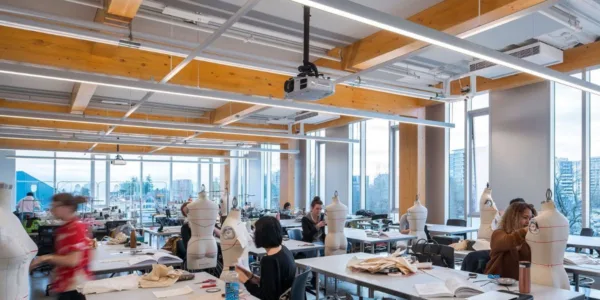
Optimized Classroom and Laboratory Lighting
The classroom is the core of the learning environment. Here, lighting must balance brightness with visual comfort to support reading, writing, and screen usage. We prioritize flicker-free LED technology to eliminate the invisible strobing of legacy fluorescents, which is a known cause of headaches and distraction.
For science laboratories and art rooms, color accuracy is non-negotiable. We recommend fixtures with a High CRI (90+) to ensure chemical reactions and color spectrums are viewed accurately.
- Standard Classrooms: Volumetric LED Troffers or Flat Panels (3500K-4000K).
- Labs & Art Rooms: High-CRI Linear Fixtures (5000K for daylight simulation).
- Controls: 0-10V dimming allows teachers to lower light levels for projector use.
Hallways, Stairwells, and Common Areas
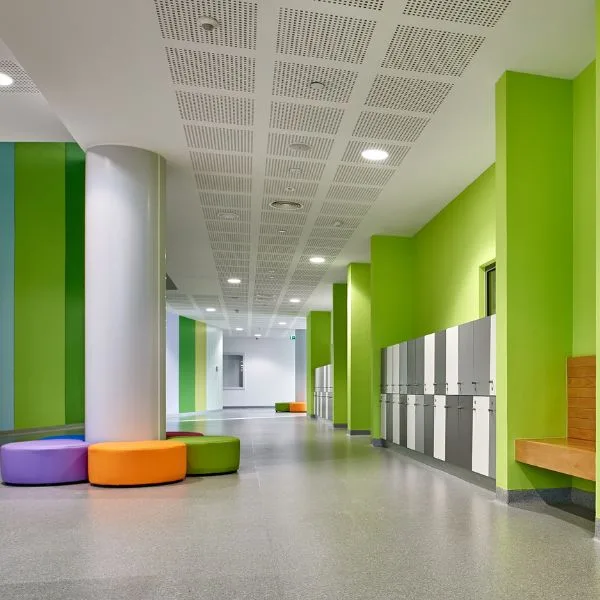
Corridors and stairwells are primarily about safety and traffic flow, but they are also areas where schools waste the most energy. Since these lights often run 24/7 or for extended hours, durability and efficiency are paramount.
We often utilize linear fixtures equipped with occupancy sensors that dim the lights when the hallway is empty and instantly brighten when motion is detected. For main lobbies or atriums where first impressions matter, installing a stylish round linear pendant light adds architectural interest while maintaining high efficacy.
Cafeterias and Multi-Purpose Spaces
Modern school cafeterias often double as auditoriums, testing centers, or community meeting spaces. This versatility demands a flexible lighting system. High ceilings in these areas typically require high-output fixtures that can push light down to the floor without creating harsh glare.
- Dining Mode: Warm, inviting light (3500K).
- Testing/Assembly Mode: Bright, alert light (5000K).
- Maintenance: Long-life LEDs (50,000+ hours) reduce the need for lifts and scaffolding to change bulbs in high ceilings.
Libraries and Administrative Offices
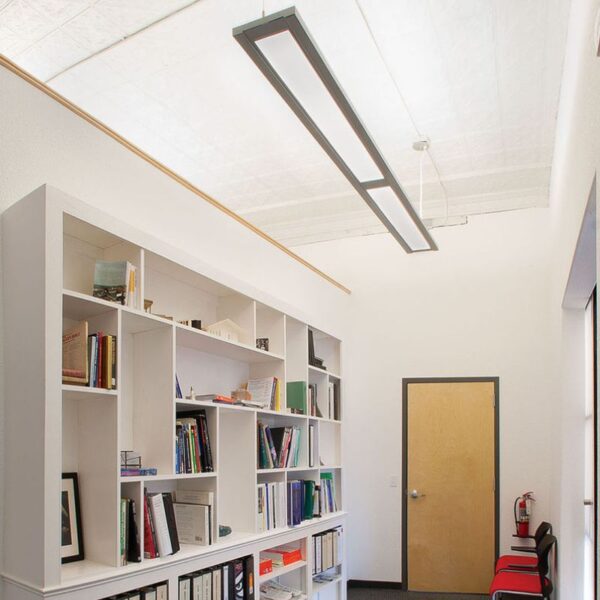
Libraries and administrative blocks require lighting that reduces eye strain during prolonged periods of reading or computer work. The goal here is Low UGR (Unified Glare Rating) to prevent screen reflection and visual fatigue.
In administrative offices and study carrels, we focus on task lighting that directs illumination exactly where it is needed. A sleek regressed linear hanging light is an excellent choice for these spaces, offering a modern aesthetic with deep-set LEDs that minimize glare for staff and students alike. Combining these fixtures with daylight harvesting sensors ensures you only use artificial light when natural light falls below a set level.
Specialized Lighting for School Sports and Outdoors
When we talk about the led lighting for schools complete guide 2026, we cannot ignore the critical role of athletic and exterior illumination. These areas demand high-performance fixtures that can withstand physical impact, harsh weather, and long operating hours. Upgrading these spaces isn’t just about visibility; it’s about safety for athletes and security for the entire campus.
High Bay Lighting for Gymnasiums and Field Houses
Gymnasiums are unique environments where lighting must be tough enough to take a hit. In my experience, replacing old metal halide fixtures with LED high bays is the single most impactful upgrade for a school’s sports facility. Old lights buzz, flicker, and take forever to warm up, but LEDs provide instant-on capability, which is crucial for multi-use spaces.
For these high-ceiling areas, we prioritize fixtures with high impact resistance ratings (IK08 or IK10) and wire guards to protect against stray balls. Glare control is also non-negotiable; athletes looking up for a rebound shouldn’t be blinded by the light source.
- Impact Resistance: Must handle ball strikes without shattering.
- Unified Glare Rating (UGR): Low UGR (<22) prevents eye fatigue for players and spectators.
- Instant Control: Immediate full brightness for events and assemblies.
Stadium and Sports Field Lighting Solutions
Outdoor sports lighting is a precise science. The goal is to deliver broadcast-quality brightness on the field without spilling light into the surrounding neighborhood. Modern LED sports lighters offer superior beam control compared to traditional floodlights, allowing us to direct light exactly where the action is.
We focus heavily on durability here. Fixtures must be IP65 or IP66 rated to survive rain, snow, and dust. Additionally, high Color Rendering Index (CRI) LEDs make it easier for players to track fast-moving objects and for fans to distinguish team colors clearly at night.
Key considerations for field lighting:
- Precision Optics: Minimizes light pollution and “sky glow.”
- Thermal Management: robust heat sinks ensure longevity even in hot summers.
- Wind Load: Aerodynamic designs to reduce stress on poles.
Parking Lot and Campus Perimeter Security
A well-lit campus is a safe campus. Security lighting needs to be uniform, eliminating dark shadows where trouble can hide. For parking lots, we use pole-mounted area lights with wide distribution patterns to cover large swathes of asphalt efficiently.
Closer to the buildings, the strategy shifts to path of egress and architectural integration. For building overhangs, covered walkways, and entry canopies, installing durable recessed lighting solutions ensures that transition zones are bright and welcoming without cluttering the ceiling line. Combining these fixtures with photocells or motion sensors maximizes energy savings, ensuring lights are only on when they are actually needed.
Common Types of LED Fixtures for Schools
Selecting the right hardware is the backbone of any successful led lighting for schools complete guide 2026. Schools are complex environments requiring a mix of functional, aesthetic, and durable lighting solutions. We provide a range of DLC Premium listed fixtures designed to meet specific educational needs while maximizing rebate eligibility.
LED Flat Panels and Troffers
These are the standard “workhorses” for general classroom lighting. Designed to replace outdated fluorescent tubes in drop ceilings, our LED Flat Panels and Volumetric Troffers offer a clean, modern look with zero glare.
- Versatility: Available in standard 2×2 and 2×4 sizes to fit existing T-grid ceilings.
- Customization: Features CCT Tuning (adjustable color temperature) and Wattage Selectable drivers, allowing facility managers to dial in the perfect brightness and light color for testing versus reading time.
- Health Benefits: Built with flicker-free technology to reduce eye strain and headaches among students and staff.
Architectural Linear and Pendant Lights
For areas requiring a more modern aesthetic—such as STEM labs, libraries, and administrative offices—linear lighting provides both style and high performance. These fixtures can be suspended, surface-mounted, or recessed to create continuous runs of light that eliminate shadows.
When designing modern learning spaces, selecting a 4-foot LED suspended linear fixture is often the best choice for balancing direct task lighting with indirect ambient light. This dual-output approach brightens the ceiling, making spaces feel larger and more open. We also offer wall-mounted linear lights to provide accent illumination along perimeter walls or whiteboards.
LED Downlights and Recessed Fixtures
In hallways, lobbies, and restrooms, bulky fixtures can clutter the ceiling line. LED downlights (often called “can lights”) offer a sleek, low-profile solution. They are highly energy-efficient, replacing old CFL or incandescent bulbs that require frequent maintenance.
- Durability: Rated for 50,000+ hours to minimize ladder climbing for maintenance crews.
- Control: Compatible with 0-10V dimming systems for smart energy management.
- Safety: Provides reliable, instant-on illumination essential for high-traffic transition areas.
Industrial UFO High Bays for Large Spaces
Gymnasiums, cafeterias, and auditoriums present unique challenges due to their high ceilings and potential for physical impact. Our industrial-grade LED High Bays are engineered to deliver high lumen output from great heights without losing intensity.
- Impact Resistance: Essential for gyms where stray balls can damage standard lights; we recommend fixtures with protective wire guards or impact-resistant lenses.
- Efficiency: Delivers massive energy reduction compared to old metal halide lamps.
- Longevity: Backed by our industry-leading 10-Year Warranty, ensuring these difficult-to-reach fixtures remain maintenance-free for a decade or more.
Technical Specifications for Classroom Lighting Design
When we talk about the led lighting for schools complete guide 2026, we have to move past just screwing in a bulb. The technical specifications define whether a learning space supports concentration or causes headaches. Getting the specs right—from color temperature to brightness intensity—is the difference between a productive classroom and a tired one.
Choosing the Best Color Temperature (CCT) for Learning
Color Correlated Temperature (CCT), measured in Kelvin (K), dictates the “mood” of the light. In educational settings, we aren’t looking for the warm, sleepy glow of a living room (2700K). We need light that mimics daylight to suppress melatonin and keep students alert.
- 3000K (Warm White): Best for libraries or quiet reading nooks where relaxation is key.
- 4000K (Cool White): The standard for most general classrooms. It is neutral, clean, and supports reading without being harsh.
- 5000K – 6000K (Daylight): Ideal for laboratories, art studios, and high-focus areas where detail visibility is paramount.
For modern educational spaces that want to break away from the boring grid look, installing square modular linear lights allows you to maintain these optimal CCT levels while adding a contemporary architectural element to the ceiling design.
Recommended Foot-Candle and Brightness Levels
Brightness is measured in foot-candles (fc) or lux. If a room is too dim, students strain their eyes; too bright, and they suffer from glare. The IES (Illuminating Engineering Society) provides specific standards that we strictly adhere to when planning school layouts.
Target Light Levels by Area:
| School Area | Foot-Candles (fc) | Lux (lx) | Goal |
|---|---|---|---|
| General Classroom | 40 – 50 fc | 400 – 500 lx | Reading & writing tasks |
| Science Labs / Art Rooms | 50 – 75 fc | 500 – 750 lx | High detail work |
| Computer Labs | 30 – 40 fc | 300 – 400 lx | Reduce screen glare |
| Hallways / Corridors | 10 – 20 fc | 100 – 200 lx | Safe navigation |
Color Tuning and Variable Light Control
Static lighting is becoming a thing of the past. Advanced LED systems now offer Tunable White technology and dimming capabilities (usually 0-10V dimming). This gives teachers control over the room’s atmosphere.
- Focus Mode: High intensity, cool blue-enriched light (5000K) for testing or difficult subjects.
- Calm Mode: Lower intensity, warmer light (3000K) for settling down after recess or during storytime.
- AV Mode: Dimmable zones near projection screens to prevent washout while keeping student desks illuminated.
Implementing flexible fixtures, such as a horizontal tube pendant light, can provide excellent general illumination with the ability to integrate into these smart control systems, ensuring the lighting adapts to the curriculum, not the other way around.
Safety and Security Through Smart Lighting Systems
In our led lighting for schools complete guide 2026, we emphasize that modern illumination goes beyond just visibility; it is a critical component of campus security and student safety. Integrating smart controls transforms standard fixtures into an intelligent network that protects occupants and assets alike.
Emergency Exit and Path of Egress Lighting
When power failures occur, immediate and reliable illumination is non-negotiable. Compliance with local fire codes and safety standards requires that all escape routes be clearly visible to prevent panic.
- Battery Backup: LED drivers should switch seamlessly to battery power, providing 90 minutes of illumination.
- Continuous Illumination: We often recommend installing rectangular modular linear lights in corridors. Their continuous design eliminates dark spots and provides a clear, directed path toward exits, acting as a visual guide during emergencies.
- Testing Protocols: Smart systems can self-diagnose battery health, alerting facility managers before a real emergency arises.
Occupancy Sensors and Motion Detection
Sensors are the backbone of both energy efficiency and active security monitoring. While their primary job is to dim or turn off lights in empty rooms, they serve a dual purpose after hours.
- Deterrence: Unexpected motion in a hallway or gym at night triggers the lights, instantly startling potential intruders and alerting security cameras.
- Staff Safety: Teachers or janitorial staff working late never have to walk into a dark room; the lights anticipate their arrival.
- Zoning: Advanced systems allow us to group fixtures, ensuring that if one sensor trips, the entire zone lights up for better visibility.
Integrated UV-C Sanitation Solutions
Health safety has become a permanent priority in educational facility management. Modern LED systems can now integrate UV-C technology to actively disinfect spaces.
- Overnight Cleaning: These systems are programmed to activate only when rooms are confirmed empty via occupancy sensors.
- Air and Surface Treatment: UV-C light neutralizes airborne pathogens and sterilizes desk surfaces, reducing the spread of illness.
- Safety Interlocks: To prevent exposure, these fixtures immediately shut off the UV-C component if motion is detected, ensuring students and staff are never at risk.
Planning an Educational Lighting Refurbishment
Executing a successful upgrade requires a strategic approach. As we look toward the standards set in this led lighting for schools complete guide 2026, simply swapping bulbs isn’t enough. A well-planned refurbishment ensures the facility maximizes energy savings, meets safety codes, and creates a better environment for students and staff.
Conducting a Professional Lighting Audit
Everything starts with data. Before we order a single fixture, we need to understand the current state of the facility. A professional audit involves walking every square meter of the campus to document existing fixture types, wattages, and conditions. We measure current light levels to see if classrooms are too dim or if hallways are wastefully bright.
This is also the critical moment to identify environmental constraints. For example, areas like locker rooms, showers, and cafeteria kitchens have high moisture levels, requiring us to identify where to install durable wet location lighting fixtures that can withstand humidity and frequent cleaning without failing.
Key Audit Steps:
- Inventory Mapping: Count and categorize every light source.
- Energy Analysis: Calculate current burn hours and electricity costs.
- Photometric Testing: Measure foot-candles to ensure compliance with educational standards.
Retrofitting Existing Fixtures vs. Full Replacement
This is the biggest decision in the project scope. Retrofitting usually involves bypassing the ballast and installing LED tubes into existing housings. It is cost-effective and less invasive, making it a popular choice for tight budgets. However, you are often limited by the optics and condition of the old housing.
Full Replacement involves removing the old fixture entirely and installing a new integrated LED luminaire. While the upfront cost is higher, the performance and aesthetic gains are significant. For modernizing spaces like libraries or STEM labs, specifying suspended linear lighting allows for a complete visual transformation and better light distribution compared to keeping old recessed troffers.
- Retrofit: Lower cost, faster install, reuses old housing.
- Replacement: Maximum efficiency, modern design, longer warranty, better controls.
Budgeting and Rebates for School Energy Projects
Funding is often the primary hurdle for educational institutions. However, the Return on Investment (ROI) for LED school lighting is incredibly strong, often paying for itself in energy and maintenance savings within 3 to 5 years. When building the budget, we move beyond simple sticker price and look at the Total Cost of Ownership.
Financial Strategies:
- Utility Rebates: Most energy providers offer substantial cash incentives for switching to LED.
- Maintenance Savings: Factor in the elimination of ballast replacements and labor costs.
- Grants and Bonds: Look for government initiatives specifically targeting school infrastructure and carbon reduction.
Related Sources
STAY IN THE LOOP
Subscribe to our free newsletter.
Leave A Comment
Retrofit LED Lighting Solutions Are soaring energy bills, relentless ballast [...]

Struggling to cut operational costs while upgrading your facility’s lighting [...]
The Financial & Operational Business Case Upgrading to energy efficient [...]
Are you worried about overhead head clearance, or tired of [...]