
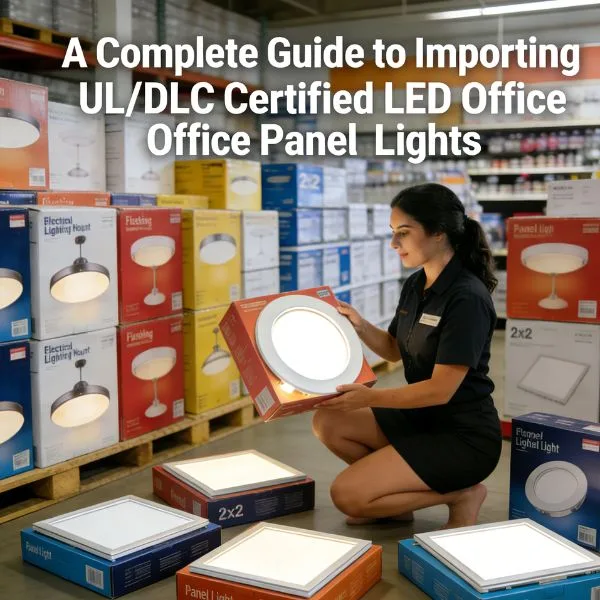
Safety First: Navigating UL and DLC Certifications
When I import LED lighting, safety and efficiency certifications are my first priority. In the North American market, these aren’t just “extra” features—they are legal and financial requirements for any commercial project.
UL/cUL Listing: The Non-Negotiable Safety Standard
For any LED office troffer import, UL listed LED panel lights are the baseline. UL (Underwriters Laboratories) or cUL (for Canada) ensures the fixtures meet rigorous fire and electrical safety standards.
- Code Compliance: Most North American electrical inspectors will not sign off on a project using non-listed fixtures.
- Liability Protection: Using UL-certified products protects you and your clients from insurance denials in the event of electrical failure.
- Market Entry: Many major distributors and retailers refuse to stock items that lack a recognized NRTL (Nationally Recognized Testing Laboratory) mark.
DLC Premium 5.1: Unlocking Utility Rebates
To stay competitive, DLC Premium office lighting is essential. The DesignLights Consortium (DLC) 5.1 standard is the current benchmark for high-efficiency commercial lighting.
- Utility Rebates: This is the biggest selling point. Many US utilities offer significant “per-fixture” cash back to end-users, but utility rebates for DLC certified products are often restricted to the “Premium” tier.
- Performance Guarantee: DLC 5.1 requires specific technical specs, including 0-10V dimmable panel lights and high efficacy, ensuring you are selling a top-tier product.
- Energy Savings: Premium-listed panels provide a faster ROI for your customers through lower monthly energy bills.
FCC, RoHS, and NRCan: Additional Compliance
Beyond safety and rebates, you must satisfy federal regulations to ensure a smooth U.S. customs clearance for lighting fixtures:
- FCC: Mandatory for the US market. It ensures the LED drivers do not produce electromagnetic interference (EMI) that disrupts wireless signals or other electronics.
- RoHS: While primarily a European standard, many US commercial buyers demand RoHS compliance to ensure the fixtures are free of hazardous substances like lead and mercury.
- NRCan: If you are shipping to Canada, Canada NRCan LED reporting is a legal requirement. You must register your products’ energy performance with Natural Resources Canada before they can be sold.
Choosing Between UL and ETL Certification
I am often asked whether UL or ETL is better. Both are OSHA-recognized NRTLs and test to the exact same ANSI/UL safety standards.
| Feature | UL Listing | ETL Listing |
|---|---|---|
| Market Perception | The “Gold Standard” and most widely recognized. | Highly respected and widely accepted by inspectors. |
| Testing Timeline | Can be longer due to high volume at testing labs. | Often faster, which is better for rapid product launches. |
| Cost Structure | Typically involves higher initial and quarterly fees. | Generally more cost-effective for small to mid-sized batches. |
In my experience, if your factory has a valid ETL report, it is just as legal and safe as UL, but UL still carries a slightly higher “prestige” value for certain government contracts.
Picking the Right LED Office Panel Lights for the North American Market
When I help clients select fixtures for a project, I focus on the balance between visual comfort and long-term energy savings. Choosing the right LED office panel lights is more than just picking a price point; it’s about meeting strict building codes while ensuring the workspace is actually functional.
Back-lit vs. Edge-lit Panels: Which One Should You Buy?
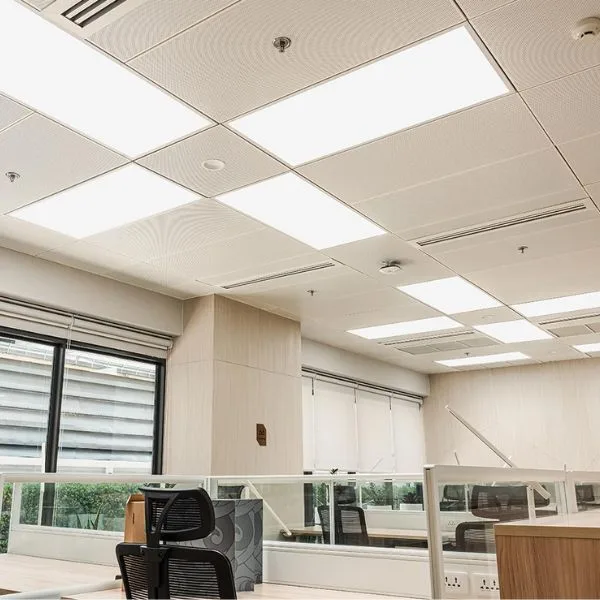
In the past, edge-lit panels were the favorite because of their slim profile and soft light. However, back-lit LED panel lights have become the industry standard for bulk imports.
- Back-lit Panels: These offer higher efficacy (often reaching 140 lm/W) and are generally more cost-effective. Since the LEDs face downward, you don’t lose light in the light guide plate, and they are less prone to yellowing over time.
- Edge-lit Panels: These are ultra-thin and provide a very sleek look, which is perfect for high-end design-builds. They offer excellent diffusion but are slightly less efficient than their back-lit counterparts.
Essential Specs for High-Performance Office Lighting
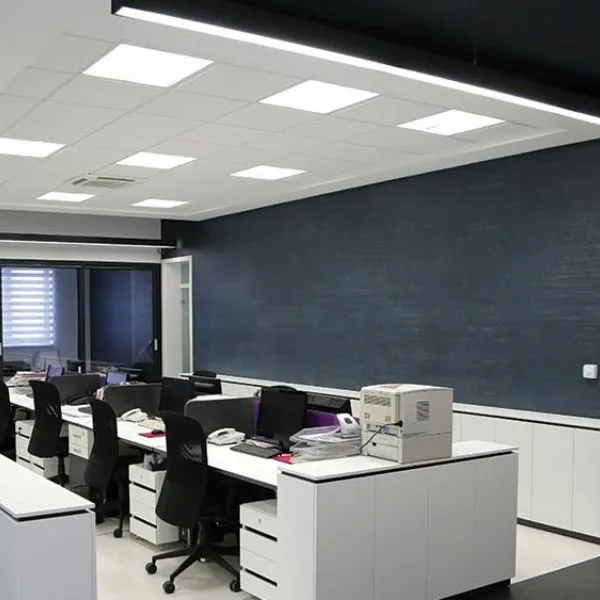
To compete in the US and Canadian markets, your products must meet high technical bars. Most “contractor grade” fixtures won’t cut it for premium commercial bids. I always look for these “must-have” specs:
- Efficacy: Minimum 125 lm/W, though 140 lm/W is preferred to future-proof against rising energy standards.
- Color Quality: High CRI commercial lighting (CRI >90) is now a standard request for offices to ensure better skin tones and vibrant environments.
- Health & Safety: Insist on flicker-free office LED panels. Low-quality drivers cause invisible flickering that leads to eye strain and headaches, which is a major red flag for corporate buyers.
- Dimming & Intelligence: 0-10V dimmable panel lights are non-negotiable for North American offices. Many new builds also require DALI or integrated motion sensors to comply with local energy codes.
Selecting the right panel is similar to the process used when selecting a 4-foot LED suspended linear fixture for commercial projects, where the mounting and driver compatibility are just as important as the light output.
Installation Types and IP Ratings
The versatility of your inventory matters. A standard LED office troffer should be adaptable. While IP20 is standard for dry office spaces, I recommend sourcing panels that are damp-rated for areas near restrooms or breakrooms.
| Installation Type | Best Use Case |
|---|---|
| Recessed | Standard T-bar drop ceilings (the most common US office setup). |
| Suspended | Modern “open-ceiling” designs with aircraft cables. |
| Surface Mount | Concrete or drywall ceilings where a grid isn’t available. |
Using fixtures that are DLC Premium office lighting certified ensures your customers can claim utility rebates, making your product significantly more attractive than non-certified alternatives. High-quality manufacturing standards are the only way to guarantee these panels pass job-site inspections.
How I Vet a Reliable Factory Direct LED Supplier
When I import LED panels from China, I never take a supplier’s word at face value. A professional-looking website doesn’t guarantee a quality product. Vetting is about protecting your investment from customs seizures or project failures.
Spotting Red Flags in Documentation
The first thing I look for is a valid UL File Number. If a supplier hesitates or sends a blurry scan, the certificate might be forged or borrowed.
- Verify the UL iQ Database: Always cross-reference the manufacturer’s name with the file number.
- Check DLC 5.1 Status: Ensure their DLC Premium office lighting is actually listed so your clients can qualify for utility rebates DLC certified programs.
- Review LM-79 and LM-80 Reports: These documents verify the actual performance and color stability of the LEDs over time.
The Necessity of Factory Audits and Test Reports
I never skip the audit phase. A physical inspection confirms the factory has the testing equipment needed for high CRI commercial lighting and follows strict quality control. It is during these audits that I verify they are using genuine flicker-free office LED panels and high-quality drivers. Understanding how to choose UL-certified linear LED lighting for commercial applications is essential for identifying which manufacturers truly understand North American technical benchmarks.
Why Working with Experienced Exporters Saves Time
Navigating the OEM LED office lighting North America market is complex for a solo importer. Partnering with an experienced team like Prillumen Light eliminates the guesswork. I make sure every UL listed LED panel light is produced in a facility that understands US electrical codes and labeling requirements. This ensures your 0-10V dimmable panel lights arrive on time, in compliance, and ready for the job site.
Section 301 Tariffs and Landed Cost Calculations for LED Panels
Calculating the true cost of importing LED panels from China involves much more than just the factory price. You must account for the Section 301 tariffs, which currently impose a 25% duty on most LED lighting fixtures entering the United States. Accuracy starts with identifying the correct HTS code for LED panel lights (typically 9405.11.6020); choosing the wrong classification is a fast track to customs audits and heavy fines.
Breaking Down Total Landed Costs
To protect your margins, you need to look at the “landed cost”—the total price of the product once it hits your warehouse.
- Customs Bonds: You’ll need a continuous or single-entry bond to clear shipments through CBP.
- Merchandise Processing Fee (MPF): An ad valorem fee based on the value of your goods.
- Harbor Maintenance Fee (HMF): Applicable if you are shipping via ocean freight to a U.S. port.
- Labeling & Insurance: Ensuring your fixtures meet “Made in China” marking requirements and are covered against transit damage.
| Cost Component | Impact on Budget | Strategy |
|---|---|---|
| Section 301 Duties | High (25%) | Ensure precise HTS classification. |
| Ocean/Air Freight | Variable | Consolidate shipments to reduce per-unit costs. |
| Cargo Insurance | Low (<1%) | Never skip this for bulk commercial orders. |
To lower your total expenses, focus on high-efficiency designs that maximize your ROI through energy savings. For example, knowing when to specify UL damp vs wet location lighting prevents you from over-paying for high IP ratings that an indoor office environment doesn’t actually require. By staying lean on specs and accurate on paperwork, you keep your project profitable.
Shipping Logistics and Incoterms Made Simple
Moving bulk orders of UL listed LED panel lights requires a strategic approach to logistics to protect your profit margins. I’ve found that the choice between air and ocean freight usually comes down to your project timeline versus your bottom line.
Choosing Your Freight Method
- Ocean Freight: This is the standard for importing LED panels from China. Since panels are bulky, ocean shipping is the most cost-effective way to manage the total landed cost, though you need to plan for a 3–5 week lead time.
- Air Freight: I only recommend this for small sample runs or “emergency” job site shortages. The volumetric weight of flat panels makes air freight prohibitively expensive for large-scale installs.
Understanding Incoterms: FOB vs. DDP
When I negotiate with suppliers, I focus on two primary Incoterms depending on the importer’s experience:
| Incoterm | Who Handles Customs/Tariffs? | Best For |
|---|---|---|
| FOB (Free On Board) | The Buyer (You) | Experienced importers who want full control over shipping rates and U.S. customs clearance. |
| DDP (Delivered Duty Paid) | The Seller | New importers who want a “hands-off” experience where the supplier manages Section 301 tariffs and delivery. |
When I guide partners through supply chain logistics, I emphasize that while DDP is easier, FOB often provides more transparency regarding the actual freight and insurance costs.
Packaging and Labeling Requirements
U.S. and Canadian customs are incredibly strict about marking. If your shipment isn’t compliant, it will be flagged for an intensive exam, costing you time and money.
- “Made in China” Marking: Every individual box and the master carton must have a permanent “Made in China” label.
- Palletization: I always insist on reinforced corner protectors and heat-treated pallets (ISPM 15 compliant) to prevent damage during the long ocean transit.
- Consolidation: To reduce overhead, I recommend consolidating multiple SKUs—like different sizes of flicker-free office LED panels—into a single Full Container Load (FCL) to minimize port handling fees.
Navigating U.S. Customs Clearance for Lighting Fixtures
Clearing U.S. Customs and Border Protection (CBP) is often the most stressful part of the import process. From my experience, the secret to a smooth entry is ensuring your paperwork is bulletproof before the container even leaves the port. When you are importing UL listed LED panel lights, any discrepancy between your documents and the physical cargo can trigger an intensive exam, leading to costly delays and storage fees.
Essential Paperwork for a Smooth Entry
I always tell my clients that the quality of your documentation is just as important as the quality of the lights. CBP requires specific documents to verify the value, origin, and safety of your shipment.
| Document | Why It’s Critical |
|---|---|
| Commercial Invoice | Must include a detailed description of the goods, the HTS code, and the actual price paid. |
| Bill of Lading (BOL) | Serves as the contract of carriage and proof of ownership. |
| Packing List | Breaks down the weight, dimensions, and quantity of every carton. |
| UL/ETL Certificates | Proves the fixtures meet North American safety standards. |
Step-by-Step CBP Entry Procedures
- File the ISF (10+2): For ocean freight, I make sure this is filed at least 24 hours before the ship departs. Failure to do this results in an automatic $5,000 fine.
- Submit the Entry Manifest: Your customs broker will submit Form 3461 to get an immediate release or a “held for exam” status.
- Duty Payment: Ensure your HTS codes are correct to pay the proper Section 301 tariffs. When importing high-quality LED troffer lights, the paperwork must match the physical goods exactly to avoid re-classification.
- Release: Once the entry is liquidated and duties are paid, the cargo is released for inland transport.
How to Avoid Customs Seizures
The most common reason U.S. customs clearance for lighting fixtures gets flagged is improper labeling. CBP is very strict about two things: Country of Origin and Safety Marks.
- Permanent Marking: Every single panel must have a “Made in China” label that is permanent (stamped, etched, or a non-removable sticker). Labels on the outer box alone are not enough.
- UL Mark Verification: If you claim the products are UL listed, the mark must be authentic. CBP frequently works with UL to seize counterfeit products. I always provide a valid UL File Number upfront to prevent these issues.
- Accurate Valuation: Never “undervalue” your invoice to save on taxes. If CBP suspects the price is too low for UL listed LED panel lights, they will flag the shipment for fraud.
If you have specific concerns about your documentation, reviewing our importing FAQs can help clarify the requirements for your next shipment. Staying proactive with your broker ensures your office lighting arrives on time and within budget.
Importing LED Panels into Canada: Compliance and Customs
Expanding your reach into the Canadian market requires a slightly different playbook than the US. While the products are often similar, the regulatory environment has its own specific set of hurdles that I’ve learned to navigate to keep shipments moving smoothly.
Setting Up Your CBSA Import Account
Before you even think about placing a bulk order, you must have your Business Number (BN) registered with the Canada Border Services Agency (CBSA). This involves:
- Obtaining a BN: Issued by the Canada Revenue Agency (CRA).
- Opening an Import/Export Account: This “RM” account identifies your business to customs.
- Choosing a Customs Broker: Unless you plan to self-clear (which is a headache), a broker handles the B3 Coding Forms and GST payments.
NRCan Energy Efficiency Reporting
Unlike the US, where DLC is the primary driver for rebates, Canada mandates strict NRCan (Natural Resources Canada) reporting. Your LED panel lights must be registered in the NRCan database to ensure they meet federal energy efficiency standards.
- Verification: You must provide test data from an accredited lab.
- Compliance: Products that don’t meet NRCan standards can be denied entry or flagged during audits.
- Certifications: Ensuring your LED certifications are valid and recognized by Canadian authorities is the first step to a legal import.
Regional Regulations and Labeling
The Canadian market is unique due to its bilingual requirements and provincial oversight. If you skip these details, your product won’t make it onto a commercial job site.
| Requirement | Details |
|---|---|
| French Labeling | All consumer packaging and instructions must be in both English and French. |
| Provincial Rules | Some provinces (like Ontario or Quebec) have specific recycling fees (EHF) or electrical safety audits. |
| cUL/cETL Mark | Ensure your UL listed LED panel lights carry the “c” mark (cUL) to prove compliance with Canadian safety codes. |
I always double-check that every master carton has the “Made in China” mark clearly visible alongside the bilingual warnings. This attention to detail prevents the CBSA from holding up your inventory for “mislabeling,” which can cost thousands in storage fees. Maintaining high standards for Canada NRCan LED reporting and local safety marks is how I ensure our DLC Premium office lighting remains the top choice for North American contractors.
Maximizing ROI: Rebates and Post-Import Support
Getting your fixtures to the job site is a huge milestone, but the project isn’t “finished” until the lights are on and the rebates are in the bank. In my experience, the final 10% of the process—inspections and paperwork—is where the real profit is secured.
Passing Local Job Site Inspections
Local electrical inspectors in the U.S. and Canada are strict. If a fixture lacks a visible UL listed or ETL mark, they can shut down a site instantly.
- Keep Documentation Handy: Always have your UL/cUL certificates ready to show inspectors.
- Labeling Matters: Ensure every panel has the correct safety labeling and “Made in China” country of origin mark clearly visible.
- Code Compliance: Beyond the fixture itself, ensure your installation follows local NEC or CEC guidelines for plenum-rated wiring and earthquake clips.
How to Successfully Claim DLC Utility Rebates
DLC Premium office lighting is the gold standard for getting money back from utility companies. These rebates can sometimes cover up to 50% of the fixture cost, making your project much more competitive.
- Verify the QPL: Before the invoice is paid, double-check that the exact model number is active on the DLC Qualified Products List (QPL).
- Pre-Approval is Key: Many utility programs in states like California or New York require pre-approval before installation begins.
- Efficiency Tiers: Aim for DLC Premium 5.1 to unlock the highest available rebate tiers, as standard listings often receive lower payouts.
Ensuring Long-Term Warranty and Supplier Support
A low price means nothing if 5% of your drivers fail in the first year and your supplier goes ghost. I prioritize working with a factory direct LED supplier that offers a clear, North American-backed warranty. You can find more details on maintaining high standards in our technical articles regarding fixture longevity.
My Strategy for Support:
- Spare Parts: I always negotiate a 1-2% “buffer” of extra drivers and chips included in the bulk shipment for immediate swaps.
- Labor Allowances: For large-scale commercial contracts, I push for suppliers to provide a limited labor allowance for warranty replacements.
- Communication: Maintain a direct line to the factory engineering team to troubleshoot any flickering or dimming compatibility issues on-site.
Related Sources
STAY IN THE LOOP
Subscribe to our free newsletter.
Leave A Comment
Retrofit LED Lighting Solutions Are soaring energy bills, relentless ballast [...]

Struggling to cut operational costs while upgrading your facility’s lighting [...]
The Financial & Operational Business Case Upgrading to energy efficient [...]
Are you worried about overhead head clearance, or tired of [...]