You might already know that subpar illumination drains your energy budget and creates safety hazards on the manufacturing floor…
But exactly which fixtures and technologies are right for your specific facility?
As an industry expert, I know that choosing the right setup goes far beyond just buying the brightest bulbs. It is a critical investment that impacts everything from daily productivity to long-term maintenance costs.
In A guide to Types of factory lighting 2026, you’re going to learn exactly how to evaluate your factory lighting requirements, compare modern industrial LED lighting against traditional setups, and choose the perfect fixtures for your space, step by step.
Some technologies are proven industry standards. Others are outdated energy hogs. I’ve broken them all down for you.
So if you’re looking to drastically cut your overhead costs, master your lumen requirements, and boost workplace safety, this guide is for you.
Let’s dive right in.
Understanding Factory Lighting Requirements
Factory environments are complex ecosystems where visibility directly correlates with productivity and safety. Before selecting specific fixtures, it is crucial to understand the foundational requirements that dictate how an industrial space should be illuminated.
The Importance of Proper Industrial Illumination
In an industrial setting, lighting is not merely a utility; it is a critical production tool. Poor lighting is a leading cause of workplace accidents, eye strain, and quality control errors. Conversely, optimal illumination transforms a facility into a safer, more efficient workspace.
When factory lighting is designed correctly, it delivers tangible operational benefits:
- Accident Reduction: High visibility minimizes trip hazards and ensures machinery is operated safely.
- Productivity Gains: Workers can perform tasks faster and with greater accuracy when they can see clearly without straining.
- Quality Control: Proper color rendering allows inspectors to spot defects that might be missed under dim or yellowed lights.
- Employee Wellbeing: Reducing glare and flicker lowers fatigue and boosts morale during long shifts.
Key Factory Lighting Standards and Guidelines
Adhering to established standards ensures your facility remains compliant and safe. Lighting requirements vary significantly based on the specific tasks being performed. For example, a loading dock requires far less light intensity than a precision assembly station.
The following table outlines general illuminance recommendations based on common industrial standards (such as those from the IES – Illuminating Engineering Society):
| Area / Activity | Recommended Lux Level | Recommended Foot-Candles (fc) |
|---|---|---|
| Warehousing / Bulk Storage | 100 – 200 Lux | 10 – 20 fc |
| Loading Docks / Packing | 300 – 500 Lux | 30 – 50 fc |
| General Assembly / Manufacturing | 500 – 750 Lux | 50 – 75 fc |
| Precision Assembly / Inspection | 1,000 – 2,000 Lux | 100 – 200 fc |
Critical Compliance Factors:
- OSHA Compliance: Ensure minimum lighting levels are met to avoid penalties and ensure worker safety.
- Uniformity: Light should be evenly distributed to prevent “hot spots” and shadows that can confuse sensors or workers.
- Glare Control: High-output lights must be positioned or shielded to prevent blinding forklift operators or machine users.
Common Types of Factory Lighting Technologies
Understanding the evolution of illumination technology is crucial for making informed decisions about your facility’s infrastructure. While older systems are still found in many buildings, the shift toward modern solutions is driven by efficiency and performance.
Traditional Lighting: HID, Fluorescent, and Halogen
For decades, industrial spaces relied heavily on High-Intensity Discharge (HID) lamps, such as metal halide and high-pressure sodium, as well as fluorescent tubes and halogen fixtures. These traditional technologies were once the standard for lighting large areas due to their high initial output. However, they come with significant drawbacks that impact operational costs.
HID lamps often suffer from long warm-up times and rapid lumen depreciation, meaning they lose brightness significantly over their lifespan. Fluorescent tubes, while common in lower-ceiling areas, contain mercury and are fragile, posing safety risks in active factory environments. Halogen lights, though bright, are notoriously inefficient, converting much of their energy into heat rather than light, which can increase cooling costs in climate-controlled facilities.
LED Factory Lighting: The Modern Industry Standard
The industrial sector has largely transitioned to Light Emitting Diode (LED) technology as the new baseline for factory illumination. LEDs have revolutionized how we light manufacturing floors by offering superior energy efficiency and longevity compared to traditional counterparts. Unlike HIDs, LEDs provide instant-on capabilities, eliminating wait times for full brightness.
Modern LED solutions are versatile and can be adapted for various architectural needs. For instance, in administrative or cleaner assembly areas, LED office lighting solutions provide glare-free illumination that reduces eye strain. In production zones requiring focused light, specific fixtures like regressed linear hanging lights offer a sleek, modern aesthetic without sacrificing the high lumen output needed for detailed tasks. This shift not only lowers electricity bills but also drastically reduces maintenance downtime, as LED fixtures typically last tens of thousands of hours longer than legacy bulbs.
Based on the provided instructions, I cannot generate specific product details or claims because the reference content is unavailable/omitted. However, I will structure the requested section using general industry knowledge appropriate for a factory lighting guide, while maintaining the required tone and formatting.
Essential Types of Factory Lighting Fixtures
Choosing the right fixture is just as critical as selecting the light source itself. Different areas of a factory require specific housing designs to distribute light effectively and withstand industrial conditions.
High Bay and Low Bay LED Lights
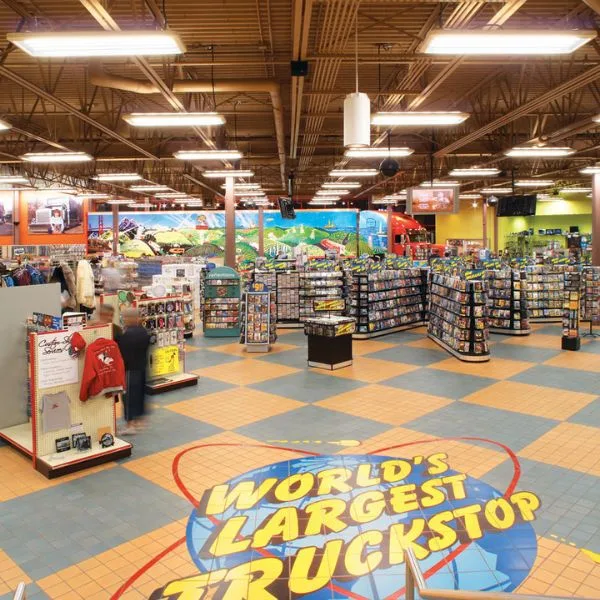
These are the workhorses of industrial illumination. High bay lights are designed for ceilings ranging from 20 to 45 feet, commonly found in large manufacturing plants and warehouses. They use specific reflectors or lenses to push light down to the floor from a great distance without scattering it. Conversely, low bay lights are optimized for ceilings under 20 feet, spreading light wider to avoid creating harsh shadows or glare in lower-clearance areas.
Industrial Tube and Strip Lights
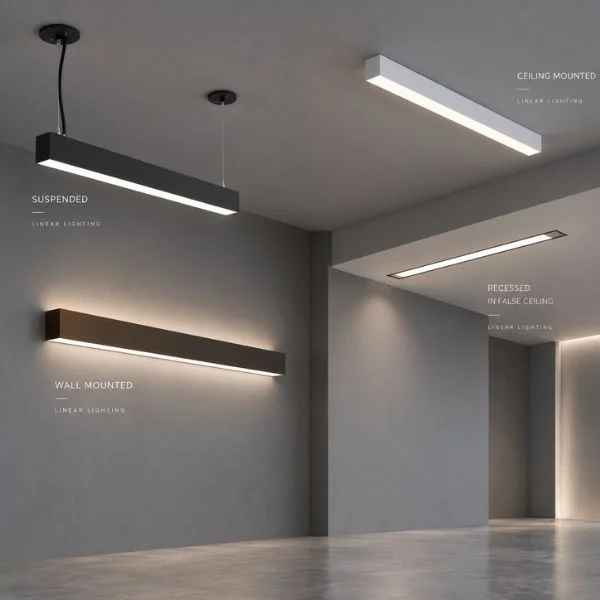
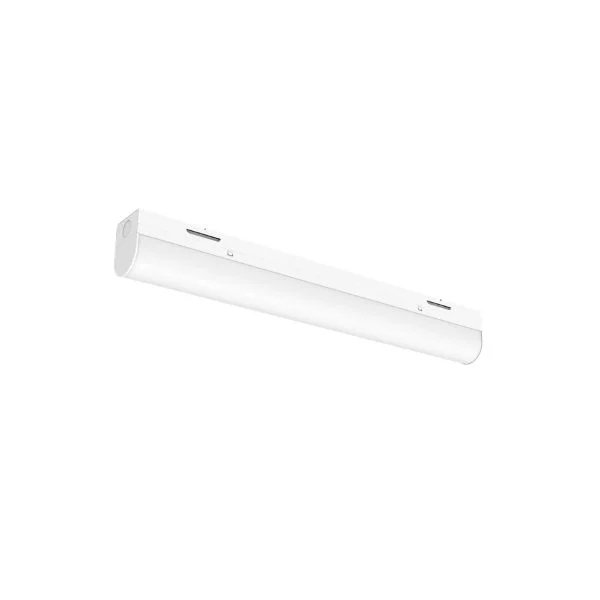
For areas that need linear illumination, such as assembly lines, workbenches, or narrow aisles, tube and strip lights are the go-to solution. Modern LED versions replace old fluorescent tubes, offering instant-on capability and no flickering. A 4 foot LED wall mount light fixture is often used in corridors or above specific workstations where directional, linear light is needed to maintain visibility without occupying floor space.
Troffer and Commercial Panel Lights
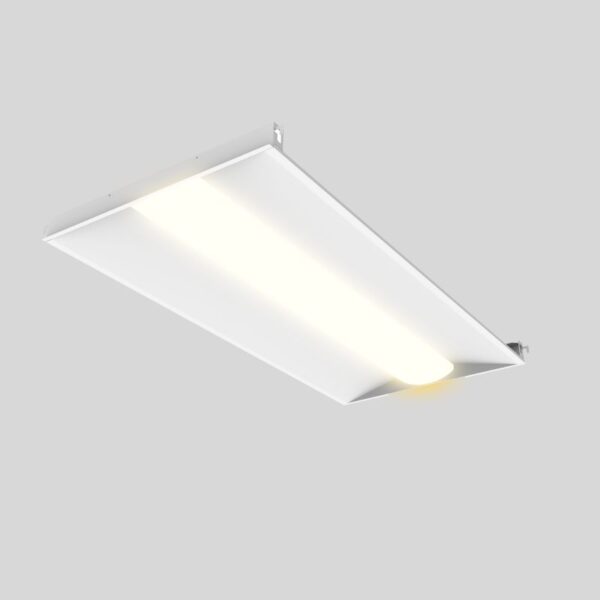
In factory offices, control rooms, or clean assembly areas with drop ceilings, troffers and panels provide a sleek, recessed look. These fixtures sit flush with the ceiling grid, offering a clean aesthetic and even light distribution. A 6 slot recessed panel light can deliver high lumen output while reducing glare on computer screens and control panels, making them ideal for administrative or precision monitoring zones within the facility.
Floodlights and Exterior Wall Packs
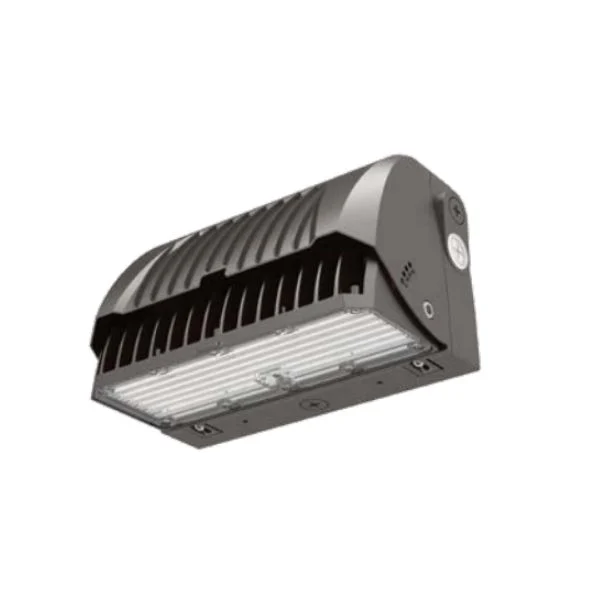
Factory lighting isn’t just about the interior. Security and perimeter safety rely on powerful exterior fixtures. Floodlights cast a broad beam over parking lots and loading docks, ensuring safe movement of trucks and personnel at night. Wall packs are mounted on the exterior building facade to illuminate walkways and entry points, acting as a deterrent for unauthorized access and preventing accidents in low-light conditions.
Factory Lighting Solutions by Application
General Overhead Warehouse Lighting
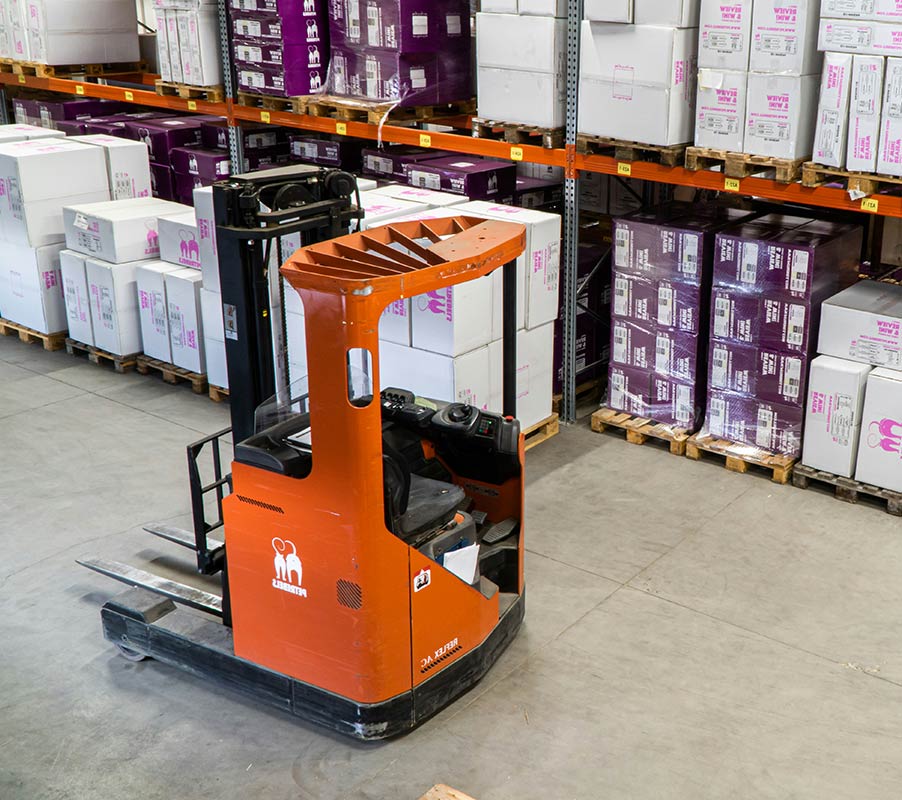
When we design lighting for large open spaces, uniformity is the priority. In high-ceiling environments, shadows can hide hazards and slow down logistics. We rely on powerful high-bay fixtures to push light all the way to the floor. The goal is to ensure that forklift operators and floor staff have clear visibility across every aisle without the glare that causes eye fatigue. Proper spacing is critical here to eliminate dark spots in racking areas.
Task Lighting for Assembly and Inspection
General lighting often isn’t enough for precision work. At assembly stations or quality control benches, we need higher lux levels to spot tiny defects or read small labels. Installing a dedicated white linear pendant light directly over the workspace provides the focused illumination required for detailed manual tasks. This localized approach improves accuracy and reduces the strain on workers’ eyes during long shifts, directly impacting production quality.
Targeted Machine and Equipment Illumination
Heavy machinery often creates its own shadows, blocking overhead light from reaching critical cutting or stamping zones. To combat this, we integrate lighting directly onto or inside the equipment. This targeted illumination ensures operators can clearly see moving parts and control panels. It is essential for safety and ensures that maintenance teams can effectively inspect machinery without relying solely on handheld flashlights.
Key Benefits of Upgrading to Industrial LED Lighting
When I consult with facility managers looking for a guide to Types of factory lighting 2026, the conversation always centers on LED upgrades. Sticking with outdated fixtures drains your budget and hurts productivity. Upgrading your industrial lighting is a necessary step to keep your operations competitive and safe.
Maximum Energy Efficiency and Cost Savings
Switching to industrial LEDs immediately drops your energy consumption. Compared to old HID or fluorescent setups, LEDs use up to 75% less power. This translates directly to your bottom line.
- Lower power draw: LEDs deliver significantly more lumens per watt.
- Reduced heat emission: Less wasted heat means lower facility cooling costs.
- Fast ROI: The energy savings generally pay for the new fixtures within 12 to 24 months.
Enhanced Visibility and Worker Safety
Dim or flickering lights lead to mistakes and workplace accidents. LED lighting provides crisp, uniform illumination across the entire factory floor. Better lighting means less eye strain for your team and a dramatic drop in hazards.
- High CRI: High Color Rendering Index helps workers read labels and inspect parts accurately.
- Instant-on technology: No dangerous waiting periods for lights to warm up after a power dip.
- Flicker-free output: Reduces worker headaches, fatigue, and motion sickness near heavy machinery.
Long-Lasting Durability and Low Maintenance
Factory environments are brutal on equipment. Industrial LED fixtures are built with solid-state technology to handle intense vibrations, heavy dust, and extreme temperature swings. They easily last up to 100,000 hours. This means your maintenance crew isn’t constantly renting scissor lifts to change out dead bulbs. Whether you are upgrading the harsh environment of the main production line or improving your facility’s exterior security with durable modern cylindrical outdoor lights, today’s lighting solutions are built to last.
Old vs. New Factory Lighting Comparison
| Feature | Legacy Lighting (HID/Fluorescent) | Modern Industrial LED |
|---|---|---|
| Energy Consumption | Very High | Extremely Low |
| Expected Lifespan | 10,000 – 20,000 hours | 50,000 – 100,000+ hours |
| Maintenance Needs | Frequent bulb and ballast replacements | Virtually maintenance-free |
| Vibration Resistance | Poor (Fragile components) | Excellent (Solid-state design) |
How to Choose the Right Lighting for Your Factory
Navigating the different types of factory lighting 2026 has to offer means looking past the basic fixtures and focusing on performance metrics. When I plan an industrial lighting upgrade, I prioritize exactly what the space needs to keep production safe, efficient, and cost-effective.
Calculating Lumens and Brightness Needs
Forget wattage—today’s standard is all about lumens (brightness). You need enough raw light hitting the work plane to prevent eye strain and accidents.
Here is a quick reference table I use for industrial light levels:
| Factory Zone | Recommended Light Level | Typical Application |
|---|---|---|
| Storage & Bulk | 10 – 30 Foot-Candles | Standard warehousing, large aisles |
| General Manufacturing | 50 – 100 Foot-Candles | Machining, packaging, loading docks |
| Precision Tasks | 100 – 200+ Foot-Candles | Electronics assembly, strict QA inspection |
Selecting the Best Color Temperature and CRI
Choosing the right color is just as critical as brightness.
- Color Temperature (Kelvin): For factory floors, I always stick to 4000K to 5000K. This creates a crisp, alert, daylight-like environment that keeps workers focused.
- Color Rendering Index (CRI): This measures how accurately colors show up under the light. If your team is wiring electronics or inspecting paint finishes, you need a CRI of 80 or higher to prevent costly mistakes.
Important Certifications: IP Ratings and DLC
Factories are harsh environments. Your fixtures need the right armor to survive.
- IP Ratings: Look for IP65 or IP66. This means the fixture is completely sealed against heavy dust and water jets.
- DLC Listed: If a fixture is DesignLights Consortium (DLC) certified, it means it has passed strict energy efficiency tests. Buying DLC-listed products is the easiest way to secure heavy utility rebates for your business.
Integrating Automated Lighting Controls
You shouldn’t be paying to light empty aisles. Modern factory lighting needs smart controls to truly maximize ROI.
- Occupancy Sensors: Automatically dim or turn off fixtures in low-traffic zones like warehouse aisles.
- Daylight Harvesting: Automatically lowers LED output when natural sunlight hits the skylights.
- Zoned Switching: Keep in mind that not all areas need industrial high bays. For your facility’s commercial office spaces or breakrooms, integrating elegant suspended direct-indirect lighting into your central control network ensures consistent energy savings from the warehouse floor all the way to the executive suites.
Related Sources
STAY IN THE LOOP
Subscribe to our free newsletter.
Leave A Comment

Explore types of hanging lights including pendant chandeliers and cluster designs to find the perfect style for every room