
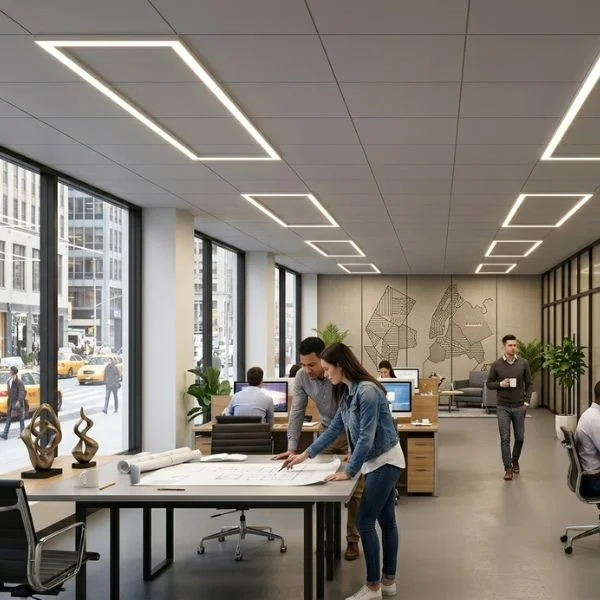
Are you struggling to choose the right office lighting systems for your workspace? Selecting the wrong setup doesn’t just look bad—it actively drains employee productivity and harms workplace well-being.
As a workspace design expert, I’ve seen how the right balance of color temperature, natural daylight, and task lighting can transform a dull office into a high-performance hub. This isn’t just theory; it’s a proven approach to reducing eye strain and maximizing energy efficiency through smart lighting technology.
In this guide, you’ll learn exactly how to implement a layered lighting strategy using energy-efficient LED downlights and human-centric lighting to get the best ROI for your business.
Let’s dive right in.
Introduction to Modern Office Lighting Systems
In the modern corporate landscape, Office Lighting Systems have evolved from basic utility to a strategic business asset. A well-designed lighting environment is no longer just about visibility; it is about creating a high-performance workspace that balances energy efficiency with human-centric design. By integrating advanced LED fixtures and smart controls, businesses can transform their physical environment into a tool for success.
The Impact of Lighting on Employee Productivity
Lighting is a primary driver of cognitive function and focus. Substandard illumination often leads to “afternoon fatigue,” whereas optimized systems keep the workforce engaged and alert.
| Lighting Factor | Impact on Productivity |
|---|---|
| Brightness (Lumens) | Prevents lethargy and maintains high energy levels. |
| Color Temperature | Cool light (5000K+) enhances concentration; warm light reduces stress. |
| Light Distribution | Uniformity eliminates shadows that cause visual distractions. |
Key Productivity Drivers:
- Reduced Eye Strain: High-quality indirect lighting minimizes glare on computer screens.
- Enhanced Focus: Proper task lighting allows for precision in detailed work.
- Alertness: Optimized blue-light levels during morning hours help regulate the natural wake-sleep cycle.
Benefits of Proper Lighting for Workplace Well-being
Investing in a premium Office Lighting System is an investment in human capital. Beyond simple output, the quality of light directly influences the physical and mental health of every team member.
- Circadian Alignment: Modern systems mimic natural daylight, supporting the body’s internal clock and improving sleep quality outside of work hours.
- Mood Elevation: Bright, flicker-free environments are proven to reduce symptoms of workplace anxiety and seasonal affective disorder.
- Ergonomic Comfort: Proper light placement reduces the need for awkward postures caused by trying to avoid shadows or screen glare.
- Safety and Clarity: Clear, consistent ambient illumination ensures a safe navigation environment in hallways and common areas.
By prioritizing workplace wellness through lighting, organizations see a measurable decrease in absenteeism and a significant boost in overall employee satisfaction.
Key Elements of Effective Office Lighting Design
Understanding Color Temperature and Lumens
Color temperature, measured in Kelvin (K), defines the mood and functionality of the workspace. For most office environments, I suggest a range of 4000K to 5000K. This cool white light mimics daylight and helps maintain high energy levels throughout the afternoon. Lumens represent the total amount of visible light emitted. To hit the mark for productivity, I calculate the necessary brightness based on the specific tasks performed in each zone, ensuring every desk has enough light for detailed work without being overwhelming.
Balancing Natural Daylight and Artificial Illumination
Relying solely on overhead lights is a mistake. I always look for ways to integrate natural daylight, which improves mood and significantly cuts down on energy efficiency costs. The key is to use artificial sources to fill the gaps where sunlight can’t reach. Installing versatile fixtures like the horizontal tube pendant light allows for better light distribution, ensuring that even the center of a large floor plan feels bright and open.
Minimizing Glare and Preventing Eye Strain
Digital eye strain is a common complaint in modern offices. To protect your team, I focus on glare reduction through smart placement and hardware choices.
- Anti-glare louvers: Use these on recessed fixtures to direct light downward rather than into eyes.
- Matte finishes: Choose lighting housings that don’t reflect light harshly.
- Flicker-free drivers: Ensure your LED fixtures use high-quality drivers to prevent the invisible strobing that causes fatigue.
- Layered approach: Combine overhead lights with adjustable task lamps to give employees control over their immediate environment.
| Feature | Recommended Specification |
|---|---|
| Color Temperature | 4000K – 5000K (Cool White) |
| Illuminance (Lux) | 500 Lux for general desk work |
| CRI (Color Rendering Index) | 80+ for accurate color perception |
| UGR (Unified Glare Rating) | Less than 19 for maximum comfort |
Implementing a Layered Lighting Strategy
I always recommend a layered approach to office lighting systems because a single light source never fits every need. By combining different types of illumination, we create a flexible environment that supports both high-focus work and casual collaboration while maximizing energy efficiency.
Ambient Lighting for General Office Spaces
Ambient lighting serves as the foundation of your workspace. It provides the base level of illumination needed for people to move around safely and perform general tasks. To avoid the “hospital feel,” I focus on uniform light distribution that minimizes shadows.
- Panel Lights: Provide a clean, modern look with soft, diffused light.
- Recessed Solutions: Using a recessed linear LED light fixture creates a streamlined ceiling appearance while delivering high lumens across open-plan areas.
- Indirect Lighting: Bouncing light off the ceiling reduces glare on computer screens, which is essential for workplace wellness.
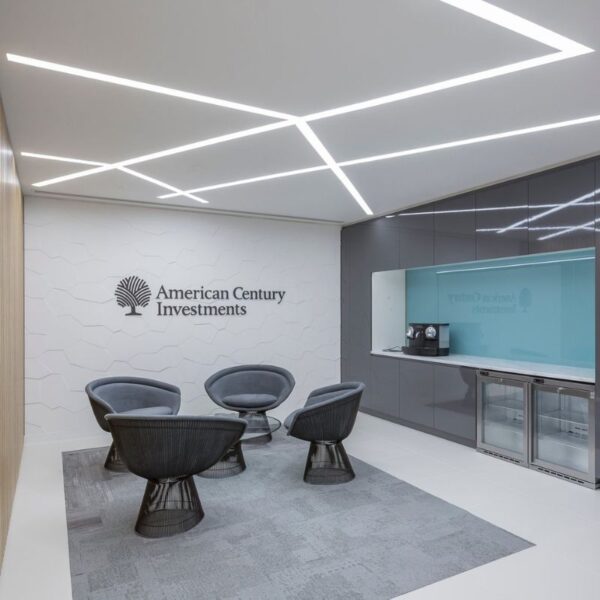
Task Lighting for Optimized Workstations
Task lighting is all about precision. I place these fixtures exactly where the work happens to prevent eye strain and improve employee productivity. This layer allows individuals to customize their immediate environment without affecting the rest of the office.
- Adjustable Desk Lamps: Allow users to direct light exactly where they need it for reading or writing.
- Under-Cabinet LEDs: Perfect for cubicles or storage areas to eliminate dark spots.
- High Color Rendering (CRI): I ensure task lights have a high CRI so colors look natural and text is easy to read.
Accent Lighting for Lobbies and Conference Rooms
Accent lighting adds character and helps define the “vibe” of professional spaces. In lobbies and meeting rooms, I use this layer to highlight architectural features, company logos, or artwork, making the space feel more premium and welcoming.
- Directional Spotlights: Focus attention on specific design elements or brand signage.
- Statement Fixtures: A direct-indirect ring pendant light works perfectly in conference rooms, providing functional light for meetings while acting as a sophisticated centerpiece.
- Wall Washers: Create a sense of depth and make smaller rooms feel much larger and more open.
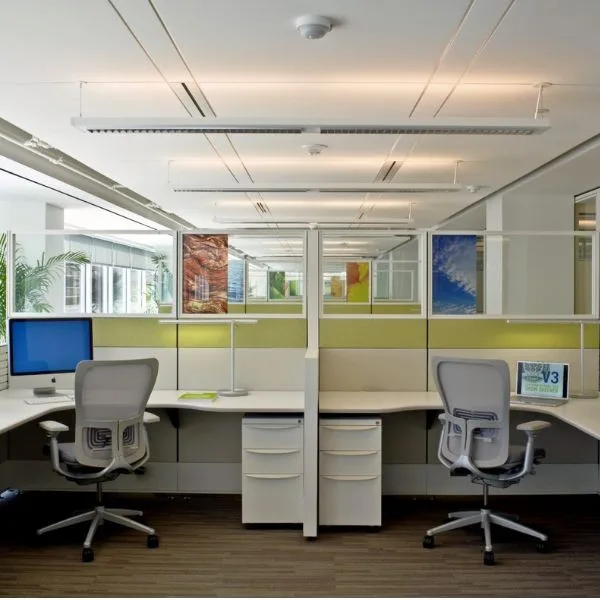
Essential Office Lighting Fixture Types
Choosing the right hardware is the foundation of any high-performance workspace. We focus on selecting LED fixtures that balance aesthetic appeal with rugged durability to ensure long-term value and minimal maintenance.
Energy-Efficient LED Downlights and Panel Lights
For general illumination, recessed downlights and LED panel lights are the industry standard. These fixtures provide a clean, streamlined look that fits perfectly into drop ceilings.
- Uniform Light Distribution: Panel lights eliminate dark spots and provide consistent brightness across the entire floor.
- Energy Efficiency: Modern LED panels consume up to 70% less energy than traditional fluorescent tubes.
- Low Profile: Ideal for maintaining a professional, uncluttered ceiling line in corporate environments.
Linear and Cylinder Pendant Lighting Systems
To create a more contemporary and focused environment, we often implement architectural solutions. Staying ahead of commercial linear lighting trends allows us to design spaces that feel open yet purposeful.
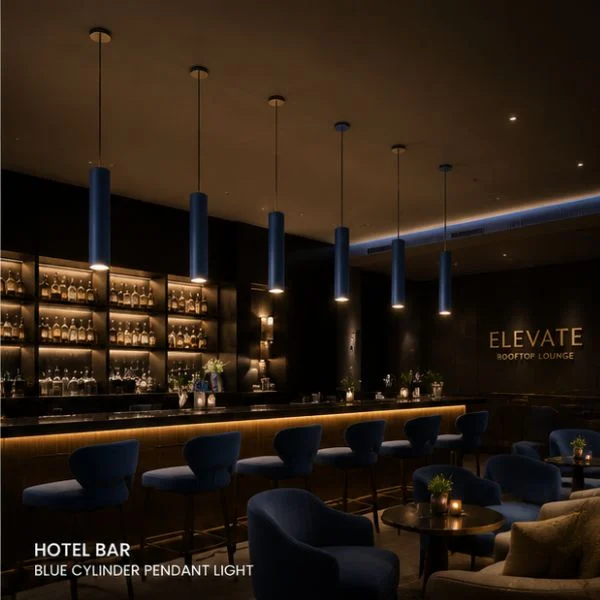
For areas requiring a mix of style and performance, a cylindrical pendant light serves as an excellent focal point over collaborative zones or reception desks. These overhead fixtures provide:
- Directional Task Lighting: Perfect for illuminating conference tables or individual workstations.
- Visual Depth: Pendants break up the monotony of flat ceilings, adding a premium feel to the office.
- Customizable Heights: Adjustable suspension systems allow for precise light placement based on the room’s layout.
Flush Mount and Surface Mount Solutions
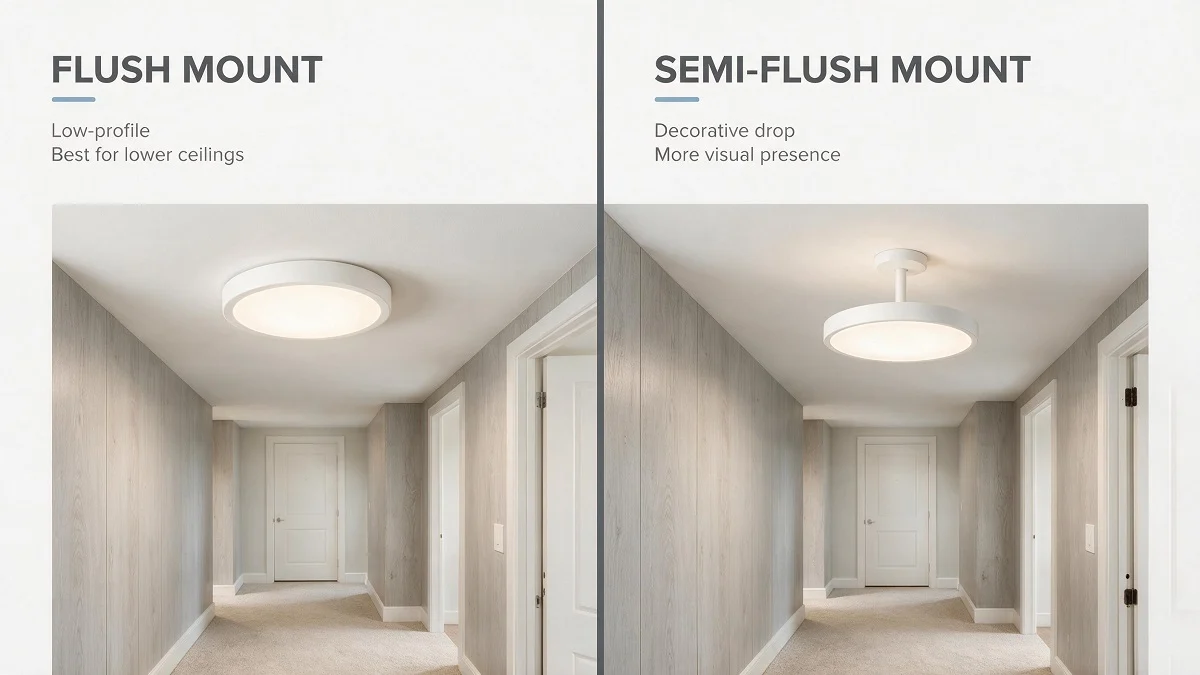
Not every office has the luxury of a recessed ceiling. In buildings with concrete slabs or low clearance, flush mount and surface mount fixtures are the go-to choice.
- Versatile Installation: These units bolt directly to the surface, making them ideal for retrofitting older buildings.
- Durability: Surface-mounted wraps and clouds are built to withstand high-traffic areas like hallways and storage rooms.
- Wide Beam Angles: These fixtures are designed to push light outward, ensuring that even tight corners receive adequate ambient illumination.
Advanced Controls and Smart Lighting Technology
Human-Centric Lighting for Circadian Rhythms
Modern office lighting systems now prioritize biological needs through human-centric design. This technology adjusts color temperature and intensity throughout the day to mimic the sun’s natural cycle. By providing cooler, blue-toned light in the morning and warmer tones in the late afternoon, we help employees maintain focus and support their natural sleep-wake cycles. This approach to workplace wellness is a game-changer for long-term productivity.
Automated Dimmable Controls and Motion Sensors
Efficiency meets convenience with automated controls. We utilize advanced sensors to ensure your office isn’t burning energy in empty rooms.
Occupancy Sensors: Automatically trigger lights when someone enters a zone and shut them off after a period of inactivity.
Motion Sensors: Ideal for hallways and breakrooms to provide illumination only when necessary.
Dimmable Controls: Allow users to manually or automatically adjust brightness levels based on the task at hand or the amount of available daylight.
Integrating these features is a core component of our linear LED lighting guide for commercial spaces, helping businesses reduce overhead while maintaining a high-quality environment.
Smart Integrated Systems for Energy Management
The most effective way to manage a large facility is through a smart integrated system. These platforms connect all LED fixtures to a centralized dashboard, allowing for real-time monitoring of energy consumption. By analyzing usage data, we can identify patterns and optimize lighting schedules to achieve maximum energy efficiency. These systems often include:
Remote Access: Control the entire office lighting system from a smartphone or tablet.
Scheduled Dimming: Automatically lower light levels during off-peak hours.
Daylight Harvesting: Sensors that detect natural light and dim the artificial lights accordingly to maintain a consistent brightness level.
Using these smart technologies ensures that your office remains a modern, cost-effective workspace that adapts to the needs of your team.
Specialized Lighting for Professional Environments
Professional spaces often require more than a “one size fits all” approach. We focus on tailoring office lighting systems to meet the specific demands of modern communication and long-term sustainability. Whether it’s a high-stakes boardroom or a high-traffic hallway, the right specialized fixtures make the difference.
Optimizing Lighting for Video Calls and Meetings
In the era of hybrid work, video conferencing is a daily necessity. Standard overhead lighting often creates harsh shadows or “raccoon eyes” on camera. We solve this by using indirect lighting and high-quality diffusers to soften the output.
| Feature | Impact on Video Quality |
|---|---|
| High CRI (90+) | Ensures natural skin tones and vibrant colors on screen. |
| Dimmable Controls | Allows users to balance screen brightness with ambient light. |
| Uniform Light Distribution | Eliminates distracting shadows and background glare. |
For meeting rooms, we recommend using a drop lens linear LED pendant to provide both functional task lighting and a professional aesthetic that looks great on camera.
Sustainable and Industrial Grade Lighting Options
Sustainability isn’t just a buzzword; it’s about reducing overhead costs and environmental impact. Our industrial-grade led fixtures are built to withstand 24/7 operation while maintaining peak energy efficiency. These systems are designed for durability, ensuring you aren’t constantly swapping out bulbs or dealing with flickering ballasts.
- Longevity: Rated for 50,000+ hours to minimize maintenance cycles.
- Performance: High lumen output with minimal heat generation.
- Versatility: For areas where recessed installation isn’t possible, our surface mount LED lights offer a rugged yet sleek solution for hallways and utility spaces.
By investing in professional-grade hardware, you secure a workspace that is both functional and future-proof. We prioritize high-performance materials that deliver consistent color temperature and light quality, ensuring your office remains a top-tier environment for years to come.
Buying Guide: How to Choose Your Office Lighting System
Selecting the right office lighting system is a strategic investment in your business’s infrastructure. I always tell my clients that the goal isn’t just to “fill the room with light,” but to create an environment where people can actually work without getting a headache by 3 PM.
Assessing Space Requirements and Layout
Before buying any hardware, you need to map out your floor plan. The height of your ceilings and the placement of workstations dictate which led fixtures will work best. For instance, open-plan offices with high ceilings benefit from suspended systems, while standard office heights are perfect for recessed downlights.
| Space Type | Recommended Lighting Strategy | Key Consideration |
|---|---|---|
| Open Workspaces | Uniform ambient lighting + task lamps | Minimize shadows on desks |
| Private Offices | Direct/Indirect pendant lighting | Personal control and comfort |
| Conference Rooms | Dimmable LED panels + accent strips | Flexibility for presentations |
| Hallways/Lobbies | Wall-mounted or decorative fixtures | Navigation and brand aesthetics |
When planning your layout, choosing the best LED lights for office environments ensures that you maintain consistent color temperature across different zones, preventing a “patchwork” look that distracts employees.
Evaluating Maintenance Costs and Energy Efficiency
I focus heavily on long-term ROI. While the initial price tag matters, the real savings come from energy efficiency and reduced maintenance cycles. Modern commercial lighting should be “set it and forget it.”
- Lumen Output vs. Wattage: Look for high lumens per watt to get more brightness for less power.
- Rated Lifespan: Quality LEDs should last 50,000+ hours, drastically cutting down on replacement labor.
- Heat Dissipation: Good fixtures run cool, which also reduces the load on your office air conditioning system.
- Warranty: Ensure your supplier provides a solid commercial-grade warranty to protect your investment.
Budgeting for System Retrofits and New Installations
Whether you are starting from scratch or upgrading an old space, your budget needs to account for both hardware and controls. Retrofitting often involves replacing old fluorescent tubes with high-performance slot linear lights to modernize the aesthetic without tearing out the entire ceiling.
- New Installations: Budget for high-end integrated smart lighting systems that offer the most long-term cost savings.
- Retrofits: Focus on “plug-and-play” LED solutions that fit existing footprints to minimize downtime.
- Control Systems: Factor in the cost of motion sensors and occupancy sensors; they usually pay for themselves within 18 months through reduced electricity waste.
STAY IN THE LOOP
Subscribe to our free newsletter.
Leave A Comment
Retrofit LED Lighting Solutions Are soaring energy bills, relentless ballast [...]

Struggling to cut operational costs while upgrading your facility’s lighting [...]
The Financial & Operational Business Case Upgrading to energy efficient [...]
Are you worried about overhead head clearance, or tired of [...]