Understanding Product Safety Certifications: What is an NRTL?
For electrical contractors and facility managers, the acronym NRTL is the cornerstone of compliance. An NRTL, or Nationally Recognized Testing Laboratory, is an independent organization recognized by the Occupational Safety and Health Administration (OSHA) to test and certify products for safety.
When you purchase industrial lighting—whether it’s a UFO High Bay or a LED Wall Pack—the NRTL mark is your proof that the fixture meets rigorous North American safety requirements. It is not just about a brand name; it is about federal recognition of the lab’s capability to test to established safety standards.
The Role of Nationally Recognized Testing Laboratories
The primary function of an NRTL is to provide third-party verification that products are safe for use in the workplace. While UL (Underwriters Laboratories) is the most famous, it is not the only one. ETL (Intertek) is also a recognized NRTL.
- OSHA Accreditation: Both UL and ETL are accredited by OSHA to test products.
- Legal Equivalence: From a legal and regulatory standpoint, marks from any NRTL are treated equally.
- Scope: These labs test everything from electrical safety to thermal performance, ensuring fixtures like our Vapor Tight lights can withstand their rated environments.
Why Product Safety Certifications are Essential
Installing non-certified lighting is a massive risk for contractors. Safety certifications are not optional suggestions; they are critical for liability, insurance, and code compliance.
- Code Compliance: Local building codes and the NEC (National Electrical Code) require listed products. Inspectors will reject projects using unlisted fixtures.
- Liability Protection: In the event of an electrical fire or accident, using non-certified products can void insurance policies and leave contractors liable.
- Performance Assurance: Certification ensures the product construction—such as our heavy-duty aluminum housings—meets specific safety benchmarks.
How Safety Standards are Established and Maintained
A common confusion is the difference between the standard and the tester. Safety standards are typically developed by organizations like UL or ANSI (American National Standards Institute). However, any NRTL can test to those standards.
- Testing to Standards: ETL tests products to the exact same UL standards as UL does. For example, an LED fixture is tested against UL 1598 regardless of which lab applies the sticker.
- Surveillance Audits: Certification is not a one-time event. NRTLs conduct quarterly, unannounced factory inspections to ensure ongoing compliance.
- Consistency: This rigorous process guarantees that every LED Shoebox Light or Canopy Light we ship maintains the same safety profile as the sample originally tested.
What is UL Certification?
When we talk about safety in the US electrical market, UL (Underwriters Laboratories) is usually the first name that comes up. It is the most recognized safety certification in North America. For us at Prillumen, and for the contractors we supply, seeing that UL mark on a box isn’t just about a logo—it’s about knowing the equipment won’t fail under pressure.
The History and Reputation of Underwriters Laboratories
UL has been around since 1894. It started when electricity was a new, dangerous technology, and insurers needed a way to assess fire risks. Over the last century, it has established itself as the “Gold Standard” for product safety.
For many older electrical inspectors and Authorities Having Jurisdiction (AHJs), UL is the benchmark. Because they wrote many of the standards used today, the brand carries a massive amount of weight. When a contractor installs a UL-listed High Bay or Wall Pack, they rarely face questions from inspectors regarding the safety of the hardware.
What Does the UL Listed Mark Mean?
The UL Listed mark signifies that a representative sample of the product has been tested and meets specific, defined safety requirements. These requirements are based on UL’s own published Standards for Safety, which are recognized nationally.
- Safety Focused: It verifies the product won’t cause fire, electric shock, or mechanical injury.
- Component Verification: It checks that internal components (like drivers and wiring) are up to code.
- Ongoing Compliance: It isn’t a one-time check; it implies continuous adherence to these standards.
For example, when you are sourcing modern linear pendants for a commercial office, seeing that UL mark ensures the fixture meets strict electrical safety codes required for indoor occupancy.
The UL Certification and Testing Process
Getting a product UL listed is a rigorous ordeal. It involves submitting products to a Nationally Recognized Testing Laboratory (NRTL) where they undergo severe stress testing.
- Construction Review: Engineers examine the physical build, materials, and electrical spacing.
- Performance Testing: Products undergo thermal testing, humidity exposure, and endurance tests to ensure they don’t overheat or fail.
- Abnormal Testing: The lab simulates short circuits and component failures to ensure the device fails safely without catching fire.
- Follow-Up Services: This is critical. UL field representatives conduct unannounced quarterly visits to the manufacturing facility to ensure the products coming off the line match the originally tested sample.
Advantages of Choosing UL for Manufacturers
For a manufacturer, choosing UL is often a strategic move to ensure smooth adoption in the US market. The primary advantage is universal acceptance. While other certifications are legally equivalent, the UL mark eliminates friction.
- Instant Recognition: Every building inspector knows the logo.
- Consumer Confidence: End-users and facility managers often view UL as a sign of premium quality.
- Reduced Liability: Using UL-listed components and fixtures helps satisfy insurance requirements for commercial buildings.
We prioritize these certifications because they give our contractor clients peace of mind. When you hang a light 30 feet in the air, you need to know the certification backing it is rock solid.
What is ETL Certification?
ETL stands for Electrical Testing Laboratories. While UL often gets the spotlight, ETL is a powerhouse in the safety certification world. As a manufacturer, we rely on ETL to get our high-performance LED fixtures into the hands of contractors quickly without cutting corners on safety. It is the fastest-growing safety certification in North America and holds the same legal authority as UL.
The Legacy of Intertek and the ETL Mark
The history of ETL dates back to 1896, founded by none other than Thomas Edison. He established the Lamp Testing Bureau to ensure safety and performance in early electric lamps. Today, that legacy lives on through Intertek, the company that manages the ETL Listed Mark.
Intertek is a Nationally Recognized Testing Laboratory (NRTL) recognized by OSHA, just like UL. When you see the ETL stamp on our industrial lighting, you are looking at over a century of testing expertise. It isn’t a “second-tier” option; it is a mark backed by a global leader in assurance, testing, inspection, and certification.
What Does the ETL Listed Mark Mean?
The ETL Listed Mark is proof that a product complies with North American safety standards. Specifically, it signifies that the equipment has been tested to ANSI/UL standards.
For a contractor, this means an ETL-listed High Bay or Wall Pack is functionally equivalent to a UL-listed one. It has passed the same rigorous tests for:
- Electrical Safety: Prevention of shocks and fires.
- Thermal Management: Ensuring heat sinks perform correctly.
- Durability: Withstanding environmental factors like moisture (IP65/IP66).
When we deal with importing UL and DLC certified LED office panel lights or manufacturing heavy-duty fixtures, the goal is always code compliance. The ETL mark guarantees that the product meets the exact same safety criteria required by building inspectors and AHJs across the US.
The ETL Certification and Inspection Process
Getting an ETL listing isn’t a one-and-done event. The process is stringent and involves continuous monitoring to ensure our products remain safe over time.
- Product Testing: We submit samples of our LED fixtures to Intertek. They test them against the applicable UL standard (e.g., UL 1598 for luminaires).
- Report Review: If the product passes, a formal report is issued detailing the construction and safety components.
- Initial Factory Inspection: Intertek inspects our manufacturing facility to ensure we have the quality control systems to build the product consistently.
- Quarterly Surveillance: This is critical. Intertek field representatives visit the factory unannounced four times a year. They check that the LED drivers, housing materials, and wiring match the original tested sample perfectly.
Benefits of ETL Certification for Businesses
For a lighting provider like Prillumen, choosing ETL often comes down to efficiency. The lighting industry moves fast, and updated LED chips or drivers need to hit the market before they become obsolete.
Why we often utilize ETL:
| Feature | Benefit to Manufacturer | Benefit to Contractor |
|---|---|---|
| Speed | Faster testing and certification timelines. | Access to the latest LED technology sooner. |
| Cost | Generally lower certification fees than UL. | Helps keep unit prices competitive for bulk orders. |
| Flexibility | Responsive customer service during the testing phase. | Custom lighting modifications can be approved faster. |
By leveraging ETL, we maintain our commitment to safety while delivering cost-effective, contractor-grade lighting solutions without unnecessary delays.
UL vs. ETL: Key Differences and Similarities
When we supply LED fixtures for large-scale industrial projects, the debate between UL and ETL often comes up. From a practical standpoint, understanding how these two certifications compare helps contractors make informed decisions without getting bogged down in brand loyalty. Both marks signify that a product has been rigorously tested, but there are operational nuances that affect manufacturing and supply.
Shared Safety Standards and Compliance Requirements
The most critical fact for any electrical contractor is that **UL and ETL test to the exact same safety standards**. An ETL Listed product is not tested to “ETL standards”; it is tested to ANSI/UL standards. For example, our LED High Bays are tested against UL 1598 regardless of which laboratory conducts the test. This functional equivalence ensures that whether you are installing a Wall Pack or specifying suspended linear lighting fixtures, the safety benchmarks for heat dissipation, electrical safety, and durability are identical.
Differences in Testing Speed and Certification Timelines
One significant difference we see on the manufacturing side is speed. Intertek (the body behind ETL) is often recognized for faster testing turnaround times compared to UL.
* **Faster Time-to-Market:** Quicker certification allows us to introduce the latest LED efficiency upgrades (higher lumens per watt) to the market sooner.
* **Agility:** We can adapt to new regulations or design improvements without long delays in the certification queue.
* **Availability:** Faster processing helps prevent stockouts on popular items like our UFO High Bays.
Market Recognition and Industry Acceptance
Historically, UL has held a “gold standard” reputation simply because they were the pioneers of safety testing in the US. Some older inspectors or facility managers may instinctively look for the UL logo out of habit. However, **ETL is currently the fastest-growing safety certification in North America**. Both marks are Nationally Recognized Testing Laboratories (NRTLs) recognized by OSHA. Legally, Authorities Having Jurisdiction (AHJs) and building inspectors across all 50 states accept both marks equally for code compliance.
Cost Structure and Accessibility for Manufacturers
For manufacturers, the cost of certification impacts the final unit price. ETL often provides a more cost-effective route for certification and quarterly inspections. This efficiency allows us to keep pricing competitive on contractor-grade fixtures without sacrificing component quality, such as our die-cast aluminum housings or surge protection drivers.
Quick Comparison: UL vs. ETL
| Feature | UL (Underwriters Laboratories) | ETL (Intertek) |
|---|---|---|
| Testing Standard | ANSI/UL Standards | ANSI/UL Standards |
| Legal Status | OSHA Recognized NRTL | OSHA Recognized NRTL |
| Speed to Market | Slower | Faster |
| Inspector Acceptance | Universal | Universal |
Choosing the Right Mark: UL or ETL?
For many of our customers, the decision often comes down to project specifications rather than actual safety differences. Since both UL and ETL test to the exact same ANSI/UL standards, the “right” choice depends on the specific needs of the job site and the speed at which you need the latest technology. At Prillumen, we ensure our products meet rigorous safety requirements regardless of which NRTL mark is on the label, focusing on durability and performance for the contractor.
Industry-Specific Preferences and Trends
In the US electrical contracting world, habit plays a big role. Some older architectural specifications or municipal codes might still explicitly ask for “UL Listed” equipment simply because that was the only option decades ago. However, modern Authorities Having Jurisdiction (AHJs) and inspectors across North America recognize the ETL mark as fully equivalent.
We are seeing a shift where performance metrics, such as DesignLights Consortium (DLC) qualification for rebates, matter more than the specific safety logo. Whether you are installing high bays in a warehouse or 4-inch recessed linear fixtures in an office, the priority is verifying that the product is listed by a recognized NRTL and meets the energy codes required for the project.
Global Market Access and International Standards
While UL is deeply rooted in American history, Intertek (the body behind ETL) has a massive global footprint. For manufacturers, using ETL can sometimes streamline the process of certifying products for multiple international markets simultaneously. For the US contractor, this global reach doesn’t change the installation process, but it often means that ETL-listed products are backed by a testing organization with extensive experience in diverse regulatory environments. This is particularly relevant when dealing with complex systems like those discussed in our guide on hospital lighting safety standards, where adherence to strict protocols is non-negotiable.
Evaluating Time-to-Market vs. Brand Heritage
One of the biggest practical differences we see is speed. LED technology evolves rapidly, with efficiency jumping from 130lm/W to 150lm/W in short cycles.
- UL Certification: Carries the weight of over a century of brand heritage (“The Gold Standard”), but the testing queues can be long, delaying product launches.
- ETL Certification: Known for faster turnaround times. This allows manufacturers to get the latest, most efficient LED drivers and chips into your hands sooner without compromising safety.
For a contractor, this means an ETL-listed fixture might offer newer technology at a better price point simply because it reached the market faster than a comparable UL-listed unit.
The Importance of Ongoing Surveillance Audits
A safety mark isn’t just a one-time sticker; it represents a commitment to consistency. Both UL and ETL conduct unannounced, quarterly factory inspections to ensure that the products rolling off the assembly line match the samples that were originally tested.
- Consistency: Inspectors verify components, construction, and electrical safety tests (like Hi-Pot testing).
- Liability: These audits protect the contractor. When you install a Prillumen fixture, the listing proves that the heavy-duty aluminum housing and internal components are being monitored for quality year-round.
If a manufacturer fails these audits, they lose the right to use the mark. This rigorous surveillance is why we stand behind our 5-year warranty—we know our manufacturing processes are under constant third-party scrutiny.
Common Misconceptions and FAQs
There is a lot of noise in the industry regarding safety marks, and unfortunately, misinformation can lead contractors to overspend or limit their options unnecessarily. We encounter these questions frequently when supplying LED High Bays and area lights for large-scale commercial projects. Let’s clear up the confusion so you can focus on getting the job done right.
Is ETL Less Rigorous Than UL Certification?
This is the most common myth we hear. The short answer is no. Both UL and ETL are Nationally Recognized Testing Laboratories (NRTLs) recognized by OSHA. They test products against the exact same set of safety standards (typically ANSI/UL standards).
When we manufacture a fixture, whether it carries a UL or ETL mark, it has undergone the same rigorous testing for electrical safety, heat dissipation, and durability. The difference lies in the testing laboratory used, not the safety of the final product. You can learn more about how we handle certifications and North American standards to ensure every fixture meets code.
Do Retailers and Insurance Companies Accept Both Marks?
Yes, they do. From a legal and insurance standpoint, the requirement is that the equipment is listed by an NRTL. Authorities Having Jurisdiction (AHJs), building inspectors, and insurance carriers view UL and ETL as legally equivalent.
- Inspectors: They look for the “Listed” mark from an approved NRTL.
- Insurance: Claims are generally honored as long as the electrical equipment was installed to code and properly certified by an OSHA-recognized lab.
- Retailers: Major distributors stock both because they know both comply with North American safety regulations.
The Risks of Using Products Without Safety Listings
Using non-listed lighting fixtures is a massive liability gamble that no contractor should take. Cheap, uncertified imports often lack proper heat sinking or surge protection, leading to premature failure or, worse, fire hazards.
If a fire occurs and the investigation reveals the lighting fixtures were not NRTL listed (neither UL nor ETL), the insurance company may deny the claim. At Prillumen, we prioritize safety alongside performance. Our products feature heavy-duty die-cast aluminum housing and are fully listed to ensure you never face liability issues regarding equipment safety.
How to Verify a Product’s UL or ETL Listing
Verifying a listing is straightforward and protects you from counterfeit products.
- Check the Label: Every certified fixture, such as our UFO High Bays or Wall Packs, will have a physical label on the housing displaying the UL or ETL logo and a unique control number.
- Online Directories: You can verify the status of a product by entering that control number into the UL Product iQ database or the Intertek (ETL) Directory of Listed Products.
- Ask for Specs: We provide full specification sheets that clearly state the certification status and DLC listing for rebate eligibility.
Related Sources
STAY IN THE LOOP
Subscribe to our free newsletter.
Leave A Comment
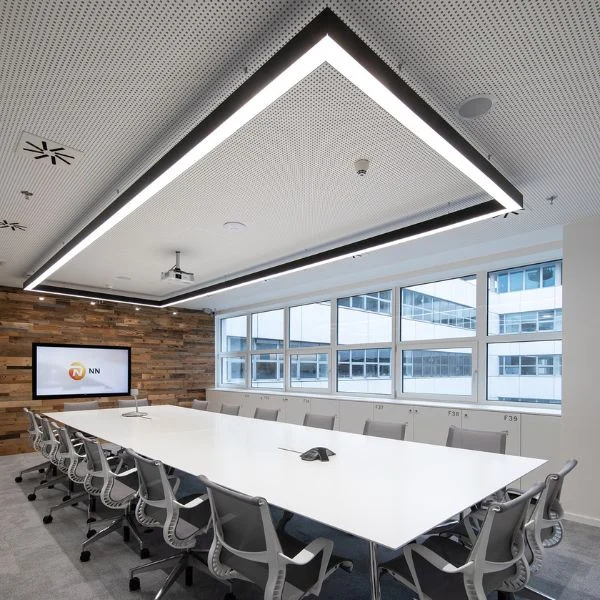
Office Lighting Design Guide for Modern Workplaces with lux UGR and LED fixture tips for comfort productivity and energy efficiency
Ever wonder why an outfit looks vibrant in natural sunlight, [...]
What is Tunable White Lighting? As the industry standard evolves, [...]