The Impact of Lighting on Learning Environments
As we navigate the standards of modern education, understanding the physical environment’s role is critical. Welcome to the lighting for classrooms ultimate guide 2026. Lighting is no longer just about basic visibility; it is a foundational element that dictates the success of an educational facility. Outdated, poorly designed lighting systems directly contribute to student fatigue, behavioral issues, and lower academic performance. In contrast, engineered lighting strategies transform standard rooms into highly productive, dynamic learning hubs.
How Classroom Lighting Influences Concentration
The correlation between illumination and cognitive function is scientifically proven and undeniable. When a student’s visual environment is compromised by harsh glare or inadequate brightness, their concentration shatters. Optimizing the visual field allows students to dedicate their cognitive energy to learning rather than struggling to see.
- Eliminating Visual Strain: High-quality LED fixtures with low glare ratings (UGR < 19) and zero visible flicker prevent the headaches and eye fatigue that derail focus.
- Optimized Color Temperatures: Utilizing cooler, daylight-mimicking light (4000K-5000K) during intensive instructional periods naturally boosts alertness and reading speed.
- Enhanced Task Visibility: Delivering precise lux levels to desks and whiteboards ensures that reading, writing, and screen-based tasks require less physical effort.
Regulating Circadian Rhythms for Student Well-being
Human biology is inextricably linked to the natural progression of sunlight. Traditional, static lighting environments disrupt the body’s internal clock, leading to lethargy and poor sleep patterns. Advanced educational lighting now prioritizes biological health by mimicking the natural day-night cycle.
| Time of Day | Light Characteristic | Biological Effect on Students |
|---|---|---|
| Morning | High Intensity, Cool White (5000K+) | Suppresses melatonin production; rapidly awakens and energizes. |
| Mid-Day | Moderate Intensity, Neutral (4000K) | Sustains steady focus and stabilizes mood during core subjects. |
| Late Afternoon | Lower Intensity, Warm White (3000K) | Promotes relaxation, reduces stress, and prepares the body for eventual rest. |
By aligning indoor illumination with natural solar rhythms, we actively support student well-being, promoting better sleep at home and sharper engagement in the classroom.
Creating Student-Centric Learning Spaces
Modern educational models demand total spatial flexibility. The outdated “one-switch-fits-all” approach fails to support contemporary teaching methods. We must engineer environments that adapt instantly to the specific needs of the students and the curriculum.
- Intelligent Zonal Dimming: Lighting must be divided into controllable zones. This allows educators to dim the light over a presentation screen while keeping desk areas brightly illuminated for active note-taking.
- Activity-Specific Tuning: Different learning tasks require different atmospheres. A space can transition from bright, uniform light for a science experiment to soft, warm light for quiet group reading.
- Adaptive Layout Support: As desks and collaborative workstations are rearranged throughout the term, uniform light distribution ensures no student is left in a dark or heavily shadowed corner.
Essential Requirements for Classroom Lighting Needs
When planning lighting for classrooms, we aren’t just hanging fixtures; we are meeting specific, non-negotiable requirements. Modern educational spaces demand systems that balance operational costs with high-performance illumination.
Energy Efficiency, Durability, and Easy Maintenance
Schools operate on tight budgets, making energy consumption a critical factor. We prioritize LED solutions because they offer significant long-term savings compared to traditional fluorescent tubes. Beyond just the electricity bill, durability is key in high-traffic educational environments. Fixtures need to withstand daily use without constant failure.
Maintenance teams in schools are often stretched thin. Therefore, we design lighting systems that are essentially “install and forget.” Long-life LEDs reduce the frequency of bulb replacements, minimizing disruptions to the learning process.
- Long Lifespan: LEDs typically last 50,000+ hours, reducing replacement cycles.
- Robust Build: Fixtures must be resistant to dust and minor impacts.
- Low Maintenance: Sealed units prevent bug and dust ingress, keeping maintenance simple.
Meeting LEED Building Standards for Education
Sustainable building practices are becoming the norm for educational facilities globally. Lighting plays a massive role in achieving LEED (Leadership in Energy and Environmental Design) certification. To meet these rigorous standards, our lighting designs focus on reducing light pollution and maximizing energy performance.
We often recommend fixtures like the drop lens linear LED pendant which can contribute to energy efficiency points due to its superior efficacy. Compliance involves strict adherence to power density limits and the integration of smart controls that automatically dim or switch off lights when natural daylight is sufficient.
Key LEED Lighting Factors:
| Factor | Description | Benefit |
|---|---|---|
| Light Pollution Reduction | minimizing light spill outdoors | Protects nocturnal environments. |
| Controllability | Individual lighting controls | Increases user comfort and saves energy. |
| Daylight Integration | Sensors adjusting to sunlight | Drastically lowers energy usage. |
Needs-Orientated Light and Glare Reduction
The visual comfort of students is paramount. Poor lighting causes eye strain, headaches, and fatigue, all of which hinder learning. “Needs-orientated light” means providing the right amount of light exactly where it is needed—on desks and whiteboards—without overwhelming the space.
Glare is the enemy of concentration. Whether it’s direct glare from a fixture or reflected glare from a shiny whiteboard, it must be eliminated. We utilize solutions like the 4 slot recessed panel light, which is designed to distribute light evenly and softly. By using diffusers and prismatic lenses, we ensure that the light source is never harsh to the direct eye, creating a calm and productive visual environment.
Modern Classroom Lighting Trends and Technologies
As we move toward 2026, educational lighting is shifting away from static, one-size-fits-all solutions. Modern classrooms require dynamic systems that adapt to the users’ needs, integrating health, efficiency, and comfort into a single infrastructure.
Human Centric Lighting (HCL) Solutions
Human Centric Lighting (HCL) is transforming how we illuminate learning spaces by mimicking the natural progression of daylight. Instead of a constant brightness level, HCL systems adjust the color temperature and intensity throughout the day. In the morning, cooler, brighter light helps wake students up and boosts alertness for critical tasks. As the day progresses, the light shifts to warmer tones to help students wind down and relax. This approach directly supports the body’s natural circadian rhythm, reducing fatigue and improving overall mood and focus in the classroom.
Smart Controls and Occupancy-Based Adjustments
Efficiency is just as critical as quality. Modern lighting setups now rely heavily on smart controls to minimize energy waste. Sensors detect when a room is empty and automatically dim or switch off fixtures, ensuring lights aren’t left burning in unoccupied classrooms. Beyond simple on/off functions, daylight harvesting sensors adjust artificial light levels based on the amount of natural sunlight entering the windows. This seamless integration ensures consistent illumination without unnecessary power consumption, making it a standard for sustainable school design.
Combining Good Acoustics with Lighting Design
A noisy classroom is just as detrimental to learning as a poorly lit one. Innovative design trends now combine acoustic management with lighting fixtures. Suspended lighting systems often feature sound-absorbing materials that help dampen echoes and reduce background noise levels. By integrating acoustic panels directly into the lighting infrastructure, schools can solve two environmental problems with one installation. This is particularly effective in open-plan learning areas or high-ceilinged spaces where sound reverberation can be distracting. For areas requiring specific aesthetic touches, incorporating elements like vertical linear light fixtures can enhance the visual design while maintaining the functional integrity of the space.
Types of Educational Lighting Fixtures
When building out the lighting for classrooms ultimate guide 2026, selecting the right hardware is where theory meets reality. We need fixtures that deliver consistent, glare-free illumination to support student focus and daily activities. Here is a breakdown of the primary lighting types we deploy in modern educational spaces.
Suspended and Pendant Lighting Options
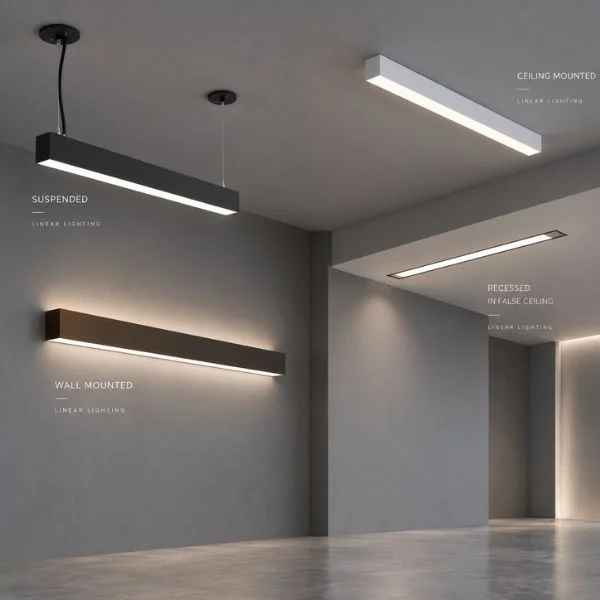
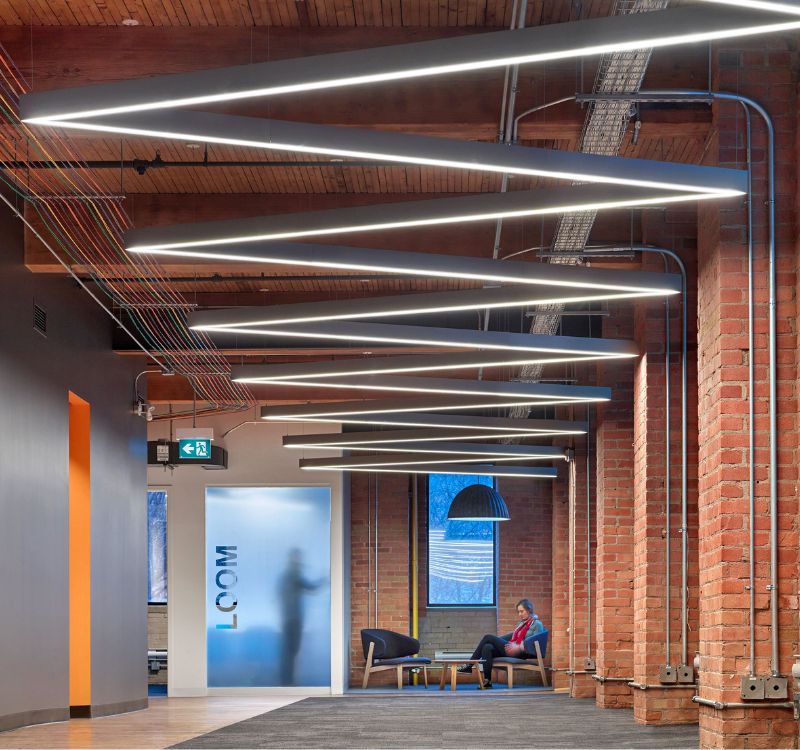
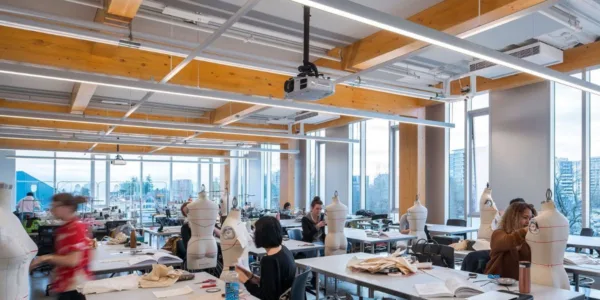
For rooms with higher or open ceilings, suspended linear fixtures are our go-to choice. They offer an optimal mix of direct and indirect light, creating a comfortable environment.
- Up/Down Illumination: Bounces light off the ceiling to eliminate harsh shadows on desks.
- Visual Comfort: Lowers the light source closer to the work plane without causing glare.
- Aesthetic Appeal: Adds a modern architectural element to the learning space.
Dedicated Classroom Board Lighting
General overhead light is rarely enough for the front of the room. We always recommend dedicated board lighting to ensure every student, even in the back row, can see the lesson clearly.
- Asymmetric Distribution: Pushes light at an angle directly onto the whiteboard or smartboard.
- Glare Reduction: Prevents reflective hot spots that cause visual fatigue.
- Enhanced Contrast: Makes written text and visual presentations pop against the background.
Recessed and Surface-Mounted LED Solutions
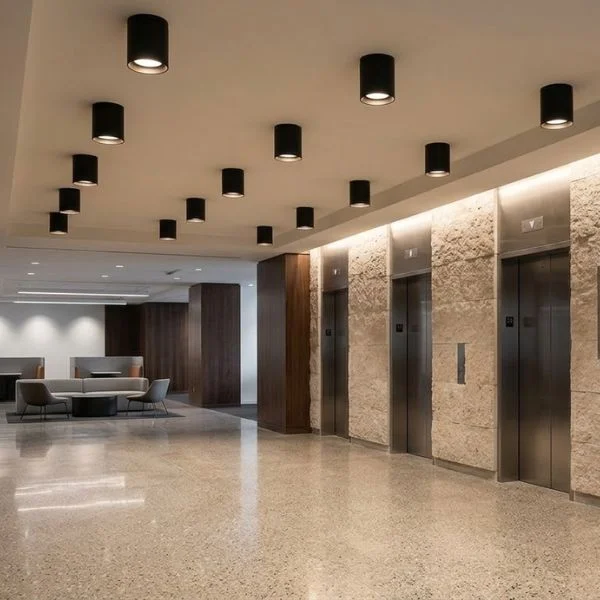
In standard classrooms with drop ceilings or limited clearance, recessed or surface-mounted fixtures remain the most practical standard. They provide a clean, unobtrusive look that maximizes overhead space. For these high-volume applications, using a 5CCT field-adjustable flush mount LED gives our installation teams the flexibility to dial in the exact color temperature needed right on the job site.
- Space-Saving: Ideal for rooms with ceiling heights under 9 feet.
- Low Maintenance: Flush, sealed designs keep dust and debris out of the housing.
- Uniform Spread: Flat panels distribute light evenly across the entire seating area.
Classroom Fixture Comparison
| Fixture Type | Best Classroom Application | Key Benefit |
|---|---|---|
| Suspended Pendants | High, exposed, or vaulted ceilings | Balanced direct/indirect ambient light |
| Dedicated Board Light | Above whiteboards and smartboards | Eliminates reflective glare, boosts contrast |
| Recessed / Flush Mount | Standard T-grid or low drywall ceilings | Clean look, easy maintenance, flexible CCT |
Lighting Solutions for Extended Campus Areas
As we map out our lighting for classrooms ultimate guide 2026, we have to look beyond the main teaching environments. An educational campus is a complex ecosystem, and every specific zone requires a tailored lighting strategy to keep students safe, focused, and comfortable.
Library and Focused Study Area Illumination
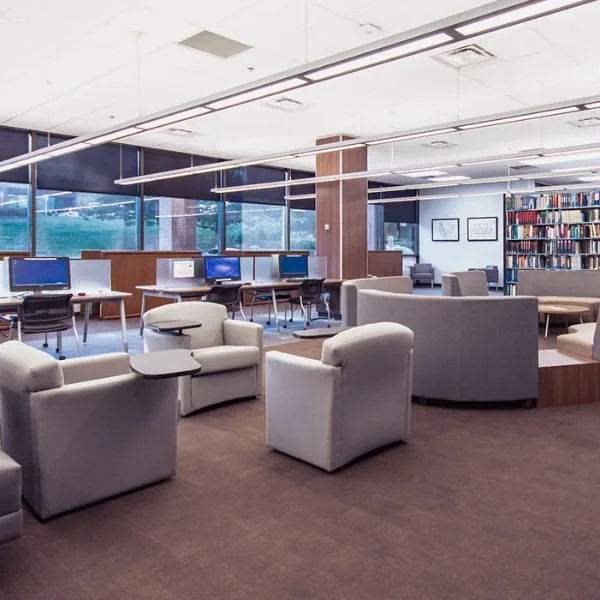
Libraries and study halls demand environments optimized for deep concentration. The primary goal here is to completely eliminate screen glare and reduce eye fatigue during long reading sessions.
- Uniform Illumination: Avoiding harsh shadows across bookshelves and study desks is critical. Integrating seamless luminaire recessed lighting provides a clean ceiling aesthetic while delivering even, comfortable light distributions.
- Low Glare (UGR): Keep the Unified Glare Rating low to support digital screen use without eye strain.
- Layered Lighting: Combine ambient overhead lights with dedicated task lighting at individual desks so students can control their immediate workspace.
Hallways, Stairways, and Communal Circulation Areas
These transit zones handle heavy foot traffic. The lighting design here must prioritize physical safety and long-term energy efficiency.
- Safety First: Stairwells and corridors require bright, consistent lighting to prevent trips and falls. Shadows in these areas are major safety hazards.
- Automated Efficiency: Since hallways fluctuate between empty and packed, occupancy sensors are a necessity. They ensure lights dim or turn off when the corridors are clear, slashing energy costs.
- Clear Wayfinding: Strategic lighting helps guide students naturally through the building, especially toward exits during emergencies.
Cafeterias, Sports Halls, and Multi-Purpose Rooms
Large campus spaces serve multiple functions throughout the day. The fixtures here need to be versatile, durable, and visually engaging.
- Sports Halls: Gymnasiums require high-lumen, high-bay fixtures equipped with robust, impact-resistant wire guards to survive physical impacts from sports equipment.
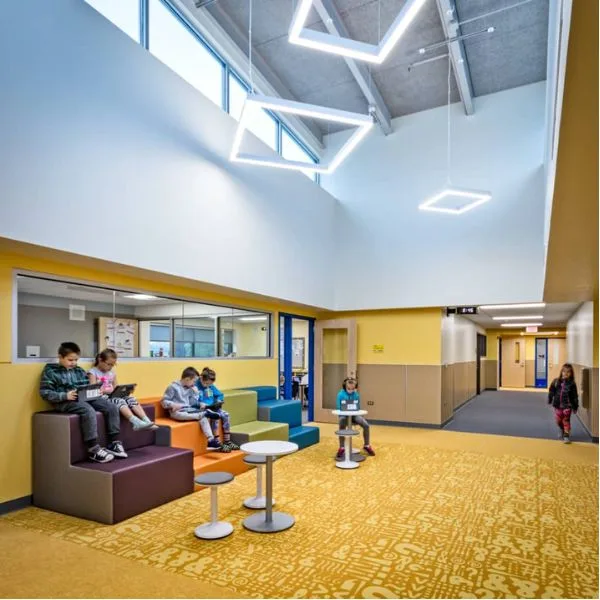
- Cafeterias & Lounges: These areas should feel welcoming and relaxing. Moving away from standard panels to creative shapes, like a hexagonal modular linear light, instantly modernizes the space and boosts the architectural vibe.
- Multi-Purpose Rooms: Adaptability is key. Robust dimming systems allow staff to seamlessly transition the room from a brightly lit exam hall to a dimmed auditorium for presentations.
Planning Your Classroom Lighting Project: Lighting for Classrooms Ultimate Guide 2026
Getting the setup right is the final hurdle. As an industry supplier, I always advise contractors and school administrators that proper planning upfront saves time, cuts maintenance costs, and ensures a superior learning space.
Classroom Design Inspirations and Layout Examples
A smart layout eliminates dark spots and reduces eye strain. The main goal is uniform light distribution across every single desk.
- Linear Continuous Rows: This is my top recommendation for modern classrooms. Utilizing 8-foot LED suspended linear fixtures provides clean architectural lines and delivers powerful, unbroken illumination directly above student workstations.
- The Standard Grid: Ideal for traditional ceiling drops. Spacing fixtures evenly ensures consistent foot-candles across the entire room.
- Perimeter Configurations: Excellent for computer labs and art rooms. It keeps the center screens free of glare while highly illuminating the outer desks.
Selecting the Best LED Lighting Products
Not all LEDs belong in a school environment. You need fixtures specifically engineered to handle long operating hours while prioritizing visual comfort.
- Strict Glare Control: Always select products with a UGR (Unified Glare Rating) under 19. This is non-negotiable for protecting student vision.
- Adaptive Capabilities: For high-performance spaces, installing RGBCW tunable white LED lights allows teachers to shift color temperatures throughout the day, directly supporting student focus and energy levels.
- Rugged Construction: Stick to aluminum housings and shatter-resistant polycarbonate lenses to withstand the daily wear and tear of a bustling campus.
Frequently Asked Questions (FAQs)
What is the ideal color temperature for classrooms?
I recommend a neutral 4000K for baseline setups. It closely mimics natural daylight, keeping students alert without feeling clinical or harsh.
How bright should a classroom be?
Educational building standards typically require between 30 to 50 foot-candles (roughly 300 to 500 lux) measured right at the desk level.
Are smart controls actually worth the budget?
Absolutely. Integrating daylight harvesting sensors and occupancy dimmers immediately cuts energy waste and significantly extends the hardware lifespan of your lighting investment.
Related Sources
STAY IN THE LOOP
Subscribe to our free newsletter.
Leave A Comment

Explore types of hanging lights including pendant chandeliers and cluster designs to find the perfect style for every room