
What is Architectural Pendant Lighting?
Architectural pendant lighting represents the intersection of high-performance engineering and aesthetic form. Unlike purely decorative fixtures, these systems are designed to serve as primary light sources while integrating seamlessly with the building’s infrastructure. They are engineered to deliver precise photometric performance, offering architects and designers the ability to shape the visual experience of a commercial or high-end residential environment.
Defining Architectural vs. Standard Pendants
The distinction between architectural and standard lighting lies in customization capabilities and technical performance. While standard pendants are often “one-size-fits-all” decorative elements, architectural solutions are specification-grade tools built for longevity and precise control.
| Feature | Standard Pendants | Architectural Pendants |
|---|---|---|
| Primary Function | Decorative accent | Functional illumination & spatial definition |
| Customization | Fixed sizes/finishes | Bespoke lengths, shapes, and finishes |
| Light Quality | Standard CRI (80+) | High CRI (90+) & Tunable White options |
| Integration | Basic on/off | Compatible with 0-10V, DALI, and Lutron systems |
| Materiality | Glass/Fabric/Basic Metal | Extruded Aluminum, Polycarbonate, Acoustic Felt |
The Role of Suspension Lighting in Interior Design
Suspended lighting fixtures play a critical role in defining the volume of a room. By lowering the light source from the structural ceiling, these fixtures bring illumination closer to the human scale, creating intimacy in expansive commercial spaces.
- Wayfinding: Linear lighting systems guide foot traffic through corridors and open offices.
- Zoning: Geometric shapes, such as rings or squares, establish distinct zones within open-plan environments without building physical walls.
- Visual Hierarchy: Strategic placement allows designers to highlight architectural features or workstations while maintaining visual comfort.
Key Benefits for Modern Commercial and Residential Spaces
Specifying architectural pendant lighting offers tangible benefits that go beyond aesthetics, addressing the complex needs of modern environments like offices, hospitality venues, and healthcare facilities.
- Acoustic Innovation: Many modern fixtures, such as our O-Tone or Line-Tone series, incorporate sound-absorbing felt (PET) materials to reduce ambient noise in open spaces.
- Energy Efficiency: High efficacy (lm/W) LED components ensure compliance with strict energy codes while reducing operational costs.
- Design Flexibility: Modular systems allow for continuous runs, curves, and custom geometric configurations that adapt to unique floor plans.
- Visual Comfort: Advanced glare control and high-quality diffusers prevent eye strain, essential for productivity in workspace environments.
Popular Types and Shapes of Architectural Pendants
Linear LED Pendant Systems
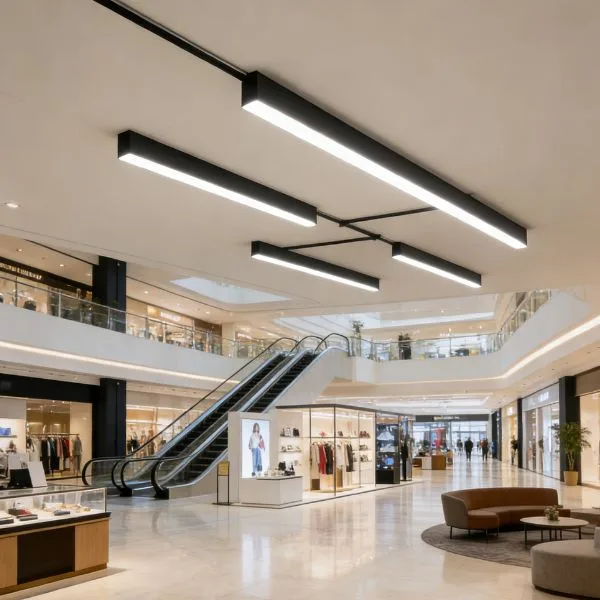
Linear pendants are the backbone of modern commercial lighting design. We engineer these fixtures to support continuous runs, allowing you to create seamless lines of light that span entire open-plan offices or corridors. Built with high-grade extruded aluminum housings, these systems offer a clean, minimal aesthetic that integrates perfectly with architectural lines. They are ideal for general illumination where uniform light distribution is critical, effectively guiding movement through a space while maintaining high efficacy.
Architectural Ring and Circular Chandeliers
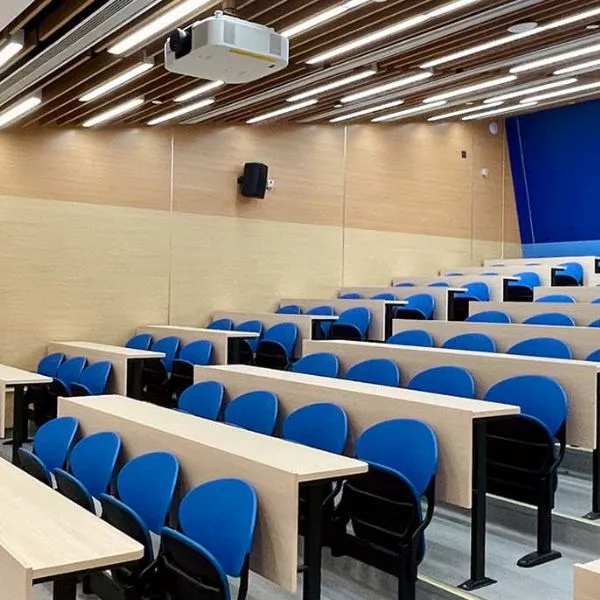
When a space requires a focal point to break up the rigidity of standard ceiling grids, circular profiles are the answer. Our ring lights and circular chandeliers add a layer of softness to interiors, making them perfect for lobbies, conference rooms, and hospitality settings. These fixtures can often be suspended in tiers or varying diameters to create a dramatic visual hierarchy. Beyond aesthetics, many of our circular options, like the O-Tone series, incorporate dual functionality by blending high-performance illumination with acoustic benefits.
Cylinder, Globe, and Geometric Fixtures
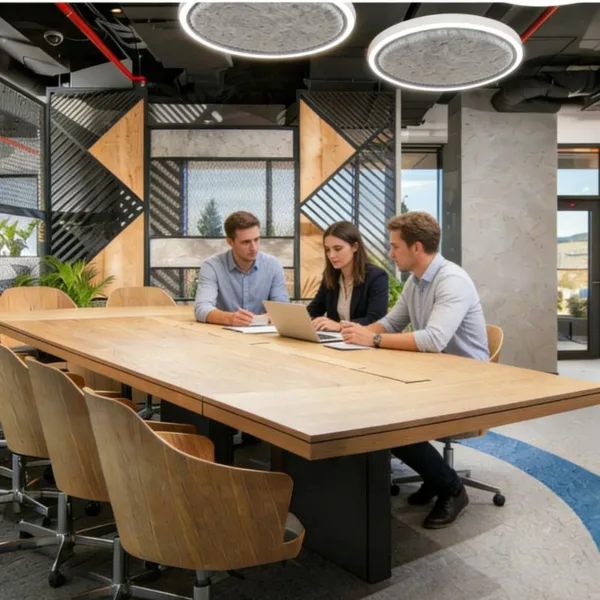
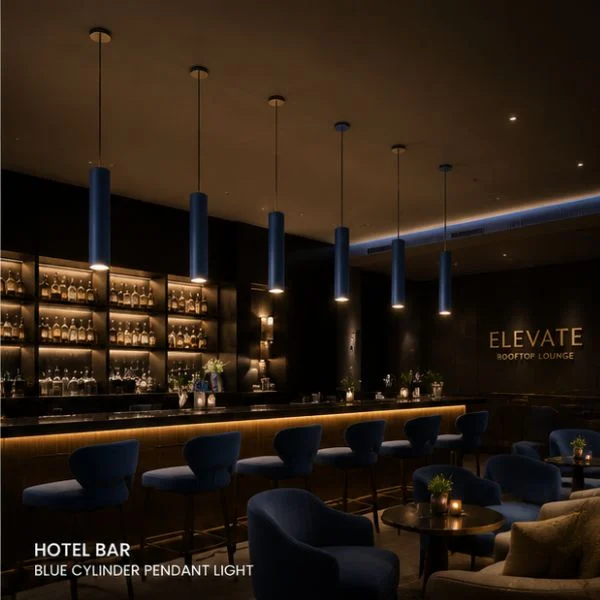
For areas needing concentrated light or specific accentuation, cylinders and geometric forms provide a distinct solution. These shapes work exceptionally well above reception desks, retail counters, or café tables, delivering focused lumens where they are needed most. Unlike linear systems that blend in, these fixtures stand out as individual architectural elements. We offer these in various finishes to match specific interior palettes, ensuring the lighting hardware complements the overall design language of the room.
Modular and Custom-Shaped Lighting Solutions
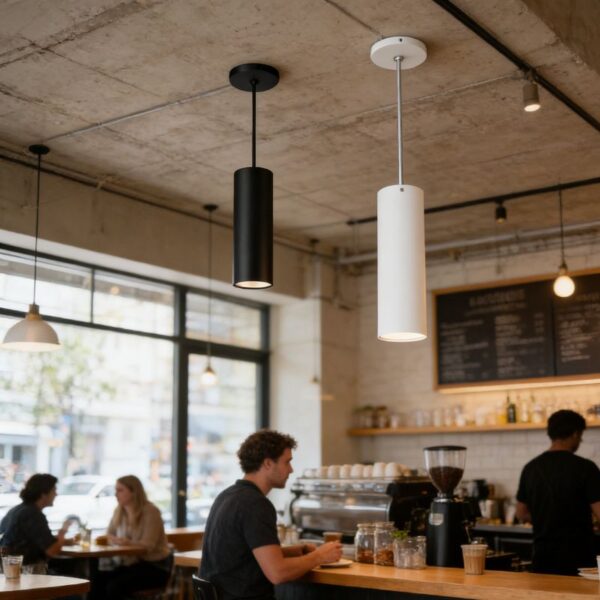
Standard shapes do not always fit the unique vision of a project. Our modular systems unlock the ability to design creative configurations, from hexagons and zig-zags to flowing curves that mimic the building’s architecture. We provide bespoke lengths and joinery options that allow designers to build custom structures tailored to the exact dimensions of a site. For those navigating complex custom specifications, exploring our technical lighting articles can provide deeper insight into how these modular components come together to form cohesive systems.
Advanced Features and Lighting Technology
When specifying lighting for commercial environments, we look beyond simple illumination. Modern architectural pendants integrate sophisticated technology to enhance both energy efficiency and occupant comfort. We focus on fixtures that deliver high performance while meeting strict energy codes.
Integrated LED Efficiency and Performance
In commercial projects, efficacy is non-negotiable. We engineer our fixtures to deliver high lumen output per watt, ensuring compliance with energy standards without sacrificing visual quality. A critical factor here is the Color Rendering Index (CRI). For spaces like retail or high-end offices, we specify CRI 90+ as the standard. This ensures colors appear true and vibrant, which is essential when planning comprehensive LED workspace lighting for offices where visual accuracy matters.
Key Performance Metrics:
- High Efficacy: Maximizing lumens while minimizing wattage.
- Thermal Management: Extruded aluminum housings that dissipate heat to extend LED lifespan.
- Visual Comfort: High-grade polycarbonate diffusers that eliminate glare and hotspots.
Uplighting vs. Downlighting (Direct and Indirect)
Balancing light distribution is the secret to a comfortable room volume. We often utilize fixtures that offer both direct and indirect lighting capabilities.
- Direct Lighting (Downlight): Focuses illumination on work surfaces, desks, and merchandise. It is task-oriented.
- Indirect Lighting (Uplight): Washes the ceiling to reduce contrast ratios and make the space feel larger and more open.
This dual-distribution approach is often seen in our suspended linear fixtures, allowing designers to control the atmosphere and functionality of a room simultaneously.
| Feature | Direct Lighting | Indirect Lighting |
|---|---|---|
| Primary Goal | Task visibility | Ambient fill |
| Target Area | Desks, Floors, Tables | Ceilings, Upper Walls |
| Visual Effect | High contrast, focused | Soft, diffuse, spacious |
Tunable White and RGBW Color-Changing Options
Lighting should adapt to the rhythm of the day. We offer Tunable White technology (typically ranging from 2700K to 5000K) to support circadian rhythms. This allows the light temperature to shift from a cool, energizing white in the morning to a warmer, relaxing tone in the evening.
For spaces requiring dynamic branding or atmospheric shifts, RGBW options allow for full color spectrum control. These systems integrate seamlessly with standard control protocols like DALI, 0-10V, and Lutron, giving facility managers complete command over the environment.
Acoustic and Sound-Dampening Pendant Solutions
Open-concept ceilings look great but often suffer from poor acoustics. We solve this by integrating sound-absorbing materials directly into the lighting fixture. Our acoustic series, such as the O-Tone or Line-Tone, utilizes eco-friendly PET felt to dampen ambient noise.
Benefits of Acoustic Lighting:
- Noise Reduction: Lowers reverberation times in open offices and lobbies.
- Dual Functionality: Eliminates the need for separate acoustic baffles and light fixtures.
- Design Flexibility: Available in various felt colors to match interior branding.
By combining high-performance illumination with acoustic properties, we provide a cleaner ceiling plan and a quieter, more productive environment.
Key Applications for Architectural Pendant Fixtures
Modern Office and Workspace Environments
In open-plan offices, lighting serves two masters: productivity and comfort. We focus heavily on reducing glare while maintaining high lux levels on the work surface. This is where **suspended direct-indirect lighting** shines, pushing light both down to the desk and up to the ceiling to eliminate cavernous shadows.
Beyond just illumination, modern workspaces demand acoustic control. Our acoustic pendant solutions tackle the noise of collaborative spaces by integrating sound-absorbing PET felt directly into the fixture. This dual-function approach helps projects meet WELL building standards by addressing visual and acoustic comfort simultaneously.
Essential Office Specs:
- Glare Control: UGR < 19 for screen-heavy tasks.
- Distribution: 70% Down / 30% Up for balanced brightness.
- Connectivity: Continuous linear runs for seamless aisle lighting.
Retail, Hospitality, and Showroom Design
Lighting in retail and hospitality is all about drama and color accuracy. When we spec fixtures for a high-end showroom or a hotel lobby, we prioritize a Color Rendering Index (CRI) of 90+ to ensure fabrics and finishes look vibrant and true to life.
Aesthetics play a massive role here. Standard linear lights often feel too clinical for these spaces. Instead, we use architectural rings or a striking vertical pendant light to create a visual anchor in a lobby or stairwell. These fixtures act as illuminated art, guiding the customer’s journey through the space while reinforcing the brand’s design language.
Industrial High-Bay and Large-Scale Installations
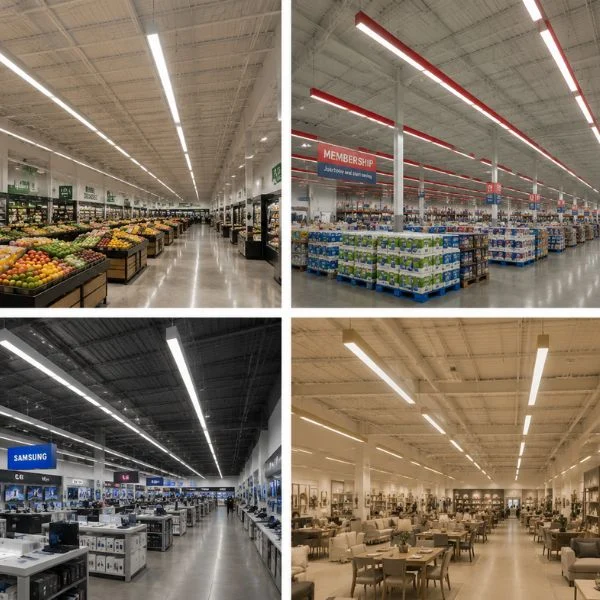
Lighting large volumes requires fixtures that balance raw power with durability. For converted industrial spaces or expansive atriums, standard residential pendants just don’t cut it. We rely on high-efficacy LED engines housed in rugged extruded aluminum to punch light down from ceilings that might be 20 feet or higher.
The advantage of our modular systems is scalability. We can configure linear pendants into massive geometric shapes or long continuous runs that match the scale of the architecture. This ensures uniform light distribution across the floor without the maintenance headaches associated with traditional high-bay lighting.
Technical Specifications and Mounting Options
Light Distribution Curves and Output Data
When we specify architectural lighting, raw lumen output is only half the story. The critical factor is how that light is delivered. We analyze light distribution curves (candela plots) to determine if a fixture provides the right mix of direct downlight for task performance and indirect uplight for ambient comfort. For commercial spaces, we prioritize high efficacy (lumens per watt) to meet energy codes without sacrificing visual quality.
We strictly recommend fixtures with a Color Rendering Index (CRI) of 90+ for hospitality and retail environments to ensure true color representation. Below is a breakdown of the core technical specs we rely on for performance-driven projects:
| Specification | Standard Requirement | Benefit |
|---|---|---|
| CRI (Color Rendering Index) | 90+ | Accurate color display for merchandise and skin tones. |
| CCT (Color Temperature) | 2700K – 5000K | Ranges from warm hospitality glow to crisp office daylight. |
| Dimming Protocol | 0-10V, DALI, Lutron | Seamless integration with building management systems. |
| Material | Extruded Aluminum | Superior heat dissipation and structural rigidity. |
Mounting Accessories and Suspension Methods
The hardware used to hang a fixture is just as important as the light itself. We typically utilize aircraft cable suspension kits that allow for field-adjustable lengths, ensuring the fixture sits perfectly level even on uneven ceilings. For power delivery, we prefer sleek canopies that hide the driver or integrate it remotely to maintain a clean aesthetic.
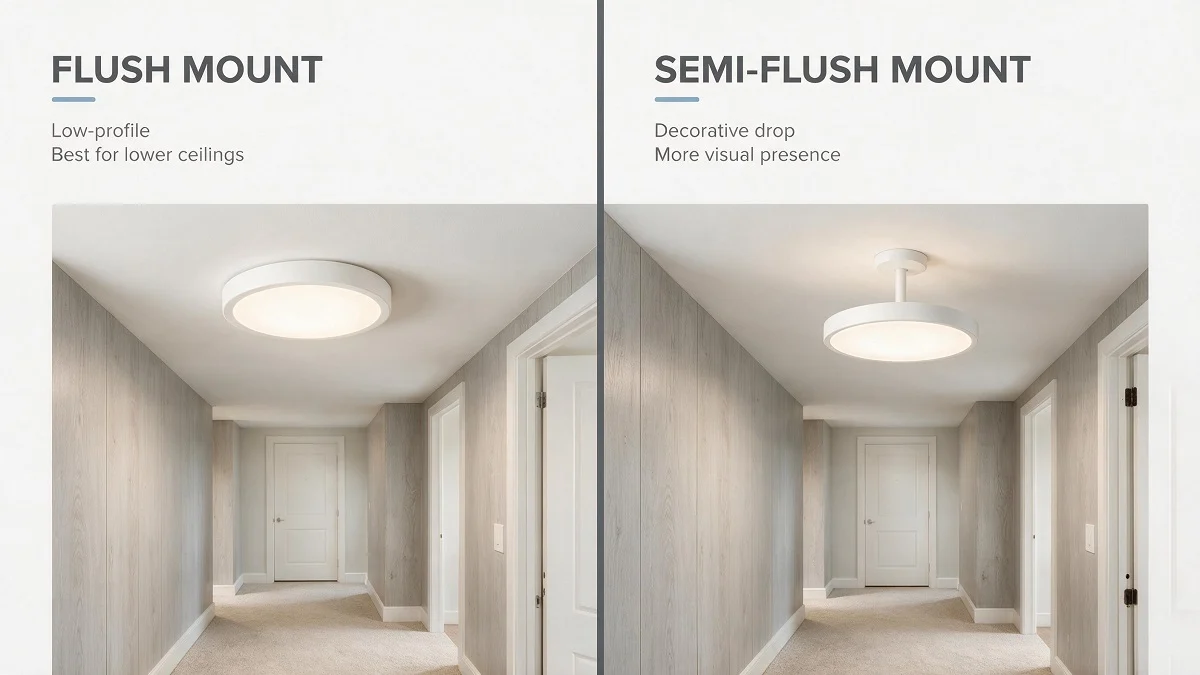
In scenarios where ceiling height is restricted or a cleaner ceiling plane is required, we might pivot from suspension kits to surface mounted alternatives that attach directly to the substrate. However, for pendants, ensuring the junction box compatibility and weight load capacity is vital. We provide distinct mounting hardware for different ceiling types, whether it is a standard grid (T-bar), drywall, or an open structure requiring unistrut attachments.
Sizing and Scaling Fixtures for Large Interiors
Proportion is the key to successful architectural integration. A fixture that looks substantial on a spec sheet can easily disappear in a double-height lobby or a vast open-plan office. We use modular systems to create continuous runs or large geometric configurations that match the scale of the architecture.
For expansive commercial areas, we often recommend acoustic linear lighting systems which add necessary physical volume to the ceiling while serving a dual purpose of noise reduction. When scaling for large interiors, we follow these general rules:
- Width: The fixture width should generally be proportional to the room’s dimensions or the furniture below it (e.g., a linear pendant should span 2/3 the length of a conference table).
- Drop Height: In high-bay areas, fixtures must be lowered significantly to provide adequate foot-candles at the working plane.
- Continuity: Use joiner kits to connect multiple segments seamlessly, creating the illusion of a single, infinite line of light.
How to Choose the Right Architectural Pendant Light
Selecting Specifications for Project Requirements
When specifying architectural pendant lights for commercial projects, technical compatibility is just as critical as the visual design. I always start by verifying the control system requirements. For seamless integration into building management systems, fixtures must support protocols like 0-10V dimming, DALI, or Lutron systems.
Next, prioritize light quality based on the application. For spaces requiring accurate color representation, such as retail or art galleries, a High CRI (90+) is non-negotiable. You can find more details on technical standards in our architectural lighting FAQ.
Key Technical Checklist:
- Dimming Protocol: Ensure drivers match the site controls (0-10V, DALI).
- Color Temperature (CCT): Choose between static (3000K/4000K) or Tunable White (2700K-5000K) for circadian rhythm support.
- Efficacy: Look for high lm/W ratings to meet energy codes without sacrificing brightness.
Coordinating Materials and Finishes with Architecture
The materiality of a fixture should complement the surrounding architectural elements. We utilize extruded aluminum housings because they offer precise lines and durability suitable for high-traffic commercial areas. For interiors dominated by hard surfaces like glass and concrete, I recommend exploring fixtures that incorporate acoustic felt. These dual-function units reduce ambient noise while providing illumination.
Customization often plays a huge role here. Whether it is a bespoke length for a continuous linear run or a specific finish color, the fixture must align with the interior palette. You can see how these material choices impact the final look in our project case studies.
Balancing Design Aesthetics with Functional Performance
The best architectural lighting merges high-lumen output with visual comfort. It is easy to find a good-looking light, but finding one that provides sufficient lux levels without causing glare is the real challenge. I focus on fixtures with high-grade polycarbonate diffusers that soften the light source while maintaining efficiency.
Performance vs. Aesthetics Matrix:
| Feature | Aesthetic Benefit | Functional Benefit |
|---|---|---|
| Modular Systems | Creates continuous, seamless geometric shapes. | Allows for custom lengths to fit specific floor plans. |
| Acoustic Padding | Adds texture and color to the ceiling plane. | Significantly lowers reverberation times in open offices. |
| Indirect/Direct Output | Adds volume to the space by illuminating the ceiling. | Reduces contrast ratios and eye strain for workers. |
Frequently Asked Questions
What is the difference between pendant and suspension lighting?
In the lighting industry, we often hear these terms used interchangeably, but there is a subtle distinction when specifying for commercial projects. Generally, a pendant refers to a single fixture hanging from a distinct drop point, often serving a decorative or task-specific role. Suspension lighting typically describes broader architectural systems, such as continuous linear runs or large-scale ring lighting configurations, that are supported by multiple aircraft cables. At Prillum, our systems are designed to bridge this gap, offering the aesthetic appeal of a pendant with the robust structural integration of a suspension system.
How do I determine the right height for installation?
Getting the suspension height right is critical for both visual comfort and safety. We recommend following these standard clearance guidelines for US commercial spaces:
- General Walking Areas: Maintain a minimum clearance of 7 to 8 feet from the floor to the bottom of the fixture to ensure safe passage.
- Over Workstations or Conference Tables: Mount the fixture approximately 30 to 36 inches above the work surface. This provides focused illumination without obstructing views across the room.
- High Ceilings: For lobbies or atriums, scale the height relative to the room volume. Our fixtures come with adjustable suspension kits, allowing onsite fine-tuning to align perfectly with the architectural sightlines.
Do architectural pendants provide enough light for a primary source?
Absolutely. Unlike purely decorative fixtures that only offer ambient glow, architectural pendants are engineered for performance. We design our fixtures with high-efficacy LED boards and optimized diffusers to serve as the main light source in offices, retail spaces, and schools. For example, a high-output drop lens linear LED pendant can deliver the necessary foot-candles for detailed tasks while managing glare. By utilizing fixtures with direct/indirect light distribution, you can illuminate the workspace below while washing the ceiling above, creating a balanced and fully lit environment without needing supplemental downlights.
Related Sources
STAY IN THE LOOP
Subscribe to our free newsletter.
Leave A Comment
Retrofit LED Lighting Solutions Are soaring energy bills, relentless ballast [...]

Struggling to cut operational costs while upgrading your facility’s lighting [...]
The Financial & Operational Business Case Upgrading to energy efficient [...]
Are you worried about overhead head clearance, or tired of [...]