The Importance of School Corridor Lighting
School corridors are more than just transit pathways; they are the connective tissue of an educational facility. Implementing a high-quality school corridor lighting ultimate guide strategy ensures these high-traffic zones support safety, well-being, and academic success. Proper illumination transforms static hallways into dynamic, supportive environments for students, faculty, and visitors alike.
Enhancing Student Safety and Navigation
Corridors must accommodate rapid foot traffic, especially during peak transition periods between classes. Effective lighting eliminates shadows, prevents accidents, and ensures clear visibility across all surfaces.
- Hazard Mitigation: Bright, uniform light prevents trips and falls on staircases, ramps, and sudden floor transitions.
- Clear Wayfinding: Properly illuminated signage and paths allow students and visitors to navigate complex campus layouts effortlessly.
- Security Surveillance: High-visibility environments deter bullying, vandalism, and unauthorized access while optimizing security camera footage.
Psychological Impact on Student Focus and Well-being
Lighting directly influences human biology, affecting mood, alertness, and cognitive performance. Dark or flickering hallways induce fatigue, whereas optimized lighting prepares the mind for learning.
| Lighting Attribute | Psychological & Physiological Effect |
|---|---|
| Optimized Lux Levels | Lowers cortisol (stress) levels and reduces eye strain. |
| Balanced Color Temperature | Enhances alertness and smooths transitions between classrooms. |
| Flicker-Free Technology | Prevents headaches and maintains student focus. |
Creating a Welcoming and Positive Campus Atmosphere
The aesthetic quality of hallway lighting shapes the first impression of an educational institution. Creative, thoughtful illumination turns clinical, intimidating corridors into warm, inviting communal spaces.
- Vibrant Ambience: Well-lit walls and ceilings make tight corridors feel spacious, open, and inclusive.
- Community Pride: Strategic accent lighting can highlight student artwork, trophies, and school branding to foster a sense of belonging.
- Acoustic Harmony: Modern, high-end fixtures integrate seamlessly with acoustic ceilings, blending visual comfort with architectural design.
Key Lighting Standards and Regulations for School Hallways
School corridor lighting ultimate guide compliance requires strict adherence to regional educational building codes. Managing a commercial lighting platform has taught us that meeting these benchmarks isn’t just about passing inspections—it directly impacts student safety and operational liability.
Required Lux Levels and Uniformity Standards
Corridors and transition zones demand consistent, well-distributed light to prevent accidents during peak passing periods.
- Standard Maintained Illuminance: Hallways require a minimum of 100 to 150 lux at floor level.
- High-Traffic Hubs: Main intersections and locker zones should target 200 lux to enhance visibility.
- Uniformity Ratio ($E{min}/E{avg}$): Maintain a ratio of 0.40 or higher to eliminate dangerous dark spots and deep shadows.
Glare Reduction and Visual Comfort Metrics
Excessive glare in long hallways causes eye strain and disorientation, particularly for students with sensory sensitivities.
| Metric | Target Value | Implementation Strategy |
|---|---|---|
| Unified Glare Rating (UGR) | $le 22$ | Use micro-prismatic diffusers or specialized shielding. |
| Color Rendering Index (CRI) | $ge 80 Ra$ | Ensures accurate color perception and clear security footage. |
| Color Temperature (CCT) | 3500K – 4000K | Balanced cool-white light that promotes alertness without feeling clinical. |
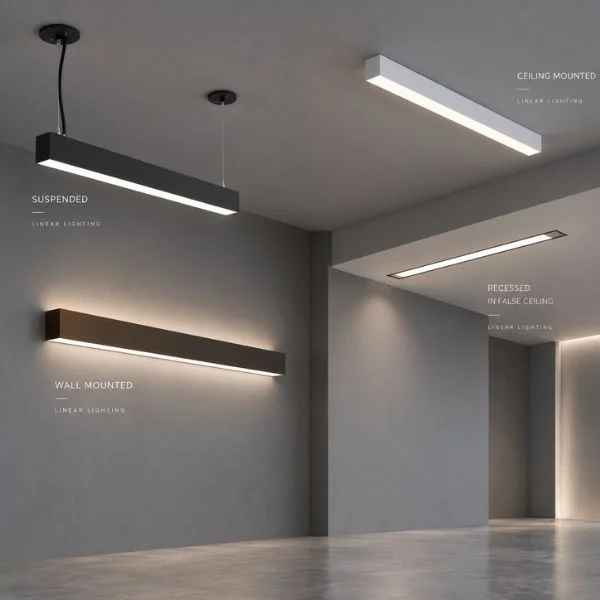
To achieve clean visual lines while keeping glare to a minimum, we frequently recommend integrating high-performance recessed linear light systems that blend seamlessly into standard acoustic ceilings.
Emergency and Exit Lighting Compliance
When power failures occur, the corridor lighting network serves as the primary evacuation route.
- Emergency Illuminance: Backup systems must instantly provide a minimum of 10 lux along the center path of the floor.
- Duration: Emergency battery backups must power all exit signs and designated path luminaires for at least 90 minutes.
- Testing Accessibility: Modern installations utilize self-diagnostic fixtures to reduce manual maintenance labor.
Types of School Corridor Lighting Fixtures
Choosing the right fixtures is about balancing visual comfort, structural demands, and long-term durability. Different architectural layouts require specific lighting form factors to maximize performance.
Recessed LED Luminaires for Clean Aesthetics
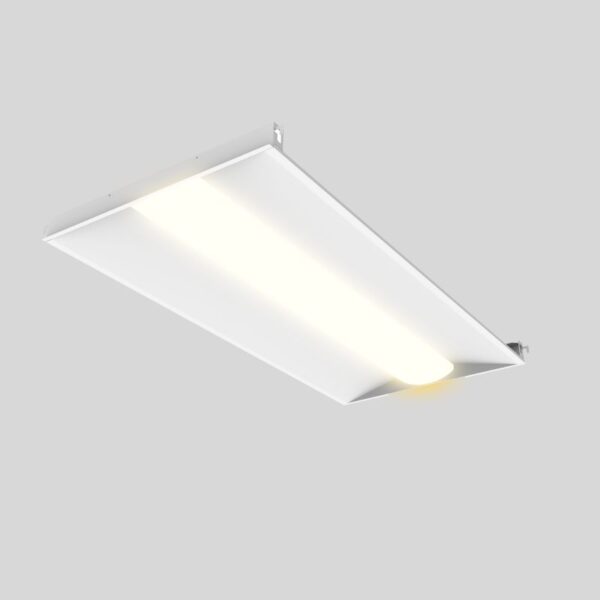
Recessed fixtures are the go-to choice for standard T-bar or drywall ceilings. They sit flush with the ceiling surface, offering a streamlined look that keeps hallways feeling open and uncluttered. For standard grid ceilings, our architectural LED troffer solutions deliver wide, even light distribution that eliminates dark corners while maintaining low glare for passing students.
Surface-Mounted and Linear LED Strip Systems
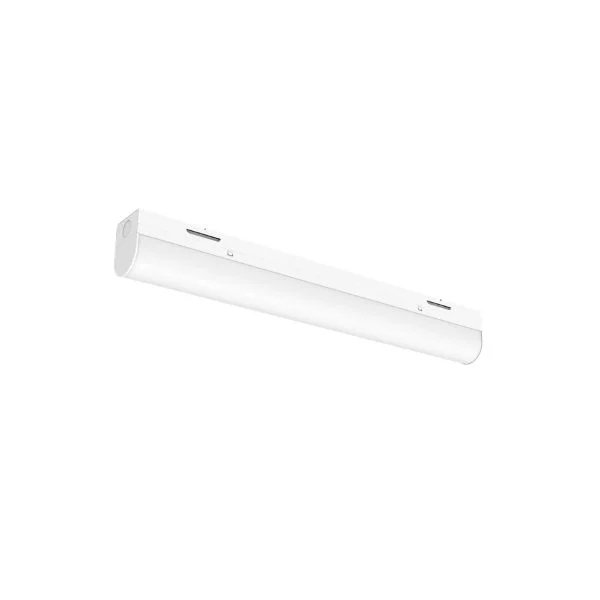
When structural limitations like low concrete ceilings prevent recession, surface-mounted linear systems offer an excellent alternative. Continuous linear LED runs create a clean, seamless line of light that naturally guides foot traffic down long hallways. These systems provide a modern look, high lumen output, and uniform distribution without requiring deep ceiling cavities.
Pendant and Architectural Lighting for High Ceilings
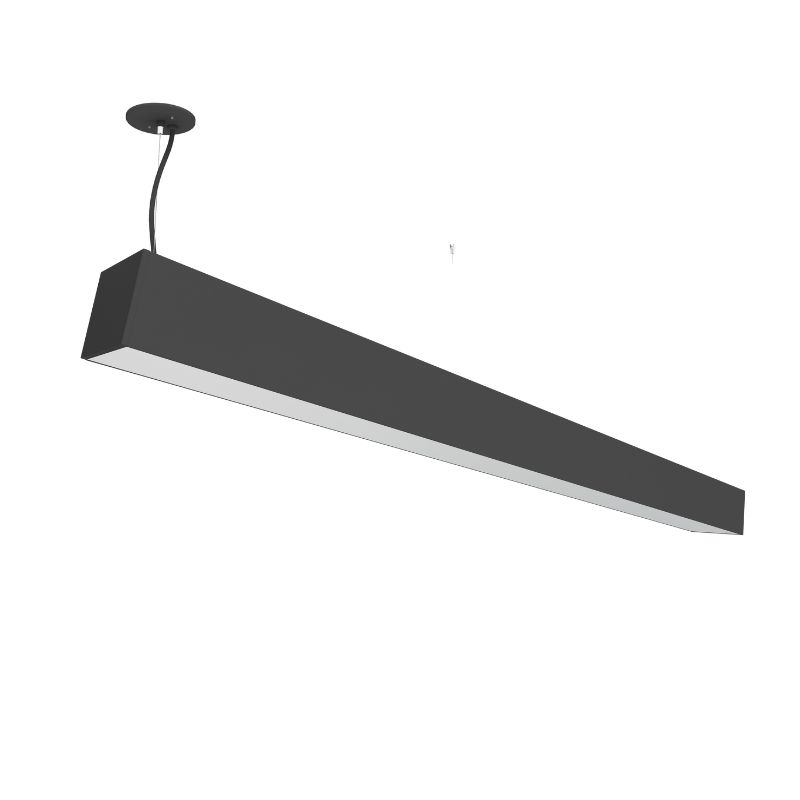
Multi-story atriums, grand entryways, and historic school buildings with soaring ceilings need fixtures that bring the light source closer to the floor. Utilizing a 2-inch architectural pendant light allows you to bridge the gap between high ceilings and the floor, ensuring proper lux levels while adding a distinct design element to the campus.
Durable and Vandal-Resistant Fixtures
School hallways are high-traffic zones prone to accidental impacts from backpacks, sports gear, and maintenance equipment.
- Impact-Rated Housings: Polycarbonate lenses and heavy-duty aluminum bodies prevent cracking and damage.
- Tamper-Proof Hardware: Specialized screws prevent unauthorized removal or vandalism in unsupervised areas.
- IP Ratings: High dust and moisture resistance ensure the internal electronics remain protected during heavy cleaning cycles.
Design Layouts for Different Corridor Configurations
Every school has a unique blueprint, and a one-size-fits-all approach to school corridor lighting ultimate guide implementation simply does not work. The layout of your fixtures must adapt to the physical architecture of the space to guarantee safety, maximize energy efficiency, and maintain visual comfort.
Traditional Narrow Hallways
Narrow, long hallways can easily feel like dark tunnels if they are not illuminated correctly. The goal here is uniformity and the elimination of harsh shadows along the lockers and floors.
- Fixture Choice: Continuous linear LED runs or evenly spaced recessed downlights centered along the ceiling path.
- Spacing Strategy: Keep spacing tight enough to avoid dark spots between fixtures, typically maintaining a 1:1 spacing-to-mounting-height ratio.
- Wall Wash Effect: Directing a portion of the light toward the walls makes the narrow corridor feel wider and more inviting.
Open Communication and Breakout Spaces
Modern schools frequently feature widened corridors that double as collaborative student lounges, study pods, or breakout zones. These areas require a layered lighting approach that shifts away from rigid, institutional grid patterns.
- Zoned Lighting: Use a mix of ambient overhead lighting and dedicated task lighting over seating clusters.
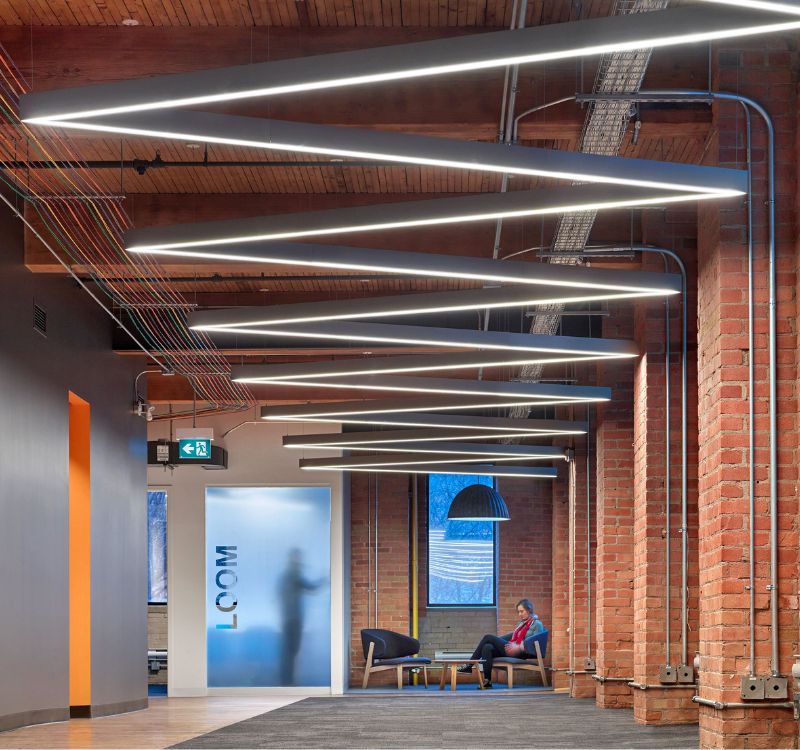
- Aesthetic Integration: Incorporating stylish office lights hanging solutions adds visual interest, defines the boundaries of the breakout zone, and lowers the perceived ceiling height for a cozier feel.
- Flexibility: Implement dimming capabilities so these spaces can transition seamlessly from high-energy group work to quiet, focused independent study.
Stairwells and Intersecting Transition Zones
Intersections and stairwells are high-traffic bottlenecks where the risk of trips and collisions increases dramatically. Lighting in these zones must prioritize high visibility and clear directional cues.
| Corridor Zone | Lighting Priority | Recommended Layout Strategy |
|---|---|---|
| T-Intersections & Corners | Increased Lux Levels | Place fixtures directly over the intersection point to eliminate blind spots. |
| Stairwell Steps | Shadow-Free Contrast | Position luminaires to cast light downward onto treads, highlighting the edge of each step. |
| Transition Doorways | Adaptive Brightness | Increase intensity near exit doors to guide students naturally during class changes or emergencies. |
Energy Efficiency and Sustainability Solutions
Transitioning to High-Efficiency LED Technology
Upgrading to modern LED systems is the fastest way to cut school energy bills. Old fluorescent tubes waste power and heat, while our high-efficiency LED luminaires deliver brighter, crisper light using a fraction of the electricity. This transition instantly lowers daily operational costs and shrinks the campus carbon footprint.
Optimizing Lifespan to Reduce School Maintenance Costs
School maintenance teams are constantly stretched thin. By installing commercial-grade LEDs engineered for longevity, you drastically cut down on constant bulb replacements in high-traffic hallways. Fewer maintenance hours spent on ladders means lower labor costs and less disruption to the school day.
Sustainable Material and Product Selection
Eco-friendly education facilities require sustainable hardware. We focus on fixtures built with recyclable aluminum housings and non-hazardous components. Selecting durable, responsibly manufactured products ensures your school corridor lighting ultimate guide to sustainability complies with environmental goals while delivering reliable, long-term performance.
Smart Lighting Controls for Educational Facilities
Modernizing school hallways means moving past simple on-off switches. Implementing intelligent controls ensures that our school corridor lighting ultimate guide focuses not just on fixtures, but on how those fixtures adapt to real-time environment changes.
Occupancy and Motion Sensors for Energy Savings
Hallways experience predictable bursts of heavy foot traffic followed by long periods of emptiness. Keeping lights running at full capacity in an empty corridor wastes immense amounts of electricity.
- PIR (Passive Infrared) Sensors: Detect body heat and motion to instantly bring lights to 100% capacity when a door opens or a student turns the corner.
- Bi-Level Dimming: Instead of turning completely off—which can create safety anxieties—fixtures dim down to a safe 10% to 20% standby level when corridors are empty.
- Ultrasonic Sensors: Ideal for long, winding hallways or corridors with structural blind spots, as they use sound waves to detect presence around corners.
Daylight Harvesting in Hallways with Windows
Corridors with large windows or skylights do not need maximum artificial output during a bright afternoon.
| Feature | How It Works | Primary Benefit |
|---|---|---|
| Photosensors | Continuous monitoring of ambient natural light levels. | Automates dimming dynamically. |
| Continuous Dimming | Smoothly adjusts LED output rather than stepping down abruptly. | Zero distractions for students in classrooms. |
| Zone Control | Dims only the window-side fixtures while keeping interior walls bright. | Balanced illumination across the floor plan. |
Centralized Campus Smart Control Systems
Managing an entire educational facility requires an eagle-eye view. Connecting your corridor luminaires to a centralized campus system streamlines both utility tracking and everyday maintenance.
- Custom Scheduling: Program specific profiles for active school hours, after-school clubs, cleaning shifts, and summer breaks.
- Automated Fault Detection: The central dashboard flags broken fixtures instantly, allowing maintenance teams to swap parts before students even arrive.
- System Integration: Connects seamlessly with automated architectural setups, including our modular Y-shape modular linear light systems, allowing you to synchronize open breakout zones and corridors under a single smart network.
Choosing the Right Corridor Lighting Solution
Balancing Initial Cost vs. Long-Term Value
Upgrading school corridor lighting requires looking past the upfront price tag. While budget-friendly fixtures seem appealing initially, they often lead to higher energy bills and frequent maintenance. Investing in commercial-grade LED systems cuts power consumption immediately and slashes operational costs for years. When evaluating options, look at the total cost of ownership (TCO)—including energy savings and reduced labor—rather than just the purchase price.
Evaluating Durability and Warranty Terms
School hallways experience heavy foot traffic and occasional impacts. Fixtures must feature robust housing materials, such as polycarbonate lenses and heavy-duty aluminum frames, to withstand daily wear and tear. Always verify the manufacturer’s warranty terms. A reliable, multi-year warranty ensures the manufacturer stands behind their product’s performance and lifespan, protecting the school’s investment against premature component failures.
Key Factors for Successful Retrofit Installation
A smooth lighting retrofit depends on careful planning to minimize classroom disruption. Map out the existing layout to determine if a simple LED tube swap works or if a full fixture replacement is necessary.
- Assess Compatibility: Ensure new fixtures align with existing ceiling grids or mounting points.
- Plan the Schedule: Execute installations during school breaks or after hours to keep hallways clear.
- Verify Controls: Confirm that new fixtures integrate seamlessly with existing emergency backups and motion sensors.
If your facility has unique architectural layouts, specialized solutions like custom linear light manufacturing can simplify the installation process by matching exact corridor dimensions perfectly.
STAY IN THE LOOP
Subscribe to our free newsletter.
Leave A Comment

Explore types of hanging lights including pendant chandeliers and cluster designs to find the perfect style for every room