Understanding Multipurpose Room Lighting Design
Defining the Modern Multi-Use Space
In 2026, the multipurpose room has evolved beyond a simple “spare room.” These spaces now serve as high-performance hubs—functioning as educational labs, community event centers, indoor sports zones, or professional seminar halls. A modern multi-use space is defined by its ability to transition between disparate activities without compromising safety or comfort. The architecture of these rooms demands a lighting layout that can accommodate high-energy physical activity one hour and focused, sedentary work the next.
The Importance of Flexible Illumination
Static lighting is the enemy of versatility. Flexible illumination is the backbone of any successful multipurpose design. Because these rooms are utilized for everything from athletic training to theatrical performances, the lighting must adapt to specific visual needs.
- Visual Comfort: Reducing glare for screen-based tasks.
- Safety: Ensuring high-impact areas are shadow-free.
- Adaptability: Providing the right light levels for different occupancy types.
Without a dynamic system, a room remains limited by its hardware, regardless of its physical dimensions.
Core Lighting Best Practices for Versatile Rooms
Designing for versatility requires a strategic approach to fixture placement and control. To achieve a professional-grade setup, follow these core principles:
- Uniformity is Key: Ensure consistent illuminance across the floor plane to eliminate dark spots that can cause safety hazards in sports or social settings.
- Integrated Controls: Use centralized systems that allow users to switch between “Performance,” “Meeting,” and “Sports” modes at the touch of a button.
- High Color Rendering (CRI): Select LEDs with a CRI of 80 or higher to ensure colors appear natural, which is critical for both educational environments and social events.
- Zoning: Divide the room into logical lighting zones. This allows for dimming the perimeter during a presentation while keeping the “stage” or focal area bright.
- Durability: In high-ceiling or athletic environments, prioritize fixtures with IK-rated impact resistance to withstand stray balls or equipment.
Layering Light for Maximum Functionality
To make a space truly versatile, you can’t rely on a single light source. I always recommend a layered approach. By combining different types of illumination, you ensure the room transitions seamlessly from a high-energy workout zone to a focused testing center or an intimate event space.
Ambient Lighting for General Visibility
Ambient lighting is your foundation. It provides the uniform overhead glow that allows people to move safely and see clearly throughout the entire footprint. In most modern multipurpose designs, I utilize high-efficiency LED panels or recessed downlights to create a clean, unobtrusive base level of brightness. This layer is essential for basic navigation and general assembly.
Task Lighting for Focused Activities
When the room shifts into “work mode,” task lighting takes over. This is about putting high-intensity light exactly where it’s needed—whether that’s over a podium, a lab bench, or a registration desk. For specialized environments, I often integrate acoustic pendant lights to provide targeted illumination while simultaneously managing noise levels, which is a game-changer in busy, echo-prone halls.
Accent Lighting for Aesthetic Depth
Accent lighting is the “secret sauce” that adds character and professional polish. I use this layer to highlight architectural features, wall art, or trophies.
- Wall Washers: Create a sense of spaciousness.
- Directional Spotlights: Draw attention to speakers or displays.
- Strategic Contrast: Adds depth so the room doesn’t feel flat or clinical.
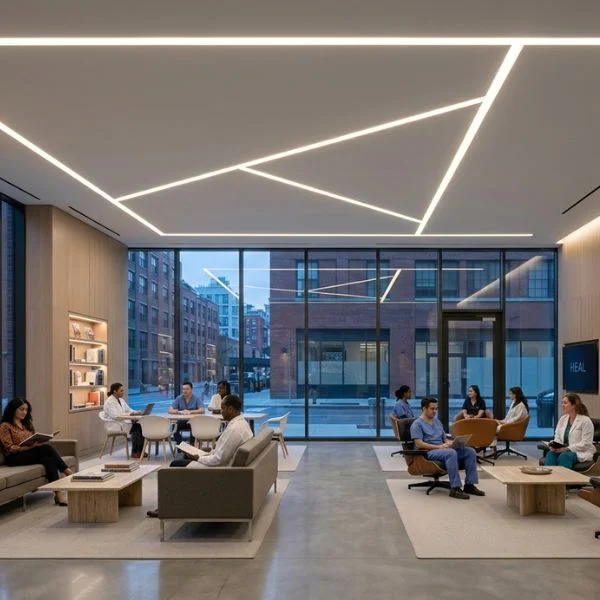
By balancing these three layers, your Multipurpose Room lighting becomes a dynamic tool rather than a static fixture. Check out how we apply these principles in high-stakes environments through our healthcare lighting solutions, where precision and atmosphere are equally critical.
Essential Fixture Types for Multipurpose Room Lighting Complete Guide 2026
Choosing the right hardware is the backbone of any successful lighting design. In 2026, the focus has shifted toward fixtures that offer both high performance and aesthetic adaptability.
Track Lighting Systems for High Adjustability
Track lighting remains the gold standard for spaces that change layouts frequently. These systems allow you to add, remove, or reposition individual heads along a live rail, making them perfect for art displays or temporary workstations. They provide the directional flexibility needed to highlight specific zones without rewiring the entire ceiling.
Linear Pendant and Suspension Fixtures
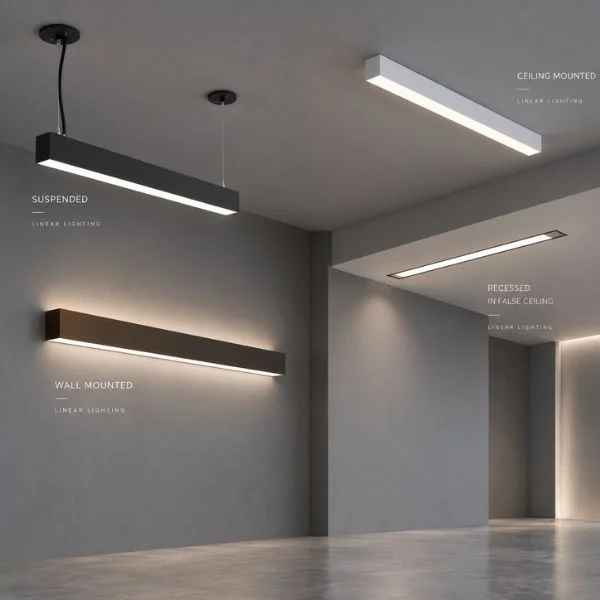
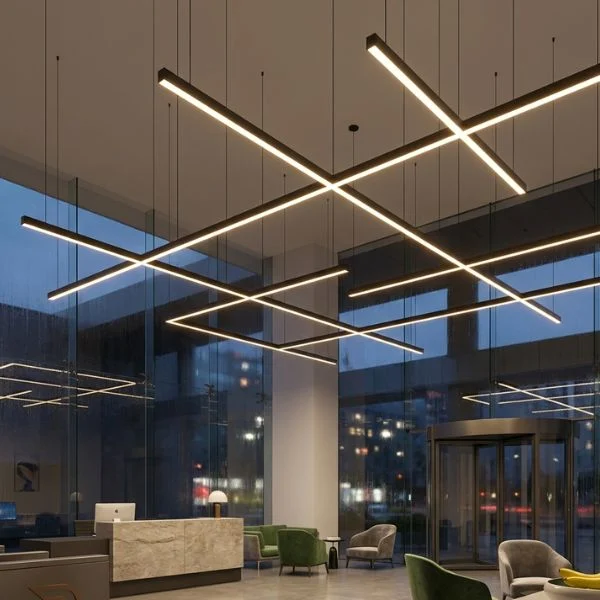
For a modern, professional look, linear LED pendant lights are the go-to choice. These fixtures provide excellent downward task lighting while often including an “uplight” component to brighten the ceiling, reducing the “cave effect” in offices or classrooms.
- Best for: Conference tables, reception desks, and collaborative hubs.
- Key Benefit: Uniform light distribution with a sleek, architectural profile.
Recessed Troffers and LED Downlights
When you need a clean, unobtrusive ceiling line, recessed options are unbeatable. Modern 2 by 4 LED lights provide high-output illumination with integrated dimming capabilities. These are the workhorses of multipurpose rooms, offering reliable ambient light that stays out of the way of physical activities or equipment.

High Bay Solutions for Large Scale Venues
For rooms with soaring ceilings—like community gyms or large event halls—high bay fixtures are essential. We utilize advanced LED optics to ensure light reaches the floor level effectively without causing excessive glare.
| Fixture Type | Best Application | Primary Advantage |
|---|---|---|
| Track Lights | Galleries / Retail | Extreme Versatility |
| Linear Pendants | Offices / Studios | Stylish Task Lighting |
| LED Troffers | Classrooms / Labs | Clean, Uniform Glow |
| High Bays | Gyms / Warehouses | Powerful Long-Throw Lumens |
Application Scenarios: From Classrooms to Cafetoriums
When we design for multipurpose environments, we understand that one size never fits all. Whether it’s a high-energy gym or a focused learning lab, the lighting must adapt instantly to the activity at hand.
Educational Classrooms and Flexible Learning Labs
Modern classrooms are no longer just rows of desks; they are dynamic hubs for collaboration. We prioritize flicker-free LED systems that reduce eye strain during long study sessions. Utilizing high-performance LED office lighting solutions ensures that these spaces remain bright and inviting, supporting both traditional lectures and digital screen-based learning with ease.
Indoor Athletics and Gymnasiums
For sports and physical education, durability is the top priority. We utilize impact-resistant housing and high-lumen output fixtures to ensure clear visibility for fast-moving objects.
- Uniformity: Eliminates dark spots on the court.
- Instant-On: No warm-up time required compared to old HID lamps.
- Glare Control: Protects players’ vision during overhead play.
Theater, Auditorium, and Performance Spaces
Versatility is key when a room transitions from a morning assembly to an evening play. We integrate sophisticated dimming controls and localized “scene” settings. This allows users to shift focus from the stage to the seating area with a single touch, creating the perfect atmosphere for any production or presentation.
Cafeterias and Community Gathering Areas
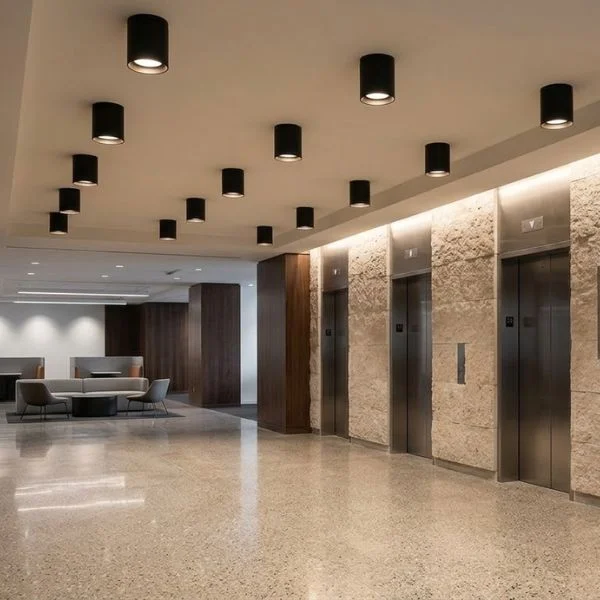
Cafetoriums require a balance between functional dining light and warm, social ambiance. We often recommend surface-mounted cylinder lights to add a touch of modern style while maintaining high efficiency. These spaces benefit from:
- Warm Color Temperatures: Enhances the appearance of food and creates a welcoming vibe.
- Zoned Switching: Allows for partial lighting during off-hours to save energy.
- High CRI: Ensures colors look natural and vibrant under artificial light.
Technical Specifications and Construction Standards
In my experience, getting the technical side of Multipurpose Room lighting right is what separates a professional installation from a DIY headache. You need a balance between brightness, safety, and long-term durability to handle everything from community meetings to high-intensity sports.
Recommended Illuminance and Footcandle Levels
For a truly versatile space, your lighting system must meet specific footcandle requirements depending on the activity. We recommend using smart drivers that can transition between these levels seamlessly.
| Activity Type | Recommended Footcandles (fc) | Lux Level (lx) |
|---|---|---|
| General Assemblies | 30 – 50 fc | 300 – 500 lx |
| Educational/Testing | 50 – 70 fc | 500 – 700 lx |
| Indoor Sports/Gym | 50 – 80 fc | 500 – 800 lx |
| Social Events/Dining | 10 – 20 fc | 100 – 200 lx |
Mounting Considerations and Top-Access Requirements
Mounting is where many projects run into trouble. In rooms with high ceilings or restricted floor access, I always suggest fixtures that offer top-access maintenance. This allows your team to service drivers and wiring from a crawlspace or catwalk without needing to bring in heavy lifts that can damage expensive flooring.
- Pendant Mounts: Ideal for localized task lighting over workstations.
- Recessed Mounting: For a clean look, I recommend trimless recessed linear lighting to integrate seamlessly into the ceiling architecture.
- Surface Mounting: Best for concrete ceilings where recessed options aren’t feasible.
Durable Fixture Construction for Challenging Environments
A multipurpose room is a “high-traffic” zone. Your fixtures need to be as tough as the walls. We build our systems to withstand the physical demands of these environments, ensuring they don’t just look good, but stay functional for years.
- Impact Resistance: Use fixtures with IK10 ratings or wire guards if the room hosts sports.
- Heat Dissipation: Our aluminum housings act as a heat sink to extend the life of the LED chips.
- Vibration Proof: Essential if the room is located near HVAC units or heavy machinery.
- Quality Finishes: For a sleek, industrial aesthetic that hides dust and wear, consider using surface mounted LED cylinders with powder-coated finishes.
Advanced Controls and Smart Lighting Trends
In 2026, the Multipurpose Room lighting Complete Guide isn’t just about the fixtures themselves; it’s about the intelligence behind them. Modern spaces demand lighting that adapts instantly to the user’s needs through automated, high-performance control systems.
Color Tuning and Human-Centric Wellness
We are moving beyond static “white” light. Tunable white technology allows us to adjust the color temperature throughout the day to support the natural circadian rhythms of occupants.
- Morning/Alertness: Crisp, cool blue-toned light ($5000K+$) to boost focus in learning labs.
- Afternoon/Relaxation: Warm, amber tones ($2700K – 3000K$) for social gatherings or community events.
- Wellness Impact: Integrating helps reduce eye strain and improves productivity in windowless environments.
Dimmable Systems and Integrated Scene Control
A truly versatile room requires integrated scene control. Instead of fumbling with a dozen switches, we implement centralized hubs where a single touch transforms the environment.
- Presentation Mode: Dims the center lights while keeping the perimeter active.
- Performance Mode: Blackout capabilities with focused spotlighting.
- Cleaning/Maintenance: Full brightness across all zones for maximum visibility.
For high-ceiling venues, our white linear pendant light options offer seamless dimming compatibility with 0-10V or DALI protocols, ensuring flicker-free transitions during critical events.
Connected Lighting and Energy Management
The smartest way to manage a facility is through connected lighting. By utilizing IoT-enabled sensors and wireless mesh networks, we provide real-time data on energy consumption and room occupancy.
- Occupancy Sensing: Automatically shuts down zones when no movement is detected.
- Daylight Harvesting: Photosensors adjust fixture output based on available natural sunlight.
- Remote Management: Control an entire campus or commercial building from a single dashboard to optimize your utility spend.
Our office lighting solutions prioritize these smart sensors to ensure that your multipurpose space remains sustainable and cost-effective long after the initial installation. By choosing a system with high-end energy management, you’re not just buying lights—you’re investing in a future-proof infrastructure.
How to Choose the Right Multipurpose Lighting System
Selecting the perfect Multipurpose Room lighting Complete Guide 2026 setup isn’t just about picking pretty fixtures; it’s about matching technology to your room’s daily evolution. We focus on systems that balance high-performance output with long-term cost savings.
Evaluating Space Requirements and Layout
Before buying, we look at the “zoning” of your room. A space that hosts a morning yoga class and an evening town hall needs a layout that supports both wide-angle washes and tight focus points. I recommend mapping your furniture layout first to ensure your linear LED pendant light or track systems align with where the action actually happens.
| Factor | Requirement | Impact on Design |
|---|---|---|
| Ceiling Height | Low vs. High Bay | Determines beam angle and fixture intensity. |
| Room Usage | High-Impact vs. Quiet | Affects the need for protective cages or acoustic baffles. |
| Natural Light | Windows/Skylights | Determines the need for daylight harvesting sensors. |
Energy Efficiency and Sustainability Factors
In 2026, energy codes are stricter than ever. We prioritize high-efficacy LEDs that deliver maximum lumens per watt. To hit your sustainability goals, look for fixtures with integrated sensors. Using direct-indirect LED linear pendants is a smart move here; they provide comfortable up-lighting to reduce glare while focusing efficient task lighting downward, cutting down the total number of fixtures needed.
Installation Guides and Professional Setup
A professional setup ensures your “smart” system stays smart. Whether you are installing surface mount LED lights or recessed troffers, we follow a strict checklist:
- Circuit Zoning: Group fixtures so you can dim sections independently.
- Control Integration: Ensure your dimmers and DALI/0-10V drivers are 100% compatible to avoid flickering.
- Emergency Standards: Integrate battery backups that meet local safety codes without ruining the room’s aesthetic.
- Mounting Security: Use aircraft cables or heavy-duty brackets specifically rated for the weight of architectural luminaires.
Frequently Asked Questions
Can I install track lights on any ceiling type?
Most modern track systems are highly versatile, but your ceiling structure dictates the installation method. For standard drywall or wood ceilings, surface-mounted tracks are straightforward. However, if you are dealing with T-grid drop ceilings common in commercial hubs, you’ll need specific mounting clips to secure the rail to the grid. For industrial-style open ceilings, tracks are often suspended via aircraft cables to maintain a level plane.
What are the best dimmable options for multi-use rooms?
For 2026, the gold standard is 0-10V dimming or DALI (Digital Addressable Lighting Interface) systems. These provide flicker-free, smooth transitions which are essential for spaces shifting from high-energy sports to cinema-style presentations. If you want a clean, minimalist aesthetic with high-performance dimming, using mud-in recessed linear lights allows the fixtures to blend into the architecture while offering precise light control.
How do I maintain lighting in high-ceiling spaces?
Maintenance in high-ceiling environments like gyms or auditoriums is all about planning for “top-access” or long-life cycles.
- LED Longevity: We use high-grade drivers rated for 100,000+ hours to minimize the need for lifts.
- Remote Drivers: Whenever possible, install drivers in accessible wall cabinets rather than at the fixture level.
- Dust Resistance: Choose fixtures with a high IP rating to prevent dust buildup inside the lens, which ensures the Multipurpose Room lighting Complete Guide 2026 standards for footcandle levels are met years after installation.


Rectangular Modular Linear Light
Rectangular Modular LED Linear Light Manufacturer for Conference Tables & [...]

Square Modular Linear Light
Square Modular LED Linear Light Manufacturer for Open Plan Office [...]

Triangular Modular Linear Light
Triangular 60° Modular LED Linear Light Manufacturer for Architectural DesignOur Hexagonal [...]

L-Shape Modular Linear Light
L-Shape 90° Modular LED Linear Light Manufacturer for Commercial ProjectsThe [...]

X-Shape Modular Linear Light
X-Shape Modular LED Linear Light Manufacturer for Commercial ProjectsThe X-Shape [...]

Y-Shape Modular Linear Light
The Y-Shape Modular Linear Light provides a unique 120° branching solution, [...]

T-Shape Modular Linear Light
Our T-Shape Modular Linear Light is the go-to system for [...]

Hexagonal Modular Linear Light
Our Hexagonal Modular Linear Light system is engineered to create [...]


Acoustic Linear Lighting
Acoustic Linear Lighting Sound-Absorbing Panels with Integrated LED for Commercial [...]

ARC Curved Linear Pendant Light
Architectural Curved Linear Pendant Light ManufacturerIntroducing the Architectural Curved Linear [...]


STAY IN THE LOOP
Subscribe to our free newsletter.
Leave A Comment

Explore types of hanging lights including pendant chandeliers and cluster designs to find the perfect style for every room