
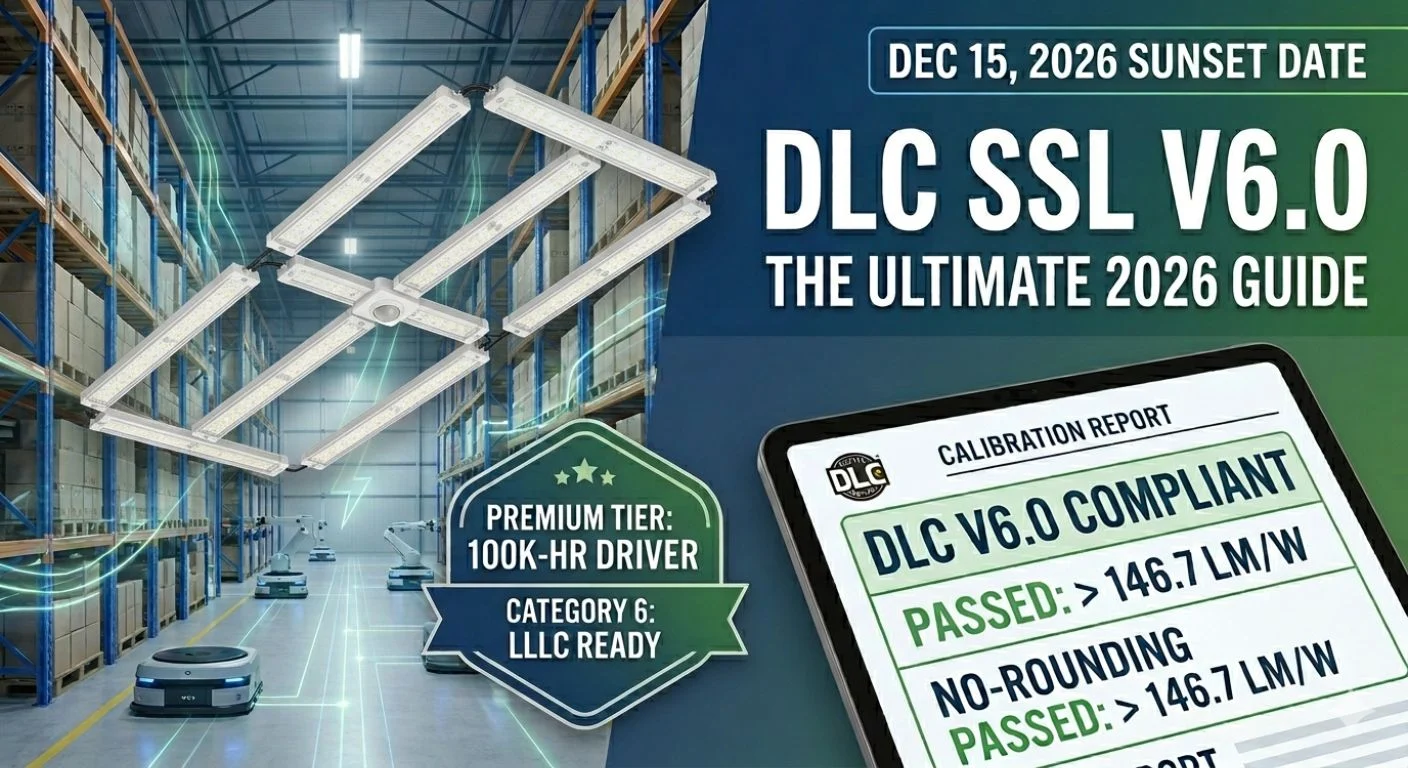
DLC SSL V6.0 Technical Requirements: The Ultimate 2026 Guide for Lighting Industry
🔷 I. Introduction to the DesignLights Consortium (DLC) SSL V6.0 Transition
1.1 Why Create the New LED Technical Requirements for 2026?
The DesignLights Consortium (DLC) has moved beyond simple energy savings. The SSL V6.0 update is a bold step toward decarbonization. By integrating high-efficacy requirements with mandatory advanced controls, the DLC aims to ensure that commercial lighting systems contribute to long-term carbon reduction through intelligent energy management rather than just high-bin LEDs.
1.2 DLC SSL V6.0 vs. V5.1 Key Changes: From Lumens to Systems
Compared to V5.1, V6.0 represents a “Systemic Reset.” It breaks the one-size-fits-all model, introducing specific requirements for solar luminaires, hazardous locations, and ultra-low CCTs (1800K/2000K). The most significant change is the shift toward Enhanced Lighting Controllability, making smart features a prerequisite for certification.
1.3 The Significance of DLC SSL Version 6.0 for Utility Rebates
In North America, a DLC listing is the mandatory “passport” for utility rebates. Over 75% of efficiency programs use the Qualified Products List (QPL) to verify performance. Without V6.0 compliance, products will be ineligible for these multi-million dollar incentive pools starting late 2026.
🔷 II. New Product Categories and Amber LED Standards in V6.0
2.1 Exploring DLC V6.0 Amber LED Testing Requirements
DLC V6.0 significantly broadens the scope of eligible products to meet modern environmental needs, particularly regarding ecologically sensitive areas:
de-Amber (Direct-Emission): Narrow-band (590-605nm),
pc-Amber (Phosphor-Converted): Broad-band, blue light
Filtered-Amber: White LED with amber filters, blue light
2.2 New Categories: Solar Luminaires, Turtle Lighting, and 1800K CCT
V6.0 introduces specialized paths for Solar-Powered Luminaires and expansion of Hazardous Location (UL 844) fixtures. It also includes Turtle-Friendly spectral requirements and ultra-low 1800K and 2000K white light categories to protect nocturnal wildlife and meet aesthetic demands.
🔷 III. Understanding DLC V6.0 Control Categories 0-6
3.1 Mandatory Controls Integration for DLC Premium Listing
V6.0 replaces the old binary functional lists with a structured Control Categories system (Category 0-6). For a product to qualify for the DLC Premium tier, it must belong to Category 2 (Controls Ready), Category 5 (Networked), or Category 6 (LLLC). Category 0 (no controls) is no longer eligible for Premium status.
3.2 Advanced Dimming Standards: Standard vs. Premium Requirements
The controllability thresholds have been tightened to ensure maximum energy savings:
Standard Tier: Must support continuous dimming to 10%
Premium Tier: Must support continuous dimming to 10%
🔷 IV. DLC V6.0 Efficacy Thresholds and Driver Reliability
4.1 The 20 lm/W Efficacy Gap and PUD-Based Standards
Efficacy is no longer a fixed number. Under V6.0, Premium Tier efficacy must generally be at least 20 lm/W higher than the Standard threshold. Furthermore, thresholds are now set by Primary Use Designation (PUD)—meaning street lights, wall packs, and high-bays each have independent, fine-tuned standards.
4.2 Driver Rated Life and ISTMT Testing for DLC Premium
Reliability is a cornerstone of the new requirements.
Standard Tier: Minimum driver life of 50,000 hours.
Premium Tier: Minimum driver life of 100,000 hours.
Manufacturers must provide In-Situ Temperature Measurement Testing (ISTMT) for the driver case (TMP PS) to verify these longevity claims.
🔷 V. FACT and FALO Testing Protocols for DLC V6.0
5.1 Field-Adjustable Light Output (FALO) Matrix Testing
For products with wattage-select switches, laboratories must test the maximum power point and report performance data for all adjustable settings. This ensures that the fixture remains efficient across its entire operating range.
5.2 Field-Adjustable Color Temperature (FACT) Worst-Case Logic
CCT-tunable products require testing at the lowest, highest, and mid-point CCTs. Crucially, the QPL listing is based on the setting with the lowest efficacy (usually the lowest CCT, like 2700K). This prevents “cherry-picking” high efficacy data from cool-white settings.
🔷 VI. Strict Compliance: The “No-Rounding” Tolerance Policy
6.1 Precision Matters: Zero Tolerance for Efficacy Data
DLC enforces a rigorous “No-Rounding” rule. If a category requires 110 lm/W and the tolerance is -3%, the measured value must be strictly $\ge 106.7$ lm/W. A value of 106.69 lm/W is a Fail, even if it rounds up to 106.7. This requires manufacturers to build in significant design margins during R&D.
🔷 VII. Impact on QPL and Manufacturer Deadlines for 2026
7.1 DLC SSL V6.0 Sunset Date: December 15, 2026
The most critical date for the industry is December 15, 2026. On this day, all SSL V5.1 products that have not been updated to meet V6.0 criteria will be officially Delisted from the QPL. This will immediately void their eligibility for most North American utility rebates.
7.2 How Utilities Utilize V6.0 Standards for Rebate Tiers
Utilities are shifting toward “Control-Dependent Rebates.” Products listed under Category 6 (LLLC) in V6.0 often qualify for significantly higher incentives because they guarantee deeper, verifiable energy savings through integrated intelligence.
🔷 VII. Detailed Technical Matrix: SSL V6.0 Core Performance Requirements
This section provides the granular data points required for engineering compliance and successful QPL submission.
1. Differentiated Efficacy Thresholds by Primary Use Designation (PUD)
Unlike previous versions, V6.0 applies more aggressive and category-specific efficacy increases (averaging 14% across the board).
Premium vs. Standard Gap: The Premium tier now mandates an efficacy that is generally 20 lm/W higher than the Standard threshold for the same PUD.
Outdoor Performance: Roadway and Area lights must achieve significantly higher thresholds to account for optical precision, often exceeding 125 lm/W (Standard) and 145 lm/W (Premium).
Replacement Lamps: HID replacements (E26/E39) are now subjected to “Bare Lamp” testing, ensuring performance is inherent to the source, not the housing.
2. Comprehensive Control Categories (Categories 0–6)
V6.0 formalizes controllability into seven distinct categories to align with utility incentive tiers.
| Category | Definition | Premium Eligibility |
| Category 0 | No integral control capabilities. | No |
| Category 1 | Controls Ready (Receptacle-only, e.g., Zhaga/NEMA). | Yes |
| Category 2 | Integrated dimming/manual control. | Yes |
| Category 3-5 | Integrated sensors (Occupancy/Daylight) or Networked controllers. | Yes |
| Category 6 | LLLC (Luminaire Level Lighting Control) with 2+ integral sensors. | Yes (Highest Rebate) |
3. Advanced Driver Reliability & Lifetime Protocols
To reduce maintenance cycles and electronic waste, V6.0 elevates driver standards:
Rated Life: Standard fixtures require a 50,000-hour rated life, while Premium fixtures must demonstrate a 100,000-hour rated life.
ISTMT (In-Situ Temperature Measurement Testing): Manufacturers must submit ISTMT reports for the Driver Case (TMP PS). The measured temperature at this point must not exceed the driver’s rated maximum to validate the 100k-hour claim.
4. Field-Adjustable (FA) Testing & Reporting Matrix
For products with tunable features, the testing burden is now multidimensional:
FALO (Wattage Tuning): Testing must be conducted at the maximum rated wattage. However, manufacturers must report performance data for every selectable setting (e.g., 100W/150W/200W).
FACT (Color Tuning): Full LM-79 reports are required at the lowest, highest, and mid-point CCTs. The QPL efficacy listing is determined by the lowest-performing setting (the “worst-case” scenario, typically the lowest CCT).
5. Strict “No-Rounding” Tolerance & Compliance Policy
The DLC has eliminated the practice of “rounding up” to meet thresholds.
Zero Tolerance: If a category requires 110 lm/W and includes a -3% testing tolerance, the raw measured value must be $\ge 106.7$ lm/W.
Compliance Failure: A lab measurement of 106.69 lm/W is a hard failure, even though it would round to 106.7. This requires engineers to target at least a 5% safety margin during the design phase to ensure laboratory pass rates.
Table: DLC Minimum Efficacy Requirements for Luminaires & Retrofit Kits
🔹 Outdoor Luminaires
| Application Type | DLC Minimum Efficacy (lm/W) |
|---|---|
| Outdoor Pole/Arm-Mounted Area & Roadway | 125 |
| Outdoor Decorative Pole/Arm-Mounted | 115 |
| Wall-Mounted Area (Zero Uplight) | 125 |
| Wall-Mounted Area (With Uplight) | 125 |
| Bollards | 115 |
| Parking Garage | 115 |
| Fuel Pump Canopy | 125 |
| Architectural Flood & Spot | 125 |
| Stairwell & Passageway | 125 |
| Sports Lighting | 115 |
| Hazardous Environment Area | 115 |
🔹 Indoor Luminaires
🔹 Outdoor Retrofit Kits
| Application Type | DLC Minimum Efficacy (lm/W) |
|---|---|
| Area & Roadway Retrofit | 125 |
| Decorative Retrofit | 115 |
| Large Area/Roadway Retrofit | 125 |
| Wall-Mounted Area Retrofit | 125 |
| Parking Garage Retrofit | 115 |
| Fuel Pump Canopy Retrofit | 125 |
🔹 Indoor Retrofit Kits
| Application Type | DLC Minimum Efficacy (lm/W) |
|---|---|
| Troffer Retrofit | 120 |
| Linear Ambient Retrofit | 125 |
| High Bay Retrofit | 135 |
| Low Bay Retrofit | 130 |
🔹 Linear Replacement Lamps (T8 / T5)
| Lamp Type | In-Luminaire (lm/W) | Bare Lamp (lm/W) |
|---|---|---|
| 2’ T8 | — | 130 |
| 3’ T8 | — | 130 |
| 4’ T8 | — | 130 |
| 4’ T5 | — | 130 |
| 4’ T5HO | — | 130 |
| 8’ T8 | — | 130 |
| U-Bend | — | 130 |
🔚 Conclusion: Securing Your Market Access in 2026
The DLC SSL Version 6.0 technical requirements summary makes it clear: technical precision and smart integration are the new competitive advantages. Manufacturers must act now to upgrade their portfolios, master the new SPDX spectral reporting, and ensure their drivers meet the 100k-hour Premium benchmark.
DLC 6.0V LED Luminaire Products
RGBCW Tunable White Linear Light
RGBCW Tunable White Linear Light Manufacturer for US marketTunable white [...]

ARC Curved Linear Pendant Light
Architectural Curved Linear Pendant Light ManufacturerIntroducing the Architectural Curved Linear [...]

Cylindrical Pendant Light
Architectural LED Cylinder Pendant Light for Commercial Interiors ManufacturerThe Prillumen [...]

Horizontal Tube Pendant Light
Horizontal Tube Pendant Light—360° Light Manufacturer The Prillumen Horizontal Tube [...]
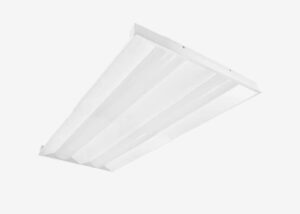
Dual Lens Troffer Light
Dual Lens LED Troffer Light Fixtures Recessed Lighting ManufacturerOur Dual [...]
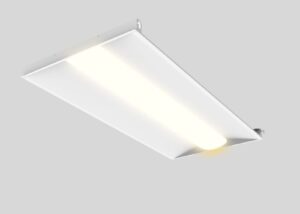
Center Basket Troffer Light
LED Recessed Basket Troffer Light ManufacturerOur LED Basket Troffer Light [...]
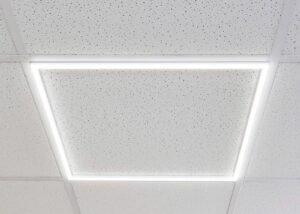
LED Ceiling Grid Light
LED Ceiling Grid Light—Commercial Recessed/Lay-in Panel ManufacturerOur LED Ceiling Grid [...]
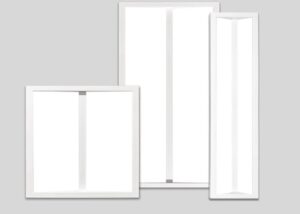
Architectural LED Troffer
Architectural LED Troffer Recessed Fixture ManufacturerOur Architectural LED Troffer series [...]


STAY IN THE LOOP
Subscribe to our free newsletter.
Leave A Comment
Office Lighting Design Guide for Modern Workplaces with lux UGR and LED fixture tips for comfort productivity and energy efficiency
Ever wonder why an outfit looks vibrant in natural sunlight, [...]
What is Tunable White Lighting? As the industry standard evolves, [...]
Understanding Product Safety Certifications: What is an NRTL? For electrical [...]