Understanding Commercial Lighting Technologies
Selecting the right illumination is critical for operational efficiency, safety, and ambiance in any business setting. The market offers various types of commercial lighting fixtures, each utilizing distinct technologies suited for specific environments. Understanding the core differences between these light sources is the first step in optimizing your facility’s energy consumption and visual performance.
Modern LED Commercial Lighting
Light Emitting Diode (LED) technology has rapidly become the industry standard for commercial applications. Unlike traditional bulbs that rely on heating filaments or gases, LEDs use semiconductors to produce light, resulting in significantly higher efficiency.
Energy Efficiency: LEDs consume up to 75% less energy than incandescent lighting.
- Longevity: Commercial LED fixtures often last 50,000 to 100,000 hours, drastically reducing replacement costs.
- Versatility: From high bays to recessed troffers, LED technology is adaptable to almost any fixture design, offering superior color rendering (CRI) and instant-on capabilities without warm-up times.
Fluorescent Tube Lighting
For decades, **fluorescent tubefluorescent tube lighting was the backbone of office and retail illumination. While losing market share to LEDs, they remain prevalent in many existing buildings. These gas-discharge lamps, commonly seen as linear T5 or T8 tubes, offer decent efficiency and a broad diffuse light output ideal for general coverage. However, they contain mercury, require ballasts to operate, and suffer from flickering or buzzing as they near the end of their lifespan.
High-Intensity Discharge (HID) and Halogen Lamps
High-Intensity Discharge (HID) lamps—including Metal Halide and High-Pressure Sodium—and Halogen lamps are known for their powerful output. Historically, these were the go-to solution for large spaces like warehouses, stadiums, and parking lots where high lumens were required.
- High Output: Excellent for illuminating vast outdoor areas or high-ceiling industrial zones.
- Drawbacks: These fixtures generate excessive heat, have long warm-up times, and offer poor energy efficiency compared to modern alternatives. Most businesses are actively retrofitting these heavy-duty fixtures with LED equivalents to cut utility costs.
Common Indoor Commercial Lighting Fixtures
Selecting the right indoor lighting isn’t just about brightness; it’s about matching functionality with energy efficiency. We see a massive variety in the types of commercial lighting fixtures available today, each designed for specific ceiling heights and work environments. Knowing the difference ensures you get the best performance for your square footage.
Panels and Troffers for Offices
In most corporate settings, uniform lighting is non-negotiable. LED panels and troLED panels and troffers are the gold standard for drop ceilings, providing smooth, glare-free illumination that significantly reduces eye strain for employees. Unlike the buzzing fluorescent tubes of the past, modern LED flat panels turn on instantly and maintain consistent color temperature.
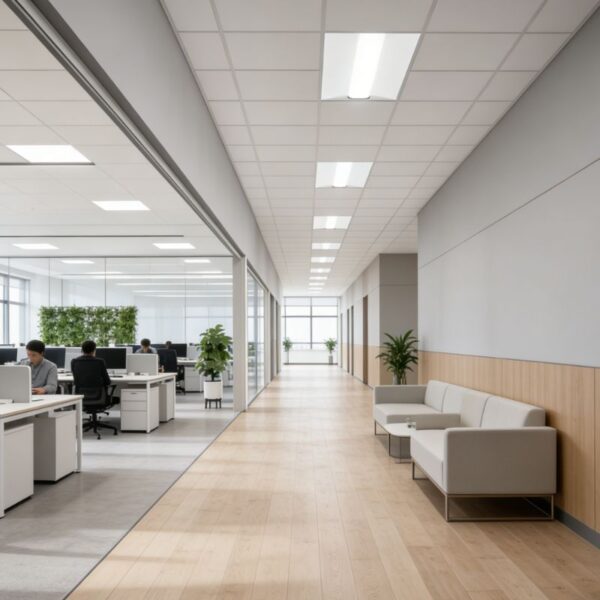
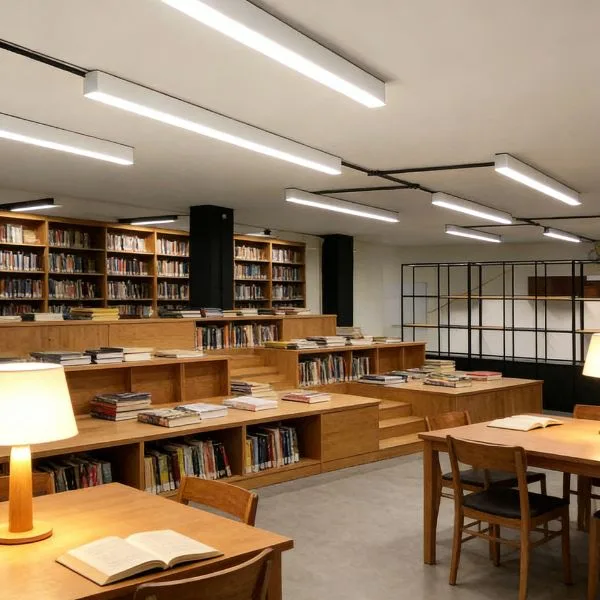
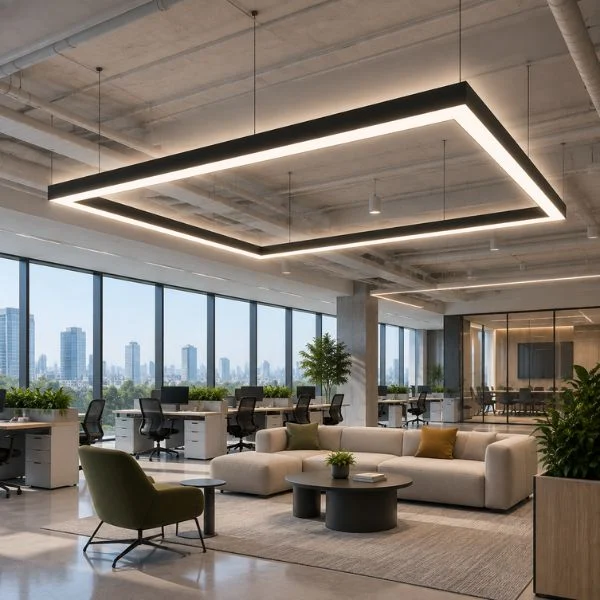
For open-plan offices looking to upgrade their style, we often suggest moving beyond standard ceiling grids. Incorporating a stylish 4′ Linear Pendant Light Fixture 4′ Linear Pendant Light Fixture can add a contemporary architectural element while delivering focused light exactly where it’s needed over workstations or conference tables.
High Bay and Low Bay Lights for Warehouses
When dealing with industrial spaces, ceiling height dictates your fixture choice. You can’t just install any light and hope for the best.
High Bay Lights: Essential for ceilings ranging from 20 to 45 feet. They use distinct beam angles to push high-intensity light down to the floor without losing brightness.
Low Bay Lights: Best for ceilings under 20 feet. These fixtures are designed to spread light wider to cover large areas without creating blinding hot spots.
Recessed Downlights and Accent Lighting
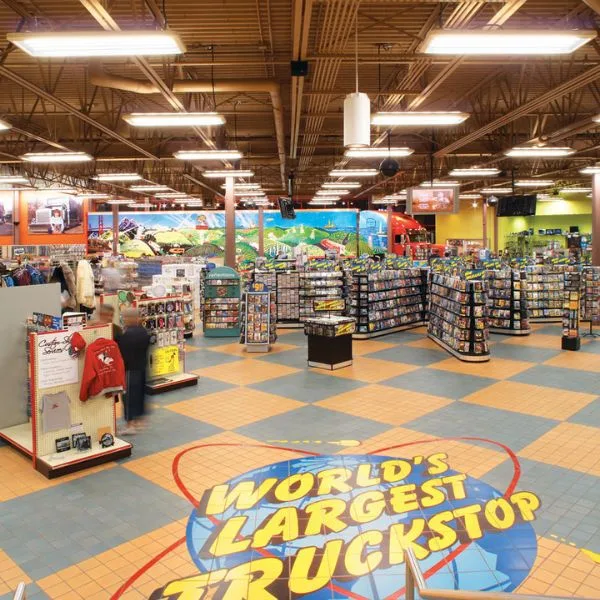
General illumination gets the job done, but accent lighting creates the experience. Recessed downlights (often called “can lights”) are perfect for hallways, lobbies, and meeting rooms where you want a clean, unobtrusive ceiling line.
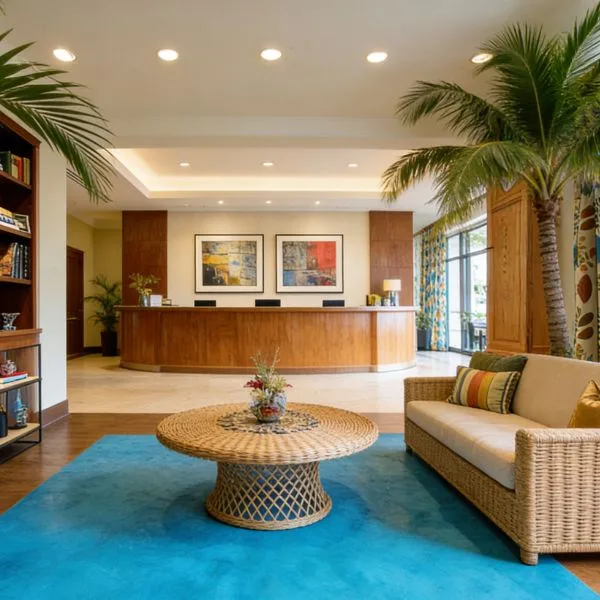
To truly elevate a commercial interior, layering light is key. Using architectural wall sconces along perimeter walls or pillars adds vertical visual interest and softens the overall ambiance. This approach is particularly effective in hospitality and retail sectors where mood directly impacts customer behavior.
Essential Outdoor Commercial Lighting Types
Outdoor lighting isn’t just about visibility; it’s about security, liability reduction, and branding. We know that the right exterior fixtures protect your assets and invite customers in. Below is a breakdown of the standard types of commercial lighting fixtures used for exterior applications.
Parking Lot and Area Lighting
Parking lots are the first touchpoint for most physical businesses, and poorly lit areas are a major liability. We primarily use high-output Area Lights (often called “Shoebox” lights) mounted on poles to cast wide, uniform light distribution across pavement.
- Safety First: High lumen output prevents vehicle accidents and deters criminal activity.
- LED Efficiency: Swapping old HID lamps for LEDs cuts energy costs significantly. This efficiency is a critical factor when optimizing grocery store lighting and other large retail operations to improve overall ROI.
- Smart Control: Modern fixtures often include photocells or motion sensors to automatically adjust output based on activity and time of day.
Wall Packs for Exterior Security
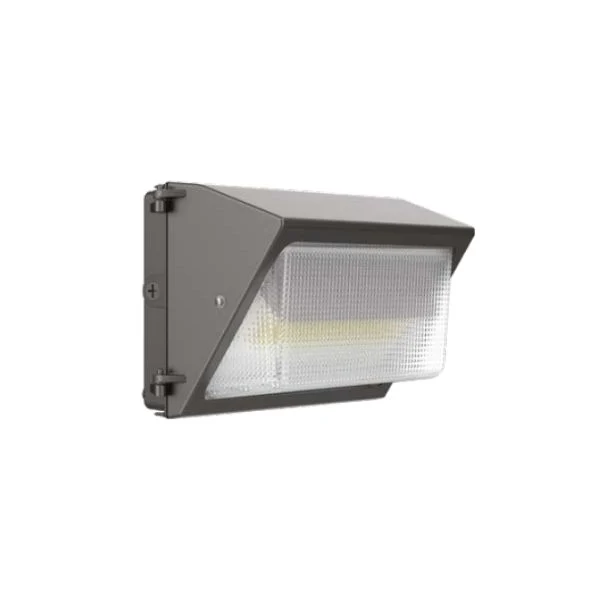
Wall packs are the workhorses of building perimeter security. These fixtures mount directly to the vertical exterior walls of a structure to illuminate the immediate area around the building, eliminating dark corners where intruders might hide.
- Durability: We rely on fixtures housed in die-cast aluminum with polycarbonate lenses to resist vandalism and harsh weather conditions.
- Light Direction: Full Cut-off: Directs light strictly downward to minimize light pollution (Dark Sky compliant). Standard/Semi-Cut-off: Throws light forward and down for wider coverage.
Canopy, Bollard, and Flood Lights
Beyond the main parking area, different outdoor zones require specialized fixtures to maintain a cohesive look and proper function.
- Canopy Lights: These are essential for loading docks, gas stations, and building overhangs. They are surface-mounted or recessed to provide focused downward light where people are working or walking.
- Bollard Lights: These short, sturdy posts line walkways and landscape paths. They offer guidance and ambiance without blinding pedestrians.
- Flood Lights: We use these for high-impact directional lighting. They are perfect for highlighting signage, architectural details, or blasting light across large storage yards.
Key Application Scenarios for Commercial Fixtures
Understanding where to place specific types of commercial lighting fixtures is just as important as buying the right tech. Different environments demand unique lighting properties to ensure safety, sales performance, or productivity.
Retail and Hospitality Environments
In retail and hospitality, lighting isn’t just about visibility; it’s about the “vibe” and guiding the customer’s eye. You want high Color Rendering Index (CRI) ratings here to make merchandise pop and food look appetizing. We often see a mix of ambient and accent lighting used to create depth.
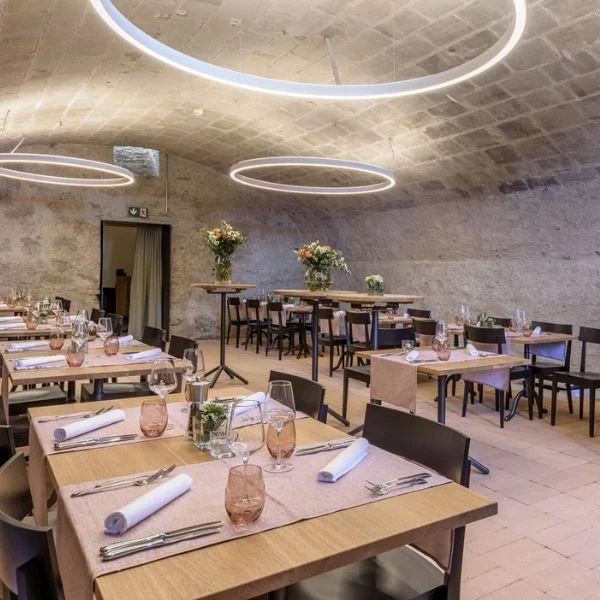
For main floor areas or trendy reception desks, aesthetics matter heavily. A stylish direct-indirect ring pendant light can serve as a centerpiece that elevates the brand image while providing soft, comfortable illumination.
Key considerations for these spaces:
- Color Temperature: Warmer tones (2700K-3000K) for hospitality; Neutral whites (3500K-4000K) for retail.
- Flexibility: Track lighting allows you to aim beams at changing displays.
- Glare Control: Essential to prevent customer eye fatigue.
Industrial Facilities and Manufacturing
When we talk about manufacturing floors or processing plants, function trumps form every time. The goal here is safety and precision. Shadows can hide hazards, so we need powerful, uniform light distribution. This is where high-output fixtures shine, cutting through the cavernous vertical space typical of these buildings.
Priorities for industrial setups:
- High Lumen Output: Necessary to reach the floor from high ceilings.
- Durability: Fixtures must withstand vibrations and potential impacts.
- Instant-On: Unlike old HID lamps, modern LED solutions turn on instantly, which is safer after a power flicker.
Walk-In Coolers and Specialized Spaces
Some zones are hostile to standard electronics. Walk-in coolers, freezers, and commercial kitchens introduce moisture, extreme cold, and grease. Standard office lights will fail quickly here or, worse, violate health codes.
You need fixtures specifically built to seal out contaminants—usually referred to as “vapor tight” or “vapor proof” lights.
- Ingress Protection (IP) Rating: Look for IP65 or higher to ensure the fixture is dust-tight and can handle water jets during cleaning.
- NSF Rating: Required for food processing zones to ensure the materials are food-safe and easy to sanitize.
- Cold Tolerance: Electronic drivers must be rated to start and run reliably in sub-zero temperatures.
Advantages of Upgrading to Commercial LED Lights
When evaluating different types of commercial lighting fixtures for your facility, upgrading to LED technology is the smartest investment you can make. The shift from legacy lighting to modern LEDs fundamentally changes how a building operates, improving both the bottom line and the everyday work environment.
Exceptional Energy Efficiency and Cost Savings
The primary reason we see businesses switch to LED commercial lighting is the immediate drop in energy consumption. LEDs convert nearly all their consumed energy directly into light, drastically reducing wasted heat.
- Massive Energy Reduction: Upgrading typically cuts lighting electricity usage by 50% to 75% compared to older fluorescent or HID systems.
- Lower Utility Bills: This efficiency directly translates to thousands of dollars saved annually, creating a rapid return on investment.
- Optimized Usage: Pairing these fixtures with smart controls further drives down costs. Following strategies from a wholesale dimmable office lighting guide for contractors ensures your lights only draw maximum power exactly when and where it is needed.
Reduced Maintenance and Extended Lifespan
Constantly replacing burnt-out bulbs disrupts operations and drains your maintenance budget. Commercial LED fixtures eliminate this headache through superior solid-state engineering.
- Decades of Reliability: Quality LED fixtures are rated to last anywhere from 50,000 to over 100,000 operational hours.
- Zero Routine Swaps: You stop paying for replacement tubes, ballasts, and the expensive lift rentals required to reach high warehouse ceilings.
- High Durability: Without fragile glass or sensitive filaments, LED fixtures easily withstand facility vibrations and temperature swings.
Enhanced Design Flexibility and Environmental Performance
Modern commercial lighting does much more than just illuminate a room; it actively enhances the architectural feel while meeting strict green building standards.
- Eco-Friendly Design: LEDs contain zero toxic mercury and are 100% recyclable, instantly lowering your building’s carbon footprint.
- Superior Light Quality: They eliminate the harsh glare, annoying hum, and headache-inducing flicker associated with legacy lighting.
- Architectural Integration: The compact nature of diodes allows for sleek, modern fixture designs. Whether you need discrete recessed lighting or plan to review the factors to consider when sourcing suspended linear fixtures for commercial projects, LED technology gives you complete control over beam angles, color rendering (CRI), and color temperature (CCT) to perfectly match your space.
How to Choose the Best Commercial Lighting Solutions
Selecting the right commercial lighting fixtures isn’t just about picking the brightest bulb; it’s about matching the specific needs of your facility with the right technology. I always tell my clients that a well-planned lighting strategy reduces operational headaches and cuts costs immediately.
Evaluating Durability and Environmental Conditions
The environment dictates the fixture. You cannot install a standard office troffer in a humid manufacturing plant and expect it to last. When I assess a site, I look strictly at Ingress Protection (IP) and Impact Protection (IK) ratings.
- Dry, Clean Areas (Offices/Retail): Standard IP20 ratings are usually sufficient. Here, aesthetic durability matters more. For example, a sturdy direct indirect wall light grille offers both resilience and visual appeal for high-traffic corridors.
- Wet or Dusty Areas (Warehouses/Exteriors): You need at least IP65. This ensures dust and water jets won’t compromise the electronics.
- High-Risk Areas: If there is a risk of physical damage, look for high IK ratings (IK08 or above) to prevent breakage.
Integrating Smart Lighting Controls
Lighting controls are where the real efficiency magic happens. It is pointless to light an empty room at 100% brightness. Modern commercial lighting fixtures should be compatible with 0-10V dimming, DALI systems, or occupancy sensors.
Integrating these controls allows for daylight harvesting—where lights automatically dim when natural sunlight is available. For modern office layouts, installing a rectangular modular linear light compatible with smart sensors gives you granular control over energy usage, ensuring you only pay for the light you actually need.
Leveraging Energy Rebates and Payback Periods
The upfront cost of LED fixtures is often offset by energy rebates and long-term savings. Utility companies frequently offer substantial rebates for upgrading to DLC-certified (DesignLights Consortium) products.
I always calculate the ROI (Return on Investment) before finalizing a purchase. In most commercial applications, the payback period for switching to high-efficiency LEDs is under two years.
Typical ROI Breakdown for Commercial LEDs:
| Cost Factor | Traditional Lighting (Fluorescent/HID) | Modern LED Commercial Fixtures |
|---|---|---|
| Energy Consumption | High (wastage via heat) | Low (converts 95% to light) |
| Maintenance Cycle | Every 1-2 years | Every 5-10 years |
| HVAC Load | Increases cooling costs | Minimal heat generation |
| Payback Period | N/A | 12 – 24 Months |
Related Sources
STAY IN THE LOOP
Subscribe to our free newsletter.
Leave A Comment
Recessed and pendant lighting explained Choosing the right illumination strategy [...]
Anatomy of a Modular LED Lighting System We design every [...]
LED vs. Incandescent Bulbs: What Is the Real Difference? Are [...]