Recessed and pendant lighting explained
Choosing the right illumination strategy defines the functionality, spatial comfort, and visual identity of any commercial environment. Understanding the structural and operational distinctions between recessed lighting و pendant lighting is the first step in planning a high-performance commercial interior.
What Is Commercial Recessed Lighting?
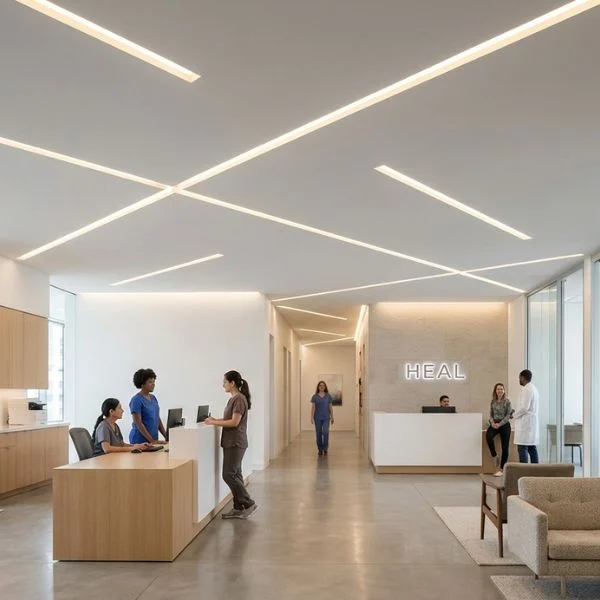
cURL Too many subrequests by single Worker invocation. To configure this limit, refer to https://developers.cloudflare.com/workers/wrangler/configuration/#limits consists of fixtures installed directly inside the ceiling surface, sitting flush with drywall, plaster, or acoustic T-bar grid systems. The housing and electrical wiring remain concealed within the ceiling plenum.
- Installation profile: Completely flush or semi-flush integration for an uncluttered ceiling plane.
- Primary role: Delivers uniform ambient illumination, wide-area downlighting, and clean wall-washing.
- Core visual effect: Low visual profile that emphasizes the architecture rather than the fixture itself.
What Is Commercial Pendant Lighting?
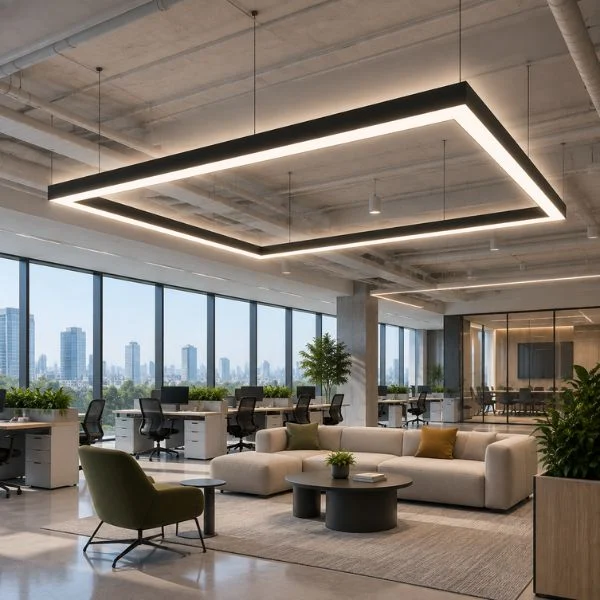
Pendant lighting—often categorized as suspended lighting—features fixtures hung from the structural ceiling via aircraft cables, rigid stems, or cords. These fixtures drop downward into the usable room volume.
- Installation profile: Suspended below the ceiling deck at specified drop lengths.
- Primary role: Provides direct task lighting, localized ambient glow, or bi-directional (up/down) distribution.
- Core visual effect: Acts as an architectural focal point, defining functional zones within open-plenum or high-ceiling layouts.
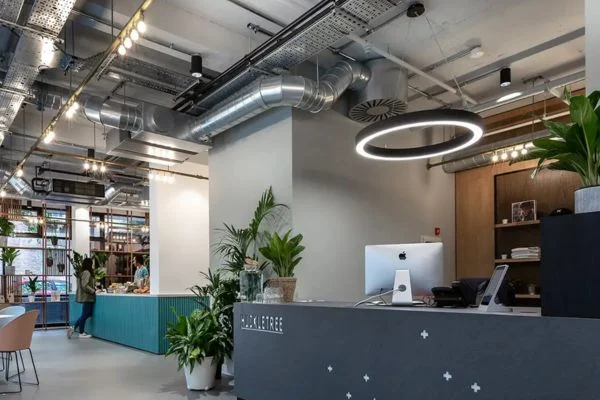
Visual differences
عند المقارنة recessed vs pendant lights, the visual impact on a commercial space is immediate. Recessed lighting blends into the architecture, while cURL Too many subrequests by single Worker invocation. To configure this limit, refer to https://developers.cloudflare.com/workers/wrangler/configuration/#limits acts as an active design element.
Architectural presence
- Recessed fixtures: Built directly into the ceiling plane, these fixtures maintain clean sightlines and create an uncluttered, minimalist aesthetic. Sleek installations like 2-inch recessed linear lighting allow the light itself to define the room without hardware intruding into the open volume.
- Pendant fixtures: Suspended from stems or aircraft cables, pendants drop down into the room’s visual field. They serve as decorative focal points, adding texture, color, and structural definition to high or exposed ceilings.
Spatial impact on interiors
| Visual Element | إضاءة مخفية | Pendant Lighting |
|---|---|---|
| Ceiling Plane | Completely flush and uninterrupted | Broken by hanging stems, cords, or bodies |
| Sightlines | Open, maximizing vertical headroom | Defined, drawing the eye to specific zones |
| Aesthetic Role | Subtle and architectural | Expressive and sculptural |
| Spatial Feel | Expansive and clean | Structured and intimate |
Choosing between them visually comes down to whether your commercial interior needs discreet background illumination or bold fixtures that anchor specific functional zones.
Ceiling-height requirements
Ceiling height is the single most decisive structural factor when evaluating recessed vs pendant lights in commercial interiors. The vertical clearance of your space determines not only visual balance but also photometric efficiency.
Low to standard ceilings (Under 9–10 feet)
In spaces with standard or lower clearance, recessed lighting is the practical choice. Suspending fixtures in rooms under 9 feet can disrupt sightlines, make rooms feel cramped, and present physical clearance hazards. For modular acoustic grid setups, integrating 4ft recessed LED lights for ceiling systems preserves full headroom while delivering clean, uniform ambient illumination.
High and open architectural ceilings (10+ feet)
In high, vaulted, or exposed industrial ceilings, recessed fixtures often sit too far from the working plane, causing unnecessary light dissipation before reaching desks or counters. Suspended lighting solves this by lowering the light source closer to the task area, creating defined visual zones and comfortable light levels without over-driving wattage.
| cURL Too many subrequests by single Worker invocation. To configure this limit, refer to https://developers.cloudflare.com/workers/wrangler/configuration/#limits | Recommended Fixture Type | cURL Too many subrequests by single Worker invocation. To configure this limit, refer to https://developers.cloudflare.com/workers/wrangler/configuration/#limits |
|---|---|---|
| Under 9 ft (2.7 m) | إضاءة مخفية | Maximizes vertical clearance and eliminates visual clutter |
| 9 to 11 ft (2.7–3.4 m) | Recessed or Low-Profile Pendants | Adaptable; works well with 2×4 LED drop ceiling lights or shallow suspended fixtures |
| 12+ ft (3.6+ m) / Open Deck | Suspended Pendant Lighting | Brings direct illumination down to the working plane and reduces light waste |
- Maintain adequate clearance: Ensure any suspended pendant maintains at least 7 to 8 feet of clearance from the floor in general pathways, or 30 to 36 inches above conference and reception surfaces.
- Prevent dark upper volumes: For high ceilings using pendants, select fixtures with uplight capability to illuminate the ceiling deck and prevent a dark cavern effect.
Light distribution
Light distribution determines how comfortable, functional, and visually balanced a commercial interior feels. When comparing recessed vs pendant lights, the fundamental difference comes down to directional focus versus multi-dimensional throw.
Direct downward output from recessed fixtures
Recessed ceiling lighting provides focused, downward illumination designed to deliver uniform ambient light across large surface areas.
- Direct beam angle: Light travels straight down from the ceiling plane, making it ideal for general circulation, grid layouts, and clean utility coverage.
- Minimal spill light: Because the light source sits inside the ceiling cavity, stray glare is cut down significantly.
- Uniform coverage: Utilizing continuous architectural runs like 4-inch recessed linear slot lighting ensures smooth foot-candle levels across entire work surfaces without dark patches.
Direct and indirect spread from pendant fixtures
Suspended lighting brings the light source closer to the work plane, providing greater control over task and ambient layers.
- Dual light emission: Many commercial pendant systems feature bi-directional optics, casting light downward onto desks while throwing light upward against the ceiling.
- Reduced contrast: The upward component reflects off the ceiling deck, eliminating the harsh shadows and the “cave effect” often caused by purely downward-facing fixtures.
- Focused task zones: Hanging fixtures concentrate lumens directly over collaboration tables, reception counters, and active work zones for superior visual clarity.
Installation considerations
When choosing between recessed vs pendant lights, installation complexity and ceiling infrastructure play a decisive role in project timelines and labor costs. We evaluate the ceiling deck, electrical routing, and structural capacity before specifying either fixture style.
Installing recessed lighting fixtures
Recessed architectural fixtures integrate directly into the ceiling plane, requiring careful planning around overhead infrastructure:
- Plenum space clearance: Recessed housings require adequate vertical depth above the ceiling line to clear ductwork, pipes, and structural beams.
- Ceiling cutouts and grid integration: In drop ceilings, standard commercial troffers and downlights seat directly into T-bar grids. For drywall or plaster ceilings, precise cutouts and dedicated mounting frames are necessary.
- Wiring and driver placement: Remote or integrated drivers must remain accessible through the fixture aperture for future maintenance.
For complex layouts, reviewing specific installation guidelines for commercial applications helps streamline electrical prep and rough-in timelines.
Mounting suspended pendant systems
Suspended lighting attaches directly to structural ceiling elements, bypassing the need for recessed plenum depth:
- Structural anchor points: Pendant systems require secure anchoring into concrete slabs, open steel trusses, or unistrut channels to support the weight of the fixtures.
- Cable adjustment and leveling: Aircraft cables and power cords must be field-adjusted to align perfectly across long runs and maintain uniform mounting heights over work surfaces.
- Retrofit flexibility: Because suspended fixtures do not require recessed cavities, they are often faster and less invasive to install in open-plenum architectures or spaces with solid concrete ceilings.
Office applications
Choosing between recessed and pendant fixtures in a modern workplace comes down to how each zone functions. We design our حلول إضاءة مكتبية LED التجارية to balance high visual comfort with clear architectural lines across different office settings.
Open Workspaces and Desks
In high-density work zones, uniform light levels and glare control are top priorities.
Recessed lighting: Perfect for standard acoustic drop ceilings and clean grid layouts. Recessed fixtures deliver seamless, shadow-free ambient illumination across entire workstation clusters without intruding into the line of sight.
Pendant lighting: Ideal for open-plenum or exposed concrete ceilings. Installing suspended cURL Too many subrequests by single Worker invocation. To configure this limit, refer to https://developers.cloudflare.com/workers/wrangler/configuration/#limits brings direct task lighting right down to the working plane while casting soft uplight to eliminate dark ceiling cavities.
Conference Rooms and Boardrooms
Meeting spaces require flexible lighting that supports video calls, screen presentations, and active discussions.
مصابيح السقف المدمجة: Placed along the perimeter to wash walls with light, expanding the visual scale of the room and preventing monitor reflections.
Suspended pendants: Installed directly above the central conference table to establish a sharp visual anchor and focus attention during key presentations.
Breakout Zones and Casual Lounges
- Pendants: Create a relaxed, hospitality-inspired atmosphere in pantries, dining areas, and informal huddle spaces by dropping the visual scale.
- Recessed ceiling lighting: Keeps high-traffic corridors, copy rooms, and storage areas well-lit, clean, and completely unobstructed.
Retail and reception applications
First impressions define retail and hospitality spaces. In front-of-house areas, lighting does more than illuminate—it guides customer navigation, highlights products, and reinforces brand identity.
مناطق الاستقبال والردهة
Reception desks require a defined visual anchor. We rely on suspended lighting to create a clear focal point above check-in counters and waiting lounges.
- Pendants as focal features: Hanging fixtures frame the desk, draw the visitor’s eye immediately upon entry, and establish the architectural tone of the interior.
- Recessed support: Flush recessed downlights provide clean perimeter illumination around circulation paths, preventing shadows without competing with decorative elements.
Retail Floor Layouts
Effective merchandise presentation relies on balanced visual hierarchy. Implementing dedicated commercial retail lighting fixtures ensures your product displays capture attention while keeping aisles open and bright.
- General merchandise aisles: Recessed ceiling lighting delivers clean, uniform ambient light across large footprints, keeping ceiling lines tidy and uncluttered.
- Feature displays and checkout zones: Suspended pendants bring light closer to promotional tables, cash wraps, and display islands, creating intimate zones of focus.
- Visual contrast: Combining both fixture types with optimized LED lighting for retail stores helps direct foot traffic naturally toward high-value inventory.
When to combine both
In many commercial interiors, the debate between recessed vs pendant lights is not an either-or decision. The most effective lighting designs use a layered approach, pairing the clean ambient coverage of recessed fixtures with the focused, visual impact of suspended lighting.
Effective Layered Lighting Strategies
- Open-Plan Workspaces: Use recessed downlights across general circulation paths to maintain clean ceiling lines, while placing مصابيح الثريات المعمارية للمشاريع التجارية over conference tables, collaborative zones, and individual workstations for dedicated task illumination.
- صالات العرض التجارية: Combine recessed perimeter fixtures for background wall washing with decorative pendants over sales counters and featured displays to anchor the customer journey.
- Hospitality and Lounges: Rely on recessed lighting for foundational ambient safety and wayfinding, complemented by low-hanging pendant fixtures to create intimate, visually defined seating clusters.
- Architectural Transitions: In buildings with shifting ceiling heights, we deploy recessed fittings in low-clearance hallways and transition smoothly into suspended fixtures when moving into double-height lobbies or open-deck office areas.
Layering both cURL Too many subrequests by single Worker invocation. To configure this limit, refer to https://developers.cloudflare.com/workers/wrangler/configuration/#limits fixtures balances functional task lighting, uniform ambient levels, and architectural depth across your floor plan.
Comparison table
Choosing between recessed and pendant fixtures comes down to ceiling height, architectural layout, and overall visual intent. Use this side-by-side breakdown to evaluate which system best suits your commercial interior project:
| Feature / Criteria | مخفي Commercial Lighting | Pendant / Suspended Lighting |
|---|---|---|
| cURL Too many subrequests by single Worker invocation. To configure this limit, refer to https://developers.cloudflare.com/workers/wrangler/configuration/#limits | Best for low to standard ceilings (under 9–10 ft) | Best for high, vaulted, or open exposed ceilings (10+ ft) |
| Aesthetic Profile | Clean, flush, minimal visual clutter | Decorative, architectural focal point, defines zones |
| توزيع الضوء | Downward ambient spread, uniform surface illumination | Direct task illumination, accent beams, or direct/indirect options |
| Installation Requirement | Requires ceiling plenum space, drywall cutout, or T-grid | Requires structural ceiling anchor points and cable drop length |
| التأثير البصري | Blends seamlessly into the ceiling plane | Lowers perceived ceiling height and adds physical volume |
| Ideal Commercial Zones | Open-plan desks, hallways, restrooms, utility corridors | Conference tables, reception desks, lobbies, breakout zones |
If your layout features drop ceilings or tight plenum depths, consult our دليل شراء تقني لمصابيح العمارة المدمجة to select the right form factor and driver setup for your build.
Quick Selection Rules
- Choose recessed lighting when clean lines, uniform general illumination, and maximum vertical clearance are the top priorities.
- Choose pendant lighting when you need dedicated task lighting over surfaces, balanced direct/indirect illumination, or a bold architectural statement in open-ceiling spaces.
ابق على اطلاع
اشترك في نشرتنا الإخبارية المجانية.
اترك تعليقًا
Anatomy of a Modular LED Lighting System We design every [...]

LED vs. Incandescent Bulbs: What Is the Real Difference? Are [...]