# 0–10V Dimming for Commercial LED Linear Lighting: A Practical Guide
0–10V dimming is one of the most widely used lighting control methods in North American commercial buildings. From suspended linear pendants in open offices to recessed architectural lighting in conference rooms, it allows compatible LED fixtures to adjust light output using a low-voltage control signal.
However, specifying a 0–10V dimmable fixture does not automatically guarantee smooth dimming, complete shutoff, or compatibility with every lighting control system.
For lighting designers, electrical contractors, distributors, and project buyers, understanding the relationship between the LED driver, dimming controller, wiring, and fixture configuration is essential.
This guide explains how 0–10V dimming works, where it is used in commercial linear lighting, and what to verify before specifying fixtures for a project.
What Is 0–10V Dimming?
0–10V dimming is an analog lighting control method that uses a low-voltage DC signal to communicate the requested brightness level to a compatible LED driver.
In a typical commercial installation, the LED fixture receives its normal AC supply while a separate pair of control conductors carries the dimming signal.
The LED driver interprets the signal and adjusts the output delivered to the LED modules.
In general:
| Control Signal | Typical Response |
|---|---|
| 10V | Maximum programmed light output |
| 7V | Intermediate light output |
| 5V | Intermediate light output |
| 1V | Low-end dimming region |
| 0V | Minimum output or off, depending on driver design |
These values are illustrative rather than a universal voltage-to-brightness conversion. Actual performance depends on the driver, controller, dimming curve, and programmed settings.
Important: Not all 0–10V drivers dim to zero light output. Some stop at 10% or 1%, while others support dim-to-off functionality.
How Does 0–10V Dimming Work in LED Linear Fixtures?
A commercial 0–10V lighting system generally includes three primary elements.
1. LED Linear Luminaire
The luminaire contains the LED light source, optical components, housing, and compatible LED driver.
Commercial architectural luminaires may be configured as suspended, recessed, surface-mounted, or continuous-run systems.
2. 0–10V LED Driver
The driver converts incoming AC power into the regulated electrical output required by the LED modules.
Its dimming input responds to a compatible analog control signal.
The driver determines important performance characteristics, including minimum light output, dimming response, and potentially flicker behavior.
3. Lighting Controller
The controller may be a wall dimmer, occupancy-sensing control, daylight-responsive control, or part of a building lighting control system.
It communicates the desired lighting level to the driver.
The controller and driver must use compatible electrical control characteristics, including the appropriate source/sink relationship.
Understanding 0–10V Dimming Wiring
A typical 0–10V LED luminaire requires both normal power connections and a separate dimming control pair.
The AC power circuit supplies the energy required to operate the luminaire.
The low-voltage control circuit communicates the desired light output.
For many North American lighting products, the control conductors are identified using violet for DIM+ and pink for DIM−. Older products may use gray instead of pink.
Always follow the wiring diagram supplied with the specific luminaire and controller rather than relying on conductor color alone.
Installation considerations:
- Verify control polarity and driver terminal identification.
- Check the controller’s maximum control-current rating.
- Confirm the permitted number of drivers on each control channel.
- Follow applicable wiring, insulation, separation, and electrical-code requirements.
- Coordinate power switching when the driver does not support dim-to-off.
- Test actual dimming performance before completing a large installation.
Electrical connections should be completed by qualified personnel using the approved project documentation.
Why Is 0–10V Dimming Popular in Commercial Linear Lighting?
Flexible Lighting Levels
Commercial interiors often require different lighting levels throughout the day.
A conference room may need brighter illumination for general meetings and reduced light output for presentations.
A retail space may use lower general illumination to emphasize merchandise displays.
Compatible 0–10V controls allow these adjustments without changing the installed luminaire.
Integration With Building Controls
0–10V dimmable fixtures can be integrated into compatible occupancy-based and daylight-responsive lighting control strategies.
For example, a daylight sensor may reduce the output of fixtures near windows when sufficient natural light is available.
Actual energy savings depend on occupancy, daylight availability, control programming, and building operating conditions.
Suitable for Repetitive Commercial Installations
Offices, educational facilities, corridors, and retail interiors frequently use multiple luminaires arranged in groups.
A properly designed 0–10V control zone can command multiple compatible drivers to respond together.
However, grouping capability is limited by controller ratings, wiring conditions, and driver characteristics.
0–10V Dimming in Different Architectural Linear Lighting Systems
Suspended Linear Pendant Lighting
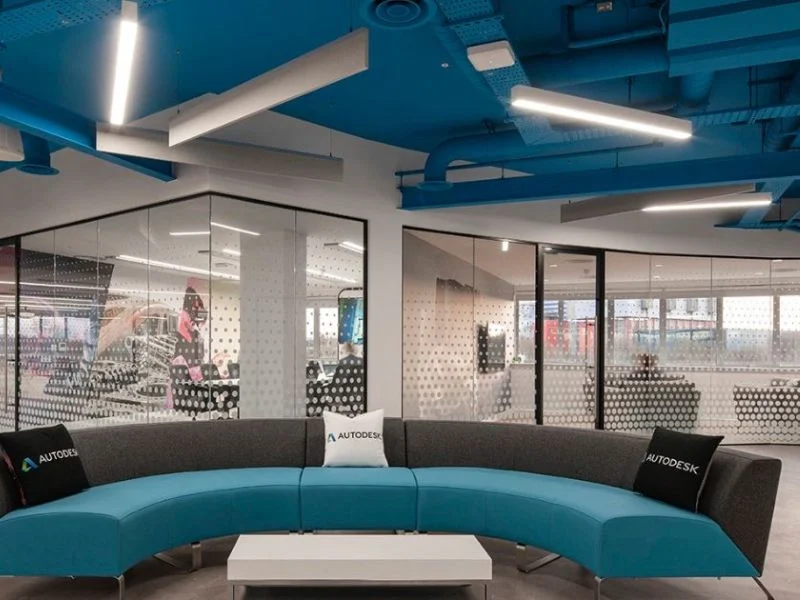
Suspended linear pendants are frequently installed above office workstations, meeting tables, reception areas, and collaborative spaces.
0–10V dimming allows lighting output to be adjusted to suit changing visual tasks.
For direct/indirect suspended lighting, the uplight and downlight components may be controlled together or separately, depending on the driver and control configuration.
Independent uplight/downlight dimming requires a specifically designed fixture configuration and suitable control channels. It should not be assumed for every direct/indirect pendant.
cURL Too many subrequests by single Worker invocation. To configure this limit, refer to https://developers.cloudflare.com/workers/wrangler/configuration/#limits
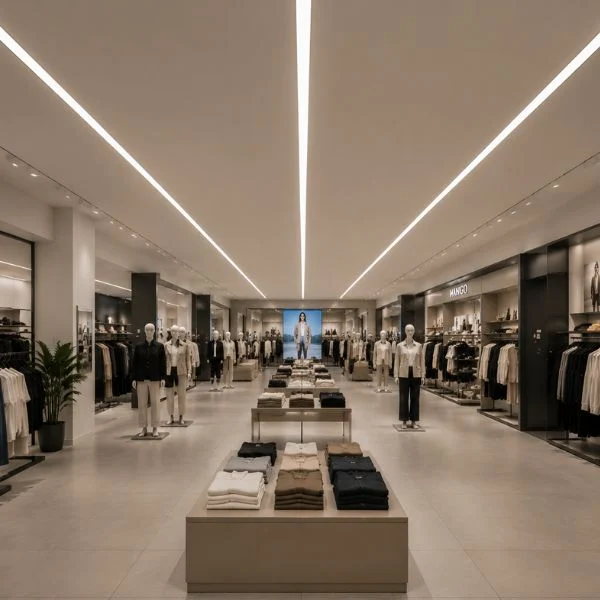
Recessed linear luminaires integrate into architectural ceilings and can create long, uninterrupted lines of light.
0–10V control is useful where recessed fixtures are grouped into lighting zones, particularly in offices, corridors, retail stores, and educational facilities.
For continuous-run recessed systems, designers should verify how the drivers are distributed across the run and how the dimming circuits are connected.
A mechanically continuous lighting system does not necessarily constitute a single electrical control zone.
Surface-Mounted Linear Lighting
Surface-mounted linear fixtures are suitable for commercial projects where recessed installation is impractical.
They can be integrated into compatible 0–10V control systems for general illumination, occupancy-based control, and scheduled lighting operation.
0–10V vs TRIAC vs DALI Dimming
Different lighting control methods serve different project requirements.
| الميزة | 0–10 فولت | TRIAC / Phase-Cut | cURL Too many subrequests by single Worker invocation. To configure this limit, refer to https://developers.cloudflare.com/workers/wrangler/configuration/#limits |
|---|---|---|---|
| Control method | Analog low-voltage signal | AC waveform modification | Digital communication |
| Typical applications | الإضاءة التجارية | Residential and selected retrofit projects | Advanced commercial lighting |
| Dedicated control wiring | Generally required | Often uses power wiring | Digital control bus |
| Individual addressing | Not inherent | Not inherent | Supported |
| Group control | By control circuit | By circuit/controller | Programmable groups |
| Commissioning | Relatively straightforward | Depends on installation | Often more involved |
| Driver compatibility | 0–10V driver required | Compatible phase-cut driver required | DALI-compatible driver required |
For straightforward commercial lighting zones, 0–10V is often a practical solution.
For projects requiring individual fixture addressing, digital feedback, or frequent reconfiguration of lighting groups, DALI may be more appropriate.
Neither method automatically guarantees better dimming quality. Driver performance and system design remain important.
What Is the Difference Between 0–10V and 1–10V Dimming?
Although the names are similar, 0–10V and 1–10V control interfaces should not automatically be treated as interchangeable.
Differences can include the control interface’s electrical characteristics, source/sink relationship, and minimum output behavior.
In North American commercial lighting, many LED drivers are marketed as 0–10V dimmable, but the exact electrical interface should be verified using the driver’s technical documentation.
For projects involving existing control systems, always confirm compatibility rather than relying only on the nominal voltage range.
Common 0–10V Dimming Problems and Troubleshooting
LED Fixtures Do Not Dim
Possible causes include incompatible control equipment, disconnected control wiring, incorrect polarity, or a driver without the expected dimming capability.
Check the approved wiring diagram and the exact controller and driver model numbers.
Fixtures Do Not Turn Completely Off
Some LED drivers remain illuminated at their minimum programmed output even when the control signal approaches 0V.
If complete shutoff is required, specify a compatible dim-to-off driver or an appropriate power-switching arrangement.
Fixtures Flicker at Low Brightness
Low-end flicker may result from driver performance, controller incompatibility, electrical interference, or other system conditions.
A driver with a wider dimming range does not necessarily provide better flicker performance.
Request relevant driver performance information and test the complete control combination.
Multiple Fixtures Dim Unevenly
Different LED drivers may respond differently to the same control signal.
Uneven output can also result from differences in wiring, signal conditions, or programmed dimming curves.
For long continuous-run installations, consistent driver selection and proper control-circuit design are particularly important.
How to Specify 0–10V Dimmable LED Linear Lighting
Before ordering fixtures for a commercial project, verify the following information.
| Specification Item | What Buyers Should Confirm |
|---|---|
| Fixture type | Suspended, recessed, surface-mounted, or continuous-run |
| Input voltage | Matches the building electrical supply |
| LED driver | Exact model and supported dimming interface |
| Dimming range | 10%, 1%, or another verified minimum |
| Dim-to-off | Whether complete electronic shutoff is supported |
| Control compatibility | Controller and driver electrical characteristics |
| Dimming curve | Appropriate response for the application |
| Control zoning | Number of zones and drivers per control channel |
| Direct/indirect control | Combined or independently controlled outputs |
| cURL Too many subrequests by single Worker invocation. To configure this limit, refer to https://developers.cloudflare.com/workers/wrangler/configuration/#limits | Approved control conductors and installation requirements |
| التوثيق | Datasheets, wiring diagrams, and relevant test information |
| شهادة | Listing scope for the exact fixture configuration |
A mock-up or compatibility test is advisable when low-end dimming quality, flicker performance, or precise synchronization is critical.
0–10V Dimmable Architectural Lighting From Prillumen
Prillumen provides architectural LED linear lighting solutions for commercial projects, including suspended pendants, recessed linear systems, and continuous-run configurations.
Depending on the product family and project specification, compatible 0–10V dimming configurations can be supplied.
الإضاءة الخطية الغائرة
Our recessed linear lighting systems include multiple architectural profiles, flanged and trimless installation options, and continuous-run capabilities.
These products can be configured for commercial ceiling installations requiring coordinated lighting controls.
Explore our Recessed Linear Ceiling Lighting.
Suspended Architectural Linear Lighting
Prillumen suspended linear fixtures offer architectural optical options and direct or direct/indirect distributions for modern commercial interiors.
Available control configurations should be reviewed according to the project requirements, particularly when separate uplight and downlight control is needed.
Explore our Architectural Linear Lighting Systems.
Project-Specific Lighting Configurations
For OEM/ODM and commercial project requirements, Prillumen can review fixture lengths, mounting configurations, optical distributions, LED drivers, and lighting control requirements.
Final driver selection, dimming range, electrical compatibility, and certification scope should be confirmed for the actual ordered configuration.
الأسئلة الشائعة
Can 0–10V dimming control multiple LED fixtures?
Yes. A compatible controller can operate multiple drivers within a control zone, provided its ratings and the system wiring requirements are satisfied.
Does 0–10V dimming require special wiring?
Generally, yes. Most conventional 0–10V systems require a dedicated low-voltage control pair in addition to the luminaire power supply.
Can a 0–10V LED fixture dim to 1%?
Some drivers support 1% or lower dimming levels, while others have higher minimum outputs. The exact performance must be confirmed for the selected driver.
Can 0–10V dimming work with occupancy sensors?
Yes, when the sensors and lighting control equipment are designed for compatible 0–10V operation.
Is 0–10V dimming compatible with all LED drivers?
No. The LED driver must support the required control interface, and compatibility with the selected controller should be verified.
Can 0–10V dimming control uplight and downlight separately?
Yes, when a direct/indirect luminaire has independently controllable driver channels and the project includes the necessary control circuits.
Does 0–10V dimming reduce energy consumption?
Reducing LED light output generally reduces electrical consumption, although the exact relationship depends on driver and fixture performance. Actual building savings depend on the control strategy and usage patterns.
Conclusion: Choose the Complete Lighting Control System
0–10V dimming remains a practical choice for many commercial LED linear lighting projects because it offers a familiar control method and can support flexible lighting levels across a wide range of applications.
Successful performance depends on more than selecting a luminaire labeled “0–10V dimmable.”
The driver, controller, wiring, dimming range, control zoning, and fixture configuration must work together.
For architectural linear lighting projects, these details are especially important when specifying continuous runs, direct/indirect pendants, and integrated building lighting controls.
Planning a Commercial LED Linear Lighting Project?
Contact Prillumen to discuss architectural fixture configurations, 0–10V driver options, continuous-run layouts, and project-specific lighting requirements.
ابق على اطلاع
اشترك في نشرتنا الإخبارية المجانية.
اترك تعليقًا
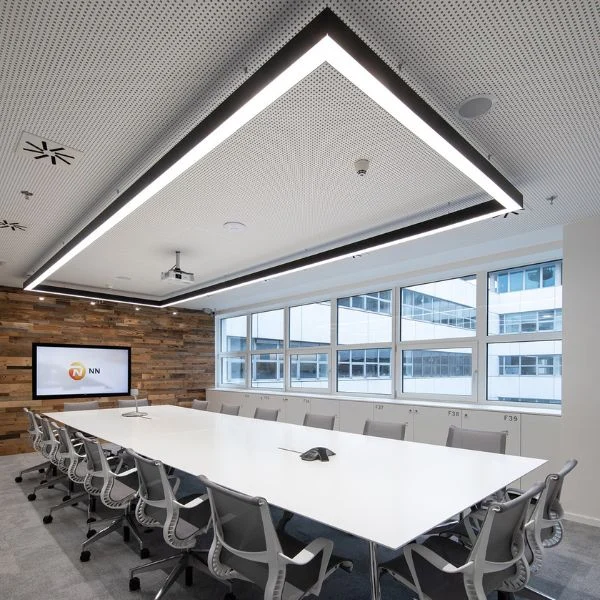
إضاءة المكاتب Design Guide for Modern Workplaces with lux UGR and LED fixture tips for comfort productivity and energy efficiency
Ever wonder why an outfit looks vibrant in natural sunlight, [...]

ما هو الإضاءة البيضاء القابلة لضبط التدرج؟ مع تطور معيار الصناعة، [...]