
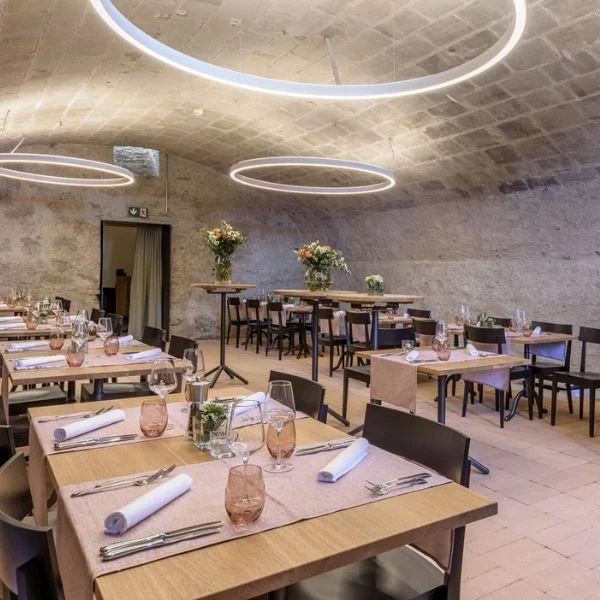
The Importance of Proper Commercial Illumination
Lighting is a critical component of building infrastructure that directly influences operational success. Beyond simply providing visibility, a well-designed lighting strategy enhances the functionality of a workspace, ensuring that tasks are performed safely and accurately. In commercial environments, the quality of light dictates the atmosphere, affecting how customers perceive a brand and how employees engage with their work.
Effective illumination supports:
- Productivity: Reduces eye strain and fatigue, keeping staff alert.
- Safety: Minimizes accidents in high-traffic areas like hallways and stairwells.
- Aesthetics: Highlights architectural features and creates a welcoming professional environment.
Why Switch to LED Commercial Lighting Fixtures
Transitioning to LED technology is the most logical financial and operational decision for modern facilities. Traditional lighting methods, such as fluorescent or incandescent bulbs, cannot compete with the efficiency and performance standards set by modern Light Emitting Diodes (LEDs). Upgrading to LED fixtures transforms energy consumption patterns, drastically lowering utility overheads immediately upon installation.
Key advantages of LED adoption include:
- Energy Efficiency: LEDs consume significantly less power to produce the same or better lumen output compared to legacy technologies.
- Operational Longevity: With a lifespan far exceeding traditional bulbs, replacement cycles are extended, reducing maintenance labor and material costs.
- Superior Light Quality: LEDs offer better color rendering and consistent brightness, eliminating the flicker and hum associated with older fixtures.
- Instant On: Unlike some high-intensity discharge lamps, LEDs reach full brightness instantly, which is vital for security and emergency scenarios.
Drop Ceiling and Suspended LED Lights
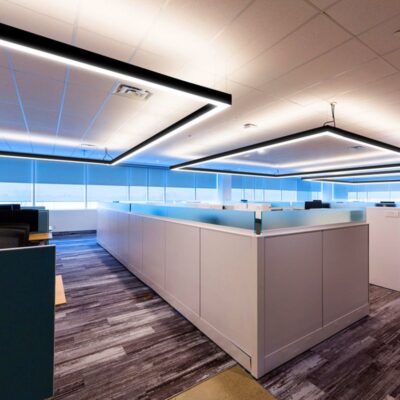
When we look at modern office renovations or new commercial builds, the ceiling grid is often the first place we start. For standard drop ceilings, LED panels and troffers are the go-to solution. They drop directly into existing T-grids (typically 2×2 or 2×4 layouts), providing immediate energy savings and a clean, flush look without requiring complex rewiring.
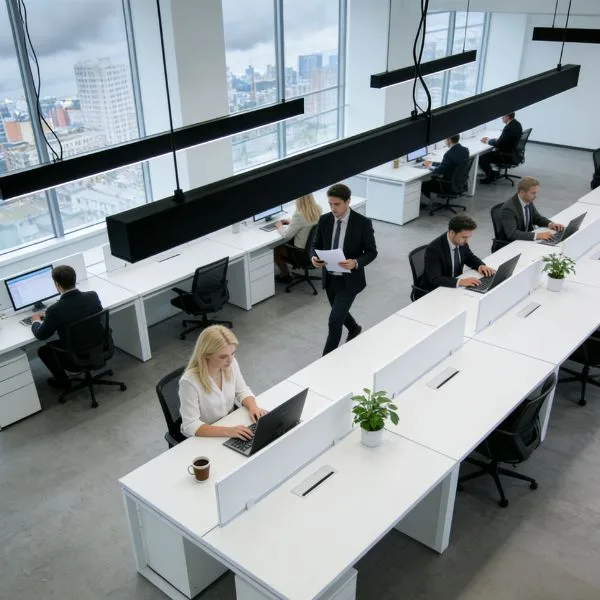
However, if you want to elevate the aesthetic of a conference room or open lobby, suspended lighting is the better choice. These fixtures hang from cables, creating a more architectural feel. Beyond just illumination, some modern fixtures serve a dual purpose. For open-plan offices where noise is a concern, installing acoustic linear lighting can help dampen sound while providing high-quality downlighting. It is a practical way to merge interior design with functional illumination.
High Bay, Low Bay, and Wrap Fixtures
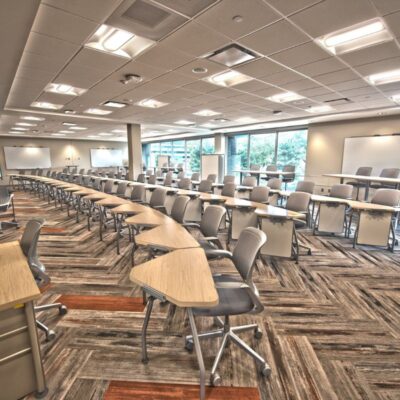
Choosing between high bay and low bay fixtures strictly comes down to ceiling height. In our experience, if your facility has ceilings over 20 feet—like a large warehouse or distribution center—you need High Bay LEDs. They are engineered to push light down from a distance without losing intensity. For ceilings between 12 and 20 feet, Low Bay fixtures are sufficient to spread light evenly without creating glare.
For utility areas, corridors, and workshops where the ceiling is lower and the budget is tighter, wrap fixtures are the standard. They are durable, easy to mount, and provide wide light distribution. These are often the workhorses in back-of-house areas. If you are outfitting a maintenance area or parking structure, durable fixtures similar to commercial garage lights ensure longevity even in tougher environments.
Emergency Lights and Exit Signs
This category is non-negotiable. Every commercial building guide for 2026 emphasizes safety compliance above all else. Emergency lighting and illuminated exit signs are required by code to ensure occupants can safely evacuate during a power outage.
We always recommend LED-based emergency units because they draw very little power, ensuring the backup battery lasts longer during a crisis. These fixtures must be tested regularly, and modern LED versions often come with self-diagnostic capabilities, reducing the maintenance burden on your facility management team.
Specialty Lighting: Wafer, Gooseneck, and Grow Lights
Sometimes standard fixtures just don’t fit the application. When dealing with extremely shallow ceiling plenums where a traditional can light won’t fit, Wafer LEDs are the solution. They are ultra-thin and can be installed almost anywhere, making them perfect for renovations in older buildings with tight spaces.
Gooseneck lights serve a different purpose, usually found on building exteriors to illuminate signage or storefronts. They add a classic, vintage aesthetic while improving brand visibility at night. Finally, for commercial spaces incorporating indoor agriculture or extensive plant walls, Grow Lights provide the specific light spectrum needed for photosynthesis, which standard office lighting cannot supply.
Office, Hallway, and Stairway Lighting
Lighting in professional environments directly impacts productivity and safety. In office settings, the goal is to eliminate glare on screens while maintaining high energy efficiency. We prioritize fixtures that offer consistent color temperatures (typically 4000K or 5000K) to keep employees alert and focused. For contractors handling large-scale fit-outs, understanding the nuances of these fixtures is vital, which is why we recommend consulting our wholesale dimmable office lighting guide for detailed specifications.
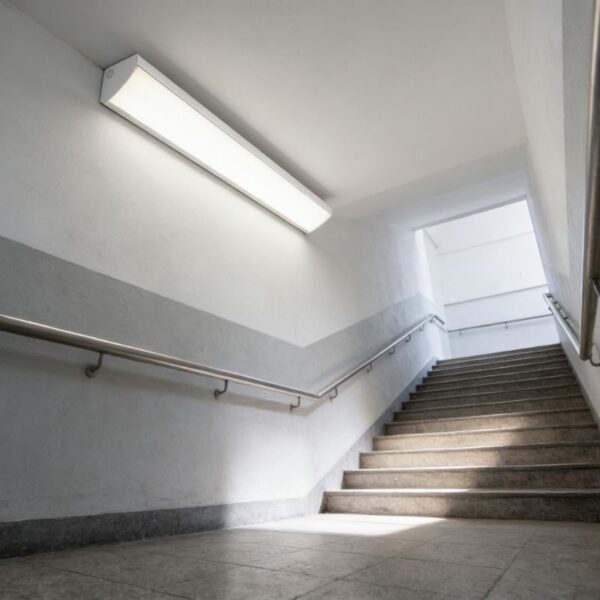
Hallways and stairways serve a different purpose: safe transit. These areas must be illuminated to meet strict building codes, ensuring clear visibility of steps and exits.
- Motion Sensors: Essential for reducing energy waste in low-traffic stairwells.
- Uniformity: Eliminates shadows that can cause trips or falls.
- Durability: Fixtures in these high-traffic zones need to withstand constant use.
Outdoor Parking Lots and Parking Structures
Security is the primary driver for exterior illumination. A well-lit parking lot discourages criminal activity and prevents vehicle accidents. We focus on high-lumen output fixtures that provide broad coverage, reducing the number of poles needed while eliminating dark corners. For parking structures, the lighting must also be durable enough to handle vehicle exhaust and vibration.
Beyond the main overhead lights, perimeter lighting is crucial for walkways leading into the facility. Installing robust wall light cylinder outdoor fixtures near entrances and along building exteriors adds a layer of safety and architectural appeal, guiding pedestrians safely from their cars to the building entrance.
Hospitality, Healthcare, and Refrigeration Lighting
These sectors require specialized lighting solutions that go beyond standard commercial specs.
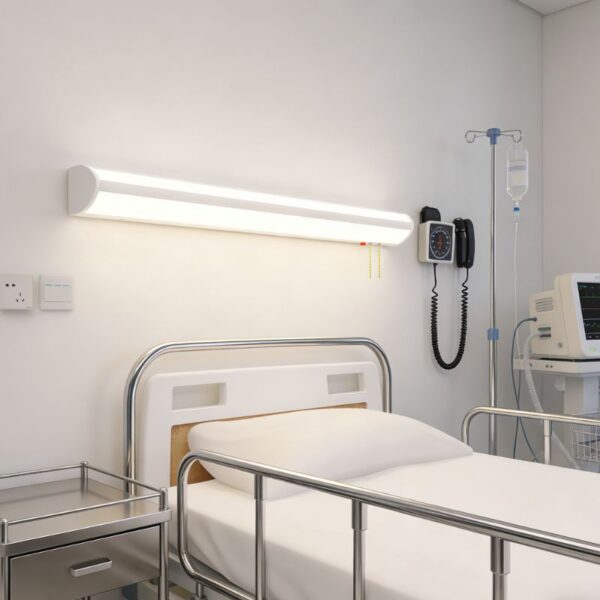
- Healthcare: Requires high CRI (Color Rendering Index) for accurate diagnosis and bright, clean light for sanitation visibility.
- Refrigeration: Lights must be rated for sub-zero temperatures and damp locations to prevent failure in walk-in freezers or display cases.
- Hospitality: The focus shifts to ambiance and guest comfort.
In hotels and multi-family residential projects, the aesthetic quality of the light is paramount. Guests expect flattering, warm lighting in personal spaces. A sleek multifamily linear LED vanity is often the standard for bathrooms and suites, providing the soft, even illumination required for grooming while enhancing the room’s modern design.
Significant Energy and Cost Savings
When putting together our commercial building lighting complete guide 2026, the most common question we get is about the bottom line. The math is simple: modern LED lighting slashes energy bills. By switching out old fluorescent or HID setups, commercial properties routinely cut their lighting energy usage by 50% to 70%. Upgrading to highly efficient ceiling fixtures like our 6-slot recessed panel light instantly lowers daily operating costs while providing superior illumination. It is a smart facility investment that quickly pays for itself.
Enhanced Safety and Regulatory Compliance
Safety is never optional. A well-lit facility directly prevents trips, falls, and workplace accidents. Beyond basic physical safety, your building must meet strict 2026 commercial building codes and workplace regulations. Modern LED systems deliver consistent, high-quality light that keeps your property compliant and your insurance premiums in check.
- Accident Prevention: Eliminates dangerous dark spots in hallways, stairwells, and warehouses.
- Code Compliance: Easily meets updated OSHA and local building energy standards.
- Employee Comfort: Removes the harsh glare and flickering of old fluorescent tubes, drastically reducing eye strain and headaches.
Longer Lifespan and Lower Maintenance
Constantly paying maintenance crews to change out dead bulbs in high commercial ceilings is a massive waste of labor and money. Today’s commercial lighting is built to last. When we equip spaces with durable linear LED pendant lights, we expect them to run flawlessly for years without a second thought.
Maintenance Reality Check:
| Feature | Traditional Lighting | Modern LED Commercial Lighting |
|---|---|---|
| Average Lifespan | 10,000 – 20,000 hours | 50,000 – 100,000+ hours |
| Maintenance Labor | High (Frequent replacements) | Minimal to zero upkeep |
| Long-Term Performance | Fades and flickers over time | Holds steady, crisp brightness |
Less time spent on ladders means your maintenance team can focus on actually running the building. Quality commercial fixtures simply work harder, burn brighter, and last much longer.
Evaluating Your Building Layout and Needs
Before you buy a single bulb, you need a solid game plan. Commercial building lighting isn’t just about brightness; it’s about how people use the space. When I look at a project, I start by mapping out the distinct zones. An open-plan office needs a completely different approach than a warehouse floor or a reception area.
You have to consider ceiling height, natural light availability, and the specific tasks happening in each area. For instance, high ceilings in a lobby might benefit from suspended architectural lighting, whereas a conference room with a drop ceiling needs focused, glare-free illumination.
Key factors to assess:
- Ceiling Type: Is it a grid (T-bar), drywall, or open deck? This dictates mounting options.
- Room Function: Detailed work requires higher lumens; hallways need softer, ambient light.
- Existing Wiring: Where are your junction boxes? Retrofitting is cheaper if you stick to existing layouts.
Comparing Fixture Types and Specifications
Once you know the layout, it’s time to match fixtures to the function. The market is flooded with options, so understanding the specs is crucial for a successful commercial building lighting setup in 2026. You aren’t just comparing prices; you are comparing performance.
Pay close attention to Lumens per Watt (lm/W)—this tells you how energy-efficient the fixture is. Higher is better. Also, look at the Color Rendering Index (CRI). For retail or design spaces, you want a CRI over 90 to make colors pop. For general warehousing, 80 is usually sufficient.
Here is a quick breakdown of common commercial fixtures:
| Fixture Type | Best Application | Key Feature |
|---|---|---|
| Linear Slots | Modern offices, lobbies | Sleek, continuous lines of light. |
| Recessed Panels | Grid ceilings, classrooms | Even, low-glare distribution. |
| High Bays | Warehouses, gyms | Powerful output for high ceilings. |
| Wall Mounts | Hallways, stairwells | Adds safety and architectural accent. |
For spaces requiring a clean, modern aesthetic, a 4 slot recessed panel light integrates seamlessly into standard grid ceilings. If you are dealing with drywall or want a more decorative touch, consider a slot 4 wall mounted linear light to wash walls with light and open up the space.
Finding Reliable Commercial Lighting Suppliers
The supplier you choose can make or break your project. You need a partner, not just a vendor. In the commercial sector, reliability is everything. If a driver fails in six months, you need to know the warranty will be honored without a headache.
Look for suppliers who offer detailed photometric data (IES files). This shows they understand the technical side of lighting design. A good supplier should be able to guide you on whether you need standard fixtures or something more specialized, like round linear light patterns, to create a unique visual identity.
Checklist for vetting suppliers:
- Warranty Terms: Do they offer 5 years or more?
- Certifications: Are the products UL, ETL, or DLC listed? This is non-negotiable for safety and rebates.
- Support: Can they help with layout planning or energy rebate paperwork?
- Stock Availability: Long lead times can kill construction schedules.
STAY IN THE LOOP
Subscribe to our free newsletter.
Leave A Comment
Retrofit LED Lighting Solutions Are soaring energy bills, relentless ballast [...]

Struggling to cut operational costs while upgrading your facility’s lighting [...]
The Financial & Operational Business Case Upgrading to energy efficient [...]
Are you worried about overhead head clearance, or tired of [...]