
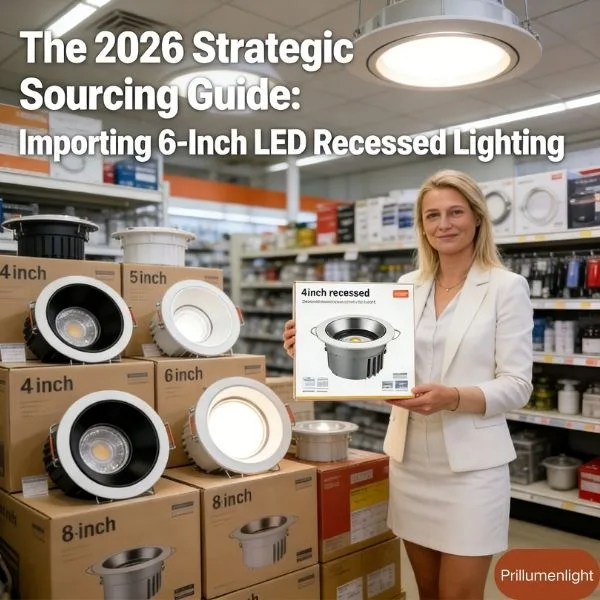
Why 6-Inch Remains the Professional Standard
In my experience running lighting projects, I’ve found that while 4-inch trims are popular for modern accents, 6-inch recessed downlights remain the practical standard for high-performance general illumination. They offer a wider aperture that minimizes glare while maximizing light output, making them the most efficient choice for reducing total fixture counts and labor costs on the job site.
6-Inch vs. 4-Inch Downlights for Coverage
Choosing between sizes isn’t just about the look; it’s about the beam spread and the number of holes you have to cut. 6-inch fixtures typically provide a broader wash of light, which is essential for uniform coverage in larger rooms.
| Feature | 6-Inch LED Recessed Lighting | 4-Inch LED Recessed Lighting |
|---|---|---|
| Primary Use | General Ambient Lighting | Task & Accent Lighting |
| Light Spread | Wide (100°–120°) | Focused (40°–90°) |
| Ceiling Height | Ideal for 8–12 ft | Best for 8 ft or lower |
| Installation | Fewer fixtures needed | More fixtures required |
Lumen Requirements for 8-10 ft Ceilings
For standard residential and commercial ceilings (8–10 ft), you need enough punch to reach the floor without creating “hot spots.” I recommend sticking to these lumen ranges for 6-inch vs 4-inch downlights comparisons:
- 8-Foot Ceilings: 750–900 Lumens (65W equivalent)
- 9-10 Foot Ceilings: 900–1200 Lumens (75W–100W equivalent)
- High Output Areas: 1200+ Lumens for kitchens and workspaces
Balancing Light Distribution and Visual Aesthetics
Using a 6-inch aperture allows for a more natural distribution of light. When I spec these for a project, the goal is to avoid the “Swiss cheese” ceiling effect caused by over-installing smaller lights.
- Wider spacing: You can often space 6-inch units further apart (approx. 5–6 feet) compared to 4-inch units.
- Softened shadows: The larger light source creates a more diffused edge, reducing harsh shadows on walls and furniture.
- Visual scale: In larger open-concept rooms, the 6-inch trim provides a proportional look that smaller fixtures can’t match.
Essential Features to Specify in 6-Inch LED Fixtures
When I’m spec’ing gear for a project, I look for features that save time and prevent callbacks. The “one-size-fits-all” approach doesn’t work for high-end clients in the US market. I focus on high-performance components that handle the rigors of a real job site while delivering a premium finish.
- 5CCT Selectable Recessed Lights: This is a game-changer for job-site flexibility. Carrying one SKU that toggles between 2700K and 5000K means I’m never stuck with the wrong color temperature when the homeowner changes their mind.
- 90+ High CRI Recessed Lighting: Standard 80 CRI makes rooms look muddy. I always insist on 90+ CRI to ensure colors, paint, and wood grains look exactly how they were designed.
- Triac Dimmable Recessed LED: Compatibility is king. I only use fixtures that offer smooth, flicker-free dimming on standard Lutron or Leviton wall switches.
| Feature | Contractor Benefit |
|---|---|
| Selectable CCT | Simplifies inventory and allows for on-site color adjustments. |
| Beam Angle Control | Properly directs light to avoid “hot spots” and glare. |
| 90+ CRI | Delivers the high-end color accuracy expected in modern residential builds. |
| Triac Dimming | Prevents flickering and ensures compatibility with existing dimmers. |
While 6-inch recessed downlights are the workhorse of general lighting, I often integrate specialized recessed linear LED ceiling lights in hallways or custom offices to elevate the design. If my crew hits a snag with wiring or compatibility, I rely on detailed FAQ items to get fast answers and keep the project on schedule. This combination of flexibility and technical reliability is what separates a professional install from a DIY job.
Critical Certifications for 6-Inch LED Recessed Lighting
Cutting corners on certifications isn’t an option if you want to avoid failed inspections or safety hazards. When I specify 6-inch LED recessed lighting, I make sure every fixture hits the mark for local U.S. building codes.
IC Rated Recessed Fixtures and Airtight Safety
Safety starts with IC rated recessed fixtures. These are mandatory when you’re installing lights in ceilings with blown-in or fiberglass insulation. An IC (Insulation Contact) rating means the fixture is engineered to stay cool enough that it won’t start a fire when buried in thermal material.
In addition to safety, I always look for airtight recessed housings. These prevent conditioned air from leaking into the attic, which is a major point of emphasis for modern energy audits and blower door tests.
Wet Location and Efficiency Compliance
Standard fixtures won’t cut it in showers or outdoor soffits. For those areas, you need dedicated wet location recessed lighting that features gaskets to keep moisture out of the electronics.
- UL/ETL Listings: This is your proof of third-party safety testing. Never install a fixture without one.
- Title 24 Requirements: Essential for California projects, these high-efficacy standards are becoming the blueprint for energy codes across the country.
- Energy Star: Often required for local utility rebates, helping your clients save money upfront and on their monthly bills.
Choosing the right professional lighting gear means these certifications are already baked into the product, so you can focus on the install rather than the paperwork. Staying compliant with these standards is the easiest way to minimize liability and ensure a long-lasting, code-compliant finish.
Installation Best Practices for 6-Inch LED Efficiency
Time is money on the job site. Choosing the right hardware for your 6-inch recessed downlights determines how quickly you can wrap up a project and move to the next one. We prioritize setups that minimize labor without sacrificing the finish.
Ultra-Slim Wafer Lights vs. Traditional Housing
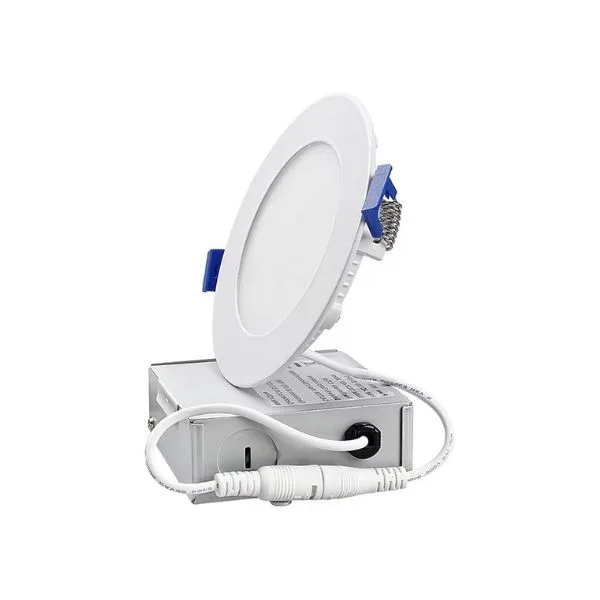
For most modern residential and light commercial jobs, ultra-slim wafer lights have become my go-to. Since they are canless LED recessed lighting, you don’t need to worry about joist placement or deep ceiling cavities.
- Wafer Lights: Best for tight plenums and “cut-and-go” efficiency. They use a remote junction box recessed light design that fits almost anywhere.
- Traditional Cans: Still relevant for high-end architectural projects where specific trim depth or heavy-duty commercial grade downlights are required.
Retrofit Kits vs. New Construction Setups
If you are working with existing 6-inch cans, LED retrofit kits 6-inch models are the fastest upgrade path. They screw directly into the E26 socket, instantly providing high CRI recessed lighting and a fresh look. For new builds, we often suggest direct-wire canless LED recessed lighting to eliminate the cost of the housing entirely.
| Feature | Retrofit Kit | Ultra-Slim Wafer |
|---|---|---|
| Install Speed | Fastest (Screw-in) | Fast (Cutout + J-Box) |
| Ceiling Clearance | Requires existing can | Requires < 2 inches |
| Best Use | Remodels | New construction / Basements |
Avoiding Wiring and Dimmer Pitfalls
The biggest callback killer is flickering. To ensure a smooth 100% to 5% range, always match your fixtures with a compatible Triac dimmable recessed LED wall switch.
- Wiring Tip: Always check the wattage load. While LEDs are low-draw, overloading a single circuit with too many 5CCT selectable recessed lights can still lead to driver stress.
- Custom Needs: For large-scale developments requiring specific electrical specs, our custom engineering and OEM services help us deliver fixtures that match your exact project requirements.
- Thermal Safety: Ensure you are using IC rated recessed fixtures whenever the light will be in direct contact with spray foam or fiberglass insulation to prevent overheating and premature failure.
Master Your Recessed Lighting Spacing Guide
Getting the layout right is what separates a DIY job from a professional install. For 6-inch LED recessed lighting, I follow the “half-ceiling-height” rule as a baseline. If you are working with standard 8-foot ceilings, space your fixtures 4 feet apart. This ensures the beam spreads overlap perfectly, eliminating dark “dead zones” between units.
Calculating Fixture Count for Open Spaces
Whether I’m bidding on a residential kitchen or a retail floor, the math has to be precise to avoid over-lighting or leaving customers in the dark.
- Residential Focus: Aim for 30–40 foot-candles in task-heavy areas like kitchens, and 20 foot-candles for general living spaces.
- Commercial Layouts: Demand is higher, usually 50+ foot-candles. When dealing with mixed-use environments, I’ve found that using linear LED lighting layout tips for office spaces helps integrate commercial grade downlights with other architectural fixtures for a seamless look.
- The Formula: (Room Square Footage × Desired Foot-candles) / Lumens per Fixture = Total Fixtures Needed.
Strategic Placement to Kill Shadows and Glare
Even the best ultra-slim wafer lights will cause issues if they aren’t placed strategically. I always keep fixtures approximately 2 feet away from the walls. This creates a soft “wall wash” effect rather than harsh, concentrated hot spots.
To minimize glare and shadows, I prioritize these three rules:
- Avoid the “Cave” Effect: Don’t tuck lights into corners; it wastes light and creates awkward shadows.
- Task Alignment: In kitchens, align the 6-inch recessed downlights with the edge of the countertop rather than the center of the walkway to prevent your body from blocking the light.
- Ceiling Height Adjustments: For ceilings over 10 feet, I tighten the spacing or switch to high-output canless LED recessed lighting to ensure the light actually reaches the floor.
Reliable Gear Recommendations for Pros
When you’re sourcing 6-inch LED recessed lighting, the hardware you choose determines your profit margin and your reputation. I always recommend sticking with commercial grade downlights like our lineup at Prillumen. These fixtures are built to handle the heat and duty cycles of a busy job site without the cheap plastic feel of big-box store alternatives.
Top-Tier 5CCT Selectable Recessed Lights
The move to 5CCT selectable recessed lights has changed the game for inventory management. Instead of carrying five different SKUs, you carry one.
- Build Quality: Look for die-cast aluminum heat sinks rather than thin plastic.
- Ease of Install: Our designs feature heavy-duty spring clips and accessible junction box recessed lights that don’t fight you during the rough-in.
- Performance: High-quality drivers ensure these units remain Triac dimmable recessed LED fixtures that won’t buzz or flicker when the client dims the lights.
Comparison of Professional Lighting Gear
| Feature | Prillumen Commercial Series | Standard Retail Options |
|---|---|---|
| Housing | Aluminum Heat Management | Plastic or Thin Steel |
| Flexibility | 5CCT Selectable | Single Color Temp |
| Installation | Ultra-slim wafer lights / Canless | Traditional Cans Only |
| Rating | IC rated recessed fixtures | Often limited |
Maximizing Margins with Contractor Wholesale Recessed Lighting
To keep your business profitable, you need to leverage contractor wholesale recessed lighting pricing. Buying in bulk doesn’t just lower the cost per unit; it ensures you have a consistent look across the entire project. When you source directly, you get 6-inch recessed downlights that meet strict wet location recessed lighting standards for bathrooms and soffits, ensuring you pass inspection the first time.
By choosing gear that balances high-end specs with easy installation, you minimize labor time and virtually eliminate the callbacks that eat into your bottom line.
Troubleshooting and Minimizing Callbacks
Nothing kills a profit margin faster than a “no-charge” return trip to a job site. To keep your projects profitable and your clients happy, I focus on the two biggest failure points in the field: driver compatibility and heat management.
Managing Flickering and Dimmer Issues
Most flickering in Triac dimmable recessed LED setups happens because of a mismatch between the dimmer switch and the driver. I always verify that the total wattage on the circuit meets the dimmer’s minimum load requirements to avoid “ghosting” or strobing.
- Use High-Quality Drivers: Cheap drivers are prone to interference.
- Compatibility Check: Match your 6-inch recessed downlights with tested ELV or Triac dimmers.
- Heat Dissipation: Ensure ultra-slim wafer lights have enough plenum space for airflow, even if they are IC rated recessed fixtures.
Reliability and Warranty Standards
When sourcing commercial grade downlights, I look for units with robust aluminum heat sinks rather than plastic housings. A solid build directly correlates to a longer lifespan and better color consistency. For more professional tips on selecting durable gear, check out these buying insights to avoid common procurement pitfalls.
| Issue | Potential Cause | Pro Fix |
|---|---|---|
| Flickering | Incompatible Dimmer | Swap to a verified LED-rated Triac dimmer |
| Premature Failure | Excessive Heat | Use junction box recessed lights for better airflow |
| Color Shifting | Low-Quality Chips | Stick to high CRI recessed lighting with 5-year warranties |
I prioritize manufacturers that offer a clear, “no-hassle” replacement policy. If a 6-inch LED recessed lighting fixture fails within the first year, it’s usually a component defect; if it fails in year three, it’s almost always a heat management issue. I stick to proven gear and contractor wholesale recessed lighting sources that stand behind their builds to keep my callbacks at zero.
FAQ: Common Contractor Questions on 6-Inch LED Recessed Lighting
Can 6-inch lights be used in small rooms?
Absolutely. While many designers lean toward 4-inch units for tight aesthetics, 6-inch recessed downlights provide superior ambient coverage. In smaller spaces like laundry rooms or walk-in closets, a single 6-inch fixture often replaces two smaller ones, saving you installation time and material costs. Using 5CCT selectable recessed lights allows you to dial in the warmth so the light doesn’t feel clinical in a confined area.
Are canless designs better than traditional cans for heat?
From a performance standpoint, canless LED recessed lighting—specifically ultra-slim wafer lights—handles heat more efficiently. Traditional housings act like ovens, trapping heat around the bulb. In contrast, canless units use an external junction box and thin profiles that dissipate heat directly into the plenum. This design minimizes the risk of the driver overheating and reduces potential call-backs due to flickering.
How many fixtures can run on a standard 15-amp circuit?
Because modern LEDs draw so little power, the capacity is massive. On a standard 120V, 15-amp circuit, you have 1,800 watts of total capacity. Following the 80% rule (1,440 watts):
- 12W Fixtures: Up to 120 units.
- 15W Fixtures: Up to 96 units.
In a typical residential or commercial layout, you will hit the physical limit of the room’s wiring before you ever overload the circuit with LED loads. If you have specific questions about high-volume commercial layouts, feel free to contact us for technical support.
Is IC Rating necessary if there is no insulation?
Even if you aren’t currently blowing in cellulose, specifying IC rated recessed fixtures is the professional standard. It future-proofs the installation. If a homeowner adds insulation later, your work remains code-compliant and fire-safe. Most of our commercial grade downlights come standard with IC and Airtight ratings to cover all job site variables.
STAY IN THE LOOP
Subscribe to our free newsletter.
Leave A Comment
Retrofit LED Lighting Solutions Are soaring energy bills, relentless ballast [...]

Struggling to cut operational costs while upgrading your facility’s lighting [...]
The Financial & Operational Business Case Upgrading to energy efficient [...]
Are you worried about overhead head clearance, or tired of [...]